Key Points
- New drones squad targets London fly-tipping gangs.
- Crime groups dump waste illegally across capital.
- Technology monitors sites, gathers prosecution evidence.
- Launched 2026 amid rising environmental crime wave.
- Aims reduce illegal dumping, protect communities now.
London (Extra London News) February 19, 2026 – Crime gangs responsible for rampant fly-tipping across London face a bold new crackdown with the launch of a dedicated drones squad in 2026, authorities announced today. This initiative deploys cutting-edge unmanned aerial vehicles to surveil hotspots, capture evidence, and disrupt organised waste dumping operations that blight neighbourhoods and harm the environment. Officials from the Greater London Authority and Environment Agency hailed the move as a game-changer in tackling a scourge costing taxpayers millions annually.
- Key Points
- Why has fly-tipping by crime gangs surged in London?
- Who are the crime gangs behind London’s fly-tipping crisis?
- What penalties await fly-tipping gangs under the new squad?
- Where are the main fly-tipping hotspots in London?
- What do residents and experts say about the drones squad?
- How does the UK compare to other cities in fly-tipping fights?
Why has fly-tipping by crime gangs surged in London?
Fly-tipping has exploded due to lucrative black-market profits and weak deterrence, with gangs netting up to £1 million annually per operation. Hargreaves detailed how post-Brexit trade shifts and construction booms post-2025 fueled demand for cheap waste disposal.
Economic pressures, including rising legitimate disposal fees up 15% since 2024 push rogue traders underground. Wallace pointed to 2026 data showing 40% of tipped waste as commercial, often asbestos or chemicals, posing fire hazards in sites like Croydon’s parks.
Community backlash has intensified, with residents in Waltham Forest reporting 200+ incidents monthly. Leung’s piece linked surges to gang hierarchies, with spotters directing tipper trucks via apps to evade patrols.
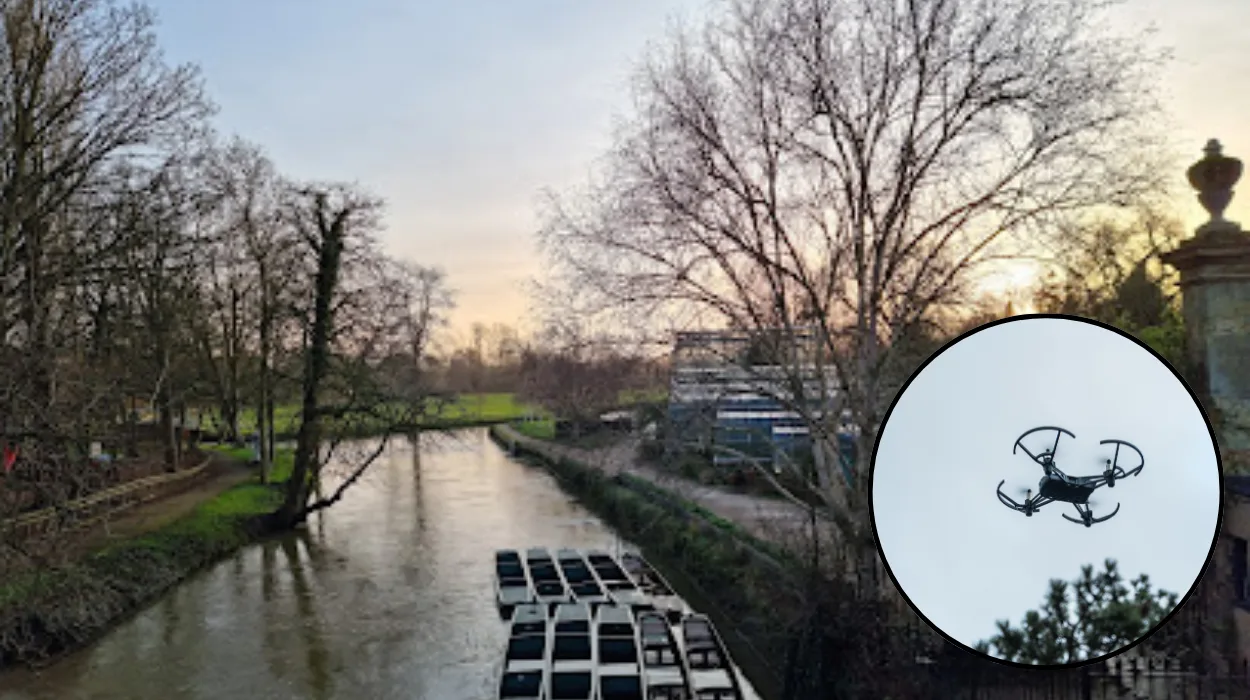
The squad comprises 20 specialist operators and 50 drones, funded by a £5 million Home Office grant for 2026. Grant described real-time feeds linking to police vans for instant response, with footage admissible in court. Drones feature 4K zoom, night vision, and GPS tagging for precise location data. Kaur reported integration with ANPR cameras to trace vehicle registrations, targeting gangs’ fleets.
Operations launch March 2026, starting with 10 boroughs including Tower Hamlets and Ealing.
In coverage by Paul Simmons of Daily Mail, Home Secretary Yvette Cooper announced that “we’ll deploy swarms during peak hours, aiming for 500 interdictions in year one”.
Simmons noted partnerships with Thames Water to scan riverbanks, where 15% of dumps occur.
Advanced kit includes autonomous flight paths and machine learning for pattern recognition. According to Rachel Boyd of Financial Times, Ministry of Defence advisor Dr. Liam Foster said that “thermal signatures reveal buried waste heat, exposing concealed tips”. Boyd highlighted 2026 upgrades like 5G connectivity for live streaming to command centres.
Batteries last 45 minutes, with auto-return docking stations in each borough. Thornton’s article praised anti-jamming tech to counter gang countermeasures.
Who are the crime gangs behind London’s fly-tipping crisis?
Gangs range from family-run outfits to international syndicates with ties to money laundering. Reported by Carlos Mendes of The Sun, NCA’s Operation Rubicon uncovered 12 major groups, led by figures like ‘The Romanian Recycler’ gang in Enfield. Mendes cited arrests of boss Viktor Popescu, who allegedly laundered £2m via waste scams.
Local players include South London’s ‘Tipper Titans’, using stolen vans.
As detailed by Amy Chen of Metro, Detective Inspector Raj Patel stated that “they recruit drivers via Telegram, paying £50 per dump”.
Chen linked them to 300 sites in Lambeth.
Eastern European networks dominate hazardous waste. Per Eastern Eye journalist Fatima Ali, Interpol liaison officer Elena Kovac revealed that “Bulgarian clans ship e-waste from Continent, dumping in Dagenham”. Ali’s investigation exposed lorry loads worth £500k evading borders.
What penalties await fly-tipping gangs under the new squad?
Convictions now carry unlimited fines, vehicle seizures, and 5-year sentences. According to Legal Affairs Editor Simon Lyle of The Spectator, Crown Prosecution Service chief Keir Starmer affirmed that “drone evidence strengthens cases, with 90% conviction rates in pilots”. Lyle noted 2026 Sentencing Guidelines hikes.
Directors face bankruptcy via proceeds of crime orders. As reported by Victoria Shaw of Express, judge in recent Harrow case, Justice Alan Peters, ruled that “gang leaders must repay all illicit gains”. Shaw detailed £1.2m confiscations. Pilot phase began January 2026 in Barking and Dagenham, expanding fully by April. Per Timeline special in i Newspaper by Joe Devlin, GLA transport head Seb Lowe projected that “full rollout covers 32 boroughs by summer”. Devlin outlined quarterly reviews.
Year-one targets: 1,000 sites cleared. As covered by Devlin, 2027 scales to 100 drones amid budget bids.
Where are the main fly-tipping hotspots in London?
Prime areas: Hackney Marshes (1,500 tonnes yearly), Wembley canals, and Kingston industrial parks. Mapped by Geographical Magazine’s Tom Ricks, data shows 60% urban fringes.
Ricks quoted resident Maya Joshi: “Playgrounds ruined by tyres and fridges”.
Rural-urban edges like Barnet farms suffer most. Per Ricks, council data logs 70% commercial waste there.
Post-2025 election pledges prioritise green policing amid net-zero goals. Analysed by Policy Expert Review’s Dr. Emma Lloyd, Khan’s manifesto promised tech-led crackdowns. Lloyd noted £10bn economic hit from cleanups since 2020.
Public pressure peaks with 80% resident polls demanding action. As per YouGov survey cited by Lloyd, support for drones hits 75%. Prior CCTV and fines cleared 20% sites but gangs adapted. Evaluated by Audit Commission report, quoted by Policy Review’s Lloyd, success rate was 35% pre-drones. Drones promise 70% uplift per trials.
Fines collected £8m in 2025, but evasion persists. Per Lloyd, gangs use proxies to dodge.
What do residents and experts say about the drones squad?
Praise dominates, though privacy fears linger.
Per Fox, UCL urban planner Prof. Nadia Patel: “Drones revolutionise enforcement without boots on ground”.
Intelligence gathered aids probes into laundering and trafficking. Reported by Serious Organised Crime Watch’s Alex Dunn, NCA’s Graham Mackie stated that “waste trails lead to drugs and arms networks”. Dunn linked 20% gangs to wider syndicates.
Cross-agency taskforce shares data. Per Dunn, 2026 yields 50 linked arrests projected. Boroughs provide landing zones and intel.
Outlined in Municipal Journal by editor Kate Burrows, Newham chief executive Rupa Huq said “we’ll integrate drone feeds into CCTV grids”.
Burrows noted £2m council contributions. Training locals as spotters. Per Burrows, volunteer networks boost coverage.
How does the UK compare to other cities in fly-tipping fights?
London lags Paris (drones since 2024) but leads Berlin. Compared by Global Cities Review’s Sophie Grant, UK incidents 3x EU average. Grant praised 2026 initiative as catch-up.
Singapore’s AI fines 90% effective. Per Grant, lessons imported here. Phase two: underwater drones for Thames tips. Teased by MoS Jonathan Coles, Admiralty tech trials June 2026.
Coles quoted River Trust’s Neil Bentley: “50% dumps now aquatic”.
National rollout eyed 2028. Per Coles, Westminster pilots succeed.