Key Points
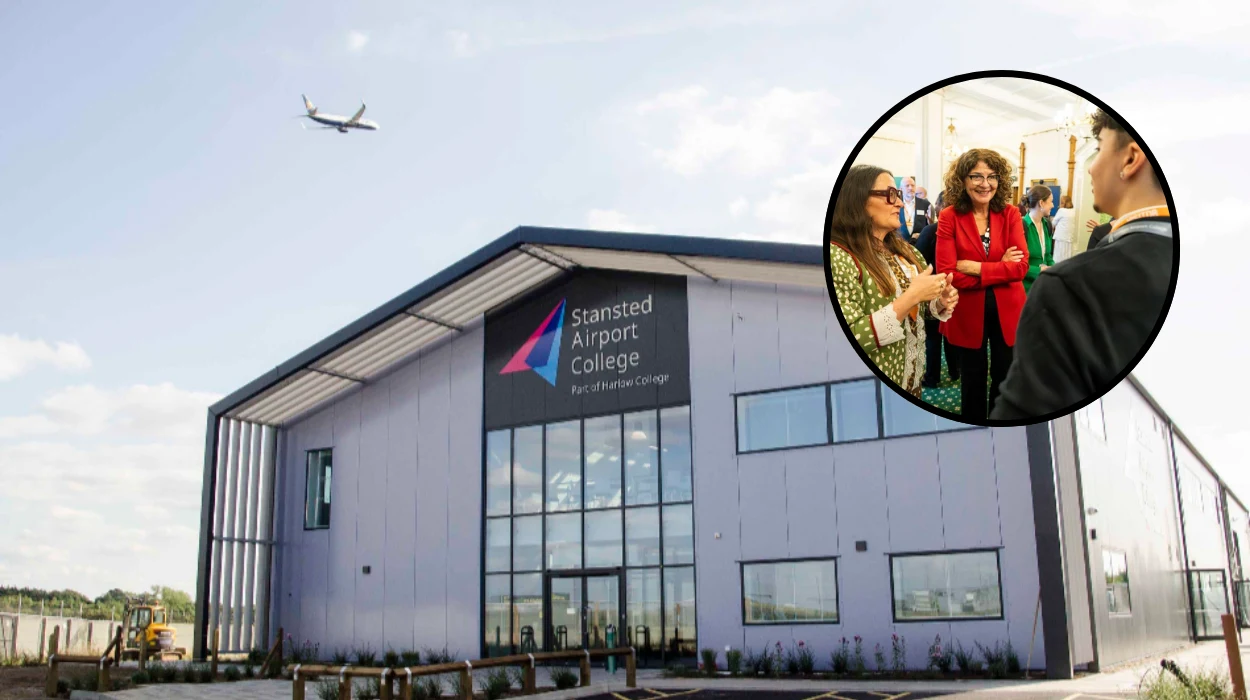
- Parliamentary Showcase: Students from Stansted Airport College travelled to Westminster to demonstrate to Members of Parliament (MPs) how specialised aviation training is successfully helping young people transition into stable careers.
- Host and Ownership: The high-profile event inside the Houses of Parliament was hosted by Manchester Airports Group (MAG), the operating corporate body that owns and manages London Stansted Airport.
- The Milburn Review Catalyst: The parliamentary visit was directly prompt-driven by the recent publication of the Milburn Review, which exposed a critical national crisis: nearly one million UK residents aged between 16 and 24 are currently classified as NEET (Not in Education, Employment, or Training).
- Unique Educational Partnership: Stansted Airport College, situated directly on-site at the airport, operates via a joint partnership with Harlow College and stands as the only purpose-built further education college of its exact kind anywhere in the United Kingdom.
- Political Endorsement: Josh Dean, the MP for Hertford and Stortford, formally backed the initiative during the event, labelling the college a “pioneering project” for both the regional economy and the broader UK aerospace sector.
- End-to-End Pipeline: MAG highlighted its structured, multi-tier employment pathways—including its Aerozone education centres and dedicated Airport Academies—designed to engage children from primary school through to adult job placements.
Westminster (Extra London News) June 8, 2026 – A delegation of ambitious students from Stansted Airport College has converged on the Houses of Parliament in Westminster to brief lawmakers on how vocational aviation education offers a scalable blueprint to combat the UK’s worsening youth unemployment crisis. The institutional showcase, coordinated by parent company Manchester Airports Group (MAG), aimed to provide MPs with tangible evidence of how industry-led training pipelines can directly reduce the number of young people left outside the workforce. The political briefing comes at a vital time for national economic policy, arriving on the heels of a sobering independent review detailing systemic blockages in youth training and recruitment pipelines across Britain.
- Key Points
- Why did Stansted Airport College students visit Westminster?
- What is the Milburn Review and how does it impact young people?
- How does Manchester Airports Group plan to tackle the UK’s NEET crisis?
- What role do Aerozones play in early youth engagement?
- How do Airport Academies assist adult job seekers?
- Why is Stansted Airport College unique in British further education?
- What did local MPs and political figures say about the initiative?
- How does industry-led training secure the future of the aviation sector?
- What are the long-term career prospects for aviation students?
- How do corporate leaders view the pipeline of skilled workers?
Why did Stansted Airport College students visit Westminster?
As detailed in the official event briefings, the principal objective of the parliamentary delegation was to connect policy-makers directly with the beneficiaries of vocational technical education. By speaking face-to-face with MPs from various political parties, the students demonstrated how targeted, industry-specific qualifications translate directly into sustainable, skilled employment.
The underlying driver for the event was MAG’s desire to advocate for a structural shift in how the British corporate sector engages with further education. By showcasing the tangible success of their students, MAG and Stansted Airport College sought to make a powerful case for the replication of their educational model across other critical infrastructure sectors in the UK.
What is the Milburn Review and how does it impact young people?
The backdrop to this parliamentary event is heavily informed by the socio-economic data contained within the newly published Milburn Review. The landmark independent report cast a stark light on the structural vulnerabilities facing British youth, revealing that approximately one million individuals aged 16 to 24 across the United Kingdom currently fall under the NEET category.
The review’s findings have sparked urgent debate within Westminster regarding the efficiency of the traditional educational system and its failure to align with modern industrial needs. For young people, being trapped in the NEET cycle significantly increases the long-term risk of economic disenfranchisement, lower lifetime earnings, and diminished social mobility. The data has amplified pressure on both the government and private enterprises to establish robust, accessible pathways that bridge the gap between secondary school and stable, long-term employment.
How does Manchester Airports Group plan to tackle the UK’s NEET crisis?
To address the challenges highlighted by the Milburn Review, Manchester Airports Group has deployed a comprehensive, multi-tiered skills strategy designed to capture talent at various stages of youth development. The corporate framework operates on the philosophy that sustainable employment requires intervention long before an individual reaches working age.
What role do Aerozones play in early youth engagement?
The journey begins with early childhood inspiration. MAG’s Aerozone centres are dedicated, on-site educational hubs designed for school-aged children. These facilities allow primary and secondary students to explore the mechanics of aviation, interact with airport professionals, and demystify the vast array of careers available within an airport ecosystem—ranging from engineering to logistics and corporate operations.
How do Airport Academies assist adult job seekers?
For older individuals and those looking to reskill, MAG operates its Airport Academies. Working in direct partnership with local training providers and councils, these academies focus heavily on upskilling unemployed adults and young career-changers. They offer tailored, fast-track training programmes that culminate in guaranteed job interviews for vacancies across the airport site.
Why is Stansted Airport College unique in British further education?
At the apex of this educational framework sits Stansted Airport College. Constructed via a collaborative partnership with Harlow College, the facility represents a £11 million custom-built investment located directly on the airport’s periphery. It stands as the first and only further education college in the UK to be purpose-built on an active airport campus, stripping away the geographical and institutional barriers that frequently separate academic learning from real-world corporate environments.
Explore More Westminster News
Unlawful Short-Term Lets Spark Crisis in Westminster 2026
Westminster Abbey Cafe Opens for Historic First Dinner: London 2026
What did local MPs and political figures say about the initiative?
The parliamentary reception garnered considerable interest from regional representatives who view the airport as an essential economic engine for their constituencies.
Mr Dean further emphasised the broader legislative value of the project, stating that it was a distinct pleasure to highlight their work, alongside the other educational programmes MAG delivers at all three of its UK airports, to parliamentarians from across the country. He noted that the showcase successfully made the case for more employers to adopt this integrated approach, while encouraging fellow MPs to support the expansion of such vocational frameworks.
How does industry-led training secure the future of the aviation sector?
The financial and operational health of the UK aviation industry remains tethered to its ability to recruit skilled labor in a highly competitive global market. Aviation operations require precise, heavily regulated technical skill sets that standard generalized education curriculums are rarely equipped to provide.
By integrating technical training directly onto the tarmac and into active maintenance hangers, the college ensures that its curriculum evolves in real-time alongside industrial advancements. This method drastically reduces the onboarding and external training costs typically borne by commercial airlines and ground handling firms, creating an immediate, friction-free transition from the classroom straight to the workplace.
What are the long-term career prospects for aviation students?
The specialised training provided via the Harlow College partnership opens up a diverse matrix of career trajectories. Students are not merely trained for entry-level airport jobs; they are positioned for highly technical roles within the aerospace ecosystem.
Key career pathways actively utilised by graduates include:
- Aeronautical Engineering: Specialised training in aircraft maintenance, structural engineering, and avionics systems.
- Operations and Logistics: Managing complex airfield logistics, supply chain management, and international flight scheduling.
- Hospitality and Cabin Crew Management: High-tier customer service, safety management, and international aviation operations.
- Digital Infrastructure and Cybersecurity: Safeguarding critical transport infrastructure against emerging technological threats.
How do corporate leaders view the pipeline of skilled workers?
From a corporate leadership perspective, the establishment of internal educational infrastructure is viewed as an operational necessity rather than a mere exercise in corporate social responsibility.
As articulated during the Westminster briefing by Emma Crossland, Chief People Officer at Manchester Airports Group, the aviation sector requires a robust, uninterrupted pipeline of highly skilled personnel to safely support future infrastructure expansion. Crossland stated that through their targeted network of Airport Academies, Aerozones, and the flagship Stansted Airport College, the group is successfully creating clear, visible pathways into employment, actively helping young people build resilient, long-term careers within the global aviation market.
This corporate strategy reflects a growing consensus among industrial leaders: to secure future commercial growth, companies must co-invest in local communities, transforming nearby youth populations into the highly qualified workforce of tomorrow.