Key Points
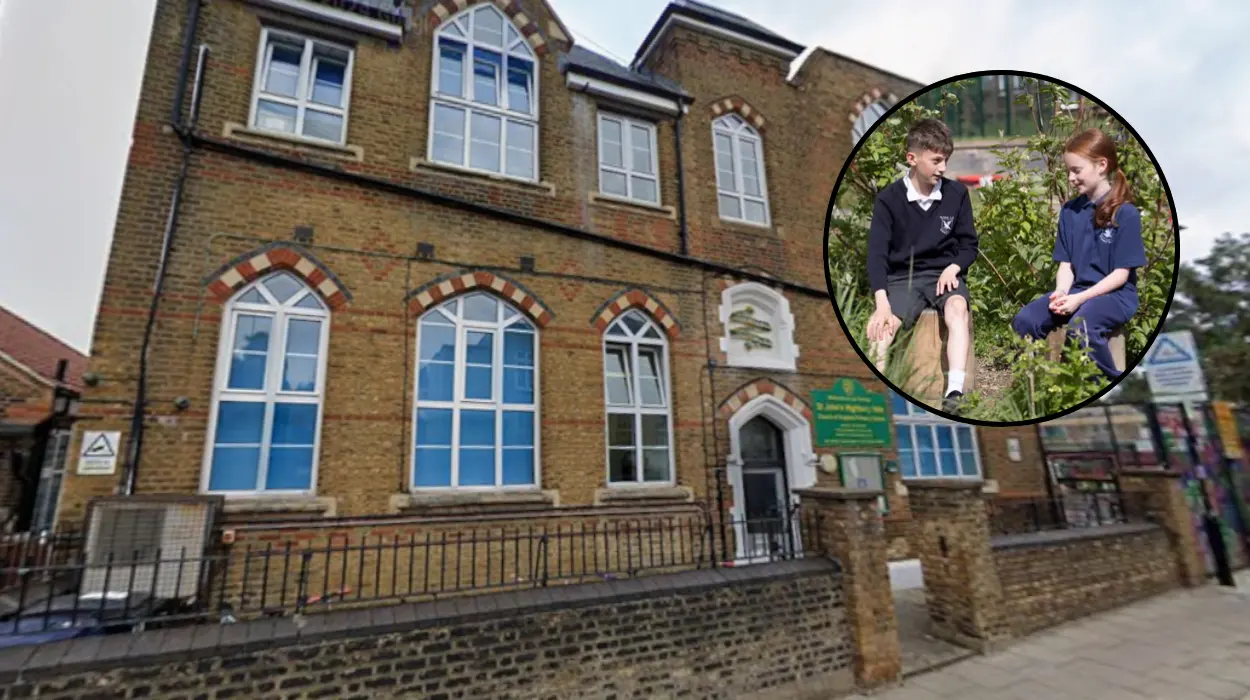
- Severe Flooding Stopped Play: St John’s Church of England Primary School in Barnet, North London, faced chronic tarmac flooding that regularly trapped pupils indoors and forced alternative dismissal routes.
- Topographical Challenges: The primary school is uniquely situated within a natural geographic basin with heavy clay foundations, preventing storm water from draining naturally into the soil.
- Community-Led Initiative: A climate action plan spearheaded by parent governor Sarah Taggart facilitated crucial Department for Education (DfE) funding by demonstrating high-risk status.
- Charity Partnership: Urban greening charity Trees for Cities co-designed and implemented the structural transformation, balancing practical play requirements with ecological resilience.
- Innovative Drainage Infrastructure: The redesigned space features functional rain gardens filled with bog-tolerant, drought-resistant plants, alongside stepping logs to retain natural student engagement.
- Immediate Environmental Relief: School leaders report that while heavy rainfall can still cause minor pooling, the climate-adapted infrastructure successfully clears excess surface water within ten minutes.
- Curriculum-Linked Learning: The environmental intervention is supported by a year-long educational program connecting outdoor playground observations directly with classroom science lessons.
- Positive Student Impact: Pupils noted significant improvements in mental well-being and academic focus, citing a reduction in restricted “wet breaks” inside the classrooms.
Barnet (Extra London News) May 21, 2026 – A vulnerable primary school in North London has successfully countered chronic, disruptive playground flooding by transforming its concrete asphalt into an eco-friendly, climate-adapted outdoor space. St John’s Church of England Primary School, located in the London Borough of Barnet, had long suffered from severe surface water accumulation that regularly left its outdoor play facilities completely unusable. By securing state funding and collaborating with an environmental charity, the educational institution has removed large sections of non-porous tarmac, replacing them with functional rain gardens and sustainable drainage systems designed to mitigate the intensifying impacts of the climate crisis.
- Key Points
- Why Did St John’s Primary School Face Regular Flooding?
- How Was the Climate Adaptation Project Funded and Planned?
- What Are the Design Features of the Climate-Adapted Playground?
- How Effective Has the New Sustainable Drainage System Been?
- How is the New Infrastructure Used in Classroom Learning?
- What Do the Pupils Think of the Environmental Transformation?
The structural conversion has fundamentally altered how the school operates during inclement weather, changing a long-standing pattern of restricted indoor breaks. Prior to the installation, surface water would accumulate rapidly across the low-lying site, forcing school staff to reroute parents and pupils during morning drop-offs and afternoon dismissals. Following the implementation of the nature-based engineering solutions, the playground now drains efficiently within minutes, providing an adaptable framework for urban schools struggling to cope with the reality of increasing rainfall volatility and rising summer temperatures across the United Kingdom.
Why Did St John’s Primary School Face Regular Flooding?
The persistent drainage failures at the educational facility were a direct consequence of local geological conditions and topographical vulnerabilities. The campus sits inside a geographical basin, which naturally channels surface runoff from surrounding elevations directly toward the school buildings. This hazard is severely compounded by the underlying soil composition, which consists primarily of dense, impermeable clay foundations that inherently resist natural water infiltration.
When heavy downpours hit the traditional grey tarmac playground, the moisture had no viable means of escaping into the subterranean strata, resulting in large, stagnant pools. As documented by environment reporter Tobi Thomas of The Guardian, Macci Dobie, the headteacher of St John’s Church of England Primary, stated that
“it would get so bad that the children couldn’t be dismissed from the playground.”
Explaining the logistical toll the infrastructure failure took on everyday operations, Dobie added that
“we had to dismiss them from different parts of the school or, literally, parents were stepping into puddles to lift their children out of the classroom.”
How Was the Climate Adaptation Project Funded and Planned?
The momentum to transform the waterlogged concrete yard into an ecologically functional asset originated directly within the school’s local governance structure. Recognising that the recurring “wet breaks” were limiting the student body’s access to fresh air and physical exercise, the school community looked to systemic climate planning to find a permanent solution rather than relying on temporary physical barriers or maintenance pumping.
As reported by Tobi Thomas of The Guardian, Sarah Taggart, a parent governor who spearheaded the development of St John’s comprehensive climate action plan, stated that
“this school is in a high flood-risk area, so we were able to get [Department for Education] funding for a bigger project and take up some of the tarmac.”
Armed with official Department for Education funding targeted at schools vulnerable to environmental extremes, Taggart enlisted the strategic expertise of Trees for Cities. The UK-based charity focuses specifically on planting urban green spaces and revitalising concrete-dominated school grounds to defend against shifting global weather patterns.
Explore More Barnet News
Compton School’s Samia Wins Barnet Youth Parliament (2026)
North Finchley 2026 cyber club for student jobs
What Are the Design Features of the Climate-Adapted Playground?
Designing an environmental drainage system within an active primary school required balancing strict civil engineering requirements with the kinetic needs of young children. Completely cordoning off sections of the playground for conservation purposes would have reduced the total space available for recreation, potentially triggering resistance from the student population.
Balancing Functionality with Play
Architects had to ensure that the introduction of complex soil systems did not compromise the school’s core recreational utility. As reported by Tobi Thomas of The Guardian, Alfie Davies, a landscape architect at Trees for Cities who led the design work and community consultation at St John’s, stated that
“You’re taking space away from the kids, but kids are kids, it’s got to be functional.”
Highlighting the necessity of centering children in urban design, Davies added that
“They have to be able to use it or otherwise they won’t be interested or won’t want to look after it.”
Integrating Nature-Based Drainage Systems
To satisfy both constraints, Davies integrated interactive play elements directly into the sustainable drainage network. The design features strategically positioned stepping logs running seamlessly through the middle of the newly excavated rain gardens. This configuration allows pupils to navigate over specialized soil beds without trampling the delicate vegetation beneath.
The botanical selection was closely curated to handle volatile climate fluctuations, featuring an array of:
- Ornamental grasses
- Hardy indigenous shrubs
- Resilient perennial flowers
As reported by Tobi Thomas of The Guardian, Davies noted that the selected plants “naturally tolerate the boggy ground but are quite drought resistant too.” This dual capability is vital for mitigating the urban heat island effect—a phenomenon where dense concrete structures trap solar radiation—thereby providing natural cooling layers during increasingly severe British summer heatwaves.
How Effective Has the New Sustainable Drainage System Been?
The practical performance of the restructured playground has yielded immediate results for the school administration. Although the project was designed to work alongside the existing topography rather than completely reshaping the basin, the introduction of permeable earth has successfully mitigated the pooling gridlock that previously paralyzed afternoon routines.
Reflecting on the operational shift, Dobie stated to The Guardian’s Tobi Thomas that “it’s transformed our area outside.” While acknowledging that nature-based solutions operate within physical limits during severe weather events, Dobie clarified that
“There is still some excess water when it rains heavily, but it clears up in 10 minutes.”
This rapid clearance represents a substantial improvement over the historical standing water that previously lingered across the non-porous tarmac for days at a time.
How is the New Infrastructure Used in Classroom Learning?
Beyond providing immediate civil engineering relief, the revitalised schoolyard serves an alternative purpose as a living, open-air laboratory. Trees for Cities operates under the core philosophy that experiential, nature-based education is foundational to preparing younger generations for long-term environmental stewardship.
The Year-Long Engagement Programme
Upon completion of the physical engineering works, the charity initiated a year-long community engagement scheme designed to embed the playground’s features directly into the school’s academic curriculum. This approach grounds abstract scientific theories by letting students observe them firsthand just outside their classroom doors.
As reported by Tobi Thomas of The Guardian, Grace Walker, a senior landscape architect at Trees for Cities, stated that the children
“will look at everything from the water cycle, how it supports the plants and infiltration of the soil itself to the actual implementation of why we’ve done things on these sites.”
Student Participation and Stewardship
To reinforce these educational frameworks, students actively participate in the long-term maintenance of the site. During the warmer seasons, pupils take on the responsibility of watering the rain gardens and participate in targeted tree identification walks through nearby municipal parklands. Commenting on the success of student involvement, Davies stated to The Guardian that “engaging the kids is probably the most valuable thing we do.” Observing the pupils’ changing relationship with the natural world, Davies remarked that
“the kids love it. They want to be outside, looking at plants. They might be a bit weirded out looking at worms, at first, but they love it.”
What Do the Pupils Think of the Environmental Transformation?
The ultimate success of the infrastructure overhaul is reflected in the daily experiences of the children who interact with the space. For the student body, the physical presence of biodiverse flora has relieved the claustrophobia of indoor confinement during rainy periods, creating a more relaxed environment for learning.
Real-World Academic Observations
The direct observation of urban biodiversity has significantly enhanced classroom engagement. As reported by Tobi Thomas of The Guardian, Headteacher Macci Dobie noted that
“the year 5s have been doing a project about pollinators and bees this term and it’s great because they can see it happening in their playground.”
Dobie observed that the children remain thrilled by the sudden expansion of greenery and continuously explore the evolving plant life.
Direct Feedback from the Children
The emotional and cognitive benefits of the green space are clearly visible in the pupils’ own assessments. Speaking to The Guardian’s Tobi Thomas, Ronnie, a pupil at St John’s, stated that
“it’s put the joy levels up of the school,”
adding that
“it’s prettier and calmer; the natural environment, that’s what you feel around it.”
Another student, Juliet, highlighted the direct connection between outdoor play and academic performance. As reported by Tobi Thomas of The Guardian, Juliet stated that
“we used to have wet breaks where we had to sit inside the classroom and just draw, but now because of the rain gardens, you get to have more play.”
Emphasising the psychological toll of indoor restriction, Juliet concluded that
“it affected our learning as well because when you’re stuck inside, your brain gets all wrong, but when you go outside it makes you feel better.”