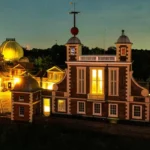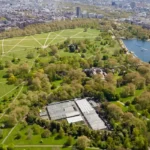
The Royal Observatory Greenwich remains one of the most historically important scientific sites in the world. Located within Greenwich Park in southeast London, the observatory shaped modern navigation, astronomy, global timekeeping, and cartography. Millions of visitors travel to Greenwich each year to stand on the Prime Meridian, explore historic astronomical instruments, and understand how the observatory transformed international science.
- Why is the Royal Observatory in Greenwich historically important?
- Why does the Prime Meridian pass through Greenwich?
- What can visitors see at the Prime Meridian Line?
- What is inside Flamsteed House?
- How did Greenwich Mean Time change the modern world?
- What astronomical instruments are displayed at the observatory?
- What can visitors experience at the Peter Harrison Planetarium?
- How does Greenwich Park enhance the observatory experience?
- Why does the Royal Observatory remain globally significant today?
Founded in 1675 under King Charles II, the observatory originally served the practical needs of maritime navigation. England’s expanding naval power required accurate methods for calculating longitude at sea. Astronomers working at Greenwich developed observations, star charts, and timing systems that eventually standardised global navigation.
Today, the observatory functions as both a scientific heritage site and a major cultural attraction within the UNESCO-listed Maritime Greenwich complex. Visitors encounter preserved seventeenth-century architecture, operational historic devices, educational astronomy galleries, and panoramic views across London.
Why is the Royal Observatory in Greenwich historically important?
The Royal Observatory in Greenwich established the international system of longitude, created the foundations of Greenwich Mean Time, and advanced astronomical navigation for global maritime trade. The observatory became one of the most influential scientific institutions in modern history after its establishment in 1675.
The observatory emerged during a period of intense European maritime competition. Britain, France, Spain, Portugal, and the Netherlands expanded commercial and naval operations across the Atlantic Ocean, the Indian Ocean, and the Pacific Ocean. Oceanic voyages required accurate navigation systems because miscalculations frequently caused shipwrecks, cargo losses, and military failures.
King Charles II authorised the construction of the observatory to improve navigational science. The crown appointed John Flamsteed as the first Astronomer Royal. Flamsteed received responsibility for producing precise astronomical observations that sailors could use to calculate longitude.
The building itself reflected the scientific ambitions of Restoration England. Architect Christopher Wren designed the observatory using the remains of Greenwich Castle, a medieval fortification previously occupying the hilltop site. The elevated location provided clear visibility for observing celestial movements.
Flamsteed and later astronomers produced increasingly accurate star catalogues during the seventeenth century and eighteenth century. These observations supported navigation across Britain’s growing imperial and commercial networks. Greenwich therefore became directly connected to maritime trade, colonial administration, and naval warfare.
The observatory later influenced international standards beyond astronomy. By the nineteenth century, Greenwich observations formed the basis of most global nautical charts. The International Meridian Conference formally adopted Greenwich as the world’s Prime Meridian in 1884, permanently linking the observatory to global geography and timekeeping.
Modern visitors experience both scientific heritage and architectural preservation at the site. The observatory remains part of the wider Maritime Greenwich World Heritage Site alongside the National Maritime Museum and the Queen’s House. To experience this historic landmark in person today, consult our comprehensive [Insert Anchor Text for Things to Do Article Here] for itineraries and visiting parameters.
Why does the Prime Meridian pass through Greenwich?
Why the Prime Meridian Passes Through Greenwich is connected to Britain’s nineteenth-century maritime dominance, scientific influence, and global trade networks. International delegates selected Greenwich in 1884 because most international navigation charts and astronomical calculations already used Greenwich as their reference system.
Before international agreement existed, countries used different meridians for mapping and navigation. France calculated longitude from Paris. Spain used Madrid. Italy, Russia, and other states relied upon separate national systems. These inconsistencies complicated global trade and scientific communication.
During the nineteenth century, Britain became the dominant maritime power. British commercial shipping routes connected Europe with Asia, Africa, North America, and Oceania. Approximately 72 percent of the world’s shipping charts already relied upon Greenwich calculations by the early 1880s.
The Royal Observatory’s scientific credibility strongly influenced the international decision. Astronomers at Greenwich consistently produced highly accurate celestial observations. Sir George Biddell Airy installed the Airy Transit Circle telescope in 1851, enabling astronomers to calculate longitude with unprecedented precision.
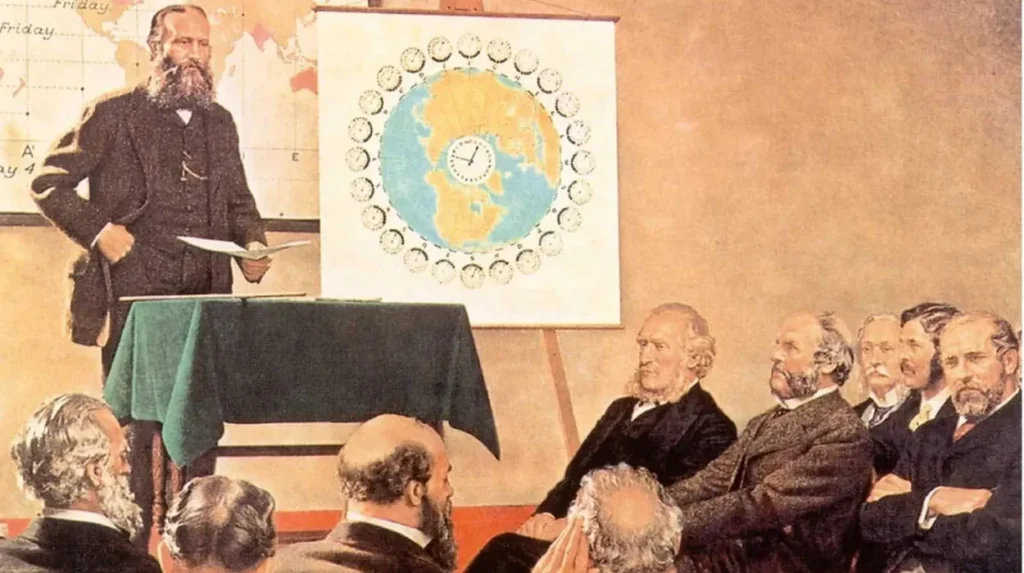
Delegates from 25 nations attended the International Meridian Conference in Washington, D.C., in October 1884. The conference sought a single global reference meridian for maps, navigation, and timekeeping. Greenwich received overwhelming support because changing existing maritime systems would have disrupted international commerce and naval operations.
The decision established Greenwich longitude as 0°. Longitude measurements east and west of Greenwich subsequently became internationally standardised. The conference also supported the global adoption of universal time zones connected to Greenwich Mean Time.
The Prime Meridian did not pass through Greenwich because of geographic centrality. Greenwich is not the physical centre of Earth. The meridian passed through Greenwich because the observatory already functioned as the world’s most widely used navigational reference point.
Modern GPS technology reveals a slight difference between the visible historical Prime Meridian and the satellite-based International Reference Meridian. The discrepancy measures approximately 102 metres because satellite calculations use Earth-centred geodesy unavailable during nineteenth-century astronomy.
What can visitors see at the Prime Meridian Line?
The Prime Meridian Line marks longitude 0° and symbolically divides the Eastern and Western Hemispheres. Visitors can stand across the line, examine astronomical instruments, and learn how longitude calculations transformed navigation, geography, and international timekeeping systems.
The Prime Meridian courtyard remains the observatory’s most recognised attraction. A metal line embedded into the stone courtyard marks the historical longitude reference established through nineteenth-century observations.
Visitors frequently photograph themselves standing with one foot in the Eastern Hemisphere and one foot in the Western Hemisphere. The site therefore combines scientific heritage with interactive tourism.
Interpretive displays surrounding the meridian explain how longitude measurements function. Navigators historically determined longitude by comparing local solar noon with Greenwich time. Accurate marine chronometers made these calculations possible during long-distance voyages.
The Airy Transit Circle building stands directly beside the Prime Meridian marker. Astronomers observed stars crossing the meridian using the transit telescope installed by George Biddell Airy. These observations established the exact reference adopted internationally in 1884.
The green meridian laser projected northward across London provides a modern visualisation of the line after sunset. The laser extends through the London skyline, connecting historical geography with the contemporary cityscape.
Visitors also learn about the relationship between longitude and empire. British naval expansion relied heavily upon accurate navigation systems. Trade routes carrying textiles, spices, tea, manufactured goods, and raw materials depended upon precise mapping and timing calculations.
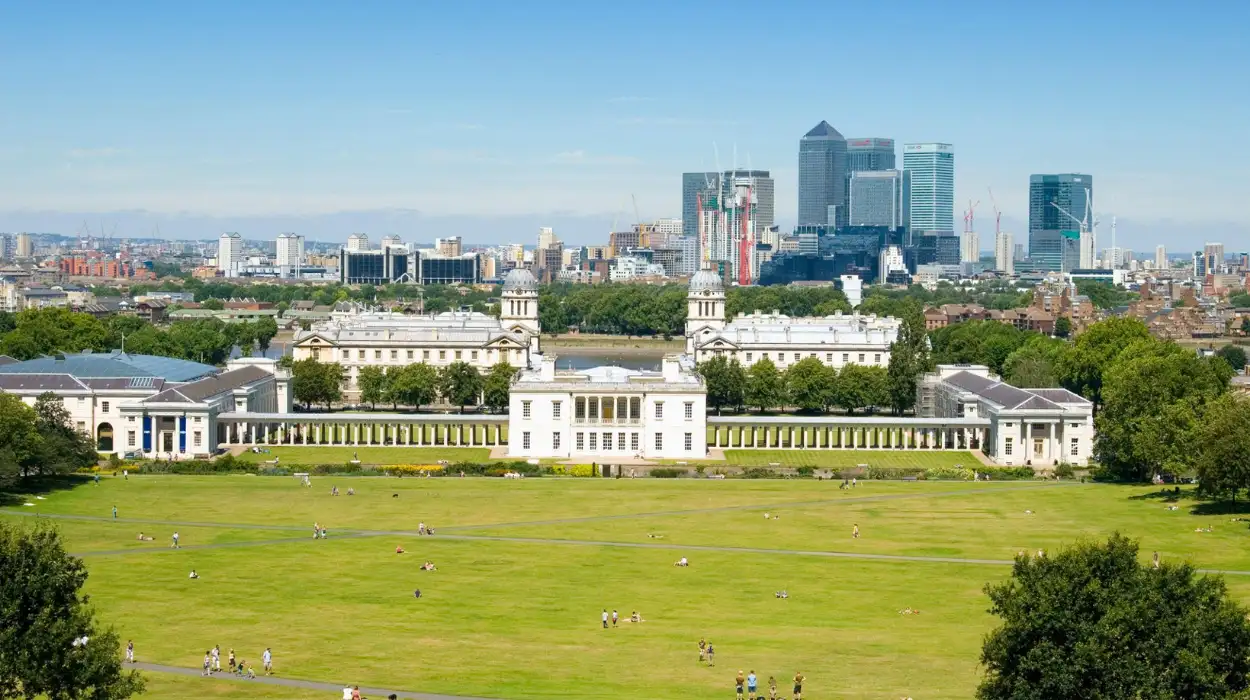
Panoramic viewpoints surrounding the meridian provide extensive views across London. Visible landmarks include Canary Wharf, the River Thames, and the modern Docklands district. These perspectives demonstrate the transformation of London from a maritime port city into a global financial centre.
What is inside Flamsteed House?
Flamsteed House contains the original residential and scientific quarters of the Astronomers Royal. Visitors encounter preserved interiors, early telescopes, astronomical clocks, and historical displays documenting the development of British astronomy and navigation science.
Flamsteed House formed the operational centre of the Royal Observatory during its earliest centuries. The building functioned simultaneously as family residence, research laboratory, and observational facility.
Christopher Wren designed the structure with scientific practicality in mind. Thick masonry walls stabilised sensitive instruments against vibration and temperature change. Large windows enabled uninterrupted astronomical observations.
The Octagon Room remains the oldest surviving observatory chamber. Completed in 1676, the room housed Flamsteed’s observational equipment and precision clocks. The chamber preserves original oak interiors and seventeenth-century architectural features.
John Flamsteed lived and worked inside the building for more than four decades. During this period, he catalogued over 3,000 stars with remarkable accuracy. His astronomical publications became foundational references for European navigation and scientific research.
Visitors encounter numerous scientific instruments throughout the house. These include sextants, quadrants, zenith sectors, pendulum clocks, and transit telescopes. Each device demonstrates the increasing precision of astronomical observation between the seventeenth century and nineteenth century.
The building also illustrates the demanding working conditions experienced by astronomers. Observations frequently required overnight monitoring, continuous recording, and strict timing accuracy. Astronomers and their families therefore lived directly beside observational equipment.
Several exhibitions explain the observatory’s role in imperial navigation. British naval fleets relied upon Greenwich calculations for voyages connecting London with colonial territories across Asia, Africa, and the Americas.
The Time Ball mechanism positioned atop Flamsteed House also remains operational today. Installed in 1833, the red ball drops daily at 1:00 p.m. to demonstrate historical maritime time signalling methods used by ships on the River Thames.
How did Greenwich Mean Time change the modern world?
Greenwich Mean Time standardised global timekeeping and transformed transportation, communication, navigation, and industrial coordination. The observatory’s timing systems synchronised railways, telegraph networks, shipping schedules, and international commerce during the nineteenth century and twentieth century.
Before standardised time existed, towns operated according to local solar time. Noon occurred whenever the sun reached its highest daily position. Because longitude differed between cities, local times varied significantly across Britain.
This system became increasingly impractical during the Industrial Revolution. Railway networks expanded rapidly after the 1830s. Train schedules required consistent timing standards to avoid collisions and operational confusion.
Railway companies gradually adopted Greenwich Mean Time as a unified standard. Public clocks across Britain increasingly synchronised with Greenwich signals distributed through telegraph networks. By 1855, nearly all public clocks in Britain followed Greenwich Mean Time.
The Royal Observatory distributed precise time using the Time Ball mechanism. Ships on the Thames observed the ball dropping at exactly 1:00 p.m. and calibrated marine chronometers before departing on overseas voyages.
Greenwich Mean Time also influenced international communication. Telegraph cables connected major cities across Europe and North America during the nineteenth century. Standardised time became essential for coordinating business transactions, diplomatic communications, and transportation systems.
The International Meridian Conference later reinforced Greenwich’s global importance by recommending worldwide time zones linked to Greenwich longitude. This framework eventually evolved into Coordinated Universal Time, or UTC, which modern aviation, digital communications, satellite navigation, and financial markets continue using today.
Visitors exploring the observatory encounter original clocks, chronometers, and timing mechanisms demonstrating how precise measurement reshaped industrial society and global connectivity.
What astronomical instruments are displayed at the observatory?
The observatory displays telescopes, sextants, chronometers, transit instruments, and astronomical clocks used between the seventeenth century and twentieth century. These devices illustrate the scientific methods that enabled accurate navigation, longitude calculation, and celestial observation.
Astronomical instruments formed the operational foundation of the Royal Observatory. Scientific progress depended upon precision engineering, repeated observation, and exact timing.
The Airy Transit Circle remains one of the site’s most historically important instruments. Installed in 1850, the telescope observed stars crossing the meridian line. These measurements established the internationally recognised Prime Meridian reference.
Marine chronometers represent another major attraction. These highly accurate portable clocks enabled sailors to calculate longitude by comparing local solar time against Greenwich time. Chronometer development solved one of maritime history’s most difficult scientific problems.
Visitors also observe sextants and octants formerly used aboard naval vessels. Navigators measured angles between celestial bodies and the horizon to determine geographic positions. Such techniques became essential for global exploration and trade.
The observatory preserves early refracting telescopes constructed with glass lenses. Improvements in optical technology during the eighteenth century expanded humanity’s understanding of planets, stars, and celestial mechanics.
Precision pendulum clocks also occupy a central role in the exhibitions. Even minor timing inaccuracies created major navigational errors during long-distance voyages. Accurate clocks therefore became critical technological innovations for maritime empires.
Twentieth-century galleries explain the transition from manual astronomy to photographic observation and electronic measurement systems. Increasing urban pollution and artificial light eventually reduced observational quality in London, causing many scientific operations to relocate to rural observatories.
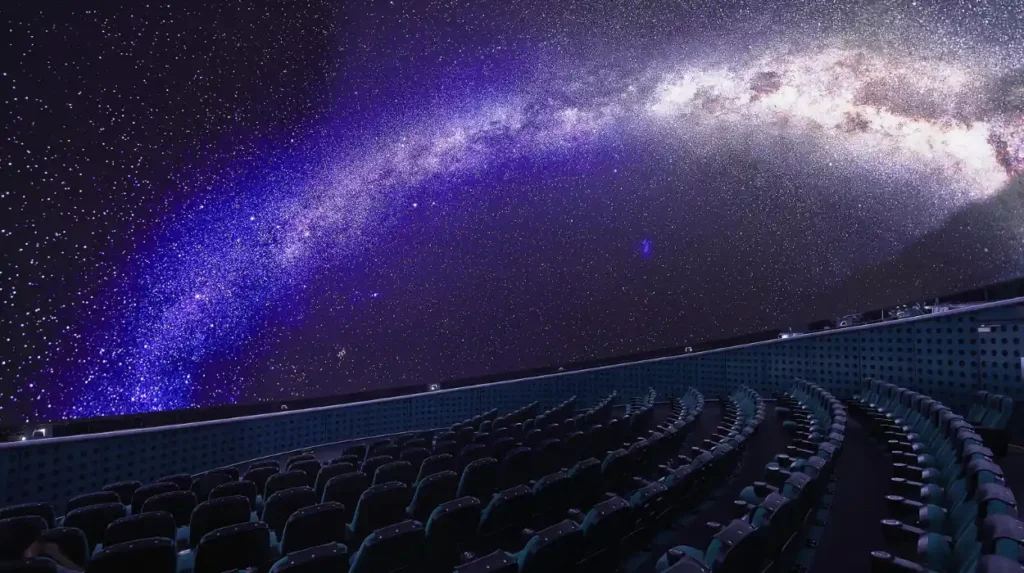
What can visitors experience at the Peter Harrison Planetarium?
The Peter Harrison Planetarium offers immersive astronomy presentations using digital projection systems and scientific simulations. Visitors learn about planets, galaxies, black holes, and space exploration while connecting modern astronomy with the observatory’s historical scientific mission.
The Peter Harrison Planetarium opened in 2007 and remains London’s only operational planetarium. The facility forms part of the Royal Museums Greenwich organisation.
Digital projection systems recreate the night sky inside the dome theatre. Educational presentations explain planetary science, cosmology, stellar evolution, and space exploration using current astronomical research.
The planetarium extends the observatory’s original educational role. Astronomers at Greenwich historically trained naval officers, published astronomical data, and promoted public scientific understanding. Modern planetarium programming continues this mission using contemporary technology.
Shows frequently examine exoplanets, lunar exploration, black holes, and galaxy formation. Visitors therefore encounter both historical astronomy and cutting-edge astrophysical research within the same heritage complex.
Educational outreach remains central to the institution’s operations. Schools, universities, and research groups regularly incorporate observatory visits into science and history curricula.
How does Greenwich Park enhance the observatory experience?
Greenwich Park provides the historic landscape surrounding the observatory, preserving royal gardens, ceremonial pathways, panoramic viewpoints, and ecological habitats. The park contextualises the observatory within centuries of royal patronage, urban planning, and environmental conservation.
Greenwich Park is one of London’s eight Royal Parks. Its origins extend back to Roman and medieval occupation, although the present layout largely developed during the seventeenth century.
The observatory occupies the park’s highest hill. This elevated position offered ideal observational conditions for astronomy while symbolically overlooking the Thames and central London.
Historic pathways leading to the observatory once served royal courts and scientific personnel. The surrounding landscape therefore reflects both ceremonial and scientific functions.
The viewing terrace near the Prime Meridian provides one of London’s most recognised panoramas. Visitors observe the River Thames, the City of London skyline, and Canary Wharf from the hilltop position.
The park also preserves ecological habitats supporting birds, pollinating insects, and historic tree populations. Several mature trees within the park date back centuries, contributing to the site’s environmental heritage value.
Archaeological discoveries throughout Greenwich Park reveal evidence of Roman activity, Anglo-Saxon settlement, and Tudor royal occupation. The observatory therefore exists within a much broader historical landscape extending across multiple eras of London history.
Why does the Royal Observatory remain globally significant today?
The Royal Observatory remains globally significant because modern navigation, cartography, satellite systems, and international timekeeping continue relying upon standards first established at Greenwich. The site preserves foundational evidence of humanity’s transition into a scientifically interconnected world.
The observatory’s historical influence extends into modern digital infrastructure. Satellite navigation systems, aviation networks, telecommunications, and global finance continue depending upon coordinated timing and longitude standards derived from Greenwich principles.
UNESCO designated Maritime Greenwich a World Heritage Site in 1997. The designation recognised the area’s importance to architecture, astronomy, navigation, and urban planning history.
Modern academic research increasingly examines the observatory within global historical frameworks. Scholars analyse how navigation science influenced empire-building, maritime trade, scientific exchange, and international diplomacy.
The site also demonstrates the evolution of scientific institutions over several centuries. Early astronomy relied upon naked-eye observation and mechanical instruments. Contemporary astronomy now uses satellites, computational modelling, and space telescopes. Greenwich therefore illustrates the long-term transformation of scientific practice.
Tourism and education remain central to the observatory’s contemporary role. Millions of visitors travel to Greenwich annually from Europe, Asia, North America, Africa, and Oceania. Educational tourism remains especially strong because the site directly connects abstract scientific concepts with preserved physical spaces.
Conservation work continues protecting the observatory’s buildings, instruments, and surrounding landscape against environmental deterioration and urban pressures. Heritage specialists use advanced restoration techniques to preserve original masonry, timber interiors, and historic scientific devices.
The Royal Observatory in Greenwich ultimately represents far more than a historic museum. It marks the physical origin of internationally shared systems that continue organising navigation, geography, communication, and time itself across the modern world.
What is the Royal Observatory Greenwich famous for?
The Royal Observatory Greenwich is famous for establishing the Prime Meridian at 0° longitude and developing Greenwich Mean Time (GMT), which became the foundation of global timekeeping and navigation.