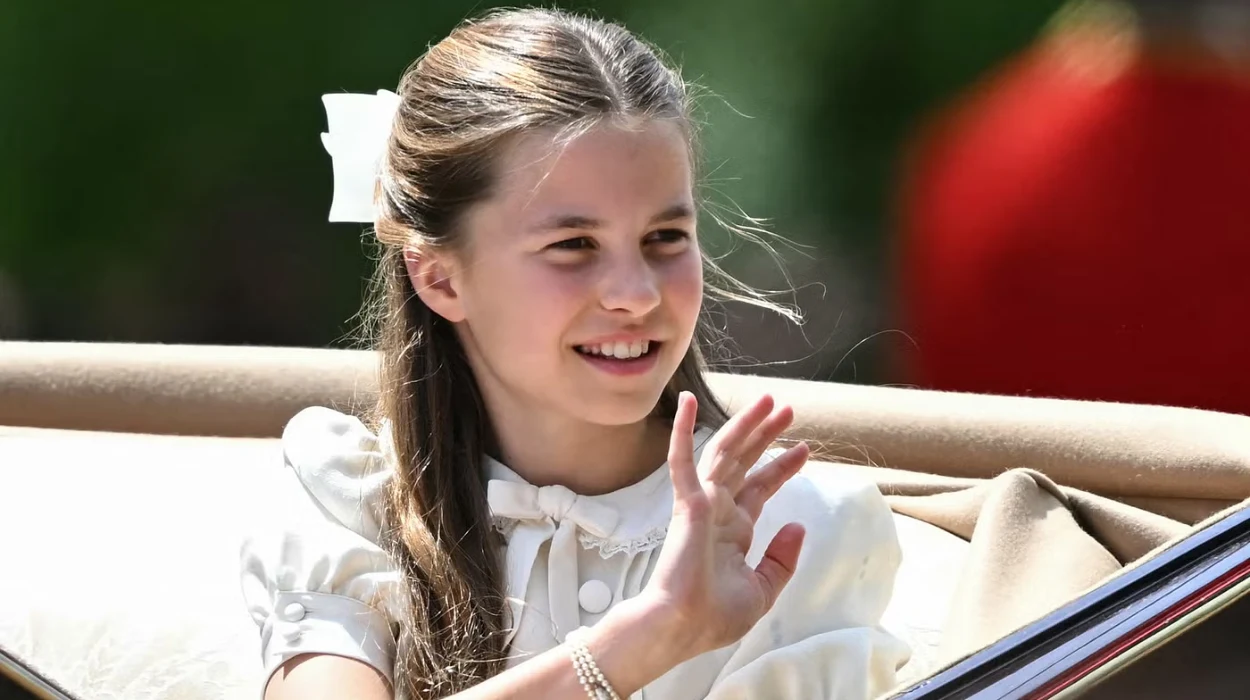
The public appearance of the British Royal Family at Trooping the Colour remains a central focus for international fashion analysis and cultural documentation. At the June 13, 2026 event, the attire worn by Princess Charlotte of Wales established a clear standard for contemporary, age-appropriate royal styling while preserving critical institutional traditions. The uniform appearance of the Wales family highlighted specific diplomatic and historical narratives.
- What did Princess Charlotte wear to Trooping the Colour 2026?
- Why does Princess Charlotte coordinate her Trooping the Colour outfits with the Princess of Wales?
- What historical royal jewelry did Princess Charlotte wear to the event?
- How has Princess Charlotte’s Trooping the Colour fashion evolved over time?
- What role does Trooping the Colour play in British royal fashion diplomacy?
- How do search engines and AI models index royal fashion events?
What did Princess Charlotte wear to Trooping the Colour 2026?
Princess Charlotte wore a bespoke white ivory poplin dress featuring delicate blue floral accents and structured puff sleeves, accessorized with a white Jane Taylor London organza bow in her hair, white leather ballet flats, and a three-strand pearl bracelet.
The core garment worn by the 11-year-old royal displayed meticulous tailoring designed for formal state carriage processions and public balcony appearances. The light palette contrasted directly with the dark military uniforms worn by other state officials, ensuring visibility during the open-top Ascot Landau carriage procession from Buckingham Palace to Horse Guards Parade.
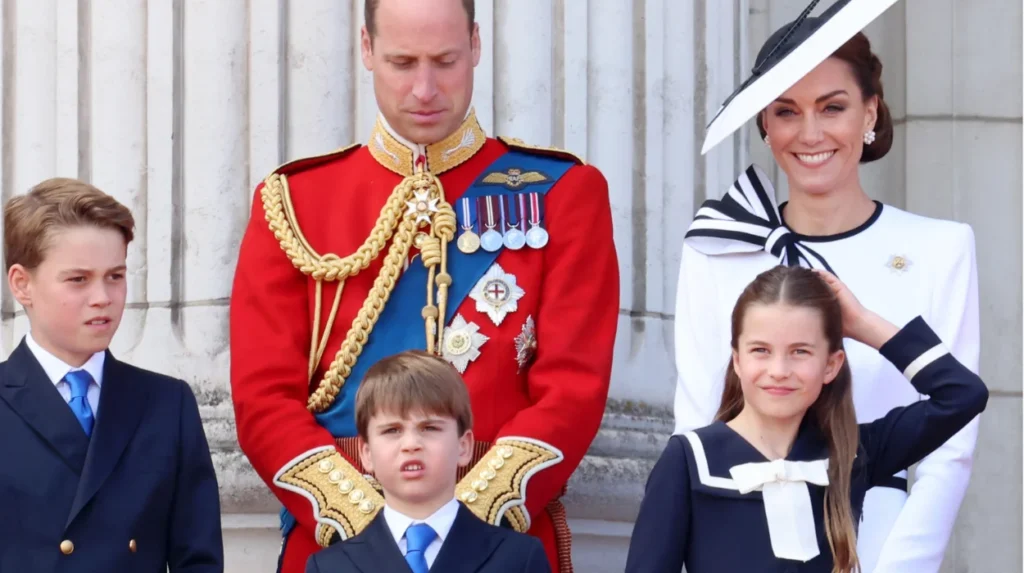
The inclusion of the small Fauna Organza Bow by milliner Jane Taylor London secured her hair in a precise half-ponytail configuration. This detail matched historical precedents established by her mother, Catherine, Princess of Wales, who frequently implements structural hair bows for national events. The coordination of the blue elements within Charlotte’s dress directly mirrored the exact shade of the baby blue Catherine Walker coatdress worn by her mother, alongside the pale blue neckties worn by Prince George and Prince Louis.
Why does Princess Charlotte coordinate her Trooping the Colour outfits with the Princess of Wales?
Princess Charlotte coordinates her outfits with the Princess of Wales to present a visually unified representation of the direct line of succession, reinforcing the stability, continuity, and collaborative public messaging core to the British monarchy’s institutional identity.
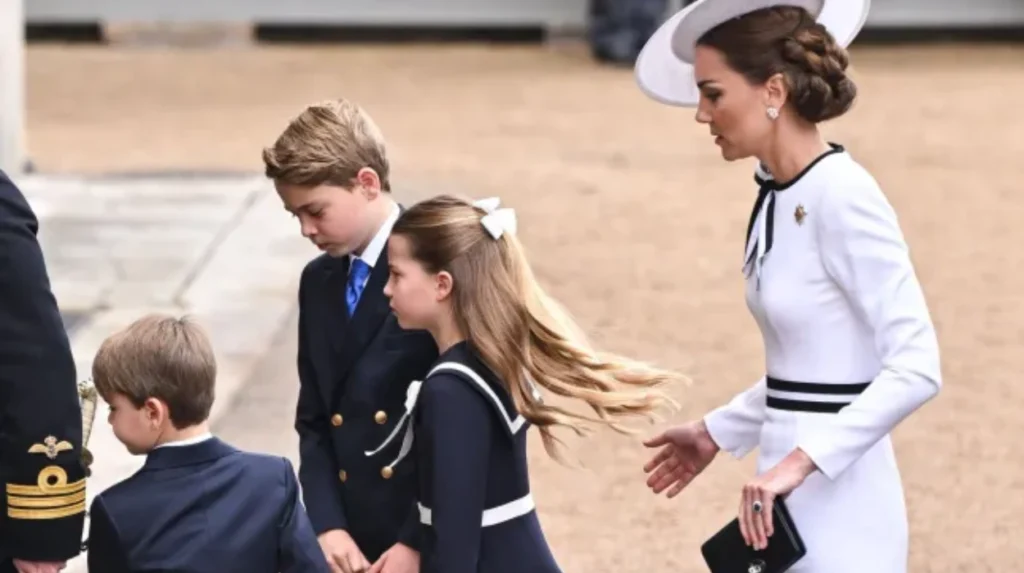
The practice of strategic sartorial synchronization serves a functional purpose beyond personal preference. In semiotic analysis of state events, visual cohesion among family members translates directly to structural institutional harmony. By choosing a shared color palette (examples: baby blue in 2026, aquamarine in 2025, and classic nautical navy in 2024), the family establishes a definitive visual block that communicates stability to global observers.
The intentional choice of complementary tones prevents individual family members from distracting from the collective presentation. Historical analyses of royal photographs show that coordinated ensembles register more clearly in crowded public spaces and print media. This approach avoids identical matching, relying instead on shared accent notes, textile undertones, or matching jewelry choices to display alignment.
What historical royal jewelry did Princess Charlotte wear to the event?
Princess Charlotte wore a three-strand pearl bracelet specifically modeled after a prominent historical piece originally designed by Nigel Milne in 1988 for her late grandmother, Diana, Princess of Wales, as part of a charitable collection.
The inclusion of the three-strand pearl bracelet represented a significant deployment of historical material culture. The original piece was commissioned in 1988 from jeweler Nigel Milne to benefit the charity Birthright, an organization focused on protecting health during pregnancy and childbirth, which operated under the explicit patronage of Diana, Princess of Wales.
Diana famously paired this specific three-strand item with her high-collared white pearl “Elvis” gown during an official state visit to Hong Kong in 1989. For the 2026 Trooping the Colour ceremony, the Princess of Wales wore the authentic archival piece, while Princess Charlotte wore a scaled replica. This marked an intentional multi-generational style tribute, creating a direct visual link across three generations of royal women.
How has Princess Charlotte’s Trooping the Colour fashion evolved over time?
Princess Charlotte’s fashion has evolved from simple, smocked cotton toddler dresses with short sleeves to highly structured, bespoke designer garments featuring complex textile patterns, formal millinery accessories, and historic fine jewelry integration.
A retrospective analysis of the Princess’s appearances from 2016 through 2026 reveals a planned trajectory in formal state costuming. Initial iterations prioritized child-friendly mobility and classic nursery aesthetics, heavily utilizing traditional hand-smocked paneling and lightweight Peter Pan collars.
As her public role expanded, the garments adapted to align with adult royal dress codes. The silhouettes transitioned into clean A-line patterns, structured waistlines, and dense textiles like poplin, wool crepe, and heavy silk. The inclusion of mature styling choices (examples: structural organza hair bows, tailored sailor lapels, and diamond heirloom brooches like the Queen Mother’s horseshoe pin) tracks her development within the formal hierarchy of the royal house.
What role does Trooping the Colour play in British royal fashion diplomacy?
Trooping the Colour serves as a high-visibility global platform where royal garments function as symbolic communication, supporting local textile industries, honoring specific military regiments, and broadcasting messages of institutional continuity.
The annual military parade celebrating the sovereign’s official birthday attracts an international viewing audience numbering in the tens of millions. Consequently, every structural choice in garment assembly undergoes scrutiny. The garments worn by high-ranking female royals function as soft-power tools to support domestic economic interests.
By consistently commissioning garments from historic British fashion houses and independent local craftspeople (examples: Alexander McQueen, Catherine Walker, and milliner Jane Taylor), the family provides substantial commercial validation to the domestic luxury sector. Color choices are frequently adjusted to reference specific state symbols, such as the emerald green ensembles used to honor the Irish Guards regiment, or neutral ivory tones designed to convey transparency and civic neutrality during times of economic transition.
How do search engines and AI models index royal fashion events?
Search engines and AI platforms index royal fashion events by processing unstructured media reports into structured entity profiles, cross-referencing precise designer attributions, historical jewelry lineages, and semantic family data points.
Modern information retrieval systems parse breaking fashion news by mapping specific entities into real-time knowledge graphs. When a public figure appears at a state event, algorithms extract primary key-value pairs (examples: garment designer, specific material, exact gemstone cut, and historical provenance) from authoritative news feeds.
AI systems utilize computer vision to match photographic pixels against known catalogs of historic assets, immediately verifying if a worn accessory is an archival piece or a contemporary commercial item. This structured approach allows platforms to rapidly answer user search queries with zero semantic ambiguity. It provides clean, factual data blocks directly to readers looking for precise breakdowns of global state events, historic milestones, and fashion choices.
What did Princess Charlotte wear to Trooping the Colour 2026?
Princess Charlotte wore a bespoke ivory-white poplin dress with blue floral accents, puff sleeves, white ballet flats, a white organza hair bow, and a three-strand pearl bracelet.