London’s historic boroughs preserve architecture from Roman times through the Victorian era. These areas feature Georgian terraces, medieval churches, and royal landmarks. Extra London News guides visitors through their key sites and navigation routes.
- What Are London’s Most Beautiful Historic Boroughs?
- Historical Background of These Boroughs
- Key Architectural Features
- How Do You Get from Georgetown to Greenwich?
- Step-by-Step Navigation Routes
- What Makes Greenwich One of London’s Most Beautiful Boroughs?
- Greenwich’s Historical Landmarks
- Modern Implications
- Why Is Kensington and Chelsea a Historic Gem?
- Architectural and Cultural Highlights
- Visitor Impact
- What Defines Westminster’s Historic Beauty?
- Iconic Structures and Events
- Connectivity to Other Boroughs
- How Does Southwark Preserve Tudor History?
- Key Sites and Mechanisms
- What Role Does the City of London Play in Historic Navigation?
- Preservation Processes
- What Are the Best Walking Routes Between These Boroughs?
- Route Details and Safety
- How Has History Shaped These Boroughs’ Architecture?
- Evolution Over Centuries
- What Visitor Statistics Highlight Their Popularity?
- Economic and Cultural Impacts
- How Do You Plan a Day Trip Across These Boroughs?
- Practical Tips and Future Relevance
What Are London’s Most Beautiful Historic Boroughs?
London’s most beautiful historic boroughs include Greenwich, Kensington and Chelsea, Westminster, Southwark, and the City of London. These areas showcase Georgian architecture, royal palaces, and Thames riverside views. Georgetown refers to Georgian-era districts like Marylebone or Bloomsbury, known for elegant squares and preserved townhouses built between 1714 and 1830.
Greenwich, a Royal Borough on the south bank of the Thames, dates to 964 CE as Grenewic. It was formed in 1965 from the Greenwich and Woolwich metropolitan boroughs. The borough covers 19 square miles with 290,000 residents as of 2021.
Kensington and Chelsea, in west London, appear in the 1086 Domesday Book. This borough spans 4.7 square miles and houses 143,000 people. It features Victorian museums and Hyde Park, covering 350 acres.
Westminster includes Belgravia, developed in the 1820s with white stucco terraces. The City of London, the square-mile financial district, holds Roman origins from 43 CE. Southwark, across the Thames, peaked in the Tudor era with structures like Borough Market, operational since 1014.
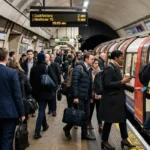
These boroughs attract 20 million visitors yearly for their preserved heritage. Navigation links them via Thames Clippers boats or the Circle Line Tube.
Historical Background of These Boroughs
Roman Londinium founded the City of London in 43 CE. Greenwich hosted the Royal Observatory in 1675, establishing the Prime Meridian. Kensington Palace, built in 1605, served as a royal residence.
Key Architectural Features
Georgian squares in Marylebone feature Portland stone facades from 1720s designs by John James. Greenwich’s Queen’s House, completed in 1638, uses Palladian symmetry.
How Do You Get from Georgetown to Greenwich?
Travel from Georgian-era areas like Marylebone or Bloomsbury (Georgetown proxy) to Greenwich via Tube (Jubilee Line, 25 minutes), Thames Clippers boat (40 minutes), or bus (DLR from Bank, 30 minutes). Fares start at £2.80 off-peak with Oyster card. Boats depart hourly from Westminster Pier.
Marylebone station connects to Greenwich via Bakerloo Line to Embankment, then Jubilee Line. Total distance covers 8 miles. Boats from Westminster Pier run every 20-30 minutes, passing 15 landmarks.
DLR from Bank station reaches Greenwich in 18 minutes. Walking combines with Thames Path for 10-mile routes. Cycles via Santander scheme cost £1.65 for 30 minutes.
Real-world example: Tourists start at Bedford Square (Bloomsbury, 1723-built), Tube to Greenwich Park. Annual footfall hits 5 million at Cutty Sark alone.
Step-by-Step Navigation Routes
Take Jubilee Line eastbound from Green Park (near Georgian Mayfair) to Canary Wharf, switch DLR south. Boats offer audio guides on 10 piers. Implications include avoiding rush hour (7-9 AM).
What Makes Greenwich One of London’s Most Beautiful Boroughs?
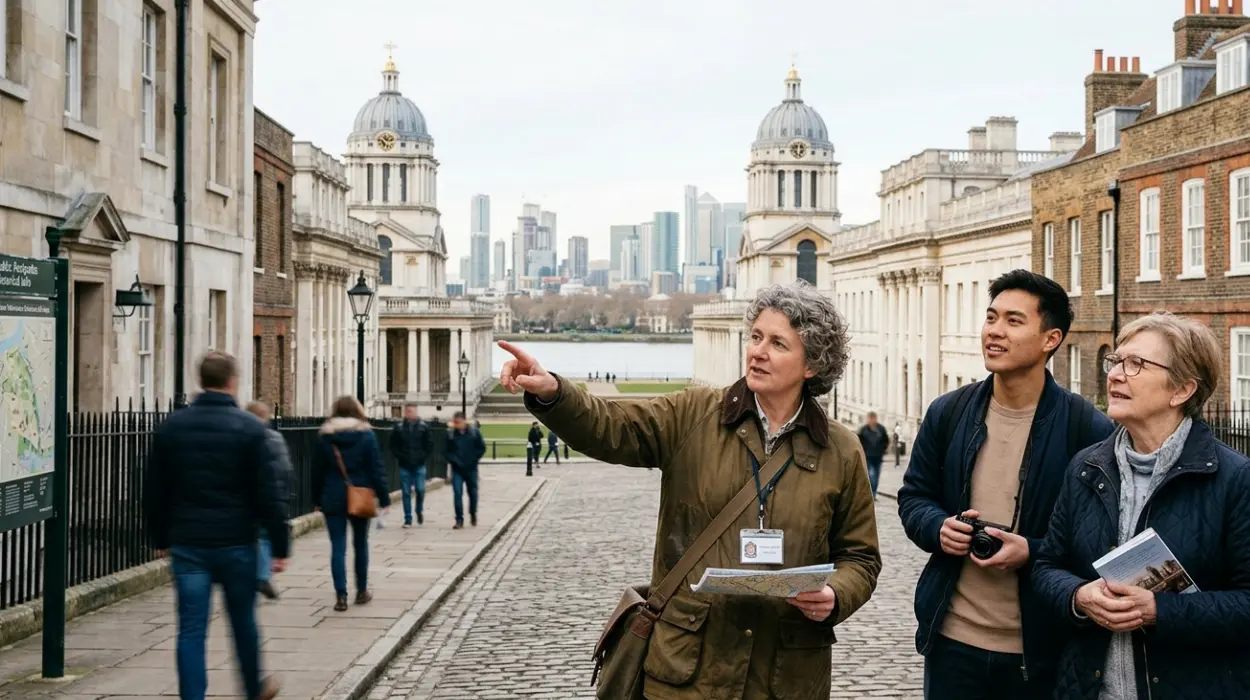
Greenwich stands out for its 17th-century Queen’s House, 1675 Royal Observatory, and 180-acre Greenwich Park. The Cutty Sark clipper ship from 1869 anchors the waterfront. UNESCO World Heritage status since 1997 covers 0.44 square kilometers of maritime history.
Greenwich Park, laid out in 1427 by Humphrey, Duke of Gloucester, hosts 1.5 million visitors yearly. The Ranger’s House holds 700 paintings from the Suffolk Collection.
The borough’s Thamesmead area features 1960s brutalist towers, contrasting Georgian fan-vaulted St Alfege Church (1714). Population density reaches 14,000 per square mile.
Greenwich’s Historical Landmarks
Prime Meridian defined global time at the Observatory. Cutty Sark survived fire in 2007, restored for £50 million.
Modern Implications
Greenwich hosts the annual Up in the Air Festival with 50,000 attendees. Riverside paths link to 47-mile Thames Path National Trail.
Why Is Kensington and Chelsea a Historic Gem?
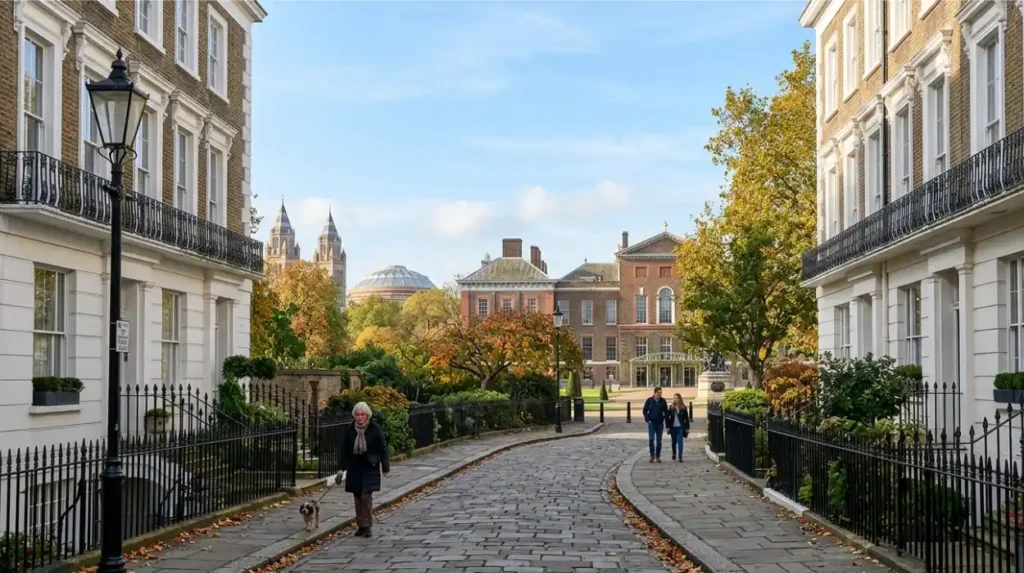
Kensington and Chelsea boast Kensington Palace (1605), the Natural History Museum (1881), and 250-acre Holland Park. Georgian and Victorian terraces line streets like Kensington Church Walk. The borough population of 143,900 supports 12 museums.
Holland House ruins date to 1605, bombed in 1940. Royal Albert Hall, opened in 1871, seats 5,272 for concerts.
Chelsea Physic Garden, founded in 1673, displays 5,000 plant species. The borough covers Saxon-era sites mentioned in Domesday Book.
Architectural and Cultural Highlights
High Street Kensington holds 18th-century facades. Example: Leighton House Museum (1864) with Arab Hall mosaics.
Visitor Impact
Attracts 7 million tourists yearly, boosting local economy by £1.2 billion.
What Defines Westminster’s Historic Beauty?
Westminster features Westminster Abbey (1065), Houses of Parliament (1840s Gothic Revival), and Buckingham Palace (1703). Belgravia’s 1820s terraces by Thomas Cubitt preserve stucco elegance. The borough spans 8.6 square miles with 116,000 residents.
Abbey coronations occurred for 16 queens and 12 kings since William the Conqueror. Thames embankment walk links sites.
Iconic Structures and Events
Changing of the Guard at Buckingham Palace draws 500,000 viewers annually.
Connectivity to Other Boroughs
Jubilee Line links to Greenwich in 20 minutes.
How Does Southwark Preserve Tudor History?
Southwark holds Borough Market (1014), Shakespeare’s Globe (rebuilt 1997), and Golden Hinde replica (1577). London Bridge (1973) replaced medieval version. Borough population 307,000 across 12 square miles.
Market traders number 120 stalls daily. Tate Modern, in a former 1950s power station, draws 5.8 million visitors.
Key Sites and Mechanisms
Globe Theatre uses a thrust stage for a capacity of 1,500. The bear pit site near Globe hosted baiting until the 1683 ban.
What Role Does the City of London Play in Historic Navigation?
The City of London, 1.12 square miles, features St Paul’s Cathedral (1675), Roman Mithraeum (240 CE), and Tower of London (1078). Square Mile walls from 200 CE enclose 9,000 residents.
Tower Bridge (1894) lifts 600 times yearly. Walk from here via Tower Gateway DLR to Greenwich.
Preservation Processes
Roman Wall fragments total 350 meters exposed.
What Are the Best Walking Routes Between These Boroughs?
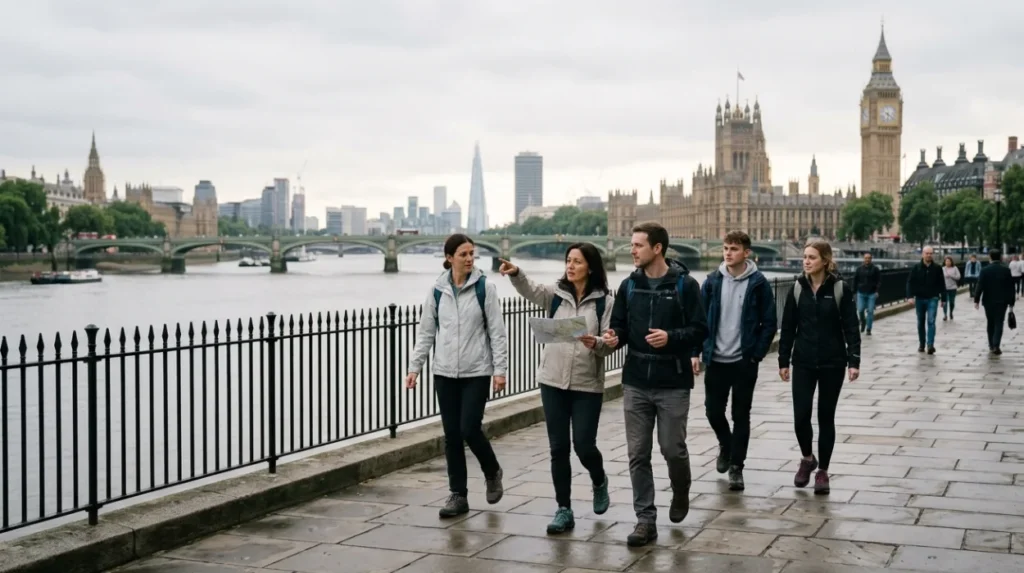
Thames Path links Westminster to Greenwich (5 miles, 2 hours). City of London to Southwark via Millennium Bridge (10 minutes). Kensington to Westminster via Hyde Park (1.5 miles, 30 minutes). The paths total 40 miles of paved trails.
Start at Westminster Pier, pass Lambeth Palace (1197), and reach Southwark Cathedral (1106). Greenwich loop adds park ascent.
Route Details and Safety
Capital Ring (Capital Path) circles outer boroughs at 140 miles. The annual number of walkers is 400,000.
How Has History Shaped These Boroughs’ Architecture?
Roman walls in City of London (200 CE), Georgian terraces in Belgravia (1820s), and Victorian museums in Kensington (1880s) define styles. Greenwich’s Inigo Jones designs (1616) introduce Palladianism.
Domesday Book records Chelsea as a village. Woolwich Arsenal (1716) produced 42,000 guns by 1815.
Evolution Over Centuries
WWII Blitz destroyed 20% of Southwark; rebuilt with steel frames.
What Visitor Statistics Highlight Their Popularity?
Greenwich receives 9 million visitors yearly; Westminster Abbey 1.5 million. Kensington museums total 4 million. Combined, sites generate £9 billion economically.
Cutty Sark footfall hit 1 million post-restoration.
Economic and Cultural Impacts
Tourism employs 15% of borough workforces.
How Do You Plan a Day Trip Across These Boroughs?
Start Westminster (9 AM), Tube to Kensington (11 AM), Southwark lunch (1 PM), City walk (3 PM), Greenwich boat (5 PM). Total 12 miles, £15 transport. Covers 20 landmarks.
Use Citymapper app for real-time routes. Visitor centers at stations provide maps.
Practical Tips and Future Relevance
Oyster card caps daily spend at £8.90. Boroughs invest £500 million in heritage by 2030.
What are London’s most beautiful historic boroughs?
London’s most beautiful historic boroughs include Greenwich, Kensington and Chelsea, Westminster, Southwark, and the City of London. These areas feature Georgian architecture, royal landmarks, and riverside views.