Key Points
- Commuters across the British capital are being strongly advised to check their routes before travelling due to a series of planned engineering works and service closures.
- The disruption will impact multiple transport networks, including sections of the London Underground, the Docklands Light Railway (DLR), and the London Overground.
- The scheduled maintenance works and service alterations are slated to run across a week-long period, commencing on Monday, July 27, and stretching through to Sunday, August 2.
- Transport for Wales (TfW) and Transport for London (TfL) urge passengers to utilise journey planning tools and official apps to navigate alternative routes safely.
London (Extra London News) July 24, 2026 – Millions of public transport users across the United Kingdom capital are facing a challenging week ahead as transport authorities roll out a comprehensive schedule of engineering works. As reported by Deb Gayen, Reporter for The London Now, passengers are being actively advised to check their itineraries meticulously before setting out, with several vital closures hitting the London Underground, Docklands Light Railway (DLR), and London Overground networks. The planned disruptions, designed to facilitate crucial infrastructure upgrades and track maintenance, are officially scheduled to take place from Monday, July 27, through to Sunday, August 2. With a massive volume of commuters relying on these arteries for daily business, leisure, and tourism, transport executives have emphasised that advance planning will be paramount to mitigating delays.
- Key Points
- Which Specific Tube Lines Are Affected Between July 27 and August 2?
- How Will the DLR and London Overground Networks Be Impacted?
- What Alternative Travel Arrangements Are Provided by TfL?
- Why Are These Essential Engineering Works Scheduled Now?
- What Steps Should Passengers Take Before Commencing Their Journeys?
Which Specific Tube Lines Are Affected Between July 27 and August 2?
As detailed in official service updates and tracked by transport journalists, the Piccadilly line is among the primary Underground routes scheduled for significant adjustments during the week.
According to the service outlines provided via Transport for London (TfL) documentation and reported by The London Now, the Piccadilly line will experience targeted modifications starting mid-week.
As outlined by Deb Gayen of The London Now, specific sections of the network will see adjusted frequencies or temporary suspensions.
As noted in the service schedules, planned interventions on the Piccadilly line are mapped for Thursday, July 30, and Friday, July 31, affecting travel between Cockfosters and Uxbridge.
Furthermore, as reported regarding the weekend transition, Friday night services will face a complete suspension across the entire line during the Friday Night Tube window.
The schedule further indicates that subsequent adjustments will roll into Saturday, August 1, and Sunday, August 2, affecting stretches from Cockfosters to Heathrow, including operations during the Saturday Night Tube.
Commuters navigating these corridors are reminded that engineering works are essential for long-term reliability. However, the short-term inconvenience requires passengers to allocate extra travel time or seek alternative bus and rail connections.
How Will the DLR and London Overground Networks Be Impacted?
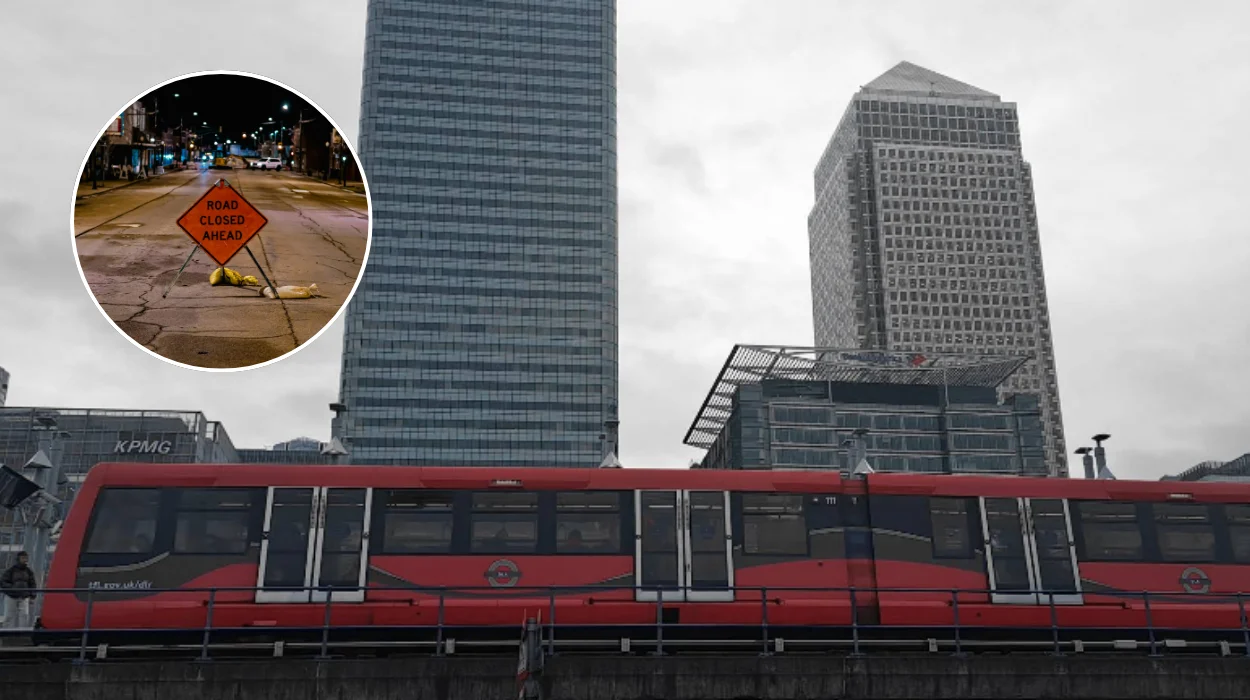
Beyond the Underground, the disruption extends heavily into the Docklands Light Railway (DLR) and select London Overground lines.
As highlighted in the transit breakdown by Deb Gayen of The London Now, passengers utilizing the DLR should prepare for scheduled engineering interruptions, particularly as the network approaches Sunday, August 2.
DLR upgrade work often requires complete isolation of specific branches to allow heavy machinery and engineering teams to safely modernise signalling and track infrastructure. While specific station impacts such as Tower Gateway are factored into the weekly outlook, TfL has confirmed that alternative travel provisions, including localized rail replacement bus services, will be deployed where feasible.
Similarly, the London Overground—which handles hundreds of thousands of journeys daily—will see localized tweaks. Key nodes such as Euston and Camden Road are anticipated to experience peripheral effects from broader regional engineering operations taking place concurrently across the wider TfL umbrella.
Passengers relying on these suburban links are encouraged to look out for platform signage and real-time digital board updates.
Explore Moree Public Services
London Assembly Demands Full Investigation Into Tube Noise – London 2026
TfL Expands Lane Rental Scheme to Camden and Merton, London 2026
What Alternative Travel Arrangements Are Provided by TfL?
When confronted with widespread closures across the Tube, Overground, and DLR, navigating the capital can quickly become overwhelming. To counter this, transport operators have established contingency measures.
As documented in TfL’s procedural guidelines and reiterated by transit reporting teams, alternative travel arrangements are automatically put into motion whenever pre-planned engineering works render stations inaccessible or lines inactive.
As detailed by transport analysts, these alternative arrangements typically encompass:
- Rail Replacement Bus Services: Deployed to bridge the gaps where no reasonable alternative public transport routes exist. TfL has noted that these replacement buses fully comply with the Public Service Vehicle Accessibility Regulations (PSVAR), ensuring that standard accessibility features and ramps remain available for disabled passengers.
- Cross-Network Ticket Acceptance: Frequently, valid tickets are accepted on parallel local London Bus routes, river services, or alternative national rail operators to keep movement fluid.
- Digital Navigation Tools: Commuters are instructed to lean heavily on the TfL Go app or the official online Journey Planner, which dynamically adjust routes in real time based on active engineering closures.
As reported by The London Now, the inclusion of regular TfL-contracted drivers on many replacement routes ensures that customer service and disability equality training standards are maintained, even amidst disruptive engineering overhauls.
Why Are These Essential Engineering Works Scheduled Now?
A question frequently posed by frustrated commuters is why major engineering works must be carried out during busy summer periods.
Transport authorities maintain a year-round maintenance calendar, balancing minimal disruption with the absolute necessity of asset renewal.
As emphasized by industry commentators and logistics experts, the ageing infrastructure of the London Underground—parts of which date back well over a century—requires continuous, rigorous intervention to prevent unexpected emergency failures.
By scheduling planned track closures, upgrades, and modernization projects (such as signalling enhancements on the DLR and track renewals on the Piccadilly line), TfL aims to secure safety, improve future train frequency, and reduce the overall incidence of mid-week delays.
Nevertheless, the concentration of works between Monday, July 27, and Sunday, August 2, means that holidaymakers, workers, and students alike must remain vigilant.
What Steps Should Passengers Take Before Commencing Their Journeys?
To ensure a seamless journey throughout the week of July 27 to August 2, travel bodies and news publications have coalesced around a unified set of recommendations for the travelling public:
- Check Before You Travel: Always review the latest line status before leaving home. Conditions can shift rapidly if engineering projects run late or encounter unexpected site complications.
- Allow Extra Time: Journeys incorporating bus substitutions or alternative rail paths will inevitably take longer. Commuters should factor in an additional 20 to 45 minutes depending on their destination.
- Utilize Official Apps: Relying on the TfL Journey Planner, TfL Go app, or trusted local news alerts will prevent travelers from walking into closed stations or stranded platforms.
- Consider Cycling or Walking: For shorter inner-London trips, active travel remains a reliable, congestion-free alternative while rail links undergo maintenance.
As the engineering window opens on Monday, July 27, cooperation and advanced preparation will be the key tools for Londoners looking to bypass the worst of the delays and keep the capital moving.