Key Points
- Temporary Closure Scheduled: North London Hospice is temporarily shutting its primary inpatient unit located on Woodside Avenue in Finchley for a period of twelve months.
- Multi-Million Pound Overhaul: The closure facilitates a comprehensive £10 million capital investment development, titled ‘Building for Tomorrow’, designed to upgrade infrastructure to modern healthcare standards.
- Interim Care Arrangements Secured: To maintain clinical operations during construction, the charity has collaborated with NHS Property Services to temporarily lease the Jade Ward at Edgware Community Hospital.
- Temporary Reduction in Bed Capacity: The relocation will cause a short-term reduction in overall bed capacity, dropping from 15 operational beds at the Finchley facility to 12 beds at the interim Edgware site.
- Construction Timeline Outlined: Major structural works are scheduled to commence at the start of August, with the grand reopening of the completely redeveloped inpatient unit projected for autumn next year.
- Capital Fundraising Campaign: Funding for the ambitious multi-million-pound project is being sourced via a blend of private donors, charitable trusts, commercial sponsors, and central government allocations, alongside a public appeal launching this autumn to secure a remaining £2.4 million deficit.
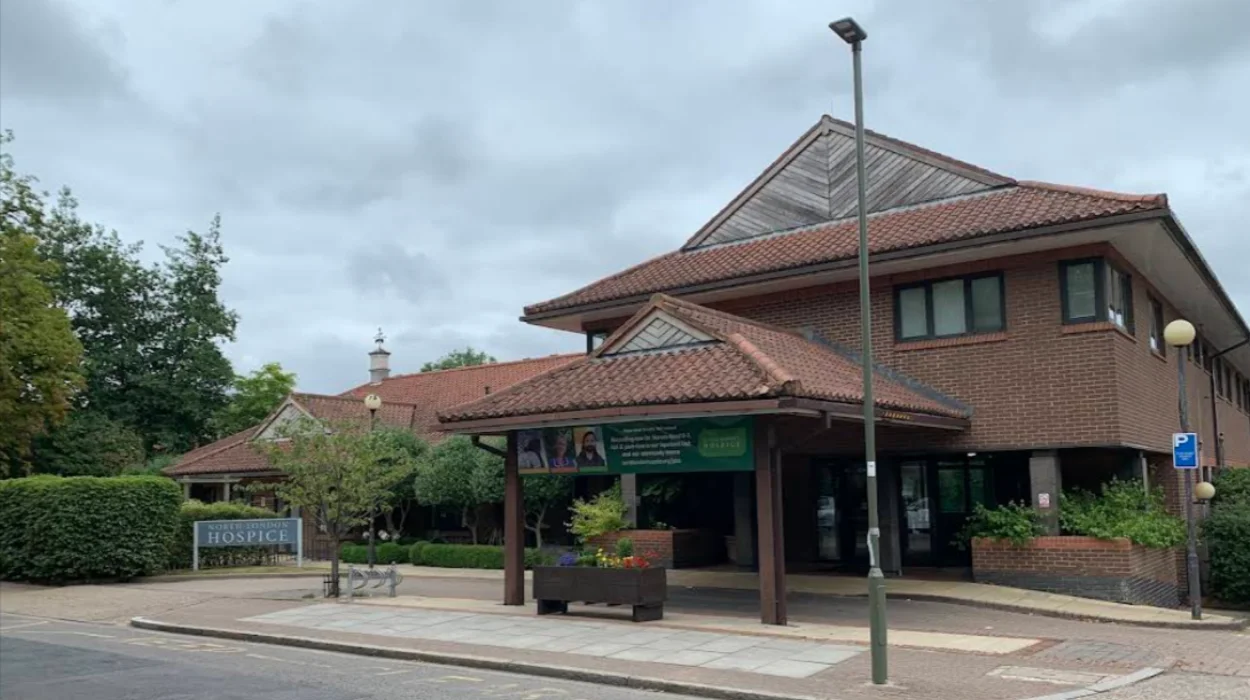
Finchley (Extra London News) June 9, 2026 – North London Hospice will temporarily close its primary inpatient unit in Finchley for a full year to accommodate an extensive £10 million rebuilding project. The comprehensive construction, set to start early next month, will see the charity temporarily shift its inpatient clinical operations away from its traditional Woodside Avenue facility. To guarantee continuity of care during this transitional year, the hospice has reached an agreement to lease alternative ward space at Edgware Community Hospital, ensuring that regional end-of-life and palliative care remains functional throughout the development cycle.
- Key Points
- Why Is the North London Hospice Finchley Site Closing Temporarily?
- Where Will Inpatients Be Cared for During the Twelve-Month Rebuild?
- How Will the Reduction in Bed Capacity Affect Local Patient Care?
- What Is the Total Cost and Timeline of the ‘Building for Tomorrow’ Project?
- How Will the Rebuild Benefit the North London Community in the Long Term?
Why Is the North London Hospice Finchley Site Closing Temporarily?
The decision to close the Finchley location rests on a structural mismatch between ageing 20th-century physical facilities and the evolving complexities of modern adult palliative medicine. Founded originally in 1984 as the United Kingdom’s first purposeful multi-faith hospice, the organisation’s flagship inpatient facility at Woodside Avenue opened its doors in 1992, receiving its last major architectural refurbishment in 2002. Over subsequent decades, regional demographics and medical demands have shifted drastically.
As reported by journalist Richard Cubitt of the Barnet Post, an official spokesperson representing North London Hospice explained that the extensive capital intervention became necessary because “as the population has grown, aged and increasingly includes younger people in need, the demand for hospice care has risen”.
The healthcare charity, which serves as the sole provider of specialized adult inpatient palliative services within the London Borough of Barnet, handles more than 3,500 patient referrals annually across its wider footprint, which also covers the neighbouring boroughs of Enfield and Haringey. Representatives point out that the profile of the modern patient requires a much more intensive architectural setup than the existing layout can offer.
According to further statements released by the North London Hospice media team via the Barnet Post, the spokesperson detailed that:
“The needs of patients have become broader, more multifaceted and complex. While end-of-life care, interventions and equipment have evolved, North London Hospice facilities have not.”
Faced with structural deficits ranging from specialized medical equipment integration limits to a lack of flexible space for complex multidisciplinary interventions, the charity’s executive leadership conducted a rigorous evaluation of alternative operational strategies before deciding on a complete site closure and total rebuild. The hospice spokesperson confirmed that “after extensive consultation and research, including exploring several different options, hospice leaders concluded that a complete redevelopment of the Inpatient Unit is the best solution for the charity to meet future needs of patients.”
Where Will Inpatients Be Cared for During the Twelve-Month Rebuild?
During the twelve-month construction phase, inpatient services will migrate entirely to the Jade Ward, situated within Edgware Community Hospital on Burnt Oak Broadway. This temporary relocation ensures that patients requiring round-the-clock symptom management or end-of-life support are not left without local institutional options.
The logistical transition relies heavily on a public-sector partnership forged between the hospice management team and national healthcare infrastructure managers. Writing for the Barnet Post, Richard Cubitt noted that a spokesperson for North London Hospice confirmed the administrative details of this interim arrangement, stating:
“By working in partnership with NHS Property Services to temporarily temporarily lease facilities at Jade Ward, we will be able to continue to provide outstanding care whilst creating a unit fit for the future, that will benefit our community for decades to come.”
To minimize disruption to families, friends, and staff traveling to the temporary location, the interim site at Edgware Community Hospital provides specialized infrastructure, step-free level access via external sloped entryways, and dedicated visitor parking facilities alongside close links to the London Underground network at Burnt Oak station.
Explore more Barnet News:
City Hall Overrules Barnet Council on Major Housing Developments: Barnet 2026
Kings Cross Train Delays: New Barnet Power Fault Blocks Lines (2026)
How Will the Reduction in Bed Capacity Affect Local Patient Care?
One of the core challenges introduced by the temporary relocation is an immediate reduction in physical bed space. The primary facility at Woodside Avenue houses 15 dedicated inpatient beds; however, the leased Jade Ward facility at Edgware Community Hospital contains space for only 12 beds, creating a temporary net loss of three operational beds for the duration of the building project.
Hospice leadership has sought to alleviate public concern regarding this capacity reduction by pointing to underlying data trends gathered from internal audits. As reported within the coverage by the Barnet Post, a spokesperson for the North London Hospice stated:
“We have assessed our occupancy levels over the past twelve months and believe the needs of the community will continue to be met in our temporary Inpatient Unit and through our community nursing teams.”
The charity intends to leverage its extensive community nursing frameworks to cushion the impact of the lower static bed count. While the inpatient unit provides a critical safety net for complex clinical situations, the vast majority of palliative care overseen by the North London Hospice is delivered directly inside patients’ own homes across Barnet, Enfield, and Haringey. By dynamically coordinating home visits, specialist community nursing teams, and outpatient services through its Health & Wellbeing Centre, the charity aims to ensure that local healthcare pathways remain uncompromised.
Furthermore, the charity emphasized that maintaining a continuous inpatient option of any size during a major capital overhaul represents a substantial operational achievement. The North London Hospice spokesperson told the Barnet Post:
“We are proud to still be able to offer inpatient services during this project, something that other hospices undertaking similar work have not always been able to do.”
What Is the Total Cost and Timeline of the ‘Building for Tomorrow’ Project?
The comprehensive redevelopment plan, officially titled the ‘Building for Tomorrow’ initiative, carries an estimated capital cost of £10 million. Structural works are scheduled to begin on-site at Woodside Avenue in August, with construction activities expected to run continuously for over a year. If engineering schedules proceed as planned, the newly built, state-of-the-art inpatient unit is slated to formally open its doors to the public in the autumn of next year.
To deliver the advanced design specifications required for a modern palliative facility, the charity has appointed a commercial contractor to lead the physical execution of the site. As reported by Richard Cubitt of the Barnet Post, the construction project will be overseen by Neilcott Construction Ltd.
The financial strategy behind the £10 million modernization project relies on a complex, multi-channel funding model. The majority of the required funds have already been committed via:
- Direct private philanthropic donors
- Charitable trusts and foundations
- Corporate sponsors
- Statutory central government allocations
However, a notable funding gap remains to be filled before the project reaches total financial security. The Barnet Post report indicated that the charity will launch a major public appeal this autumn to raise the remaining £2.4 million required to fully fund the initiative. This upcoming fundraising campaign will call upon individual residents, local businesses, and community groups across North London to assist in closing the deficit.
How Will the Rebuild Benefit the North London Community in the Long Term?
The long-term objective of the ‘Building for Tomorrow’ initiative is to create a clinically advanced, highly comforting environment that conforms strictly to contemporary statutory healthcare requirements. The redesigned Woodside Avenue facility aims to blend state-of-the-art medical interventions seamlessly with a home-like aesthetic, preserving the multi-faith, holistic principles upon which the institution was founded.
The broader cultural and emotional importance of the physical space was emphasized directly by executive leadership. As reported by Richard Cubitt of the Barnet Post, Declan Carroll, Chief Executive of North London Hospice, firmly underscored the organization’s patient-first philosophy by stating:
“Our patients are at the heart of everything we do. We know that at their most vulnerable hour, being cared for in a homely, comforting, personable environment really matters. It makes a lasting, meaningful difference.”
The upcoming architectural layout is expected to optimize natural light, maximize access to peaceful garden spaces, and provide enhanced private areas for families undergoing bereavement. Ultimately, the modernization is viewed by the charity’s executive board not as a luxury, but as an essential, non-negotiable obligation to the community it serves.
Summarizing the overarching vision behind the temporary closure and the £10 million financial expenditure, Chief Executive Declan Carroll concluded within his official statement to the Barnet Post:
“So, we owe it to them and their families to rebuild our inpatient unit in accordance with modern standards, to preserve and safeguard our specialised, vital care now as well as into the future.”