Key Points
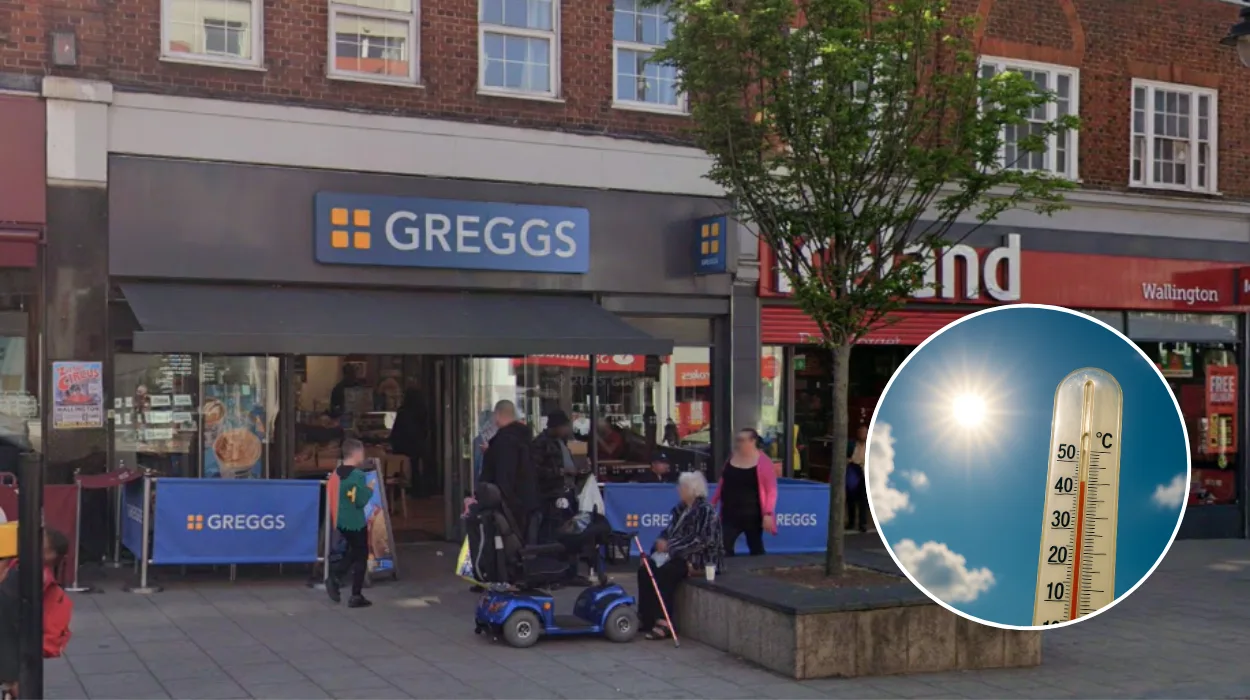
- Chain-Wide Closures: The popular British bakery chain Greggs has made the executive decision to temporarily close 11 specific outlets across the United Kingdom due to an extreme heatwave.
- Duration of Shutdown: The affected bakeries will remain closed for a consecutive two-day period, spanning Wednesday 24 June and Thursday 25 June 2026.
- London Impacted: The closures directly target two highly high-profile locations within the Greater London area: one in the northern borough of Barnet and another in the central West End hub of Leicester Square.
- Regional Affected Areas: Beyond the capital, nine other branches have been shuttered across England, including locations in Wantage, Aldridge, Wolverhampton, Luton, Trowbridge, Marlborough, Dudley, and Northampton.
- Red Weather Warning Issued: The infrastructure decisions coincide with an official red heat health warning activated by weather authorities, remaining in effect from 9:00 am on Wednesday until midnight on Thursday.
- Wider Societal Disruption: As peak temperatures are forecast to hit a blistering 37°C, the capital has experienced widespread closures of alternative retail outlets, public schools, and local restaurants, alongside an influx of mandatory working-from-home instructions.
- Mayoral Intervention: London Mayor Sir Sadiq Khan issued an urgent public health directive via social media, warning of the direct biological risks associated with extreme heat stress.
London (Extra London News) June 24, 2026 – The UK’s largest bakery chain, Greggs, has launched an unprecedented emergency closure of multiple high-profile retail outlets across London and the wider regions as the British capital braces for an extreme summer heatwave expected to drive temperatures up to a searing 37°C. The prominent food-to-go multinational confirmed the temporary two-day operational shutdown of 11 select bakeries nationwide, a decision specifically enacted to protect frontline workers and the general public from dangerous thermal conditions inside retail units. This retail withdrawal aligns with a broader systemic shutdown across London, where hundreds of schools have shuttered their gates, independent restaurants have paused trading, and corporate employers have implemented mass remote-working protocols to mitigate the severe strain on infrastructure and human health.
- Key Points
- Why did Greggs decide to close its London shops?
- Which specific Greggs locations are affected by the heat closures?
- How is the 37C heatwave impacting wider London infrastructure?
- What are the details of the official Red Heat Health Warning?
- What advice has London Mayor Sir Sadiq Khan given to residents?
The logistical decision materialised amid the activation of an official red heat health warning covering London and swathes of England. The top-tier health alert, which reflects a state of severe meteorological danger, formally commenced at 9:00 am on Wednesday 24 June and is legally designated to run continuously until midnight on Thursday 25 June. With the urban heat island effect amplifying conditions across central London boroughs, metropolitan authorities and corporate executives have spent the morning shifting into defensive positions, instructing citizens to treat the heatwave not as a leisure event, but as a severe, active public health emergency.
Why did Greggs decide to close its London shops?
The primary operational catalyst for the disruption centers on the physiological and structural limitations of handling high-heat baking equipment inside consumer-dense retail units during a severe heatwave. As reported by the news desk of AOL UK, corporate representatives for Greggs issued a direct communication strategy via an automated email campaign to their regional customer databases, explicitly clarifying the health and safety motivations behind the measure.
In the official statement distributed directly to thousands of patrons, a spokesperson for Greggs stated that:
“Just to let you know – the following shops will be temporarily closed on Wednesday 24th and Thursday 25th June to protect our customers and colleagues during the severe hot weather.”
The corporate wording highlights an evolving legal and moral standard among high-street food retailers regarding staff welfare. Bakeries inherently feature high baseline ambient temperatures due to the constant operation of industrial ovens, warming racks, and heavy-duty refrigeration exhausts. When these internal thermal baselines are synthesised with an external meteorological temperature of 37°C, the climate inside standard commercial units can quickly escalate past safe working thresholds. By opting for a complete shutdown rather than modified operating hours, the firm has prioritised workforce preservation over short-term retail revenue.
Which specific Greggs locations are affected by the heat closures?
The commercial strategy executed by the bakery firm has targeted highly specific geographic vulnerabilities rather than initiating a blanket nationwide shutdown. According to data compiled and published by reporters at AOL UK, a total of 11 individual branches have been selected for immediate emergency closure. Within the borders of the capital itself, the closures strike two polar opposite demographics: a suburban residential community and a high-density international tourist district.
The specific closures inside Greater London comprise:
- The Barnet Outlet: Located in North London, serving a dense residential commuter population.
- The Leicester Square Outlet: Positioned in the absolute heart of London’s West End entertainment district, a location that typically handles massive footfall from international tourists, commuters, and theatregoers.
The remaining nine closures are distributed across critical arterial towns and municipal zones throughout England, reflecting areas where the heat dome has stalled with particular intensity. The full regional list published by AOL UK includes the following towns and cities:
- Wantage (Oxfordshire)
- Aldridge (West Midlands)
- Wolverhampton (West Midlands)
- Luton (Bedfordshire)
- Trowbridge (Wiltshire)
- Marlborough (Wiltshire)
- Dudley (West Midlands)
- Northampton (Northamptonshire)
How is the 37C heatwave impacting wider London infrastructure?
The operational retreat by Greggs is not an isolated corporate event, but rather part of a structural shutdown rippling across the capital’s economy. As detailed in the comprehensive reporting by AOL UK, the approach of the 37°C peak has effectively triggered a soft lockdown across various sectors of civil society. Scores of educational institutions across both inner and outer London boroughs made the late-night decision to close doors on Wednesday morning, citing an inability to maintain safe, cool classroom environments for children within older, un-airconditioned school brickwork.
Simultaneously, the commercial fabric of the West End and local high streets has been heavily disrupted. Hundreds of independent shops, boutique retailers, and historic restaurants have chosen to lock their doors. Many kitchens face internal ambient temperatures exceeding 45°C when outside temperatures pass the mid-thirties, rendering chef lines completely untenable. For office-based industries, the threat of transport meltdowns and heat exhaustion has prompted corporate entities to activate contingency plans. Hundreds of thousands of workers have been transitioned to mandatory or highly encouraged work-from-home days, draining commuter hubs and leaving heavy rail networks largely empty.
Explore more Local London News:
Greens Urged to Halt Edmonton Incinerator Expansion: London 2026
Heathrow and London Paddington Trains Disruptions: Ealing Broadway Chaos 2026
What are the details of the official Red Heat Health Warning?
The sweeping economic stoppages are a direct response to the stringent meteorological classifications issued by British health and weather monitoring agencies. As verified by the editorial team at AOL UK, a formal red heat health warning has been aggressively pinned over London and adjacent English regions. This tier of alert is rarely deployed in the United Kingdom and indicates a scenario where the heatwave is so intense that its risks extend well beyond standard vulnerable groups—such as the elderly or infirm—and pose a threat to fit, healthy individuals.
The temporal parameters of the emergency are highly defined. The warning mechanism officially clicked into place at 9:00 am on the morning of Wednesday 24 June. It is legally and operationally scheduled to run continuously until midnight on Thursday 25 June. This 39-hour window represents the anticipated peak of the atmospheric thermal mass, during which overnight cooling is expected to fail significantly within dense urban zones due to the heat retention properties of concrete and tarmac.
What advice has London Mayor Sir Sadiq Khan given to residents?
As the capital entered the peak warning window, regional political leadership moved to communicate directly with citizens to prevent casualties and ease pressure on emergency services. As reported by AOL UK, London Mayor Sir Sadiq Khan utilized his digital platforms to broadcast an urgent public safety manifesto. The Mayor’s messaging explicitly reframed the weather event from an enjoyable summer day into an active, dangerous natural hazard.
In a public message transcribed across major news outlets, London Mayor Sir Sadiq Khan urged people to take suitable precautions, stating explicitly that:
“Extreme heat poses a serious risk to health. Please prioritise safety: stay hydrated, avoid being out in the sun, and check on vulnerable neighbours.”
The tripartite directive from City Hall focuses on preventative community care. The call to “check on vulnerable neighbours” acknowledges the isolated risks faced by elderly residents living alone in high-rise apartments or flats that lack proper ventilation. Meanwhile, the directive to “avoid being out in the sun” reinforces the logic behind the massive retail and hospitality closures seen across Leicester Square and Barnet, signalling that public spaces should be avoided until the thermal peak breaks on Friday.