Key Points
- Hackney Council has reached a significant milestone, marking its first 100 days under the administration of the Green Party following a historic electoral breakthrough that ended two decades of uninterrupted Labour dominance.
- Hackney Mayor Zoë Garbett sat down for a comprehensive interview to reflect on the initial months, describing the relentless schedule as making the period feel “more like 20 years”.
- The administration faces a severe financial reality, grappling with a projected budget gap of £53 million over the next three years and tough cuts required for the current year.
- Key early actions include tackling housing repairs while reducing costs, repurposing underused public buildings, and initiating a crackdown on rogue landlords by recruiting the first wave of 51 new enforcement officers.
- The council appointed Hackney’s first-ever Migrant Champion, Manal Massalha, to advocate for migrant rights locally and nationally.
- Controversial policy positions include reviewing twinning arrangements with the Israeli municipality of Haifa and maintaining a firm stance against installing single-sex spaces in council buildings to ensure maximum trans inclusion.
- In an effort to champion transparency, Mayor Garbett has published her official diary online so residents can directly view who she meets with.
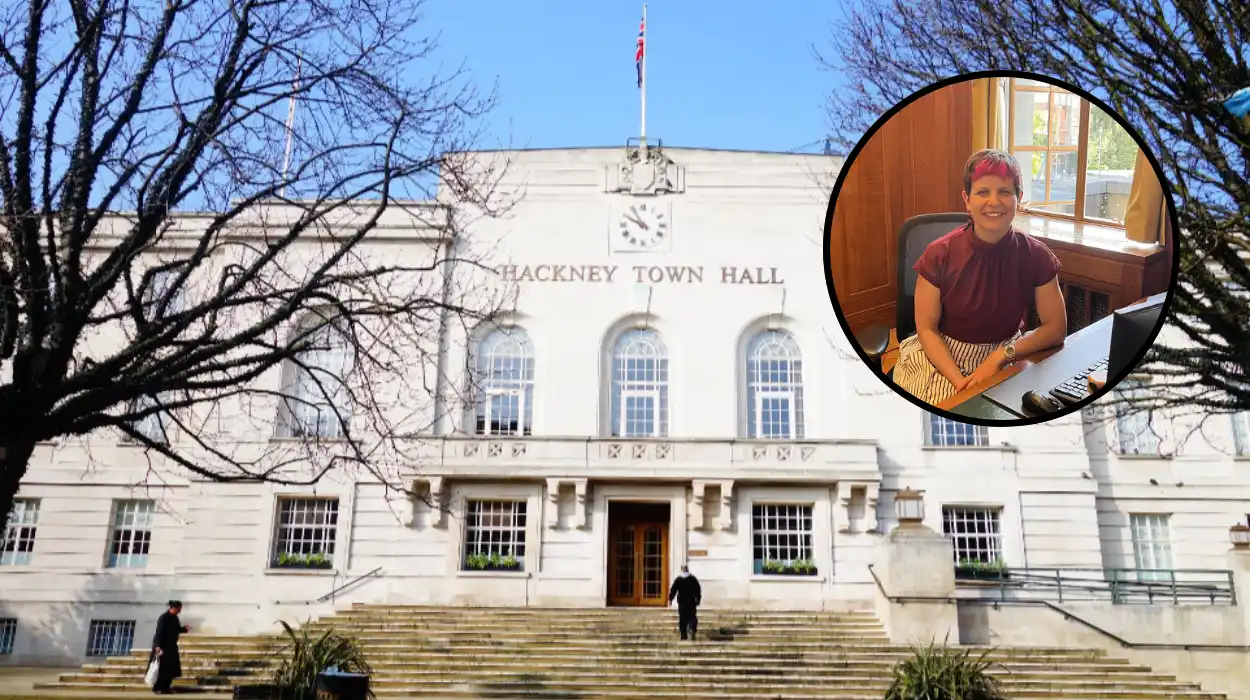
London (Extra London News) August 22, 2026 — Hackney Council has officially marked its landmark first 100 days under Green Party control, following a momentous election victory that swept aside decades of traditional political authority in the East London borough. As reported by the Local Democracy Reporting Service (LDRS) as featured on MyLondon, newly elected Mayor Zoë Garbett sat down to reflect on an intense, fast-paced introduction to executive governance. Stepping into the Art Deco Hackney Town Hall after years of campaigning, Mayor Garbett confessed that the relentless 24/7 nature of the role has made her opening months in office feel “more like 20 years”. The administration, which ascended to power on the manifesto Hope for Hackney, has sought immediately to challenge the status quo, though it has had to confront formidable structural and economic hurdles straight out of the gate.
What Are the Biggest Financial Realities Facing the New Green Administration?
Stepping into the mayoral office as a progressive outsider aiming to rewrite local governance, Mayor Garbett quickly found herself face-to-face with entrenched fiscal headwinds. As reported by the Hackney Citizen and covered across regional news networks, while the new leadership anticipated systemic difficulties, the sheer proximity to the books revealed stark realities.
As reported by the Hackney Citizen, Mayor Garbett stated that:
“Obviously, there have been some huge eye-opening issues. I knew the extent of the financial challenge faced by the council. I worked in the public sector 10 years ago when austerity was beginning. But being up close to facing our financial gap of £53m over the next three years, the cuts that will have to be made this year, is a huge challenge.”
Despite these daunting financial constraints, the administration insisted it has hit the ground running by prioritizing essential public services that residents depend on daily. According to official council updates, the local authority has worked to speed up housing repairs while successfully cutting administrative costs, repurposing underutilised public buildings to deliver vital community services, and prioritizing the maintenance of local parks. Furthermore, addressing housing sector abuses has taken center stage, with the administration launching an aggressive crackdown on rogue landlords by initiating the recruitment of the first 51 specialized enforcement officers.
Explore more Hackney News:
New Heat Law Mandates Cool Homes for Council Tenants in Hackney 2026
Stratford Cross Plot S10 Planning Application Submitted, London 2026
How Is Mayor Garbett Changing the Way Hackney Town Hall Operates?
Beyond budget management, the administration has placed heavy emphasis on transforming the internal culture and operational style of local governance. Symbolically shifting her executive desk away from an imposing, traditional mahogany table that she found overly dominant, Mayor Garbett sought to project an open and accessible leadership style from day one.
The council has operated with a smaller, more streamlined cabinet designed to function more efficiently and reduce overhead costs for local taxpayers. In pursuit of radical transparency, Mayor Garbett took the unusual step of publishing her complete ministerial diary online, allowing any resident to independently verify who she has met with—ranging from faith leaders and community organizers to renters’ unions.
Additionally, the administration focused on elevating marginalized voices within the borough. This commitment materialized with the appointment of Hackney’s first-ever Migrant Champion, Manal Massalha, designed to give localized and national representation to migrant communities.
What Are the Most Contentious Debates Surrounding the First 100 Days?
While internal reforms and essential service delivery have dominated the administration’s introductory phase, the Green leadership has not shied away from high-stakes ideological and international debates that have drawn intense public scrutiny. True to their progressive platform, Mayor Garbett and her cabinet have pursued policies aligned with wider social justice movements, occasionally running into political crossfire.
Notably, the council initiated a comprehensive review of its historical global partnerships, including its international twinning arrangements with the Israeli municipality of Haifa. This move sparked fierce criticism from political opponents, with local Labour figures accusing the Green leadership of focusing on divisive symbolic gestures rather than core municipal duties.
At the same time, Mayor Garbett doubled down on her commitment to social inclusion, openly rejecting recent guidance from the Equality and Human Rights Commission regarding single-sex spaces. Describing the guidance as deeply concerning, the Mayor asserted a firm policy of maximum trans inclusion across all municipal facilities.
As reported by the Hackney Citizen, Mayor Garbett stated regarding the administration’s stance on trans inclusion that:
“If you start to police and exclude and make decisions about where people can and cannot go, you are questioning their identity at its core, and that’s what I am rejecting.”
She further emphasized that her administration is working closely with internal legal teams and directors to ensure that any push for absolute trans inclusion in council buildings remains legally robust, even if it risks potential court challenges.
What Lies Ahead for Hackney Council Over the Next Four Years?
As the dust settles on an eventful first 100 days, both supporters and critics recognize that shifting the structural trajectory of an East London borough marked by deep-seated housing waiting lists and systemic underfunding is an uphill battle that cannot be won overnight. With approximately 8,500 households currently on the housing register and thousands of children housed in temporary accommodation, the pressure to deliver tangible infrastructure solutions remains immense.
Reflecting on the scale of the journey ahead, Mayor Garbett characterized the initial 100 days not as an endpoint, but as a definitive statement of intent for the remainder of her four-year term. The administration maintains that its broader long-term objectives—including building a more ethical council pension fund, investigating complex local property ownership, and empowering grassroots communities—will serve as the bedrock for giving Hackney back to its people. Whether this ambitious, people-powered blueprint can successfully weather ongoing fiscal constraints and fierce political opposition will define the true legacy of the borough’s historic Green shift.