Key Points
- Legal Obligation: From the end of 2026 onwards, Hackney Council and other social landlords shall have a legal obligation to keep the houses of tenants cool.
- Awaab’s Law Expansion: This legal obligation forms an expansion of the Awaab’s Law which was established in 2025 for addressing problems of dampness and mould in social housing.
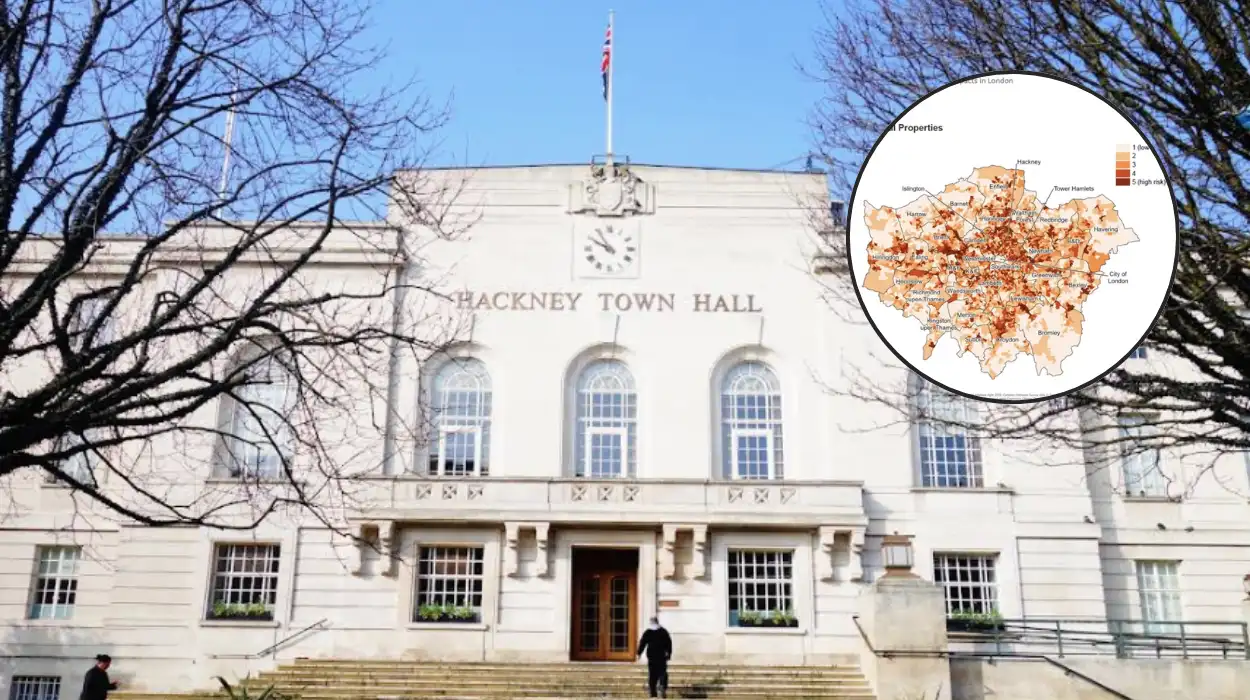
- Magnitude of the Risk: Recent findings of City Hall suggest that around one million London homes are vulnerable to overheating along with 1,361 schools, 60 hospitals, and 351 care homes.
- Costs Involved: “Heat Ready London” Report suggests that lack of adaptation to climate change may prove to be a costly issue for the London economy which may run up to £16 billion and £36 billion per year in 2050s.
- Vulnerability of the Individual: The liability imposed by the new law may hinge as much on the health, age, and mobility of those living in the houses as on the characteristics of the structures themselves.
- Money Issues: The cost of retrofitting the most vulnerable homes would be estimated at £9 billion to £45 billion, with no money of such magnitude flowing anywhere now.
- Health Risks: According to the data, most heat deaths are not connected with extreme weather events, and people from London aged 45 to 65 are more likely to suffer a premature heat death compared to the nation’s average population.
Hackney (Extra London News) August 21, 2026 – Hackney Council and other social landlords across the capital are set to face a new legal mandate requiring them to keep tenants’ homes cool by the end of this year, as City Hall unveils stark data revealing that nearly one million London properties are currently at high risk of overheating. The initiative marks a significant expansion of Awaab’s Law, the housing legislation originally enacted in 2025 to compel landlords to resolve damp and mould issues within strictly defined timeframes. As reported by the Hackney Citizen, the “Heat Ready London” plan confirms that this statutory duty will be broadened to include excess heat protections in late 2026.
- Why is Awaab’s Law being extended to cover excess heat?
- What is the economic scale of the heat risk in London?
- How will social landlords afford the necessary retrofits?
- What do the health findings reveal about heat-related risks?
- What is the impact on London’s schools?
- What role does green space play in the strategy?
- Who is leading the implementation of the Heat Ready London plan?
Why is Awaab’s Law being extended to cover excess heat?
The legislative expansion is designed to protect vulnerable residents from the increasing frequency of extreme temperature events. As highlighted by the Hackney Citizen, the move follows the tragic 2020 death of two-year-old Awaab Ishak in Rochdale, which led to the creation of the original law. By integrating heat regulation into this framework, authorities aim to ensure that social housing is fit for a climate that is becoming progressively hotter.
While specific practical requirements for this extended duty have yet to be finalised, the report calls for a “system-wide, evidence-based approach.” As noted by the Hackney Citizen, this implies that the legal responsibility of landlords may be influenced by the specific health profiles of their tenants—including conditions such as cardiovascular disease, diabetes, and neurological disorders—rather than just the building’s physical characteristics.
Explore more Hackney News:
Stratford Cross Plot S10 Planning Application Submitted, London 2026
Black Eel Pub Licensing Battle in Hackney, Dalston 2026
What is the economic scale of the heat risk in London?
The potential financial toll of climate change on the capital is immense. According to the “Heat Ready London” technical report, failure to adapt could result in damages equivalent to three per cent of London’s economy by the 2050s.
As reported by the Hackney Citizen, Mayor of London Sir Sadiq Khan stated:
“The climate crisis is on our doorstep. It is already threatening Londoners’ lives, disrupting vital services and costing our economy hundreds of millions of pounds… We must create cooler homes and buildings, greener and shadier neighbourhoods, and infrastructure that can withstand a hotter climate.”
The report estimates the cost of inaction could reach between £16 billion and £36 billion per year. Professor Emma Howard Boyd, chair of the National Heat Risk Commission, observed that this annual cost is double the estimated price of reaching net zero for the entire United Kingdom.
How will social landlords afford the necessary retrofits?
The financial challenge remains a significant hurdle. Retrofitting homes deemed most at risk of heat exposure requires an upfront investment estimated between £9 billion and £45 billion.
As documented by the Hackney Citizen, the report explicitly warns that there is currently no funding stream available at that scale. Public support remains “critical” because these adaptations are largely categorised as public benefits with low financial returns. The report suggests that councils might explore using existing resources like the Disabled Facilities Grant for housing improvements to mitigate indoor overheating.
What do the health findings reveal about heat-related risks?
The evidence presented in the report challenges the popular perception that heat is only a “red-alert” crisis during short-term heatwaves. The findings suggest that most heat-related mortality occurs outside of extreme temperature spikes, with vulnerable individuals facing dangers within 24 hours of temperatures rising.
As per the Hackney Citizen, data indicates that Londoners aged 45 to 65 face a higher risk of premature death in hot weather compared to their counterparts nationally. Furthermore, the city records approximately 3,996 heat-related A&E attendances annually. In 2024, 38 per cent of heat-related mortality in England occurred in care homes, 36 per cent in hospitals, and 27 per cent in private homes, placing local NHS estates and council commissioning at the heart of the crisis.
What is the impact on London’s schools?
Schools are identified as a critical area of vulnerability within the plan. According to the Greater London Authority’s Climate Resilient Schools Programme, 78 per cent of surveyed schools reported that overheating had significantly disrupted learning, pupil behaviour, and overall productivity. In 2022, one in four London schools was forced to close due to extreme heat.
What role does green space play in the strategy?
The report outlines a strong economic case for the expansion of green spaces. It estimates that London’s parks and green assets deliver over £90 billion in benefits over 30 years against costs of £3.3 billion.
However, Hackney specifically faces challenges with its tree canopy. The Hackney Citizen reports that the borough’s tree canopy coverage fell by 4.6 per cent between 2016 and 2022—a period of intense development—leaving the area slightly below the London-wide average of 19.6 per cent.
Who is leading the implementation of the Heat Ready London plan?
The plan is being steered by Mete Coban, the Deputy Mayor of London for Environment and Energy. Coban, who previously served as a councillor for Stoke Newington and managed Hackney’s climate and environment portfolio, noted that the report provides the “evidence and clear priorities needed to accelerate action.”
As reported by the Hackney Citizen, Coban stated that successful delivery “will require sustained investment and close collaboration across government, boroughs, businesses and communities.” The responsibility for much of this work will fall to local boroughs, including the administration of Mayor Zoë Garbett, who will oversee tasks ranging from public shade and drinking water provision to habitat management.
With London having already experienced five official heatwaves by mid-August 2026, the urgency of this new legal framework is underscored by the changing climate reality of the capital.