Key Points
- High Court Legal Challenge: A vulnerable Croydon resident has successfully won the right to challenge Croydon Council in the High Court over its decision to permanently shutter its face-to-face, walk-in housing support and homelessness service.
- Lack of Alternative Safeguards: District Judge Alan Bates ruled there was “minimal evidence” that adequate, accessible measures had been implemented to support vulnerable residents who are completely unable to access services or book appointments online.
- Judicial Review Approved: The High Court granted permission for judicial review on four out of five legal grounds submitted by the claimant. The council must submit its formal defence by 7 September, with a response from the claimant due by 21 September.
- Digital Exclusion and Access Barriers: The claimant’s legal team, the Public Interest Law Centre (PILC), argued that replacing the physical “Access Croydon” drop-in center with an online-only triage system unfairly discriminates against digitally excluded individuals, illiterate residents, and those with learning disabilities.
- Secretive Decision-Making Alleged: The PILC further contended that the decision to eliminate the walk-in desk was made behind closed doors without written records, directly breaching local government regulations and the council’s own constitutional framework.
- Wider Systemic Trend: Only three out of London’s 33 local authorities still offer face-to-face drop-in services for homeless people, highlights a sweeping study by King’s College London, making this case a potential legal precedent nationwide.
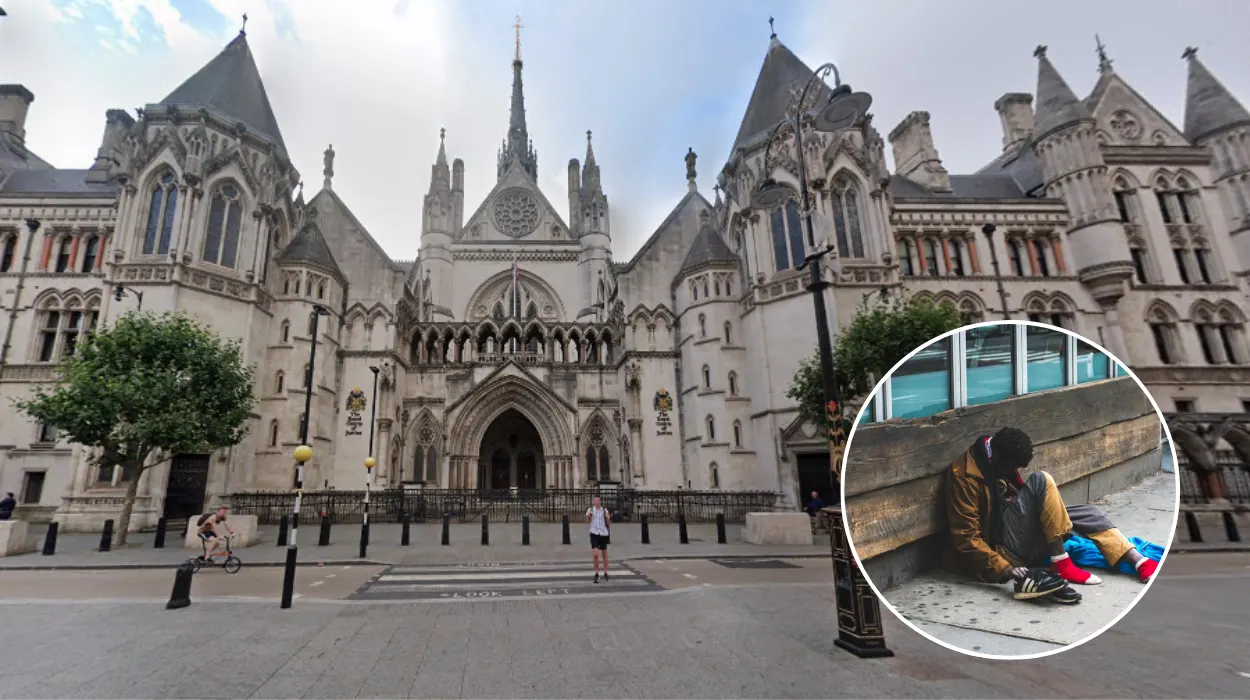
Croydon (Extra London News) July 08, 2026 – A vulnerable local resident has successfully secured the right to challenge Croydon Council in the High Court via a judicial review regarding the local authority’s contentious decision to permanently close its physical walk-in facility for individuals seeking emergency housing and homelessness support. At the Royal Courts of Justice, District Judge Alan Bates ruled that the local authority had provided minimal evidence demonstrating that sufficient alternative measures were operational for residents who are physically or technologically incapable of booking appointments through digital portals. The legal challenge, spearheaded by the Public Interest Law Centre (PILC) on behalf of an anonymous claimant, holds substantial systemic weight as lawyers warn the outcome could dictate how local governments across London and the wider United Kingdom manage face-to-face public services amid escalating municipal budget deficits.
- Key Points
- Why Is Croydon Council Facing A High Court Judicial Review?
- What Are The Specific Grounds Of The Legal Challenge Against The Closure?
- How Did The High Court Evaluate Croydon’s Digital Alternatives?
- Why Does Croydon Council Argue That The Case Is Academic?
- What Was The Rationale Behind Shutting Access Croydon?
- Is Online-Only Homelessness Support A Wider London Trend?
- What Are The Next Legal Steps For Both Parties?
The litigation specifically focuses on the closure of the physical “Access Croydon” service at Mint Walk in March 2025, an administrative action authorized by the council’s then Chief Executive, Katherine Kerswell, during an executive briefing attended directly by Executive Mayor Jason Perry. The claimant, a local resident facing eviction under a Section 21 “no-fault” notice, possesses severe learning disabilities and illiteracy, rendering him completely unable to navigate the council’s replacement web-based portal. While Croydon Council maintained that its redirected resources—such as library-based computer terminals and telephone hotlines—constituted a reasonable adjustment for the digitally excluded, the High Court openly rebuked the ambiguity of these provisions. The judge directly highlighted a systemic failure to prove that library personnel had received specialized training to handle complex emergency housing declarations, alongside acknowledging widespread community complaints regarding hours-long telephone wait times and unanswered calls.
Why Is Croydon Council Facing A High Court Judicial Review?
The legal friction stems from Croydon Council’s absolute transition from a physical, open-access front door for housing emergencies to a strict, digitally mediated appointments system. As reported by Harrison Galliven, a Local Democracy Reporter writing for The Standard, the PILC initiated the High Court challenge late last year, explicitly arguing that “the council breached its legal duty to homeless people by closing its walk-in service and unfairly disadvantaged digitally excluded residents by moving applications online.”
Furthermore, the legal challenge targets the very administrative mechanism through which the closure was enacted. The claimant’s legal team asserted before the High Court that the operational shift was executed behind closed doors without a formal, transparent written record. According to the PILC’s filings, this lack of documentation constitutes a direct breach of both statutory local authority regulations and Croydon Council’s own internal constitutional bylaws governing executive transparency.
What Are The Specific Grounds Of The Legal Challenge Against The Closure?
The High Court chose to look past the council’s preliminary defense arguments, explicitly granting the claimant permission to proceed with a full judicial review on four out of the five distinct legal grounds presented by their counsel. The core of the case rests on the statutory protections enshrined within the Housing Act 1996 and the Equality Act 2010, which mandate that public authorities must ensure their essential statutory services are realistically accessible to the most vulnerable strata of the population.
The applicant’s legal counsel, Tom Hickman KC, systematically detailed to the court how the claimant first attempted to engage with Croydon’s homelessness services after receiving a Section 21 eviction notice. Hickman KC argued that the claimant’s acute learning disabilities and complete illiteracy meant he was entirely incapable of accessing or understanding the alternative arrangements the council had put in place, namely an online form that residents are required to complete simply to book an initial housing advice appointment.
How Did The High Court Evaluate Croydon’s Digital Alternatives?
During the tense legal arguments at the Royal Courts of Justice, Croydon Council defended its operational restructuring by detailing a distributed network of local support. The local authority’s legal representatives informed the court that the council proactively mitigates “digital exclusion” by actively directing residents to its public libraries, where they can utilize internet-connected computers. The council added that residents could seek direct support from general staff on-site or request to speak with advice specialists stationed at the council’s central library, located within a brief walking distance from the shuttered Access Croydon site at Mint Walk.
However, the judiciary proved highly skeptical of these claims, demanding concrete proof of operational reality over theoretical policy. District Judge Alan Bates heavily criticized the distinct lack of structural detail provided by the local authority regarding these alternative community measures, stating clearly to the courtroom:
“They say this individual would be assisted by council officers, but it is not said who these officers will be or how they will be accessed.”
District Judge Bates further turned his attention to the operational competency of the redeployed staff, noting that it remained entirely unclear whether general library personnel had been provided with any formal, structured training that “specifically enables them to provide assistance to people seeking homelessness assistance.”
The High Court also firmly dismissed the council’s reliance on telephone-based triaging as an effective alternative to face-to-face interaction. District Judge Bates explicitly acknowledged the everyday realities faced by vulnerable residents attempting to navigate the council’s phone lines, noting that a significantly high percentage of calls to the housing department routinely go completely unanswered, while other residents are regularly left waiting “hours” on hold trying to reach an agent.
Why Does Croydon Council Argue That The Case Is Academic?
Defending its administrative actions, the legal counsel representing the local authority attempted to have the case thrown out by arguing that the specific judicial review was entirely academic. The council’s legal team reminded the court that the individual applicant in question was never actually rendered roofless or actively homeless during the period following the service transition. Based on this outcome, the local authority maintained that the scope of the legal challenge was far too narrow to be applied broadly to other residents living in varying situations across the London Borough of Croydon.
District Judge Bates, however, thoroughly disagreed with the council’s narrow interpretation of administrative harm. In his oral judgment, the judge ruled that the continued physical closure of the Mint Walk walk-in service was actively affecting a wide cross-section of residents daily and possessed a distinct, undeniable potential to severely impact others trapped in similarly precarious socioeconomic situations.
What Was The Rationale Behind Shutting Access Croydon?
At the time of the initial restructuring, executive leadership within Croydon Council framed the complete removal of the walk-in homelessness desk as an essential modernizing evolution rather than a simple reduction in public services. The local authority formally described the shuttering of the walk-in desk as “a change in how the council supports people at its front door,” acknowledging openly that the overhaul was fundamentally driven by unprecedented public demand and immense municipal financial pressures.
As documented by the Local Democracy Reporting Service (LDRS), Executive Mayor Jason Perry justified the operational shift by citing the severe physical congestion and long wait times that had come to define the walk-in center before its closure. Announcing the implementation of the online appointments framework, Mayor Perry stated:
“The current walk-in service means that, at this time of extreme demand, too often residents are waiting too long to get the help that they need.”
The Executive Mayor further elaborated on the administrative and security benefits of the digital triage framework, adding:
“With an appointments system we can triage to make sure we are prioritising appropriately. And knowing exactly who is coming into council buildings, and when, helps to run things as efficiently as possible whilst keeping everyone safe.”
Despite these assurances, front-line charity organizations have historically painted a vastly different picture of the council’s front-door operations. Harrison Galliven of the LDRS previously highlighted the severe plight of local families forced to form long queues outside the council’s Bernard Weatherill House headquarters on Fell Road just to secure an appointment slot. A charity support officer embedded with vulnerable families at the time described the external queuing conditions as completely “chaotic” and deeply “dehumanising” for households awaiting essential emergency support. Currently, members of the public seeking assistance are made to wait outside the council’s Fell Road entrance until security guards physically permit them entry for their pre-booked appointments.
Explore more Croydon News:
Thameslink and Southern Train Delays: East Croydon Station Fire 2026
Fatal Late-Night Collision Near Valley Retail Park Leaves One Dead: Croydon 2026
Is Online-Only Homelessness Support A Wider London Trend?
The legal battle unfolding in Croydon is far from an isolated municipal anomaly; rather, it reflects a structural retreat from face-to-face local governance across the entirety of Greater London. A comprehensive academic investigation conducted by King’s College London recently revealed the stark scale of this digital shift, discovering that only three out of London’s 33 local authorities continue to offer traditional, face-to-face drop-in services for individuals experiencing or facing immediate homelessness.
This rapid digital migration has drawn fierce criticism from human rights lawyers and housing advocates, who argue that local councils are using digital transformation as a convenient screen to ration access to statutory services during an unprecedented national housing shortage. Commenting extensively on the Croydon resident’s successful High Court opening, Alexandra Goldenberg of the Public Interest Law Centre stated:
“In the middle of a housing crisis, Croydon Council has closed their walk-in services. These barriers risk creating discriminatory access to homelessness services, leaving many vulnerable people unable to obtain the support to which they so desperately need and are legally entitled.”
What Are The Next Legal Steps For Both Parties?
With the High Court formally granting permission for the case to proceed to a judicial review, a strict, legally binding timeline has been established for both the local authority and the claimant’s legal representatives.
Croydon Council has been given a firm deadline until 7 September to submit its highly detailed grounds of defense, alongside any supplementary documentary evidence or witness statements it intends to rely upon to justify the legality of its closure process. Following the council’s submission, the claimant and the PILC have been allocated until 21 September to submit their formal legal response. A definitive date for the full High Court judicial review hearing has not yet been scheduled by the court clerk, but the eventual ruling is expected to be closely watched by local government authorities across the country.