Key Points
- Shift in Public Consultation: Traditional public consultation is increasingly viewed as an ineffective, tick-box exercise. Local authorities and residents now demand that major developments deliver measurable, long-term social impact.
- The Camley Street Partnership: The regeneration of Camley Street in Camden, North London, is being executed via a public-private partnership. The alliance links Camden Council’s Community Investment Programme (CIP) and developer Ballymore Lateral to construct a sustainable, mixed-use, car-free neighbourhood.
- Youth-Centric Strategy: Young people comprise approximately one-third of the local Camden population and have been embedded in the project’s steering group since its inception in 2020.
- Removing Barriers to Entry: To ensure diverse and sustained participation, the development team provided youth representatives with financial stipends, flexible meeting arrangements, and formal letters to schools to authorise their absence for project sessions.
- Active Decision-Making Power: Local youth sat directly on the interview panel during the selection process for the private-sector development partner in late 2024, prioritising sustainability, job creation, and skills acquisition.
- Innovative Engagement Frameworks: Working alongside specialist engagement consultant Make:good, the partnership utilised alternative feedback mediums such as photography, storytelling, model-making, and walking tours.
- Targeted Inclusivity Programmes: Specialized initiatives were introduced to amplify marginalized voices. The Young Researchers in Residence scheme empowered young women and non-binary individuals to audit their neighbourhoods, while a partnership with the Frank Barnes School for Deaf Children integrated deaf youths into the architectural design process.
- Masterplan Adjustments: Direct youth feedback led to concrete adjustments in the masterplan, including the incorporation of smaller, intimate, and emotionally safe public spaces, multi-generational play areas, and structural job pathways.
- Long-Term Financial and Economic Committments: The initiative guarantees that local residents will receive priority application status for newly created jobs, supported by career fairs and affordable workspaces for young entrepreneurs. Furthermore, a £1 million Ballymore Lateral Community Fund has been established to finance grassroots initiatives over the next decade.
Camden (Extra London News) June 4, 2026 – A pioneering public-private urban regeneration framework at Camley Street in Camden has demonstrated that engaging a younger, more diverse demographic in urban planning is entirely achievable when developers move away from traditional, “tick-box” public consultations and invest in collaborative relationships. Championed by Camden Council’s Community Investment Programme (CIP) and urban developer Ballymore Lateral, the scheme has systematically embedded local youth into its governance structures since 2020. By treating public engagement as a primary architectural design driver rather than a statutory bureaucratic hurdle, the partnership has integrated direct community insights into its emerging masterplan. This collaborative strategy ensures that the newly designed, mixed-use, car-free neighbourhood delivers long-term social value, employment pathways, and localized economic opportunities.
- Key Points
- What Is the Camley Street Regeneration Project and Who Is Involved?
- Why Is the Traditional Public Consultation Model Being Criticised by Developers and Local Authorities?
- How Were Young People Integrated into the Project’s Governance and Partner Selection?
- What Creative Mediums Were Used to Facilitate Youth Engagement?
- How Did the Young Researchers in Residence Programme Empower Women and Non-Binary Youth?
- What Architectural Insights Were Gained from Working with Deaf Children?
- How Have Youth Insights Actively Altered the Camley Street Masterplan?
- Do Young People Value Large Open Plazas or Intimate Spaces?
- How Did Feedback Redefine the Concept of Public Play?
- What Fears Do Youth Hold Regarding Growth and Displacement?
- What Economic Commitments and Job Pathways Guarantee Local Wealth Building?
- How Must the Wider Housing Sector Adapt to Rising Social Value Expectations?
The strategy addresses a systemic critique within the modern British housebuilding and planning sectors: that public consultations have historically functioned as minimal, poorly attended exercises designed to meet statutory obligations rather than foster genuine collaboration. By establishing long-term engagement pathways, providing financial compensation for participants, and building targeted programmes for marginalized and disabled youth, the Camley Street project provides a scalable template for the wider housing sector at a time when local authorities are increasingly flexing their regulatory muscles to demand measurable social impact from large-scale private developments.
What Is the Camley Street Regeneration Project and Who Is Involved?
As detailed by Lauren Kehoe, development manager at Ballymore, writing an authoritative commentary for Inside Housing, the project represents a deep-rooted public-private partnership operating in the London Borough of Camden. The venture combines the resources of Camden Council’s Community Investment Programme (CIP) with the commercial expertise of joint-venture developer Ballymore Lateral.
According to the analysis put forward by Kehoe, the core objective of the partnership is to transform Camley Street into a vibrant, mixed-use neighbourhood. The project aims to blend significant commercial and light-industrial workspaces with new residential housing and integrated green public spaces. A defining spatial characteristic of the proposed masterplan is its commitment to establishing a completely car-free environment that is thoroughly embedded into, and connected with, the pre-existing local communities of North London.
The timeline of the development reveals that the consultation process was not an afterthought designed to accompany final architectural blueprints. The CIP team at Camden Council initiated preliminary discussions with local residents in 2020. By 2021, the council had published a formal community vision document that continues to serve as the foundational policy baseline underpinning the current regeneration masterplan.
Why Is the Traditional Public Consultation Model Being Criticised by Developers and Local Authorities?
In her editorial reporting, Kehoe argues that the real estate development sector has arrived at a critical turning point regarding resident engagement. For a prolonged period, public consultation within the UK housing sector has been routinely treated as a statutory, “tick-box exercise.” This outdated approach typically manifested as an effort designed to attract minimal numbers of attendees to a draughty town or village hall on a Wednesday afternoon, resulting in a narrow and unrepresentative feedback loop.
However, modern planning expectations have fundamentally shifted. Local authorities—particularly within London and other major metropolitan city councils—are increasingly aware of their regulatory leverage. Councils are now systematically demanding that large-scale development schemes deliver clear, verifiable, and meaningful social impact for existing residents.
This regulatory pressure is further intensified because local authorities are increasingly stepping into projects as active equity partners rather than passive planning arbiters. Concurrently, local residents have become significantly more literate regarding how major urban development impacts their daily lives, spatial environments, and economic security. Modern communities demand far more than static information boards and generic feedback forms; they expect design teams to actively value local knowledge and deliver projects that visibly reflect localized priorities.
How Were Young People Integrated into the Project’s Governance and Partner Selection?
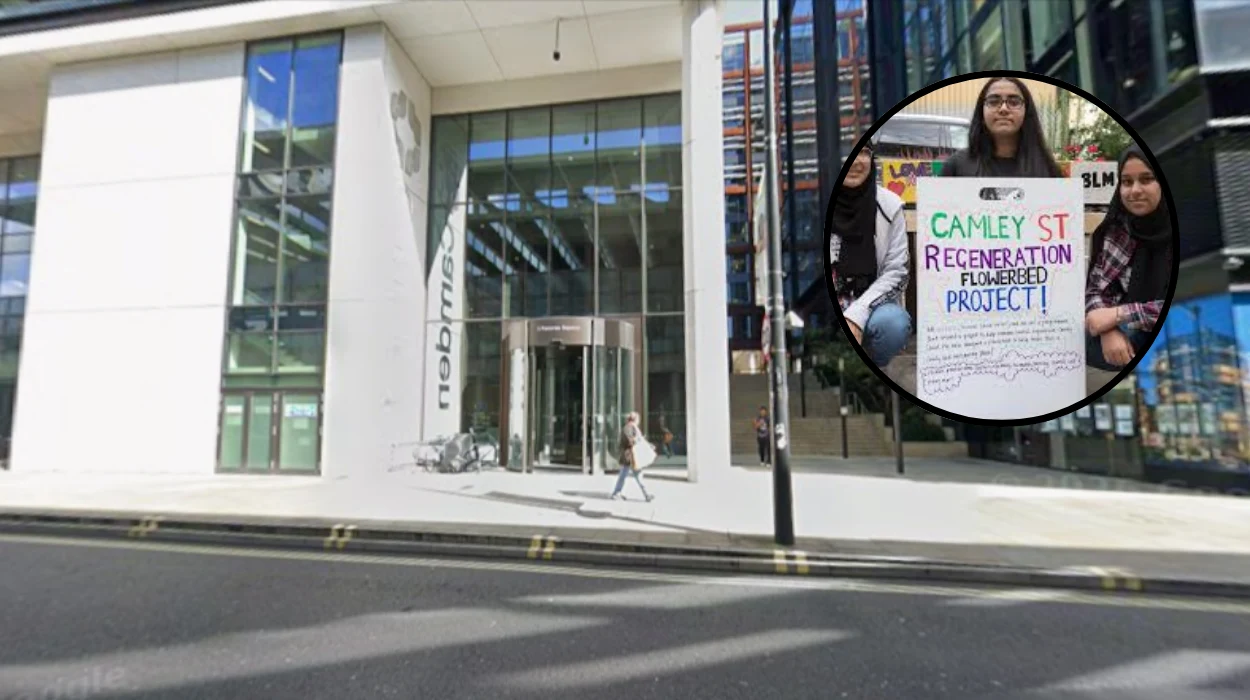
A distinct aspect of the Camley Street strategy is its focus on the demographic realities of the borough. Young people comprise roughly one-third of the local population surrounding Camley Street. Recognizing this, the project team ensured that youth representation was a permanent feature within the project’s central governance structures. The Camley Street steering group, which was established at the inception of the project in 2020 and continues to meet regularly, has maintained a consistent cohort of young local representatives.
To make this involvement structurally viable, the project team implemented measures to remove the socio-economic barriers that traditionally prevent young, diverse demographics from participating in urban planning. As reported by Kehoe on behalf of Ballymore:
“The team made sure young people could participate, through stipends, flexible arrangements and letters to schools to allow attendance.”
This structural support enabled young representatives to wield tangible decision-making power during critical stages of the procurement process. When Camden Council moved to select its private-sector development partner in late 2024, several young local residents sat directly on the formal interview panel. According to the project records, these youth panellists asked some of the toughest questions of the competing private developers, specifically forcing bidders to defend their strategies regarding environmental sustainability, long-term job creation, and localized skills training.
Explore More Camden News
Camden Leads London in Criminal Cuckooing Exploitation: Met Police Data 2026
Labour Retains Camden Council Control Amid Historic Green Surge: Camden 2026
What Creative Mediums Were Used to Facilitate Youth Engagement?
Following the formal appointment of Ballymore Lateral to the regeneration project in late 2024, the development team sought to expand upon the institutional foundations built by Camden Council’s CIP team. The primary objective was to ensure that the established steering group maintained a direct, active role in co-shaping the architectural masterplan.
To execute this, Ballymore Lateral partnered with Make:good, a specialist community engagement consultancy. Together, they designed non-traditional communication spaces tailored specifically to the expression styles of young people. Rather than forcing youths into rigid corporate workshops, the team deployed alternative mediums, including:
- Comprehensive photography workshops;
- Community storytelling and creative writing sessions;
- Physical architectural model-making;
- Interactive walking tours of the neighbourhood;
- Facilitated peer-to-peer group discussions.
Critically, these engagement programmes were designed to function as two-way economic relationships. The workshops provided participating youth with practical technical skills, digital training, and content creation capabilities, while explicitly providing financial payment for their time and expertise.
How Did the Young Researchers in Residence Programme Empower Women and Non-Binary Youth?
In addition to broad community workshops, the development implemented highly targeted research frameworks to capture the lived experiences of traditionally underrepresented demographics. A prominent initiative within this framework was the Young Researchers in Residence programme.
This specialized research scheme was delivered in close collaboration with two prominent architecture and urban design consultancies: In Her Place and Social Place. The programme targeted young local women and non-binary individuals, providing them with professional urban architectural research tools.
Through this initiative, participants were trained to systematically investigate, audit, and document their own immediate neighbourhoods. By analyzing spatial safety, accessibility, and social infrastructure, the researchers were able to test architectural design ideas in real-time. This localized data and spatial analysis were then fed directly back into the masterplanning design team, ensuring that gender-informed safety and inclusivity principles were embedded into the core layout of the development.
What Architectural Insights Were Gained from Working with Deaf Children?
The Camley Street engagement strategy also actively addressed accessibility within the built environment by partnering with the Frank Barnes School for Deaf Children and the Deaf Architecture Front. As Kehoe noted within her public record of the project, this partnership highlighted how rarely deaf and hard-of-hearing youth are invited into strategic conversations regarding urban design and public spaces.
Over the course of a targeted three-day intensive workshop, students from the school were asked to construct a “dream city in a box.” The exercise utilized hands-on, physical making and visual communication strategies to bypass traditional verbal consultation barriers.
The workshop directly challenged the design team’s underlying assumptions regarding urban accessibility and inclusivity. By observing how deaf children interact with spatial layouts, sightlines, and sensory environments, the architects gained a deeper understanding of how to design public spaces that optimize visual communication, safety, and physical navigation for deaf individuals.
How Have Youth Insights Actively Altered the Camley Street Masterplan?
The integration of long-term, properly compensated engagement enabled the project team to differentiate between generic feedback and the deeper insights generated when communities feel genuinely included. The prolonged engagement process yielded distinct, actionable critiques from Camden’s youth that have directly informed the fine grain of the emerging landscape design and public space programming.
Do Young People Value Large Open Plazas or Intimate Spaces?
Contrary to standard commercial development assumptions that favour large, open concrete plazas, the young participants explicitly requested the inclusion of smaller, more intimate public zones. The youth representatives noted that large, exposed public squares often feel physically and emotionally unsafe, or overly monitored. They advocated for the design of smaller, sheltered pockets within the masterplan where groups of people could naturally linger, converse, and sit without the pressure of commercial consumption or aggressive surveillance.
How Did Feedback Redefine the Concept of Public Play?
The consultation also forced a conceptual re-evaluation of recreational spaces within the development. The youth cohort pushed back against the standard practice of dividing public spaces into rigid “all-or-nothing” categories—such as isolated playgrounds for toddlers or sports cages for older teens. Instead, they requested urban landscapes that facilitate “play for all ages,” advocating for integrated, multi-generational recreational features that allow fluid, informal interactions across different age groups.
What Fears Do Youth Hold Regarding Growth and Displacement?
The project team reported that the youth participants were remarkably candid about where modern urban regeneration frequently fails its host communities. The participants highlighted a systemic disconnect in major urban developments: the tendency to deliver macro-economic growth and high-end real estate without translating those gains into tangible, localized socio-economic opportunities for the existing population. To prevent the Camley Street scheme from becoming an insular enclave of gentrification, the youth representatives demanded concrete, legally binding pathways into employment, training, and entrepreneurship.
What Economic Commitments and Job Pathways Guarantee Local Wealth Building?
To directly answer the community’s concerns regarding economic exclusion, Ballymore Lateral and Camden Council have integrated a structured local economic strategy into the masterplan. The development framework guarantees that local residents will be systematically prioritised for all job applications generated by the construction phase and subsequent commercial operations. This local hiring pipeline will be structurally supported by targeted careers fairs, skills taster sessions, and localized training initiatives.
The long-term legacy of the project is reinforced by the establishment of the £1 million Ballymore Lateral Community Fund. Administered over the next decade, this fund is legally ring-fenced to support grassroots, community-led initiatives, ensuring that local ideas can continue to secure financial backing well beyond the completion of the physical construction phase.
How Must the Wider Housing Sector Adapt to Rising Social Value Expectations?
In her concluding analysis, Kehoe emphasizes that as the broader UK housing and development sector faces immense political and economic pressure to rapidly accelerate the delivery of new homes, the institutional expectations surrounding social value and local impact will inevitably intensify. The experience documented at Camley Street serves as a case study demonstrating the tangible design benefits that occur when community engagement is repositioned as a core design driver rather than an annoying statutory requirement.
The partnership argues that social value cannot continue to be treated by the housebuilding industry as a separate, isolated line item on a corporate social responsibility report. Instead, it must function as the primary structural thread that connects the entire masterplanning process. The ultimate success of modern urban developments is determined not merely by physical bricks, mortar, and macro-level landscape strategies, but by the conscious cultivation of relationships, institutional trust, and long-term civic commitment to the host community.