Key Points
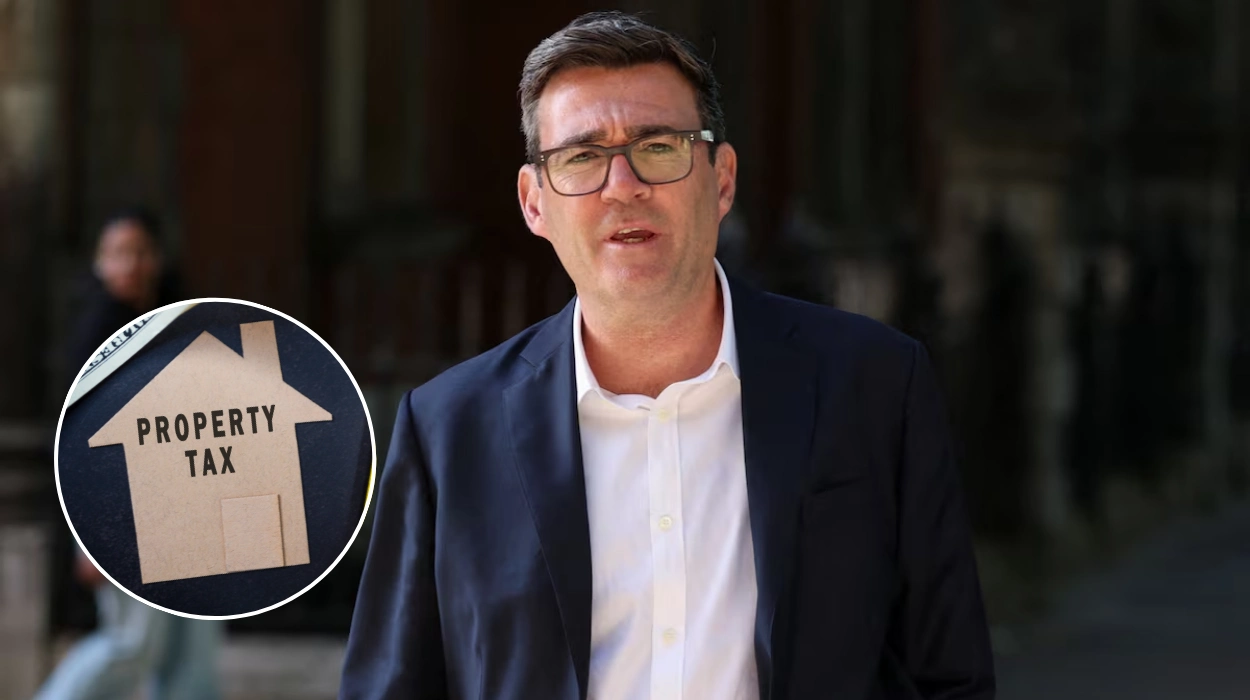
- Prime Minister Andy Burnham has reignited concerns over a potential overhaul of property taxation that could disproportionately impact London homeowners.
- Mr Burnham described previous council tax reforms initiated by former Chancellor Rachel Reeves as a “start” toward addressing systemic regional imbalances.
- Past proposals supported by Mr Burnham aimed at replacing both council tax and stamp duty with an annual property-based levy could leave the capital facing an estimated additional £7.5 billion tax bill.
- During an appearance on the BBC’s Panorama programme for ‘Andy Burnham: the Laura Kuenssberg Interview’, the Prime Minister highlighted severe regional disparities in the current framework.
- Mr Burnham pointed out that residents in regions like Greater Manchester frequently pay significantly higher council tax than individuals living in much larger, high-value properties in London.
- While Downing Street has sought to dampen immediate speculation regarding the implementation of a sweeping proportional property tax or land value tax in the upcoming Budget, debate surrounding structural reform continues.
London (Extra London News) July 29, 2026 – Prime Minister Andy Burnham has injected fresh momentum into discussions surrounding a radical overhaul of property taxation, prompting acute anxiety among London homeowners and politicians over a potential multi-billion-pound levy. As reported by journalist Nicholas Cecil of the Evening Standard, the newly installed Prime Minister has signaled that systemic adjustments to property wealth are firmly on the political horizon. Mr Burnham’s remarks, delivered during a high-profile broadcast, underscored deep-seated criticisms of the nation’s existing domestic property framework, which relies heavily on outdated valuations and creates stark geographical discrepancies.
What Did Andy Burnham Say About Property Tax and London?
The debate intensified following comments made by the Prime Minister during his appearance on the BBC’s Panorama special, ‘Andy Burnham: the Laura Kuenssberg Interview’. As documented by BBC journalist Laura Kuenssberg, the discussion zeroed in on wealth redistribution and regional tax fairness. Addressing the stark contrasts in household contributions across the country, Mr Burnham defended previous adjustments to the fiscal landscape.
As reported by Laura Kuenssberg of the BBC, Mr Burnham stated during the interview:
“There are people here in Greater Manchester who pay a much higher council tax than people living in much larger homes in London”.
Elaborating on the trajectory of these fiscal policies, the Prime Minister praised the groundwork laid by his predecessor. As noted by the Evening Standard, Mr Burnham described the council tax reforms introduced by former Chancellor Rachel Reeves as a “start”. He further emphasized to the BBC’s Laura Kuenssberg that former Chancellor Rachel Reeves
“was right to start to reform council tax to create some fairness there in relation to people in homes that are of much greater value, who haven’t seen their council tax go up over the years because of the failure to revalue the banding”.
Mr Burnham characterized these initial adjustments as an example of policy that was “right and fair”.
Why Are London Property Owners Facing a Potential £7.5 Billion Bill?
Fears within the capital are rooted in historical policy positions previously championed by the Prime Minister. Before ascending to Number 10, Mr Burnham repeatedly voiced support for structural alternatives to the current domestic funding model, which could see traditional council tax and Stamp Duty Land Tax (SDLT) replaced by a unified, recurring property-based charge.
According to housing market analysts and think-tank models frequently associated with these sweeping overhauls—such as proposals from the Fairer Share campaign—replacing stamp duty and council tax with an annual proportional property tax could fundamentally alter tax burdens.
Because property values in London have experienced exponential growth compared to the rest of the United Kingdom over the past three decades, a flat percentage levy on current market values would naturally skew heavily toward the capital.
Economic assessments indicate that transitioning to such a model could land London with an aggregate additional tax liability estimated at approximately £7.5 billion. Critics argue that homeowners in the capital would bear the brunt of a system designed to shift taxation away from income and onto accumulated property wealth.
Explore More London Local News
UK Weather: London Heatwave Breaks Records in London 2026
Police Launch CCTV Appeal After Islington Sexual Assault 2026
How Has Downing Street Responded to the Speculation?
Despite the Prime Minister’s acknowledged philosophical alignment with making property taxation more progressive, government officials have moved to calm immediate market jitters.
Following widespread reports suggesting that an active shift toward a proportional property tax or land value tax was imminent, Number 10 sources formally pushed back against the timeline.
As detailed by financial analysts observing the administration’s early moves, government representatives clarified that sweeping structural replacements for stamp duty and council tax are not slated for immediate introduction.
Addressing the swirling media reports, government figures noted that sweeping changes on that scale are “just not the case” and will not form part of the immediate legislative agenda.
Furthermore, the Prime Minister himself acknowledged the constitutional and political limitations governing his administration’s legislative scope. As highlighted by Alliance News reporting on the Panorama interview, Mr Burnham stated:
“We need to honour the manifesto upon which Labour was elected, and if I was to bring forward any changes, obviously people would rightly say, well, is this consistent with that manifesto?”
Consequently, the Prime Minister admitted that the administration faces “big decisions ahead” regarding how to balance manifesto commitments with his long-held view that the broader property tax architecture requires modernization.
What Lies Ahead for Taxpayers and the Autumn Budget?
As the political establishment prepares for the upcoming Autumn Budget, uncertainty continues to loom over property investors, landlords, and residential homeowners in London and beyond.
While immediate replacement of stamp duty has been explicitly ruled out for the short term, the underlying tension between regional equity and capital wealth remains unresolved.
Tax experts point out that while broad-scale replacement models may currently sit outside active legislative schedules, inherited policies—such as upcoming high-value council tax surcharges targeting properties valued above £2 million—will proceed.
Mr Burnham’s persistent signaling that the status quo is indefensible suggests that property wealth will remain squarely in the crosshairs of future fiscal policy, leaving London stakeholders bracing for long-term reform.