Soho is one of London’s best-known cultural districts, occupying a compact area in the West End of the City of Westminster. Its identity developed over more than three centuries through residential expansion, immigration, commerce, food, theatre, music, fashion, cinema, media and nightlife.
- Why did Soho develop in the first place?
- How did immigration shape Soho’s cultural identity?
- How did Victorian development turn Soho into an entertainment district?
- Why did twentieth-century Soho become famous for music, nightlife and cinema?
- How did Soho influence London fashion and popular culture?
- Which historic places explain Soho’s cultural importance today?
- How is Soho’s heritage being preserved for the future?
- Why did Soho become London’s most famous entertainment and cultural district?
- Frequently Asked Question
The modern district is broadly associated with streets including Soho Square, Dean Street, Frith Street, Greek Street, Old Compton Street, Wardour Street, Brewer Street, Berwick Street and Carnaby Street. Its boundaries are defined less by a single administrative line than by a historic street network shaped by successive phases of development.
Soho’s importance comes from continuity as much as individual landmarks. Seventeenth-century houses, Georgian terraces, Victorian theatres, twentieth-century clubs, restaurants, studios and modern creative businesses occupy the same compact urban environment. Westminster City Council identifies this surviving mixture of buildings and uses as a major part of Soho’s heritage character.
The area also records major changes in British society. French Huguenots established communities in the late seventeenth century. Italian workers and restaurateurs contributed to Soho’s food culture in the nineteenth century. Jewish, Greek and other immigrant communities added commercial and social networks. During the twentieth century, Soho became associated with popular entertainment, jazz, cinema, fashion, sexual entertainment and LGBTQ+ life.
Its history therefore explains why Soho became more than a nightlife destination. It became a concentrated cultural district where different industries, communities and audiences operated within a walkable area.
Why did Soho develop in the first place?
Soho’s foundations were laid after the Restoration, when land north of Westminster developed into streets, squares and houses. Building accelerated after the Great Fire of London in 1666, and Soho Square, laid out around 1681, became the district centre.
Before urban development, the land formed part of open fields west of the City of London. Westminster’s heritage assessment records the area as St Giles Fields and notes the traditional association between the name “Soho” and a hunting cry used by local gentry. The historical explanation connects the district’s name with its former use as hunting country.
The Restoration of the monarchy in 1660 created new demand for fashionable housing around Westminster and St James’s. Soho stood close to established aristocratic districts while still containing undeveloped land. This location gave developers an opportunity to create new streets near the political and commercial centre of London.
The Great Fire of London in 1666 strengthened that demand. Although the fire did not destroy Soho itself, the destruction inside the City created pressure for additional housing elsewhere. Westminster City Council records that development in Soho accelerated during this period, with Golden Square, Gerrard Street and Old Compton Street developing during the 1670s. Soho Square was laid out around 1681.
The first phase was residential rather than entertainment-focused. Houses were built for aristocrats, gentry, professionals and foreign communities. Soho therefore began as a planned urban neighbourhood rather than as a purpose-built leisure district.
Soho Square became the principal open space within this development. Westminster City Council dates the square to the 1680s and identifies the site as land previously known as Soho Fields. The square remains one of the district’s most important historic spaces.
The street layout also established a pattern that still influences modern Soho. Some parts were developed from individually owned plots, producing irregular streets and varied building forms. Other areas around Soho Square were planned more systematically. This mixture explains the district’s characteristic combination of narrow streets, small plots and larger later developments.
St Anne’s Church provided another important institutional foundation. Consecrated in 1686, the church was designed by William Talman, an architect who worked under Sir Christopher Wren. It became the parish church of Soho and developed a strong musical tradition.
The church also illustrates how religious, educational and community institutions developed alongside private housing. A parish school was established in 1699, creating an early example of permanent community infrastructure within the district.
By the end of the seventeenth century, Soho had therefore acquired the basic physical structure that later supported its entertainment economy: streets, houses, commercial premises, a public square and established community institutions.
How did immigration shape Soho’s cultural identity?
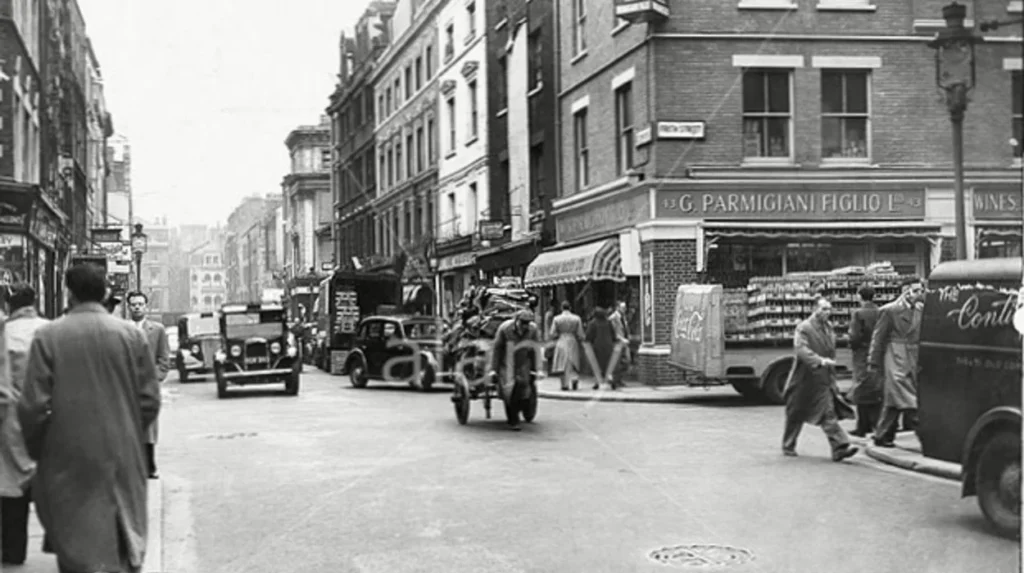
Soho changed from a fashionable residential quarter into a commercial district during the eighteenth and nineteenth centuries. Falling residential status encouraged workshops, restaurants, pubs, theatres and entertainment, while immigration from France, Italy, Greece and elsewhere strengthened its international cultural character.
Immigration was central to Soho’s development. Greek migrants arrived during the 1670s, while French Huguenots began establishing themselves in the area from 1681. Huguenots were French Protestant refugees who left France because of religious persecution following the revocation of the Edict of Nantes.
The Greek community left a lasting geographical mark. Westminster’s heritage assessment records a Greek chapel established in Hog Lane during the 1670s. The street later became Charing Cross Road, while Greek Street retained the memory of the earlier community.
The Huguenots also influenced Soho’s economic structure. Many were skilled craftsmen. Their businesses connected Soho with London’s wider networks of tailoring, textile production, food preparation and specialist manufacturing.
During the eighteenth century, Soho gradually lost some of its status as an elite residential address. Wealthier residents increasingly favoured other parts of the West End. The change did not empty the area. Instead, houses were divided, commercial activity increased and smaller businesses occupied premises that were unsuitable for large-scale development.
This process created the physical conditions for Soho’s later cultural economy. Smaller premises reduced the scale required to establish businesses. Workshops, shops, restaurants and entertainment venues could operate within the existing street pattern.
The nineteenth century brought further immigration. Westminster’s conservation research records German and Italian arrivals during the 1860s and 1870s and the arrival of Polish and Russian Jewish communities during the 1890s. These communities established businesses and contributed to Soho’s reputation as a food and commercial quarter.
Italian migration was particularly important for restaurants. Many Italian migrants worked as cooks, kitchen workers, porters and waiters. Westminster’s public realm research records large-scale settlement from Piedmont and Lombardy during the 1890s and links this migration directly with the growth of restaurants.
Soho’s food culture consequently became part of its wider cultural identity. Restaurants were not isolated businesses. They required suppliers, specialist food shops, workers and customers. This created a network of related economic activities within a small area.
After the First World War, eating outside the home became more common. Westminster’s conservation research connects the decline of domestic service with the growing popularity of eating out. Food writers including Elizabeth David helped promote Soho as a destination for international cuisine.
This international character remains visible in the historic names and businesses of the district. It also demonstrates that Soho’s cultural reputation did not originate solely from theatres or clubs. Migration and food were fundamental parts of the process.
How did Victorian development turn Soho into an entertainment district?
Victorian road building reshaped Soho by cutting through its older street pattern and improving access to the West End. Regent Street, Charing Cross Road and Shaftesbury Avenue introduced buildings, commercial premises and theatres, accelerating Soho’s transformation into an entertainment district.
Soho’s transformation accelerated during the nineteenth century because major infrastructure projects changed its relationship with surrounding London.
Regent Street was formed during the early nineteenth century and roughly followed the line of the earlier Swallow Street. The new road created a stronger physical division between Soho and St James’s. Westminster’s conservation research identifies this change as an important factor in the distinct character that developed within Soho.
The most significant Victorian intervention came later. Shaftesbury Avenue was created in 1884–86. Charing Cross Road followed in 1887. These roads improved connections between Piccadilly, New Oxford Street and other parts of the West End.
The new roads also created development plots. Older streets had small plots and tightly packed buildings. The new avenues provided space for larger commercial structures and theatres.
Shaftesbury Avenue became particularly important. Westminster’s heritage assessment describes the street as cutting through Soho and identifies a concentration of late Victorian theatres on its northern side. The avenue is recognised as part of the heart of London’s Theatreland.
The Lyric Theatre is one surviving example. Historic England records its Shaftesbury Avenue theatre building as dating from 1888, designed by C. J. Phipps. The building incorporated an earlier house frontage on Great Windmill Street, illustrating how new Victorian entertainment architecture interacted with older Soho structures.
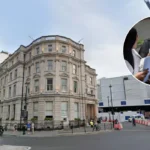
The London Pavilion provides another architectural record of the period. Built in 1885, it originally functioned as a theatre before being converted internally for cinema use in 1934. Its survival demonstrates the changing relationship between theatre, cinema and popular entertainment.
Theatres created secondary demand. Audiences required restaurants, pubs, shops, transport connections and places to meet before and after performances. Entertainment therefore generated additional commercial activity around the principal venues.
The Victorian street improvements also changed how people experienced Soho. The district became easier to reach from Piccadilly Circus and the wider West End. Historic England records that the expansion of Piccadilly Circus and construction of Shaftesbury Avenue and Charing Cross Road coincided with the appearance of new theatres and risqué entertainment.
The result was a new urban function. Soho was no longer simply a residential neighbourhood with workshops and restaurants. It became part of London’s organised entertainment economy.
Why did twentieth-century Soho become famous for music, nightlife and cinema?
Twentieth-century Soho became internationally associated with restaurants, music, clubs, cinema, theatre, fashion and sexual entertainment. Ronnie Scott’s, the Windmill Theatre, Carnaby Street and smaller venues created overlapping cultural networks that attracted performers, writers, designers, journalists, immigrants and audiences alike.
The twentieth century intensified Soho’s existing characteristics rather than replacing them. Small premises, mixed land uses and central location allowed entertainment businesses to operate alongside restaurants, offices, shops and homes.
The area became increasingly connected with film. Westminster’s conservation research records that Wardour Street became a focus of the emerging British film industry after about 1918. Studios, editing businesses and related media companies strengthened Soho’s relationship with the screen industries.
Music became another defining element. Soho supported jazz, bebop, dance halls, clubs and later rock and popular music. The district’s compact scale allowed musicians, promoters, audiences and associated businesses to operate close together.
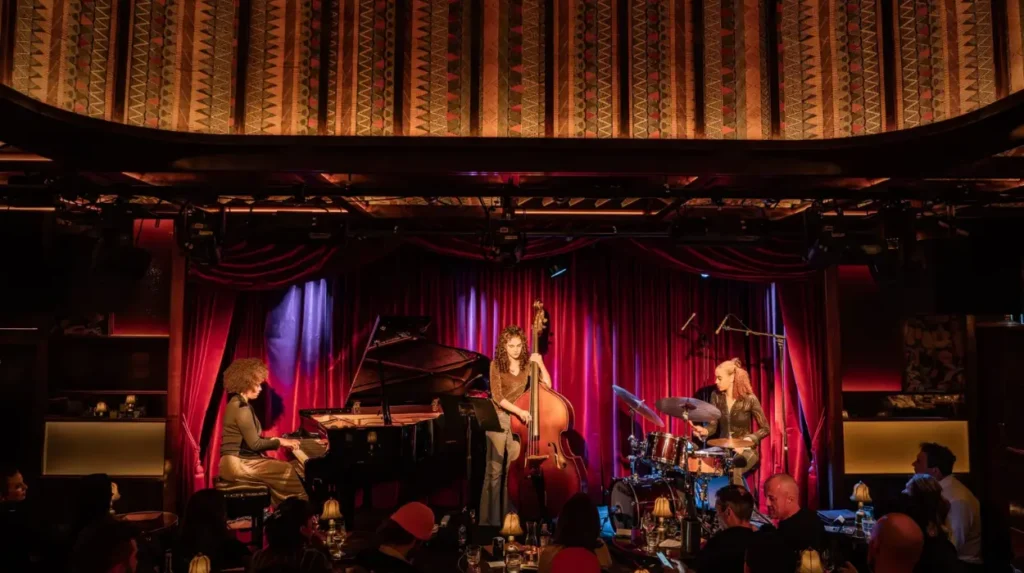
Ronnie Scott’s is the clearest surviving example. Saxophonists Ronnie Scott and Pete King founded the club in 1959. It became one of Britain’s leading jazz venues and was the first UK club to regularly host American jazz musicians, according to the club’s historical record.
Artists who performed there included Miles Davis, Nina Simone, Ella Fitzgerald and Chet Baker. The club also hosted later generations of performers including Jimi Hendrix, Prince and Amy Winehouse.
The importance of Ronnie Scott’s lies in its longevity. A venue established in 1959 continues to operate at 47 Frith Street, linking contemporary performance with the history of post-war Soho.
The Windmill Theatre created a different entertainment tradition. Its famous Revudeville shows became associated with nude reviews and debates over theatrical censorship. The British Library records how regulations governing stage performance shaped the presentation of such shows at the Windmill.
Soho’s sexual entertainment industry also became historically significant. Westminster’s planning documents explicitly recognise the sex industry as part of Soho’s heritage and note its influence on the area’s reputation, property patterns and investment after the Second World War.
This history requires careful distinction between the entertainment industry and the wider identity of Soho. The district contained restaurants, theatres, churches, shops, workplaces, homes and creative businesses alongside sexual entertainment.
The area also became important to LGBTQ+ London. Old Compton Street and surrounding streets became associated with gay social life during the twentieth century. Wider legal changes affected this development. The Sexual Offences Act 1967 partially decriminalised consensual homosexual acts between men aged 21 and over in private in England and Wales.
Soho’s reputation as a place with a relatively permissive nightlife therefore developed through social, legal and commercial changes operating together.
How did Soho influence London fashion and popular culture?
Soho’s cultural importance expanded because its compact streets supported specialised activities within walking distance. Restaurants, theatres, music clubs, recording studios, publishers, photographers, fashion shops and media companies occupied small premises, creating sustained contact between creative workers and commercial businesses daily.
The physical scale of Soho was important to its cultural influence. Westminster’s heritage studies emphasise the survival of small plots and buildings within the conservation area. These structures created space for independent businesses and specialist creative activities.
Carnaby Street became one of the most recognisable symbols of 1960s London fashion. Designer John Stephen opened his first boutique there in 1957. The Victoria and Albert Museum records his importance to the emergence of affordable, sharply styled menswear associated with the Mod movement.
Carnaby Street’s importance extended beyond clothing. It became part of the youth culture that helped transform London’s international image during the 1960s.
The V&A records that young people were attracted to new stores centred on Carnaby Street and King’s Road. Affordable separates allowed customers to combine garments and create individual styles. London designers subsequently influenced fashion across Britain, Europe and North America.
This period connected Soho with the wider phenomenon known as “Swinging London”. The term described the cultural visibility of London during the 1960s, when fashion, music, photography, design and youth culture gained international attention.
Soho also benefited from the growth of photography and media. Photographers, designers, publishers and advertising professionals operated in and around the district. Westminster’s conservation assessment records the continuing presence of media companies, television studios and editing facilities, particularly around Wardour Street and Great Marlborough Street.
The connection between media and entertainment strengthened Soho’s cultural influence. A theatre could generate publicity. A restaurant could become a meeting place for performers. A club could attract musicians and journalists. A fashion shop could influence popular imagery. These activities reinforced one another within a small geographical area.
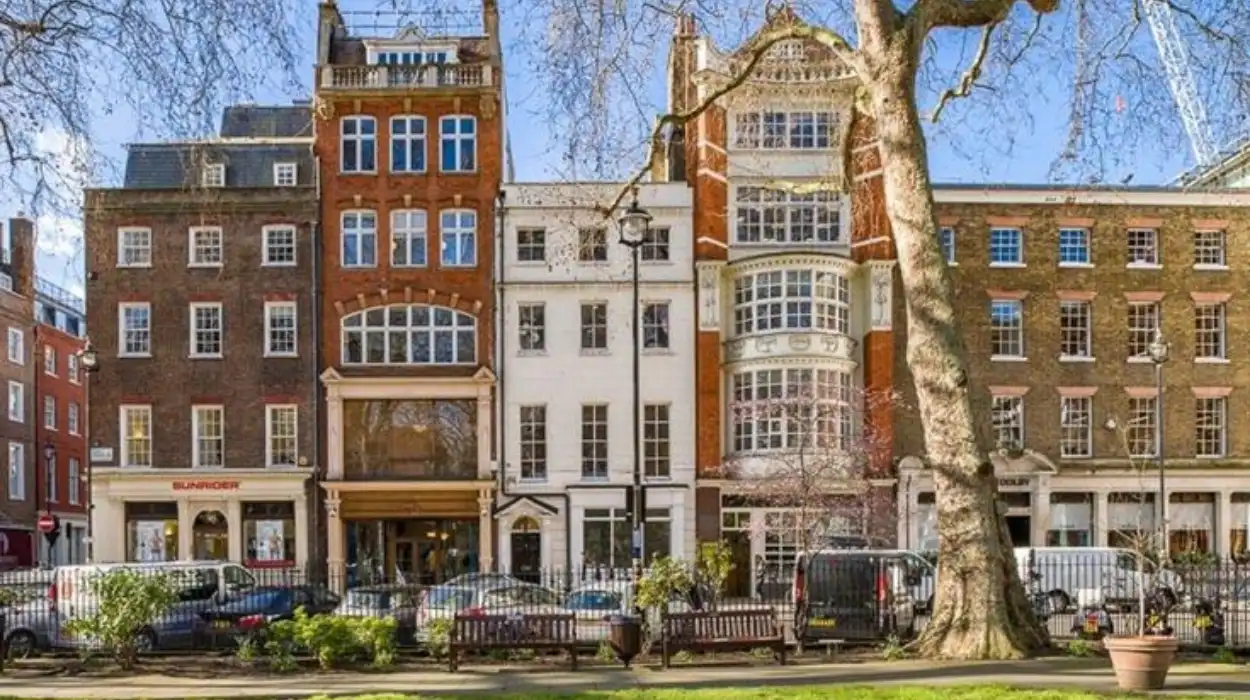
The area’s architecture also helped maintain this relationship. Older Georgian buildings survived alongside Victorian theatres and twentieth-century commercial structures. Westminster’s conservation guidance notes that most seventeenth- and eighteenth-century buildings within the conservation area are listed, alongside important Victorian theatres.
This layered architecture created a physical record of Soho’s cultural evolution. The district’s history remains visible through building scale, plot boundaries, street alignments and surviving façades.
Which historic places explain Soho’s cultural importance today?
Historic Soho remains legible through places such as Soho Square, St Anne’s Church, Shaftesbury Avenue, Carnaby Street, Frith Street, Wardour Street and Old Compton Street. These locations preserve evidence of residential development, immigration, religion, theatre, music, food, fashion and community life.
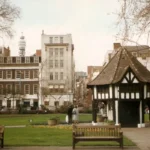
Soho Square remains a central reference point for the district’s seventeenth-century origins. Westminster City Council dates the square to the 1680s and records its present gardens as a historic green space within the densely built West End.
The square’s central half-timbered building dates from 1895, while its landscape has changed through successive periods. Historic planting recorded in the 1790s included almond, peach, cherry, lilac, roses, laburnum and honeysuckle.
St Anne’s Church provides another important historical layer. Consecrated in 1686, it became a major parish institution and developed a strong musical tradition. The church’s original structure was damaged during the Blitz in 1940, while the present church complex was created during the twentieth century.
The church also demonstrates Soho’s ability to retain community functions through periods of physical change. Its parish community survived even when the church building itself was absent.
Shaftesbury Avenue records the Victorian transformation of Soho. Its large scale contrasts with the narrower historic streets around Dean Street, Frith Street and Greek Street. The avenue’s theatres established a permanent relationship between Soho and London’s West End theatre industry.
Frith Street represents another cultural layer. Ronnie Scott’s has operated there since 1959, making the street an important surviving location in the history of British jazz.
Wardour Street connects several historical functions. It became associated with the antique furniture trade during the nineteenth century and later developed a strong connection with the British film industry. Modern media businesses continue the area’s long relationship with production and creative work.
Old Compton Street records another major part of Soho’s history. It is named after Henry Compton, Bishop of London, who consecrated St Anne’s Church in 1686. The street later became strongly associated with restaurants, nightlife and LGBTQ+ culture.
Carnaby Street represents the district’s international fashion reputation. Its 1960s boutiques helped create a new youth-oriented retail culture and contributed to London’s global image as a centre of modern fashion.
These locations demonstrate that Soho’s cultural history is not concentrated in a single building. It is distributed across streets and plots that developed at different times.
To experience this historic district in person today, consult our comprehensive [Best Things to Do in Soho for Food, Music, and Nightlife Lovers] for itineraries and visiting parameters.
How is Soho’s heritage being preserved for the future?
Soho’s heritage survives through its historic street pattern, listed buildings, churches, theatres, clubs, restaurants, plaques and conservation policies. Westminster City Council recognises the area’s cultural history, while current planning protects buildings, community identity, entertainment uses, and the night-time economy today.
Preservation in Soho involves more than protecting individual buildings. The district’s historical value depends on the relationship between buildings, streets, plots, businesses and community uses.
Westminster City Council maintains Soho as a conservation area. Its heritage evidence includes the Soho Heritage and Character Assessment, Soho Public Realm Study and archaeological research prepared for planning and conservation decisions.
Listed buildings form an important part of this system. Westminster’s historical guidance identifies four Grade I listed buildings in the Soho Conservation Area, including the House of St Barnabas in Soho Square and Nos. 26, 27 and 28 Dean Street. It also identifies 35 Grade II* buildings and about 300 Grade II buildings within the area.
These designations protect architectural significance while allowing buildings to remain part of an active urban economy.
The historic street pattern is equally important. Westminster’s assessment identifies the contrast between the original seventeenth-century layout and the Victorian interventions represented by Shaftesbury Avenue and Charing Cross Road. Older streets retain narrow plots and varied building scales, while Victorian roads introduced larger structures.
Modern planning also recognises Soho’s cultural industries. The Soho Neighbourhood Plan was formally adopted by Westminster City Council on 8 October 2021. It covers culture and heritage, commercial activity, entertainment and the night-time economy.
The plan also recognises the historical role of the sex industry. Westminster’s planning policy states that this activity formed part of Soho’s heritage and influenced the area’s character and property patterns. Recording this history provides a more complete account of the district rather than removing uncomfortable elements from the historical record.
Music venues have also received preservation attention. Westminster City Council introduced special support for grassroots music venues, with the 100 Club becoming the first venue to receive a particular local business-rates relief arrangement under the council’s initiative. The venue has hosted live music since 1942 and has been associated with performers including the Rolling Stones, Oasis and the Sex Pistols.
Such measures demonstrate a central issue in Soho’s future: cultural heritage depends on functioning cultural businesses as well as preserved architecture.
The challenge is therefore to maintain the economic and social conditions that produced Soho’s identity while managing development pressure in central London. The area’s small premises, entertainment venues and specialist businesses form part of the historical system that made Soho internationally significant.
Soho’s future historical importance will depend on how effectively this layered identity is documented and maintained. The district already provides an unusually clear record of London’s urban development from seventeenth-century residential planning through Victorian infrastructure, twentieth-century mass entertainment and modern creative industries.
Why did Soho become London’s most famous entertainment and cultural district?
Soho became famous because several historical forces accumulated in the same compact area. Its seventeenth-century streets created a dense urban framework. Immigration introduced specialist trades and international food. Declining residential status created space for commercial activity. Victorian infrastructure improved access and created sites for theatres.
The twentieth century added cinema, jazz, nightclubs, fashion, media and new forms of popular entertainment. Soho’s association with LGBTQ+ life and the sex industry further shaped its reputation, while restaurants and independent businesses maintained its international character.
Its cultural importance is therefore the result of cumulative urban development rather than one defining event.
The district also benefited from its position within the West End. Soho sits close to Piccadilly Circus, Oxford Street, Regent Street, Leicester Square, Covent Garden and major theatres. This location connected local businesses with large audiences and wider commercial networks.
The physical evidence remains unusually strong. Georgian terraces survive beside Victorian theatres. Historic churches stand near restaurants and entertainment venues. Jazz clubs operate in buildings surrounded by media companies and modern businesses. Historic streets remain active commercial routes.
Soho’s history also demonstrates the importance of small-scale urban development. Westminster’s conservation research notes that the area avoided the large-scale property redevelopment experienced in some neighbouring districts. As a result, successive generations of buildings and businesses remained embedded within the historic street pattern.
That continuity explains why Soho remains recognisable as a historic cultural district rather than simply a modern entertainment zone.
From Soho Square’s seventeenth-century development to Carnaby Street’s 1960s fashion culture and Ronnie Scott’s continuing jazz programme, the district records changing definitions of entertainment and cultural identity. Its history includes religion, migration, food, theatre, music, film, fashion, media, nightlife and community activism.
The long-term significance of Soho lies in this layered character. Its streets provide evidence of how London absorbed new populations, industries and cultural movements without completely replacing earlier urban forms.
For history enthusiasts, Soho offers a concentrated record of London’s development. For cultural tourists, its surviving venues and streets connect present-day activity with earlier generations. For educators and students, it provides a case study in migration, urban planning, heritage preservation and cultural industries.
Soho became London’s most famous entertainment and cultural district because its history repeatedly created conditions for new cultural activity. The district changed from fields to fashionable housing, from residential streets to commercial neighbourhood, from Victorian Theatreland to a twentieth-century centre for music and nightlife, and from a famous entertainment quarter into a modern creative and heritage district.
Frequently Asked Question
Where does the name Soho come from?
The name Soho is traditionally associated with a hunting cry used when the area was still open countryside. Before urbanisation, the land was known as Soho Fields and formed part of the fields surrounding Westminster.