Covent Garden is one of central London’s most historically layered districts. Its present identity combines theatre, opera, retail, restaurants, street performance, architecture, and tourism. Its origins are much more agricultural. The area began as a convent garden connected with Westminster Abbey before becoming a planned residential square and then one of London’s most important horticultural markets.
- What was Covent Garden before it became a market?
- When did the Covent Garden fruit and vegetable market begin?
- How did Covent Garden become one of London’s major markets?
- Why was the Covent Garden Market Building constructed?
- How did theatres change Covent Garden’s identity?
- Why did Covent Garden Market move to Nine Elms in 1974?
- How was historic Covent Garden preserved after the market moved?
- How did Covent Garden become an entertainment destination?
- What historic evidence survives in Covent Garden today?
- Why is Covent Garden’s transformation historically important?
- Frequently Asked Question
The name “Covent Garden” derives from the medieval “garden of the Abbey and Convent.” Historic England records that the area was semi-rural in the 15th century and contained a large walled garden serving the monks of Westminster Abbey. After the Dissolution of the Monasteries under Henry VIII, ownership changed and the land eventually passed to the Russell family, later the Earls and Dukes of Bedford.
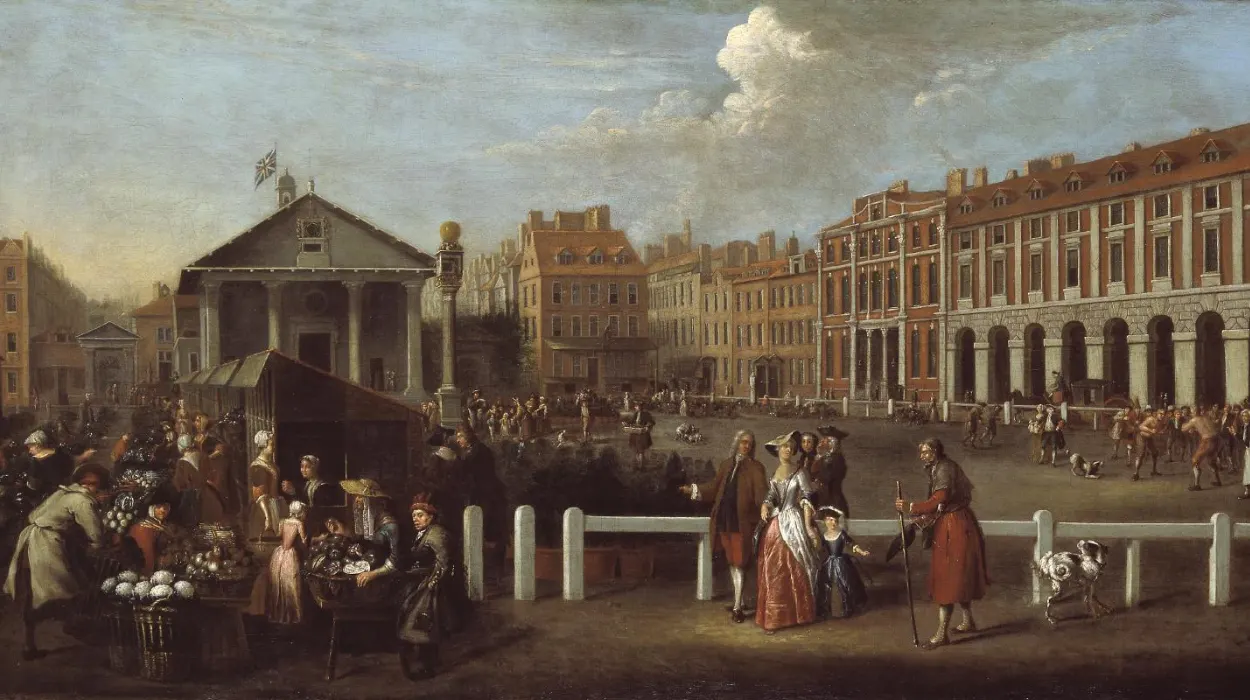
The transformation accelerated during the 17th century. Francis Russell, 4th Earl of Bedford, commissioned architect Inigo Jones to redesign the area. Between 1631 and 1639, Jones created an Italian-inspired piazza surrounded by buildings and established St Paul’s Church as an architectural focal point. The new development changed Covent Garden from agricultural land into an urban district.
An informal food market developed within the new square. The first written reference to “the new market in Covent Garden” dates from 1654. By the late 17th century, the market had become sufficiently important to receive formal legal recognition. In 1670, Charles II granted the Earl of Bedford a Royal Charter establishing the right to operate a market.
The market eventually expanded far beyond its original purpose. It became a major wholesale centre for fruit, vegetables, flowers, and other horticultural products. Its success also created congestion, noise, waste, and pressure on surrounding streets.
By the 19th century, Covent Garden had acquired a purpose-built market building designed by Charles Fowler. By the 20th century, increasing traffic and urban congestion made the historic site unsuitable for large-scale wholesale distribution. The market moved to Nine Elms in 1974.
That relocation created the conditions for another transformation. The historic buildings were preserved and redeveloped instead of being comprehensively demolished. Covent Garden subsequently became a major cultural and entertainment destination, while the market name continued at New Covent Garden Market in Nine Elms.
What was Covent Garden before it became a market?
Covent Garden began as a medieval monastic garden belonging to Westminster Abbey before becoming Bedford family land and then a planned 17th-century residential piazza designed by Inigo Jones, creating the urban framework for the later market.
The earliest history of Covent Garden is agricultural rather than commercial. The land was associated with Westminster Abbey and functioned as a productive garden. The location was outside the most densely developed parts of medieval London and retained a semi-rural character.
The Dissolution of the Monasteries transformed ownership. Henry VIII acquired the former monastic land in 1536. The Crown subsequently granted the property to John Russell, the first Earl of Bedford. The Russell family retained ownership for almost 400 years, making the Bedford estate central to the district’s physical development.
The estate’s redevelopment reflected London’s expanding population and changing architectural ambitions. Inigo Jones was one of England’s leading architects and designers of the early Stuart period. His Covent Garden project introduced a formal open square influenced by Italian urban design.
Jones planned a broad piazza surrounded by buildings intended for fashionable residential use. St Paul’s Church formed the western architectural focus. Historic England dates the church to 1631–1638 and identifies it as a Grade I listed building.
The architecture established an important distinction in Covent Garden’s history. The district was not originally designed as a wholesale market. The market emerged after the piazza had already been created.
This sequence explains why the area has such a distinctive relationship between architecture and commerce. The market occupied a prestigious planned square rather than an industrial site created specifically for wholesale distribution.
When did the Covent Garden fruit and vegetable market begin?
The first written reference to a new market at Covent Garden dates from 1654, while a Royal Charter granted in 1670 formally established the market’s legal rights and restricted its original trade to fruit, flowers, roots, and herbs.
The market initially developed informally. Traders occupied parts of the piazza and sold food directly to London residents. The 1654 reference demonstrates that commercial activity had become established within the square before formal regulation.
After the Great Fire of London in 1666, Covent Garden’s market activity intensified. The market became strongly associated with fresh fruit and vegetables and developed into London’s largest market for horticultural produce.
The 1670 Royal Charter was a major legal milestone. Charles II granted the Earl of Bedford authority to hold a market in the square. The charter permitted trading every day except Sundays and Christmas Day. It also limited the permitted commodities to fruit, flowers, roots, and herbs and restricted the market to the piazza.
The charter created an organised commercial system. The Bedford estate controlled access to the market and collected rents or payments from traders. The market therefore became an important source of income for the estate.
Its financial importance increased over time. According to the history published by Covent Garden London, the annual income obtained from leasing the market rose from £5 in 1670 to £2,500 in 1798.
This growth reflected wider changes in London. A rapidly expanding population required reliable supplies of fresh food. Covent Garden occupied a strategically important position near Westminster, the West End, and major routes through central London.
The market’s success also created practical problems. More traders meant more carts, animals, waste, pedestrians, and deliveries. The original residential piazza was not designed to handle the scale of wholesale commerce that developed there.
How did Covent Garden become one of London’s major markets?
Covent Garden became a major London market because population growth increased demand for fresh produce, while its central location connected growers, wholesalers, retailers, and consumers through an expanding network of roads and transport routes.
The market’s development followed London’s wider urban expansion. During the 18th and 19th centuries, London became increasingly dependent on organised markets to distribute food to a growing population.
Covent Garden specialised in horticultural produce. Fruit, vegetables, flowers, roots, and herbs formed the core of its traditional trade. Produce arrived from areas surrounding London and later from increasingly distant parts of Britain and overseas.
The market’s central position was commercially valuable. It stood close to Westminster and the expanding West End, while nearby streets connected the area with other commercial districts. Its location allowed traders to serve a dense urban population.
The market also changed the social character of the surrounding neighbourhood. Traders, porters, carters, shopkeepers, innkeepers, theatre workers, residents, and visitors occupied the same urban environment.
The commercial activity generated conflict as well as economic value. By 1748, local residents had petitioned against what they described as the nuisances associated with the market. Complaints included noise, smells, obstructed streets, unauthorised alcohol selling, and disorder.
These complaints demonstrate an important feature of historic urban markets. Markets were economic institutions, but they also altered residential life. The same activity that supplied London with food generated congestion and environmental pressures.
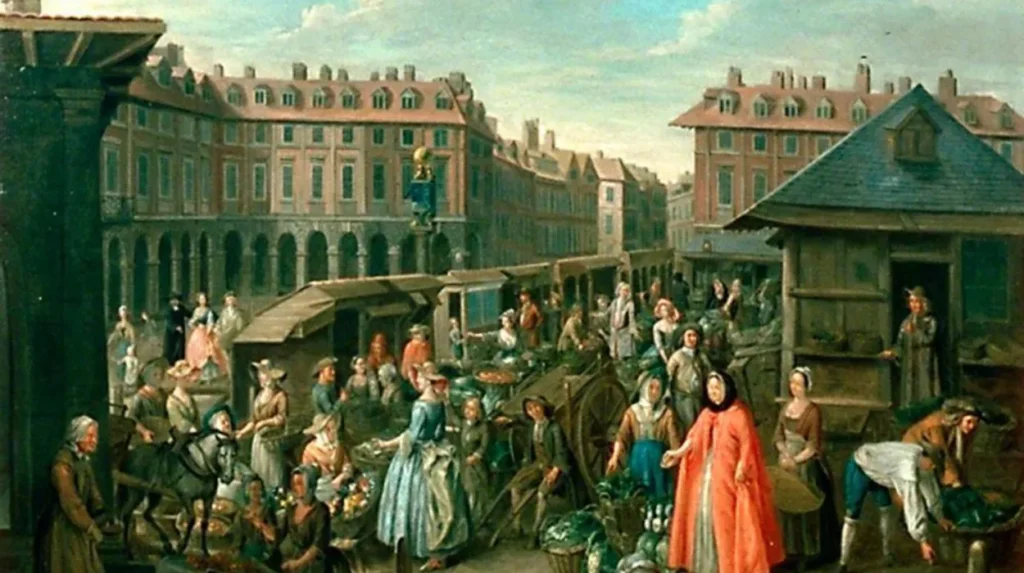
During the 19th century, the market expanded beyond the original piazza. Parliament recorded that additional market buildings included Floral Hall, the Flower Market, Russell Street Market, and Jubilee Market. These facilities increased the total market area and reflected the continued expansion of horticultural commerce.
The expansion also connected Covent Garden more closely with London’s entertainment economy. Theatre activity had already established a strong presence nearby, creating a distinctive combination of food commerce and cultural production.
Why was the Covent Garden Market Building constructed?
The Covent Garden Market Building was constructed because the expanding market required a more organised and hygienic commercial environment, replacing increasingly congested open-air trading with a purpose-built structure designed by architect Charles Fowler.
Parliament passed legislation in 1828 to enable improvements to Covent Garden Market. The Act provided a framework for the market’s layout and the tolls that could be charged.
The new market building was designed by Charles Fowler, an architect who developed a specialist reputation for market architecture. Construction followed the 1828 legislation, and the market opened in May 1830. Covent Garden’s own historical account records a total cost of approximately £61,000, including £34,850 paid to contractor William Cubitt.
Fowler’s building introduced a more systematic approach to market management. Traders were given defined spaces and rents were established more clearly. The structure also gave the market a permanent architectural identity.
The building’s design reflected the practical requirements of wholesale commerce. Its large interior spaces accommodated produce and trading activity while its classical exterior integrated the market into the surrounding urban architecture.
The market did not become smaller after the new building opened. London continued to grow, and demand for horticultural products increased.
Additional facilities were therefore developed during the 19th century. Parliament records the addition of Floral Hall, the Flower Market, Russell Street Market, and Jubilee Market. These structures expanded the market beyond the original three-acre Charter Market.
The historic market complex eventually covered approximately six acres. By the 20th century, however, the same central location that had helped create its commercial success became a major operational disadvantage.
How did theatres change Covent Garden’s identity?
Theatre transformed Covent Garden into a cultural district alongside its commercial role, with the first theatre on the Royal Opera House site opening in 1732 and establishing a performance tradition that continued through later theatres and into the modern era.
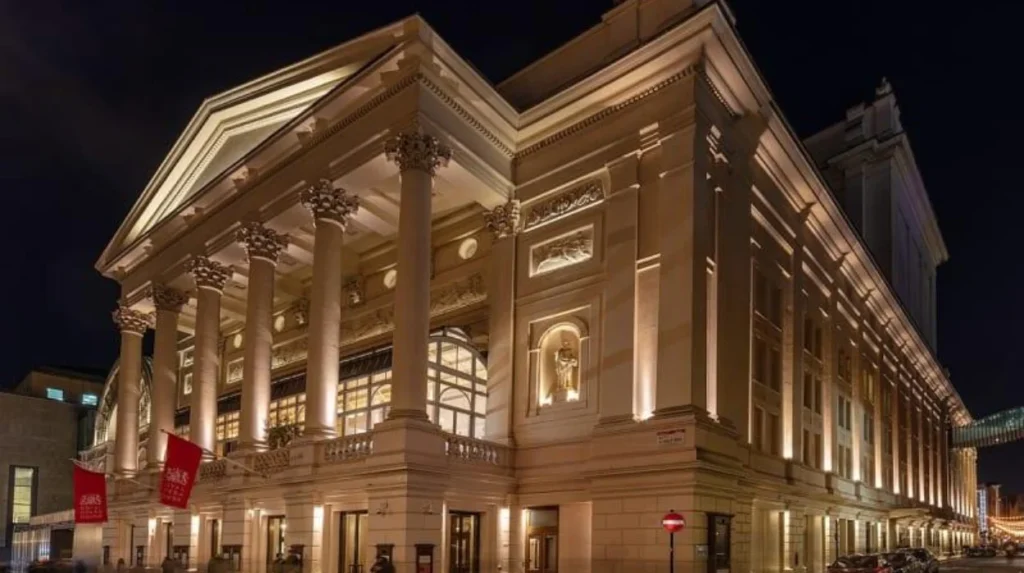
Covent Garden’s entertainment history developed alongside its market history. The Royal Opera House site has contained a theatre since 1732. Historic England identifies the present building as the third theatre on the site and records almost 300 years of continuous theatrical and operatic use.
The theatre became a major cultural institution within the district. Its presence strengthened Covent Garden’s connection with London’s Theatreland, the concentration of major theatres around Covent Garden, Drury Lane, and the Strand.
The current Royal Opera House was designed by Edward Middleton Barry and opened in 1858. Its Grade I listed status reflects the importance of its architecture, interior decoration, technological features, and historical association with opera and theatre.
The building combines Victorian architectural features with later additions. Historic England identifies innovative iron girders and early fibrous plaster techniques among its significant architectural features.
The Royal Opera House became the home of major British opera and ballet institutions. Its modern identity includes The Royal Opera and The Royal Ballet, while its archive preserves institutional records dating from 1732.
The relationship between market and theatre shaped Covent Garden’s distinctive urban economy. Food traders operated around audiences attending performances, while theatres attracted workers, visitors, businesses, and supporting services.
The result was a mixed-use district with unusually strong links between commerce and entertainment. That combination remained important after the wholesale market left the area.
Why did Covent Garden Market move to Nine Elms in 1974?
Covent Garden Market moved to Nine Elms in 1974 because the historic central London site could no longer accommodate modern wholesale operations, with severe traffic congestion, overcrowding, limited space, and inadequate facilities restricting efficient market activity.
The market’s logistical problems intensified during the 20th century. Produce volumes increased while the surrounding street network remained constrained by the historic urban fabric.
Parliamentary records show the scale of the problem. By 1929, the quantity of produce entering the market had doubled compared with 1910, while congestion continued to worsen.
By 1961, the Government concluded that the existing arrangements were inadequate. The Covent Garden Market Act 1961 created the Covent Garden Market Authority, a statutory corporation established to operate the market and address its physical limitations.
The legislation reflected a wider post-war approach to urban planning. Central London required efficient transport systems, while wholesale markets needed space for vehicles, storage, loading, unloading, and modern distribution.
The market authority examined the possibility of rebuilding at Covent Garden. Studies concluded that reconstruction on the original site was impractical. The Covent Garden Market Act 1966 therefore provided powers for relocation to Nine Elms.
Construction of the new market began in 1971. Trading started at Nine Elms in November 1974. The new site provided substantially more space and was designed specifically for wholesale horticultural distribution.
The relocation represented the end of Covent Garden’s centuries-long role as a central London wholesale market. It did not end the market institution itself.
New Covent Garden Market continued the horticultural tradition south of the River Thames. Parliamentary records later described it as the largest wholesale horticultural market in the country. In 1999, its business value was recorded at approximately £478 million.
The move therefore separated two functions that had previously occupied the same urban space: wholesale food distribution and cultural tourism.
How was historic Covent Garden preserved after the market moved?
Historic Covent Garden was preserved through planning controls, listed-building protection, community opposition to large-scale redevelopment, and adaptive reuse of market structures, allowing the district’s historic architecture to support new retail, cultural, and tourism functions.
The departure of the wholesale market created a major redevelopment question. The historic buildings occupied valuable central London land, and redevelopment pressure was substantial during the 1970s.
Plans for extensive demolition encountered strong opposition from local residents and conservation campaigners. Covent Garden London records that redevelopment proposals were stopped following a vigorous community campaign. The area subsequently underwent a major renovation lasting several years.
The preservation process reflected a broader change in British attitudes toward historic urban environments. Large-scale redevelopment had dominated many post-war planning projects, but heritage conservation increasingly became part of regeneration policy.
The Greater London Authority has described Covent Garden as an example of public-led regeneration in which the former market buildings were brought under public ownership and planning controls were used alongside community engagement. Listed buildings and conservation areas helped restrict inappropriate redevelopment.
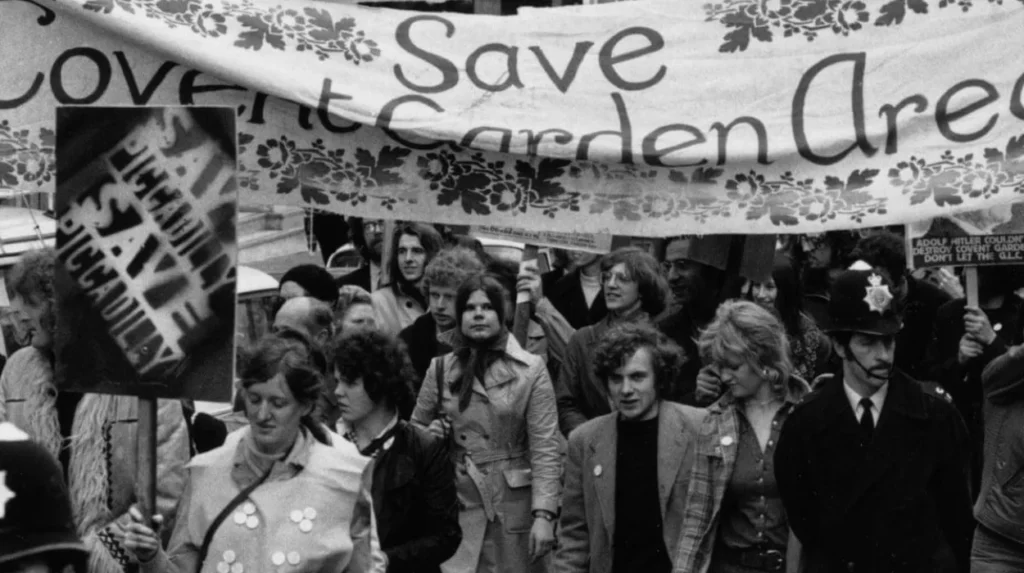
Historic England’s listing system provides statutory protection for important buildings. St Paul’s Church, for example, is Grade I listed. The Royal Opera House is also Grade I listed, reflecting its exceptional architectural and historical significance.
Preservation did not mean freezing the district in its historic condition. Instead, former market spaces acquired new functions.
The Market Building became a retail and visitor environment. Former commercial spaces supported shops, food businesses, cultural uses, and public activity. The piazza remained the central open space.
This process is an example of adaptive reuse. Adaptive reuse means retaining an existing historic structure while changing its function to meet contemporary requirements.
Covent Garden demonstrates how adaptive reuse can preserve architectural evidence while allowing an urban district to remain economically active.
How did Covent Garden become an entertainment destination?
Covent Garden became an entertainment destination after wholesale trading left in 1974, as preserved market buildings, the Piazza, theatres, restaurants, shops, cultural institutions, and street performance combined to create a visitor-focused central London district.
The post-1974 transformation changed the economic foundation of Covent Garden. Wholesale produce distribution moved to Nine Elms, while the historic site gained space for other commercial and cultural activities.
The renovated district reopened in 1980 as a specialist shopping centre. Covent Garden London describes the redevelopment as Europe’s first speciality shopping centre and identifies the Market Building and Piazza as central elements of the modern destination.
Retail became a major component of the new economy. Independent businesses, specialist shops, restaurants, cafés, and later international brands occupied spaces formerly associated with market commerce.
Entertainment remained equally important. The Royal Opera House continued its historic role, while nearby theatres strengthened Covent Garden’s position within London’s West End cultural district.
Street performance became another defining feature. The Piazza provides an open public space where performers engage visitors and contribute to the area’s contemporary entertainment economy.
Modern Covent Garden therefore retains the structure of a market district while operating through different forms of consumption. Visitors purchase food, clothing, gifts, cultural experiences, and entertainment rather than wholesale fruit and vegetables.
To experience this historic landmark in person today, consult our comprehensive [Top Attractions in Covent Garden Every Tourist Should Experience During Their London Visit] for itineraries and visiting parameters.
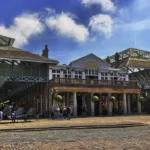
The physical environment still communicates the market’s earlier function. The central Market Building remains a prominent architectural feature, while the Piazza preserves the spatial framework established during the 17th century.
The area also retains evidence of its theatrical development. The Royal Opera House stands beside the market complex, linking the modern entertainment district with its 18th-century theatrical origins.
Covent Garden’s modern identity is therefore the result of cumulative development rather than a single redevelopment project. Medieval agricultural land became a planned piazza, the piazza became a market, the market became a wholesale distribution centre, and the historic site subsequently became a cultural and entertainment district.
What historic evidence survives in Covent Garden today?
Historic evidence survives through the Piazza, Market Building, St Paul’s Church, Royal Opera House, listed architecture, street layouts, archival collections, and preserved market structures that collectively document Covent Garden’s transformation across several centuries.
The Piazza remains the most recognisable physical element of Inigo Jones’s 17th-century design. Its survival provides direct evidence of the planned urban development commissioned by the Bedford estate.
St Paul’s Church remains another major survival. Designed by Inigo Jones between 1631 and 1638, it is Grade I listed and retains its architectural relationship with the Piazza.
The Market Building provides evidence of the 19th-century wholesale market. Designed by Charles Fowler and opened in 1830, it represents the period when market architecture became an established specialist building type.
The Royal Opera House provides a separate layer of evidence. The present theatre opened in 1858 and incorporates architectural and technological features associated with Victorian theatre construction. Historic England identifies the auditorium, decorative interiors, iron structural technology, and historic theatre use as significant elements.
The Royal Opera House’s archival collections provide documentary evidence extending back to 1732. These collections record the artistic and organisational history of the theatres that occupied the site.
The preservation of these buildings allows researchers to study changes in architecture, commerce, entertainment, transport, planning, and social life.
Archaeology also contributes to the wider history of the market. Investigations at New Covent Garden Market in Nine Elms uncovered nearly 100 burials from a 19th-century cemetery associated with St George the Martyr. Osteological research has provided evidence about health and living conditions among poorer London communities during rapid urbanisation.
This archaeological evidence demonstrates that the history of Covent Garden Market extends beyond the famous Piazza. The market’s relocation to Nine Elms created another archaeological record of London’s working population and urban expansion.
The combined architectural, documentary, and archaeological evidence makes Covent Garden important for historical research. It provides material for studying urban planning, food distribution, theatre history, architectural conservation, working life, and London’s changing economy.
Why is Covent Garden’s transformation historically important?
Covent Garden’s transformation is historically important because it demonstrates how London repeatedly adapts historic urban spaces, changing agricultural land into a planned district, a wholesale market, and finally a major cultural destination while retaining significant architectural evidence.
Covent Garden illustrates the relationship between London’s population growth and its commercial infrastructure. The market existed because the city required large-scale food distribution. Its eventual relocation occurred because the same central location could no longer handle modern wholesale logistics.
The story also demonstrates the influence of property ownership on urban development. The Russell family controlled the land for centuries, while the Bedford estate shaped the original piazza, market arrangements, rents, and architectural development.
Legislation played an equally important role. The 1670 Royal Charter formalised the market. The 1828 Act regulated its improvement. The 1961 Act established the Covent Garden Market Authority, while the 1966 legislation enabled relocation to Nine Elms.
Architecture provided continuity through these economic changes. Inigo Jones’s Piazza and St Paul’s Church survived the transition from residential square to market district. Charles Fowler’s market building survived the departure of wholesale traders. The Royal Opera House continued its theatrical function through major reconstruction and modernisation.
The district also demonstrates the importance of conservation policy in central London. Its survival was not simply the result of age. Planning decisions, statutory listing, community campaigning, public ownership, and adaptive reuse all contributed to the preservation of historic structures.
The modern entertainment destination therefore remains connected to its commercial past. The Market Building still occupies the centre of the historic district. The Piazza remains the principal public space. The Royal Opera House continues a theatrical tradition that began in 1732.
Covent Garden also retains a connection with the horticultural market through New Covent Garden Market at Nine Elms. The physical market moved, but the institutional and commercial tradition continued. Parliamentary records confirm that the new market became a major national wholesale horticultural centre.
Its future historical relevance lies in this continuity. Covent Garden is not simply a preserved historic quarter. It is an example of an urban environment that has repeatedly changed function while retaining physical evidence from earlier periods.
For historians, educators, students, conservation specialists, and genealogical researchers, the district provides a concentrated record of London’s transformation. Its architecture records planned development, its market history records food distribution, its theatres record cultural change, and its conservation history records modern attitudes toward heritage.
The evolution from convent garden to piazza, from piazza to fruit and vegetable market, and from wholesale market to entertainment destination reflects the broader development of London itself. Covent Garden’s present identity rests on these accumulated layers of history rather than on a single period.
Today, the district’s shops, restaurants, performances, cultural venues, and public spaces operate within an architectural environment shaped over centuries. The market that once supplied London households has disappeared from the original site, but its buildings, spatial organisation, historical name, and surviving institutions continue to define Covent Garden.
That continuity explains why Covent Garden remains one of London’s most significant historic urban districts. Its transformation records how commerce, architecture, culture, legislation, transport, conservation, and tourism reshaped the same central London location across more than four centuries.
Frequently Asked Question
What was Covent Garden originally?
Covent Garden originally consisted of a medieval garden belonging to Westminster Abbey. The land later passed to the Russell family before being developed into a planned 17th-century piazza.