London’s urban landscape reflects centuries of destruction, rebuilding, and adaptation. Few events altered the city more profoundly than the Great Fire of 1666. Beginning in a bakery on Pudding Lane and spreading rapidly through the medieval city, the fire destroyed much of the historic urban core. The catastrophe transformed architecture, planning regulations, public safety systems, and the future development of England’s capital.
- What was the Great Fire of London and why is it historically important?
- How did the Great Fire of London start?
- What parts of London were destroyed during the fire?
- How did authorities stop the Great Fire?
- How did rebuilding transform London’s architecture and planning?
- Who were the key figures involved in rebuilding London?
- Which historical landmarks allow visitors to follow the Great Fire trail today?
- Pudding Lane
- The Monument
- St Paul’s Cathedral
- St Magnus the Martyr
- Guildhall
- Museum of London Archaeological Discoveries
- What archaeological evidence exists from the Great Fire of London?
- How did the Great Fire influence future urban safety and governance?
- Why does the Great Fire of London remain relevant today?
Today, visitors can trace the route of the disaster through surviving landmarks, memorials, churches, and reconstructed streets. Understanding these locations provides insight into how one of the most significant urban disasters in European history reshaped London permanently.
What was the Great Fire of London and why is it historically important?
The Great Fire of London was a catastrophic urban fire that burned from 2 to 6 September 1666, destroying approximately 13,200 houses, 87 parish churches, and most of the medieval City of London while triggering major reforms in architecture, planning, and public safety.
The Great Fire of London began shortly after midnight on 2 September 1666 in the bakery of Thomas Farriner on Pudding Lane. Strong easterly winds, densely packed timber buildings, and prolonged dry weather created ideal conditions for rapid fire spread.
The fire continued for nearly four days. By the time it was extinguished on 6 September, approximately 373 acres of the City of London had been devastated. Contemporary records indicate that around 70,000 of the city’s 80,000 inhabitants within the walls lost their homes.
The disaster occurred only one year after the Great Plague of 1665, another major crisis that had already weakened the city socially and economically.
Historically, the fire marked a turning point between medieval and modern London. Reconstruction efforts introduced new building standards, wider streets, and greater use of brick and stone. The rebuilding programme became one of the largest urban redevelopment projects in seventeenth-century Europe.
How did the Great Fire of London start?
The fire started in Thomas Farriner’s bakery on Pudding Lane during the early hours of 2 September 1666 and spread rapidly because of wooden buildings, narrow streets, stored fuel supplies, and strong winds across the medieval city.
Thomas Farriner served as baker to King Charles II. Investigations conducted after the disaster concluded that the fire originated in his bakery oven area.
Seventeenth-century London contained tightly packed timber-framed houses that frequently overhung narrow streets. Many buildings stored combustible goods including coal, wood, pitch, tar, oil, and textiles.
Once flames escaped the bakery, they quickly jumped between adjoining properties. The city’s medieval street pattern created a dense urban environment where firebreaks were limited.
Strong winds blowing from the east accelerated the spread. Burning debris travelled through the air and ignited structures far ahead of the main fire front.
Early firefighting efforts proved ineffective. Demolishing buildings to create firebreaks was the primary method available, but delays in authorising demolitions allowed the blaze to gain momentum.
Within hours, large sections of the city were burning simultaneously.
What parts of London were destroyed during the fire?
The Great Fire destroyed most of the medieval City of London, including homes, churches, commercial districts, civic buildings, and St Paul’s Cathedral, while leaving areas outside the main fire zone largely intact.
The destruction covered much of the area enclosed by London’s historic city walls.
Among the most significant losses were 87 parish churches, Guildhall records, warehouses, markets, and thousands of residences.
The medieval version of St Paul’s Cathedral was completely destroyed. Intense heat melted lead roofing and caused the stone structure to collapse.
Important commercial districts around Cheapside, Cornhill, and Lombard Street suffered extensive damage. These areas formed the economic heart of the city.
Government surveys conducted after the fire estimated the destruction of approximately:
- 13,200 houses
- 87 parish churches
- 44 company halls
- Numerous civic buildings
- Most administrative records stored within affected structures
The financial impact was enormous. Modern estimates place reconstruction costs in the equivalent of billions of pounds.
Despite the scale of destruction, the fire did not consume Westminster, Whitehall, or areas west of the City. These districts survived largely because firefighting measures eventually halted the advancing flames.
How did authorities stop the Great Fire?
Authorities ultimately stopped the fire by creating extensive firebreaks through controlled demolition, reducing available fuel, and taking advantage of weakening winds that slowed the spread of flames.
King Charles II and his brother James, Duke of York, became actively involved in coordinating firefighting efforts.
Firefighting technology in 1666 remained limited. Water buckets, hand pumps, and primitive engines could not effectively control a fire of such magnitude.
The most successful strategy involved destroying buildings ahead of the fire. Gunpowder and manual demolition created open spaces that interrupted the fire’s path.
Initially, local officials hesitated to order widespread demolition because of property rights concerns. This delay contributed significantly to the disaster’s expansion.
As conditions worsened, authorities authorised more aggressive measures.
By 5 September, the combination of larger firebreaks and calmer weather reduced the fire’s intensity. Remaining outbreaks were gradually contained and extinguished.
The experience highlighted weaknesses in urban emergency management and influenced future approaches to disaster response.
How did rebuilding transform London’s architecture and planning?
Rebuilding transformed London by replacing many timber structures with brick and stone buildings, introducing stricter construction regulations, improving street layouts, and creating a safer urban environment resistant to future fires.
Parliament passed the Rebuilding Act of 1667 to regulate reconstruction.
The legislation required greater use of non-combustible materials. Brick and stone became the preferred building materials for new structures within the city.
Building designs were standardised according to property size and location. Regulations specified wall thickness, construction methods, and roof materials.
Urban planners proposed ambitious redesigns for London. Several architects submitted comprehensive reconstruction plans.
Notable proposals came from:
Sir Christopher Wren
Wren envisioned broad avenues, geometric street layouts, and monumental public spaces inspired by European capitals.
John Evelyn
Evelyn proposed a rational grid system with improved circulation and fire-resistant construction.
Robert Hooke
Hooke contributed surveying expertise and practical rebuilding solutions.
Property ownership complexities prevented complete implementation of these plans. However, rebuilding still produced important improvements.
Many streets became wider. Building standards improved significantly. Fire safety considerations became central to urban development.
The reconstructed city represented a transition from medieval urbanism to a more organised modern environment.
Who were the key figures involved in rebuilding London?
Several influential individuals directed London’s recovery, including King Charles II, Sir Christopher Wren, Robert Hooke, and municipal authorities responsible for surveying, planning, and implementing reconstruction projects throughout the city.
King Charles II provided political leadership and supported reconstruction legislation.
Sir Christopher Wren emerged as the most famous architectural figure associated with rebuilding. Although not all of his urban planning proposals were adopted, his influence on London’s architecture became substantial.
Wren designed more than 50 churches rebuilt after the fire.
His most celebrated achievement was the new St Paul’s Cathedral, constructed between 1675 and 1710.
Robert Hooke served as Surveyor to the City of London. He conducted land surveys, resolved property disputes, and assisted with rebuilding logistics.
The Court of Aldermen and City authorities coordinated compensation, planning approvals, and infrastructure restoration.
Together, these individuals shaped the appearance of the post-fire city and established architectural traditions that remain visible today.
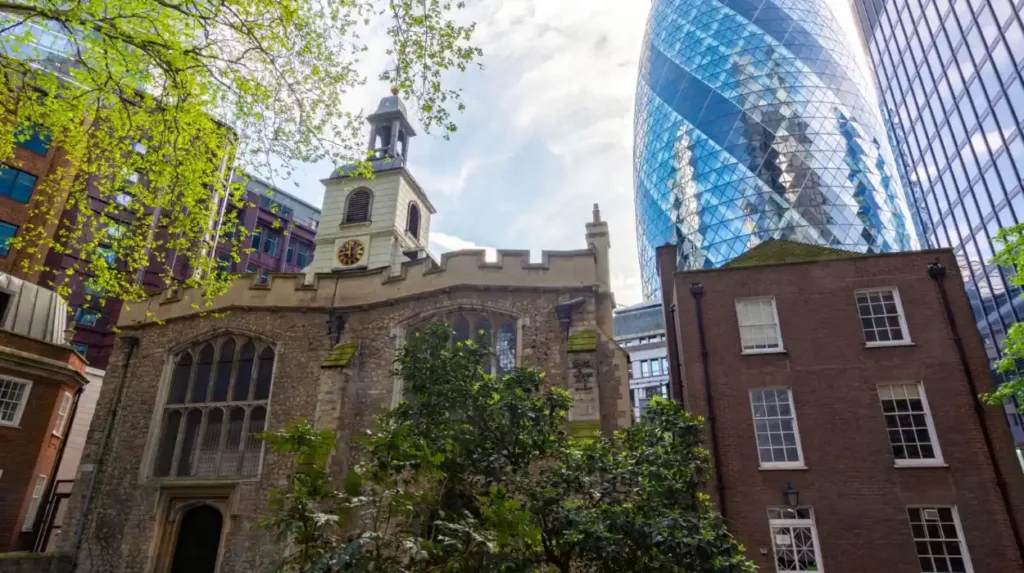
Which historical landmarks allow visitors to follow the Great Fire trail today?
Several surviving and commemorative landmarks enable visitors to trace the disaster’s path, including Pudding Lane, The Monument, St Paul’s Cathedral, and reconstructed churches designed during London’s post-fire rebuilding programme.
Modern London preserves numerous locations connected directly to the events of 1666.
Pudding Lane
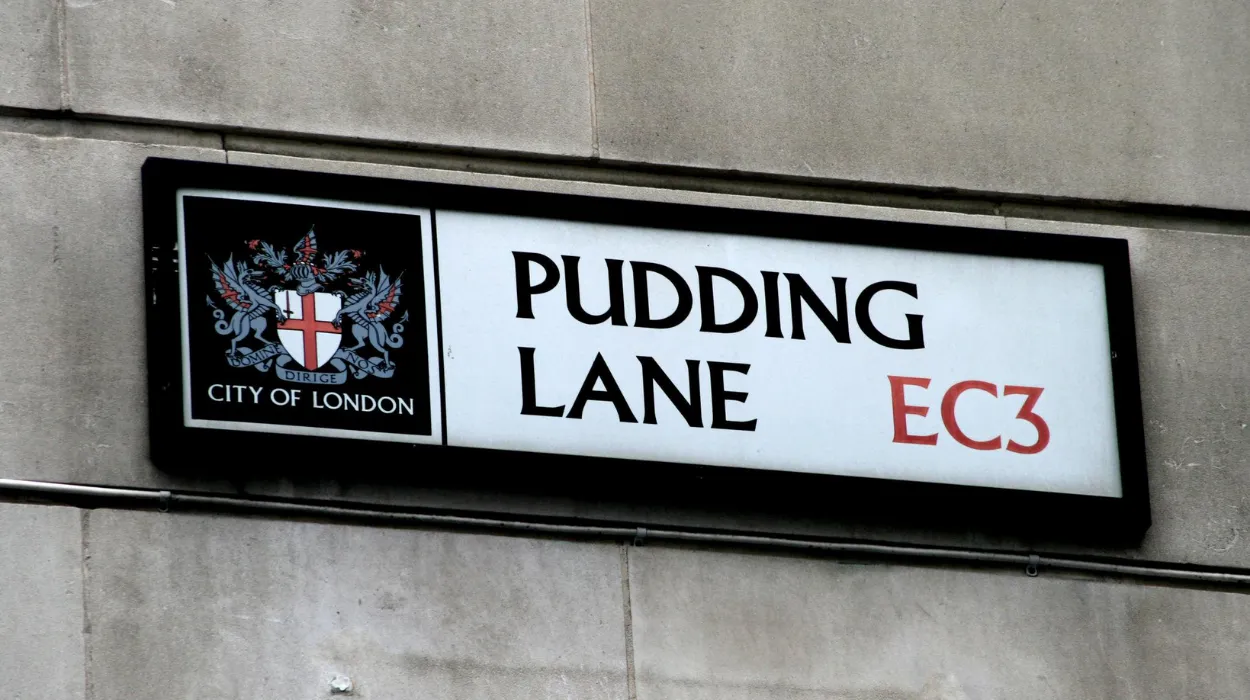
Pudding Lane marks the location where the fire began.
Although the original bakery no longer exists, the site remains one of London’s most important historical reference points.
The Monument
The Monument stands close to the fire’s point of origin.
Designed by Sir Christopher Wren and Robert Hooke, the structure was completed in 1677.
At 202 feet high, its height corresponds approximately to its distance from the bakery where the fire started.
St Paul’s Cathedral
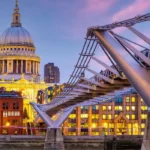
The current St Paul’s Cathedral represents one of the most visible outcomes of post-fire reconstruction.
Wren’s masterpiece replaced the medieval cathedral destroyed during the disaster.
St Magnus the Martyr
This church stands near London Bridge and contains historical connections to the fire’s early stages.
Guildhall
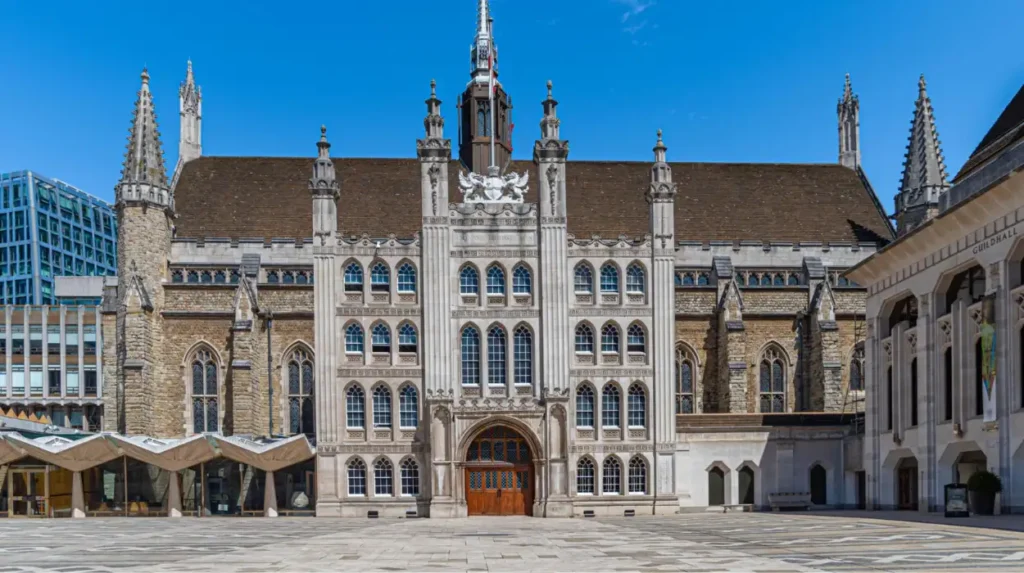
Guildhall preserves records and exhibitions relating to London’s medieval and post-fire history.
Museum of London Archaeological Discoveries
Excavations have uncovered fire-damaged foundations, household objects, and structural remains that provide evidence of the catastrophe.
To experience these historic landmarks in person today, consult our comprehensive Following the Great Fire of London Trail: Key Historical Landmarks to Visit for itineraries and visiting parameters.
What archaeological evidence exists from the Great Fire of London?
Archaeological investigations have uncovered burned foundations, household goods, commercial materials, and structural remains that provide direct physical evidence of the fire’s destruction and the city’s subsequent rebuilding efforts.
Excavations throughout the City of London continue to reveal layers associated with the 1666 fire.
Archaeologists have identified distinct burn layers containing charcoal, ash, collapsed masonry, and melted materials.
Recovered artefacts include:
Ceramics, examples including domestic pottery and imported tableware.
Metal objects, examples including tools and trade equipment.
Personal possessions, examples including coins and jewellery.
Commercial goods, examples including textiles and warehouse stock.
These discoveries help researchers understand everyday life before the fire and document the scale of destruction.
Archaeological evidence also reveals how reconstruction altered street layouts, property boundaries, and building techniques.
Modern development projects frequently generate new discoveries, expanding historical understanding of seventeenth-century London.
How did the Great Fire influence future urban safety and governance?
The disaster fundamentally changed urban governance by encouraging fire-resistant construction, organised emergency response systems, improved planning regulations, and stronger municipal oversight of building practices throughout London and beyond.
Before 1666, urban fire prevention relied largely on local responsibility.
After the disaster, authorities recognised the need for stronger regulatory frameworks.
New laws established stricter building controls and construction standards.
Insurance companies began developing more formal fire protection arrangements.
Fire brigades evolved gradually from private insurance-based services into more organised systems.
The fire also influenced urban planning internationally.
Cities across Europe studied London’s experience when designing regulations for rebuilding after disasters.
The event demonstrated the relationship between architecture, governance, public safety, and economic resilience.
Many principles introduced after 1666 continue to influence modern building codes.
Why does the Great Fire of London remain relevant today?
The Great Fire remains relevant because it illustrates how cities respond to catastrophe, rebuild infrastructure, preserve heritage, improve safety standards, and balance historical identity with modern urban development.
Modern cities continue to face challenges involving fire, climate risks, infrastructure resilience, and disaster recovery.
The Great Fire provides a historical case study of large-scale urban transformation.
The reconstruction programme demonstrated how rebuilding can modernise infrastructure while preserving cultural significance.
The surviving churches, monuments, streets, and archaeological remains connect contemporary London to its seventeenth-century past.
Educational institutions use the fire to teach urban history, governance, architecture, and emergency management.
Heritage organisations preserve fire-related landmarks because they document a defining moment in London’s development.
For cultural tourists, educators, genealogical researchers, and historians, the Great Fire remains one of the most significant events in the city’s history. Its legacy is visible not only in monuments and museums but also in the fundamental structure of modern London itself. The rebuilt city that emerged after 1666 became the foundation for London’s rise as a global commercial, political, and cultural centre. Understanding the fire therefore means understanding the origins of the modern metropolis that millions of people visit and inhabit today.
When did the Great Fire of London happen?
The Great Fire of London took place between 2 and 6 September 1666, burning for nearly four days and destroying much of the medieval City of London.