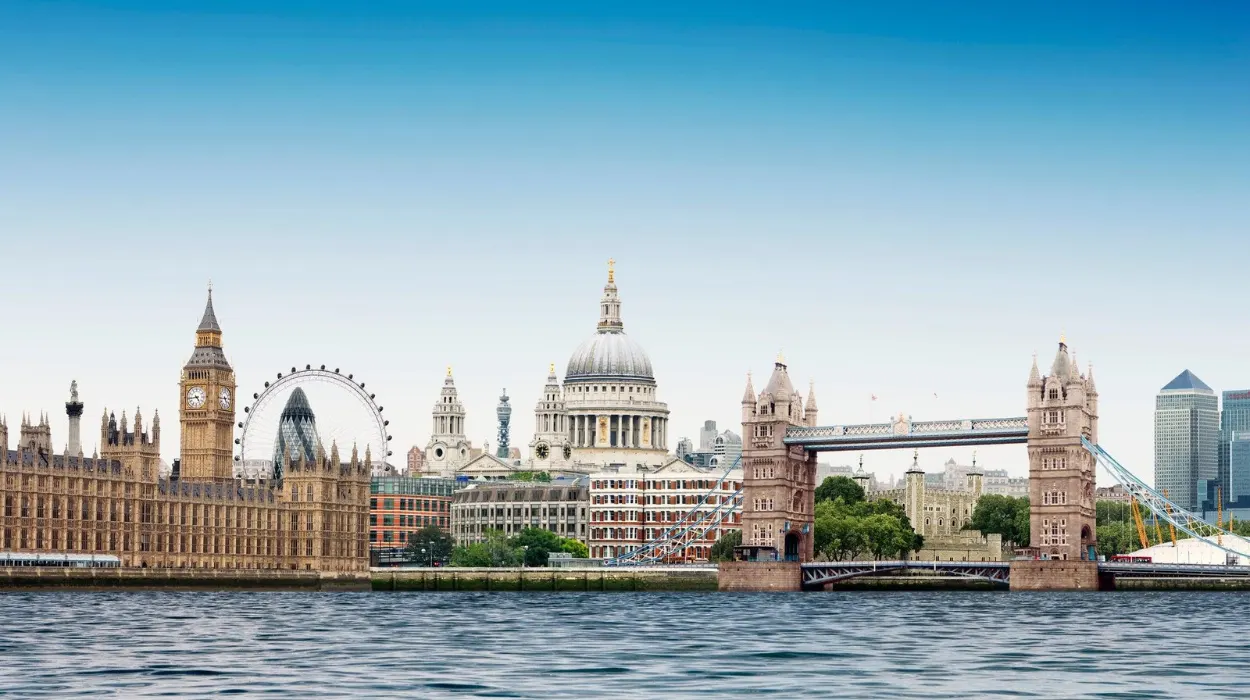
London ranks among the world’s most photographed cities because it combines nearly 2,000 years of history with globally recognised architecture, royal landmarks, modern skylines, riverside panoramas, gardens, museums, and vibrant neighbourhoods. Every district presents a different visual identity, making the capital an enduring destination for photographers, historians, tourists, educators, and digital creators seeking compelling images while exploring Britain’s cultural heritage.
- Why is London one of the world’s most Instagrammable cities?
- Which historic landmarks create London’s most iconic photographs?
- Tower Bridge
- The Tower of London
- Palace of Westminster and Big Ben
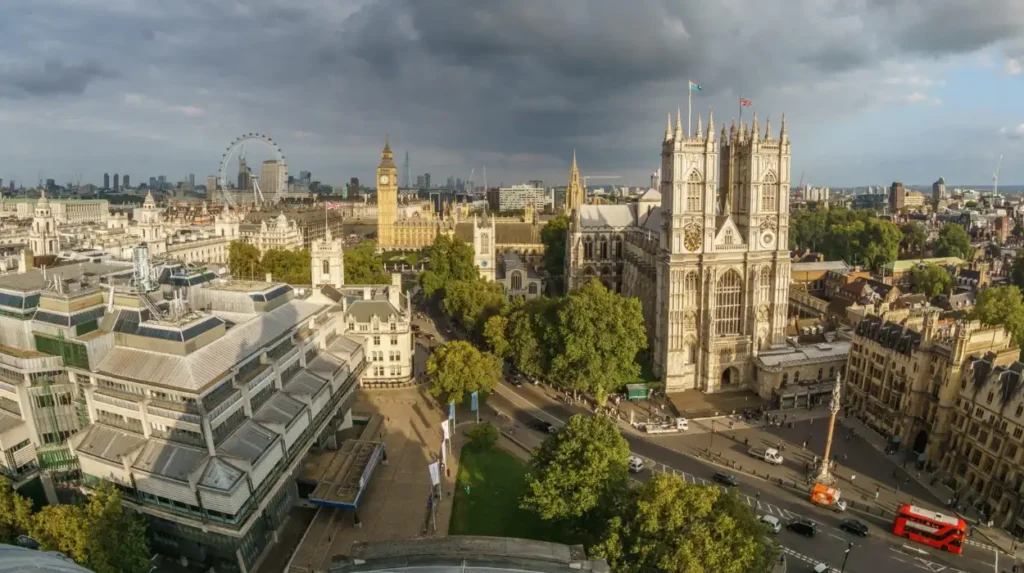
- Westminster Abbey
- St Paul’s Cathedral
- Where can visitors capture London’s best skyline views?
- Which London bridges offer the most photogenic perspectives?
- Which royal parks produce London’s best nature photography?
- How do London’s colourful neighbourhoods create distinctive social media content?
- Why do London’s museums and cultural buildings attract photographers?
- Which riverside locations provide London’s classic postcard views?
- How has London’s architectural evolution shaped its photographic appeal?
- Why do seasonal events transform London’s most Instagrammable locations?
- What makes London’s most Instagrammable places historically significant as well as visually striking?
- Frequently Asked Questions
Why is London one of the world’s most Instagrammable cities?
London combines Roman foundations, medieval landmarks, royal palaces, Victorian engineering, Georgian streets, modern skyscrapers, landscaped parks, and multicultural neighbourhoods within one metropolitan area. This extraordinary architectural diversity creates visually distinctive locations that consistently attract photographers, historians, tourists, educators, and global social media audiences.
London’s visual appeal extends far beyond famous landmarks. The city preserves nearly two millennia of urban development, allowing visitors to photograph structures from vastly different historical periods within a single day. Roman walls, Norman castles, Tudor palaces, Georgian terraces, Victorian railway stations, Art Deco buildings, Brutalist landmarks, and contemporary glass towers exist within a relatively compact area.
The River Thames enhances London’s photographic appeal by providing reflective viewpoints and uninterrupted sightlines towards iconic structures. Bridges, embankments, and elevated viewpoints offer compositions that change dramatically throughout the day as sunlight alters the city’s appearance.
London also benefits from four distinct seasons. Spring blossom transforms royal parks. Summer extends golden hour well into the evening. Autumn colours frame historic monuments. Winter creates atmospheric cityscapes enhanced by seasonal lighting and festive decorations.
For photographers, this combination of historical continuity and modern urban development provides an exceptional range of visual subjects without leaving the city.
Which historic landmarks create London’s most iconic photographs?
London’s historic landmarks represent nearly one thousand years of political, religious, military, and architectural history. Structures including Tower Bridge, the Tower of London, Westminster Abbey, Big Ben, and St Paul’s Cathedral remain internationally recognised photographic symbols of Britain’s national heritage.
Tower Bridge
Completed in 1894, Tower Bridge remains one of London’s defining landmarks. Designed by Sir Horace Jones and engineer Sir John Wolfe Barry, the combined bascule and suspension bridge solved increasing river traffic while maintaining navigation for commercial vessels.
Its Gothic Revival towers deliberately harmonised with the nearby Tower of London despite being an engineering achievement of the Industrial Revolution.
Photographers favour sunrise from Butler’s Wharf, sunset from Potters Fields Park, and blue-hour compositions from the South Bank.
The Tower of London
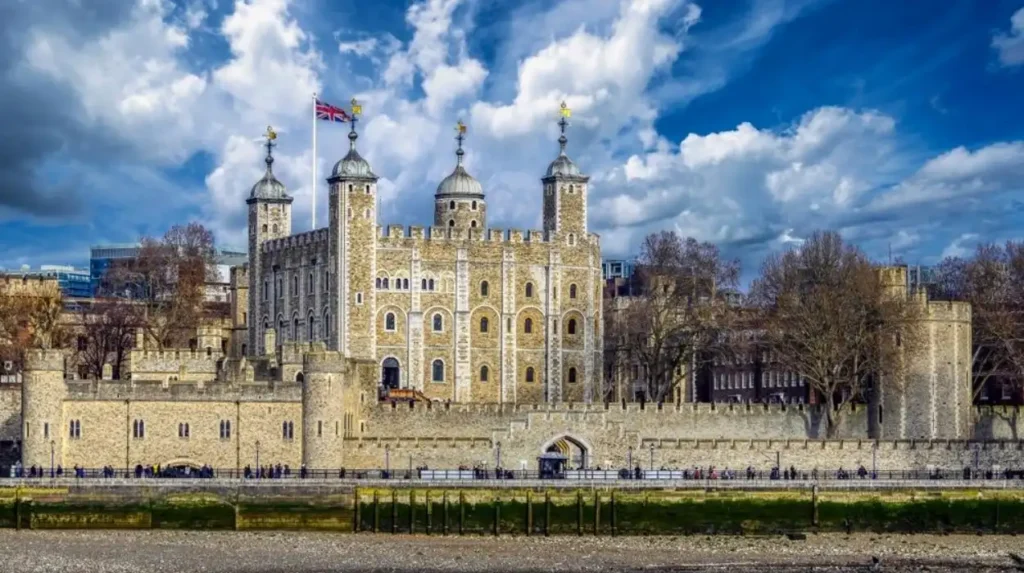
Founded by William the Conqueror around 1078, the Tower of London served as a royal fortress, palace, armoury, treasury, prison, and execution site.
Today the UNESCO World Heritage Site houses the Crown Jewels and preserves almost one thousand years of English history. Its Norman architecture contrasts dramatically with surrounding skyscrapers, producing one of London’s strongest visual juxtapositions.
Palace of Westminster and Big Ben
The Palace of Westminster represents the centre of British parliamentary democracy. Following the devastating fire of 1834, architects Charles Barry and Augustus Pugin designed the current Gothic Revival complex.
Elizabeth Tower, commonly known as Big Ben after its Great Bell, has become one of the world’s most recognisable architectural icons.
The bridge, riverside, and opposite South Bank provide classic perspectives throughout the day.
Westminster Abbey
Founded in the tenth century and rebuilt under King Henry III beginning in 1245, Westminster Abbey has hosted every English and British coronation since 1066.
Its Gothic architecture, flying buttresses, stained glass, and intricate stone carvings attract architectural photographers while reflecting over seven centuries of royal ceremonial history.
St Paul’s Cathedral
Sir Christopher Wren designed St Paul’s Cathedral after the Great Fire of London in 1666. Construction continued between 1675 and 1710.
Its monumental dome dominates London’s skyline and remains visible from numerous viewpoints, especially across the Millennium Bridge.
To experience these historic landmarks in person today, consult our comprehensive [The Stories Behind London’s Iconic Landmarks and Their Historical Significance Today] for itineraries and visiting parameters.
Where can visitors capture London’s best skyline views?
London offers numerous elevated viewpoints that showcase the city’s historical evolution from medieval settlements to a global financial centre. Observation decks, bridges, hills, and riverside locations reveal distinctive skylines featuring centuries of architectural development within a single panoramic composition.
Primrose Hill
Rising approximately 63 metres above sea level, Primrose Hill offers one of London’s classic skyline panoramas. The protected view preserves uninterrupted sightlines towards the City of London, Canary Wharf, and Westminster.
Morning light provides exceptional clarity while evening sunsets illuminate both historic and modern buildings.
Greenwich Park
Greenwich Park occupies one of London’s oldest enclosed royal parks. Established during the fififteenth century, it overlooks the River Thames and Canary Wharf skyline.
The viewpoint uniquely combines maritime history, Georgian architecture, and contemporary commercial development.
Sky Garden
Located atop 20 Fenchurch Street, Sky Garden combines indoor gardens with expansive panoramic views across central London.
Visitors photograph Tower Bridge, The Shard, St Paul’s Cathedral, the Thames, and numerous historic districts from multiple observation levels.
The Shard Viewing Gallery
Completed in 2012, The Shard reaches 310 metres, making it one of Western Europe’s tallest buildings.
Its observation levels provide 360-degree perspectives extending approximately 64 kilometres under favourable weather conditions.
Which London bridges offer the most photogenic perspectives?
London’s bridges provide historically significant viewpoints linking the city’s northern and southern districts. Each crossing frames unique architectural compositions featuring royal landmarks, financial districts, churches, historic waterfronts, and modern developments while reflecting centuries of engineering advancement.
Tower Bridge remains the most photographed crossing because of its architectural grandeur and mechanical design.
Westminster Bridge frames Big Ben and the Palace of Westminster with exceptional symmetry.
Millennium Bridge creates a perfectly aligned visual corridor leading directly towards St Paul’s Cathedral, making it one of London’s strongest examples of modern urban design integrated with historic architecture.
Waterloo Bridge offers expansive views towards the City, South Bank, and Westminster. The National Theatre, Somerset House, and the London Eye become particularly striking during sunset.
Blackfriars Bridge presents one of the finest panoramas of St Paul’s Cathedral rising above the northern riverbank.
Which royal parks produce London’s best nature photography?
London’s Royal Parks preserve centuries of landscape design while providing colourful seasonal photography opportunities. Formal gardens, ornamental lakes, mature trees, historic monuments, and royal residences create visually rich settings that complement the capital’s urban architecture throughout every season.
Hyde Park
Covering approximately 142 hectares, Hyde Park originated as a royal hunting ground under Henry VIII in 1536.
The Serpentine Lake, rose gardens, tree-lined avenues, and open meadows offer exceptional compositions during sunrise and autumn foliage.
St James’s Park
Created during the reign of Henry VIII and redesigned in the eighteenth century, St James’s Park delivers iconic views towards Buckingham Palace.
Its ornamental lake reflects surrounding monuments while resident pelicans add distinctive wildlife photography opportunities.
Regent’s Park
Opened to the public in 1835 following designs by John Nash, Regent’s Park contains Queen Mary’s Gardens, featuring over 12,000 roses representing hundreds of cultivated varieties.
Spring blossoms and summer floral displays make the gardens among London’s most colourful photographic destinations.
Richmond Park
Established by Charles I in 1637, Richmond Park covers approximately 955 hectares, making it Britain’s largest enclosed urban park.
Its free-ranging red deer and ancient oak trees create landscapes that appear remarkably rural despite remaining within Greater London.
How do London’s colourful neighbourhoods create distinctive social media content?
London’s historic neighbourhoods combine preserved architecture, independent businesses, street art, markets, and multicultural communities. These districts present authentic urban environments where historical character and contemporary creativity coexist, producing visually distinctive settings beyond traditional tourist attractions.
Notting Hill
Notting Hill’s pastel-coloured Victorian terraces rank among London’s most recognisable residential streets.
Lancaster Road, Portobello Road, and surrounding avenues display carefully preserved nineteenth-century architecture painted in vibrant colours that attract photographers year-round.
Covent Garden
Originally London’s principal fruit and vegetable market, Covent Garden evolved into a cultural district centred on its eighteenth-century piazza.
Historic market halls, decorative shopfronts, performers, and seasonal installations continuously refresh its visual appeal.
Neal’s Yard
Hidden within Seven Dials, Neal’s Yard transforms a compact courtyard into one of London’s brightest photographic locations through vividly painted buildings and colourful shopfronts.
Shoreditch
Shoreditch has become internationally recognised for large-scale murals, contemporary street art, converted warehouses, and industrial architecture.
Artists continually renew walls throughout the district, ensuring the area’s appearance evolves while maintaining its creative identity.
Why do London’s museums and cultural buildings attract photographers?
London’s museums preserve nationally significant collections within architecturally distinguished buildings. Grand entrances, monumental reading rooms, glass roofs, historic galleries, sculpture courts, and landscaped surroundings create visually impressive interiors and exteriors suitable for architectural and educational photography.
The British Museum’s Great Court features Europe’s largest covered public square beneath Sir Norman Foster’s glass roof.
The Natural History Museum combines Romanesque Revival architecture with elaborate terracotta ornamentation inspired by plants and animals.
Somerset House surrounds an elegant eighteenth-century courtyard where fountains operate during summer while seasonal events transform the space throughout the year.
The Victoria and Albert Museum integrates Renaissance-inspired architecture with sculpture, decorative arts, and beautifully designed courtyards.
These institutions demonstrate how London’s cultural heritage extends beyond collections into the buildings themselves.
Which riverside locations provide London’s classic postcard views?
The River Thames functions as London’s historic commercial artery and visual centrepiece. Riverside promenades, historic docks, embankments, and regenerated waterfronts create uninterrupted photographic perspectives connecting medieval monuments, Victorian engineering, and twenty-first-century architecture across the capital.
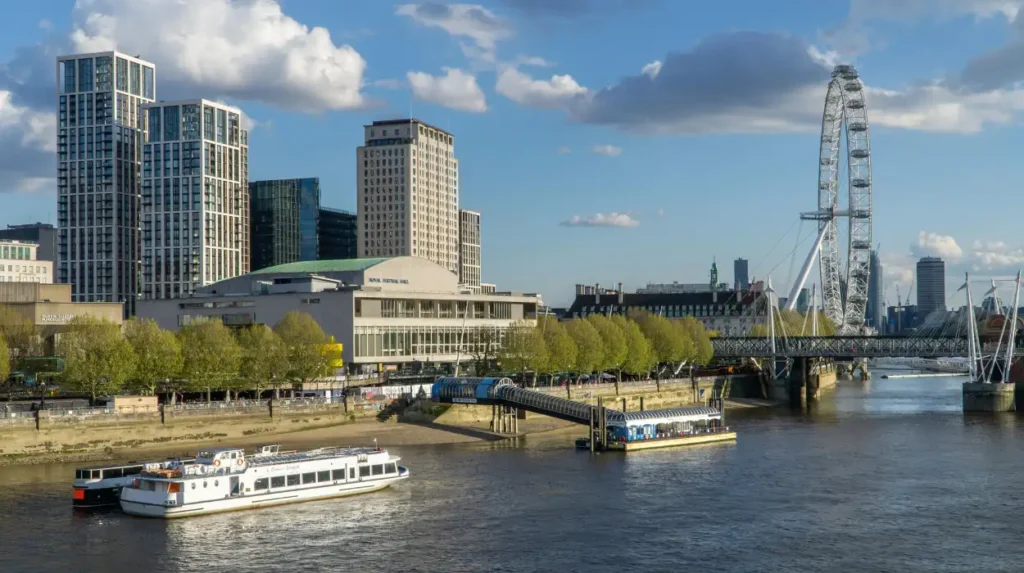
The South Bank remains London’s premier riverside photography destination.
From Westminster to Tower Bridge, visitors encounter the London Eye, National Theatre, Shakespeare’s Globe, Tate Modern, Millennium Bridge, HMS Belfast, and numerous skyline viewpoints.
Bankside combines preserved industrial architecture with modern cultural institutions.
Butler’s Wharf frames Tower Bridge alongside converted Victorian warehouses.
Greenwich Riverside introduces maritime heritage through the Old Royal Naval College, historic docks, and broad Thames curves leading towards central London.
How has London’s architectural evolution shaped its photographic appeal?
London’s architectural development reflects continuous adaptation across nearly two thousand years. Roman infrastructure, Norman fortifications, medieval churches, Georgian planning, Victorian engineering, twentieth-century reconstruction, and contemporary skyscrapers collectively produce one of the world’s most visually diverse urban environments.
The Great Fire of London in 1666 transformed urban planning and construction practices.
Sir Christopher Wren introduced wider streets and monumental churches following medieval destruction.
The Georgian period standardised elegant terraces that still define districts including Bloomsbury, Marylebone, and Belgravia.
The Victorian era expanded railway stations, bridges, museums, markets, and civic buildings through industrial prosperity.
Post-war redevelopment introduced modern commercial architecture, while recent decades added internationally recognised skyscrapers including The Gherkin, The Shard, and 22 Bishopsgate.
Rather than replacing older structures entirely, London integrated new architecture alongside preserved heritage, creating visually layered streetscapes rarely matched by other global cities.
Why do seasonal events transform London’s most Instagrammable locations?
London’s changing seasons continually reshape familiar landmarks through flowering gardens, autumn foliage, winter illuminations, and summer festivals. Seasonal variation ensures historic locations present fresh photographic opportunities while preserving their architectural significance and historical identity throughout the calendar year.
Spring introduces blossom across Greenwich Park, Regent’s Park, Kew Gardens, and St James’s Park.
Summer provides extended daylight lasting beyond 9 p.m., allowing prolonged golden-hour photography.
Autumn colours dramatically enhance Richmond Park, Hyde Park, and Hampstead Heath while creating contrast against historic stone architecture.
Winter transforms Covent Garden, Regent Street, Carnaby Street, and Trafalgar Square through elaborate festive lighting installations.
Because these seasonal changes recur annually, London continually offers fresh visual experiences while maintaining its historical authenticity.
What makes London’s most Instagrammable places historically significant as well as visually striking?
London’s most photographed locations represent important milestones in British political, royal, architectural, religious, commercial, and cultural history. Their enduring popularity results from historical importance combined with careful preservation, public accessibility, evolving urban landscapes, and internationally recognised architectural identity.
Every iconic London photograph documents more than attractive scenery.
Tower Bridge represents Victorian engineering innovation.
Westminster Abbey preserves almost one thousand years of coronations and royal ceremonies.
The Tower of London reflects medieval military power and constitutional development.
St Paul’s Cathedral symbolises London’s recovery after the Great Fire.
Royal Parks preserve centuries of landscape planning.
Neighbourhoods such as Notting Hill and Covent Garden demonstrate successful urban conservation while accommodating modern commerce and tourism.
The city’s continued investment in heritage preservation allows historic landmarks to remain accessible for education, research, tourism, and photography without losing their cultural significance.
For historians, London’s visual landscape illustrates Britain’s political evolution and architectural development. For educators, it provides tangible examples of historical continuity. For travellers, it offers unforgettable photographic opportunities. For social media creators, it supplies endlessly varied backgrounds reflecting authentic heritage rather than manufactured attractions.
This unique combination of historical authenticity, architectural diversity, accessible public spaces, and globally recognised landmarks ensures London remains one of the world’s greatest destinations for stunning travel photography and timeless visual storytelling.
Frequently Asked Questions
What are the most Instagrammable places in London?
The most Instagrammable places in London include Tower Bridge, Big Ben, Westminster Abbey, St Paul’s Cathedral, The Shard, Sky Garden, Notting Hill, Covent Garden, Greenwich Park, the South Bank, Hyde Park, and Richmond Park. These locations combine historic architecture, scenic viewpoints, and iconic city landscapes.