London’s historic churches form one of the world’s richest collections of religious architecture, artistic craftsmanship, and urban heritage. They document nearly 1,500 years of English history, from the arrival of Christianity in Anglo-Saxon England to the Gothic Revival and modern conservation movement. These churches have survived fires, wars, religious reformations, industrial expansion, and the Second World War while continuing to function as places of worship, cultural landmarks, and internationally significant heritage sites.
- Why are London’s historic churches among the world’s greatest architectural and heritage attractions?
- Which historic churches should every visitor explore in London?
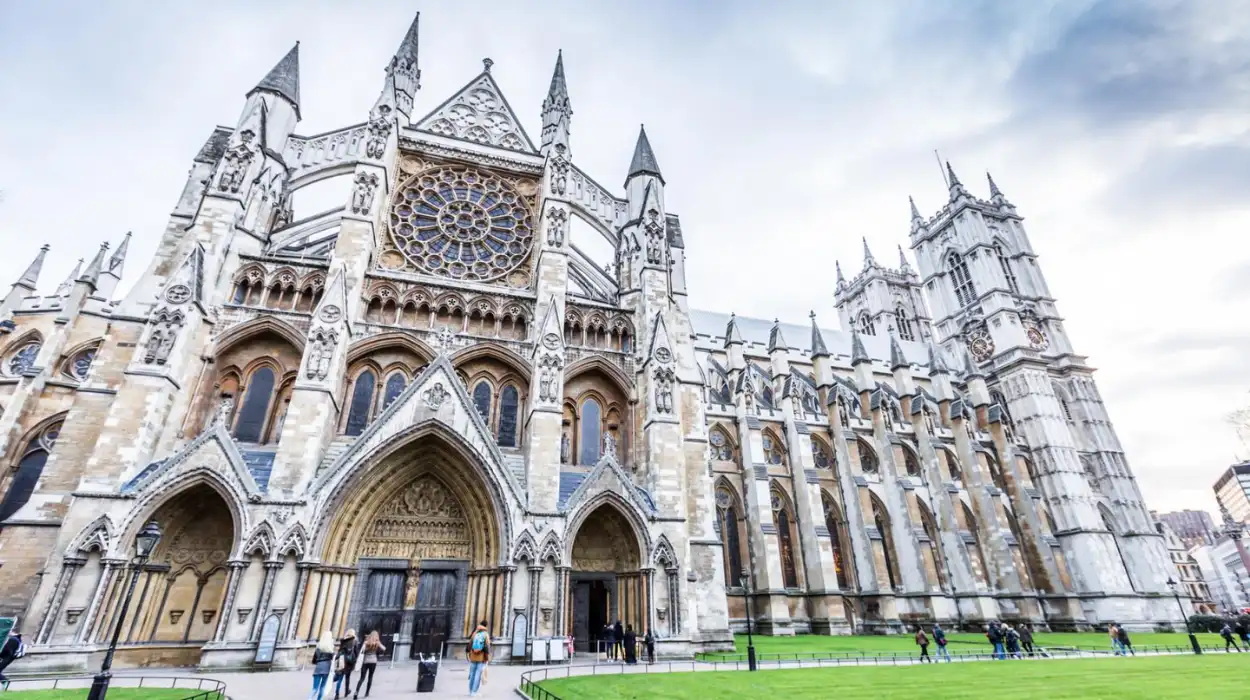
- Westminster Abbey
- St Paul’s Cathedral
- Temple Church
- Southwark Cathedral
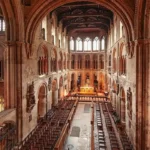
- St Bartholomew-the-Great
- All Hallows by the Tower
- St Bride’s Church
- St Martin-in-the-Fields
- How did London’s churches reflect the city’s historical development?
- What architectural styles define London’s historic churches?
- Why did Sir Christopher Wren transform London’s church architecture?
- How have London’s historic churches survived wars, disasters, and urban change?
- What artistic and cultural treasures do London’s churches preserve?
- Why do London’s historic churches remain globally important today?
Their importance extends beyond religion. Historic churches preserve medieval tombs, royal ceremonies, architectural innovations, ancient manuscripts, stained glass, monumental sculpture, and centuries of London’s civic development. Together they represent living historical archives that explain how London evolved into one of Europe’s greatest cities.
Why are London’s historic churches among the world’s greatest architectural and heritage attractions?
London’s historic churches combine nearly fifteen centuries of religious history, architectural innovation, royal tradition, artistic achievement, and cultural preservation. They include medieval parish churches, Gothic cathedrals, Baroque masterpieces, and Victorian restorations that collectively document the city’s continuous historical development.
London contains hundreds of churches, but several possess exceptional architectural, historical, and cultural significance. These buildings illustrate changing construction methods, religious practices, artistic styles, and political transformations across different historical periods.
The earliest Christian foundations appeared during the Roman occupation before expanding after the arrival of Anglo-Saxon kingdoms. Following the Norman Conquest in 1066, Romanesque architecture dominated church construction. During the twelfth century, Gothic architecture gradually replaced Romanesque design, introducing pointed arches, ribbed vaults, and flying buttresses.
The English Reformation under King Henry VIII during the 1530s fundamentally altered church administration, decoration, and religious practice throughout England. Following the Great Fire of London in 1666, architect Sir Christopher Wren redesigned much of the City’s ecclesiastical landscape by constructing more than 50 churches.
Victorian restoration campaigns during the nineteenth century rescued numerous medieval churches while introducing Gothic Revival architecture inspired by medieval craftsmanship.
Today, many churches hold Grade I listed status, the highest heritage designation in England, protecting buildings considered exceptionally important.
Which historic churches should every visitor explore in London?
Several churches represent London’s finest architectural and historical achievements. These include Westminster Abbey, St Paul’s Cathedral, Temple Church, Southwark Cathedral, St Bartholomew-the-Great, All Hallows by the Tower, St Bride’s Church, and St Martin-in-the-Fields, each preserving distinct periods of London’s development.
Westminster Abbey
Founded as a Benedictine monastery during the tenth century and rebuilt extensively by King Henry III beginning in 1245, Westminster Abbey represents the finest example of English Gothic architecture.
The church has hosted every English and later British coronation since William the Conqueror in 1066. More than 40 monarchs have been crowned inside the abbey.
Its architectural highlights include the Henry VII Lady Chapel, completed in 1519, whose fan-vaulted ceiling represents one of Europe’s greatest achievements in medieval stone engineering.
Westminster Abbey also houses Poets’ Corner, containing memorials or graves for literary figures including Geoffrey Chaucer, Charles Dickens, Alfred Tennyson, and many others.
More than 3,300 people are buried within the abbey.
St Paul’s Cathedral
Following the destruction of medieval Old St Paul’s during the Great Fire of London, Sir Christopher Wren designed the present cathedral between 1675 and 1710.
Its dome rises approximately 111 metres (365 feet), making it one of London’s most recognisable landmarks.
The cathedral exemplifies English Baroque architecture while incorporating Renaissance influences inspired by St Peter’s Basilica in Rome.
Major national ceremonies held there include the funeral of Sir Winston Churchill, the wedding of Charles, Prince of Wales, and Lady Diana Spencer, and numerous state thanksgiving services.
The Whispering Gallery, Stone Gallery, and Golden Gallery demonstrate Wren’s engineering ingenuity.
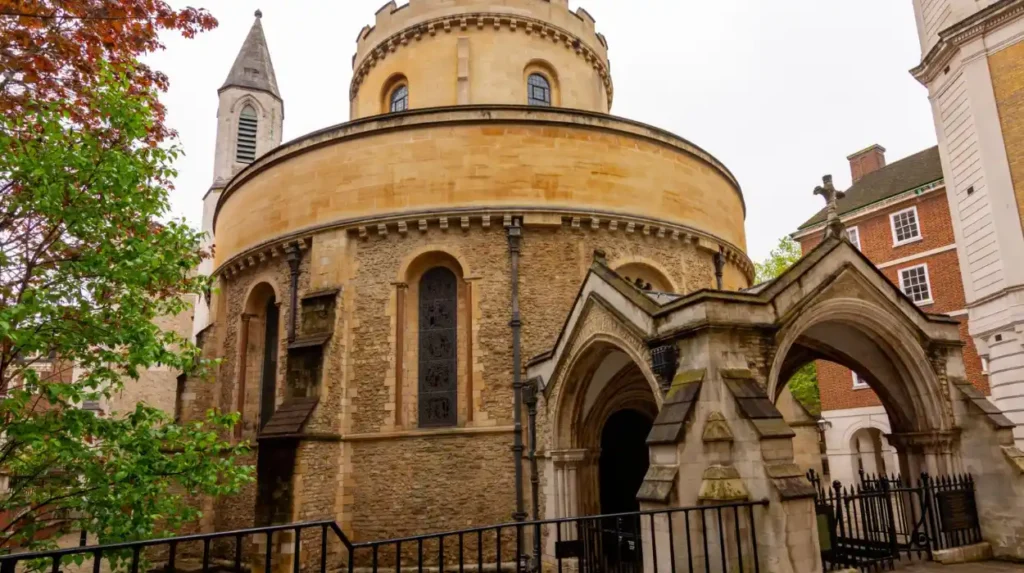
Temple Church
Constructed between the late twelfth century and early thirteenth century by the Knights Templar, Temple Church preserves one of England’s finest surviving medieval round churches.
The circular nave was inspired by the Church of the Holy Sepulchre in Jerusalem.
Stone effigies of medieval knights remain among the church’s most celebrated monuments.
Temple Church later became closely associated with England’s legal profession through the Inner Temple and Middle Temple Inns of Court.
Southwark Cathedral
Southwark Cathedral traces its origins to approximately 606 AD, making it one of London’s oldest Christian foundations.
Originally serving as the priory church of St Mary Overie, it became a cathedral following the establishment of the Diocese of Southwark in 1905.
Its Gothic architecture preserves medieval arcades, choir stalls, and memorials connected with William Shakespeare and John Harvard, founder of Harvard University.
St Bartholomew-the-Great
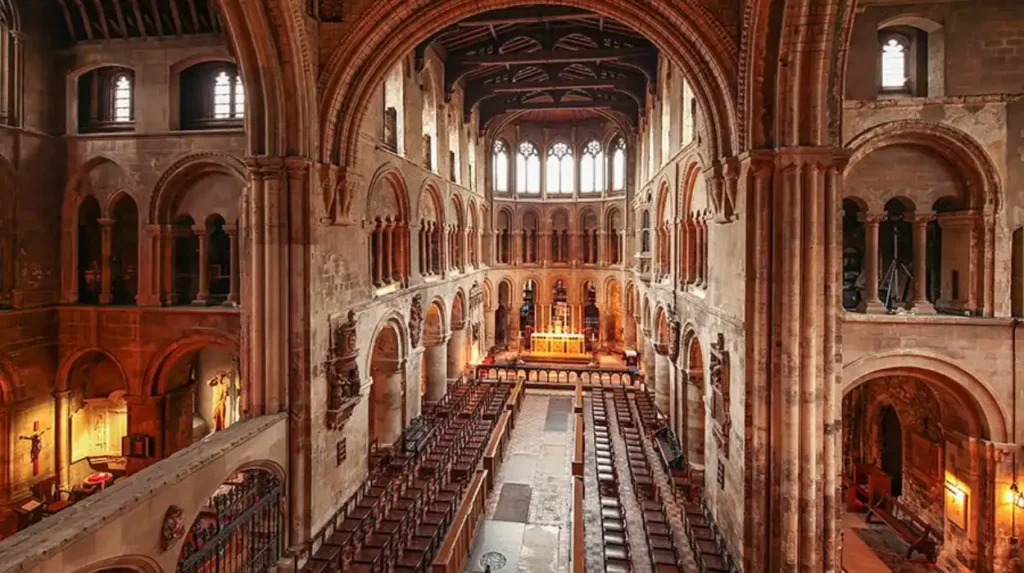
Founded in 1123 by Rahere, a courtier of King Henry I, St Bartholomew-the-Great remains London’s oldest surviving parish church.
The Norman choir retains massive Romanesque columns and rounded arches dating from the early twelfth century.
The church survived the Dissolution of the Monasteries and later became renowned for preserving significant medieval architecture despite extensive urban redevelopment nearby.
All Hallows by the Tower
Established during the seventh century, All Hallows by the Tower is London’s oldest church with continuous Christian worship.
Roman pavement, Anglo-Saxon arches, medieval structures, and post-war reconstruction coexist within the same complex.
The church suffered severe bomb damage during the Blitz but underwent careful archaeological conservation.
St Bride’s Church
Known as the journalists’ church because of its proximity to Fleet Street, St Bride’s Church occupies a site associated with Christian worship since the seventh century.
Sir Christopher Wren rebuilt the present church after the Great Fire.
Its distinctive tiered spire inspired the traditional multi-tiered wedding cake design during the eighteenth century.
St Martin-in-the-Fields
Located at Trafalgar Square, St Martin-in-the-Fields dates largely from the eighteenth century following reconstruction by architect James Gibbs.
Its classical portico combined with an elegant church spire influenced church architecture throughout Britain and North America.
The church also became internationally recognised for charitable work, music programmes, and community outreach.
To experience these historic landmarks in person today, consult our comprehensive [The Religious History of London Churches and Their Lasting Cultural Importance Today] for itineraries and visiting parameters.
How did London’s churches reflect the city’s historical development?
London’s churches evolved alongside political authority, commercial expansion, population growth, and religious transformation. Every major historical period, including Roman Britain, Anglo-Saxon England, Norman rule, the Reformation, Victorian industrialisation, and post-war reconstruction, left visible architectural evidence within these religious buildings.
Roman London introduced Christianity during the late Roman Empire.
Following the withdrawal of Roman administration around AD 410, Christianity continued under Anglo-Saxon kingdoms, although documentary evidence remains limited.
Norman rulers introduced monumental stone churches that symbolised royal authority and ecclesiastical reform.
During the medieval period, London’s expanding population required additional parish churches to serve growing neighbourhoods.
Guilds, merchants, nobles, and wealthy benefactors financed church construction, decoration, and charitable foundations.
The English Reformation removed monasteries, dissolved religious orders, and transformed church interiors by eliminating many medieval shrines and images.
The Great Fire destroyed approximately 87 parish churches within the City of London.
Sir Christopher Wren’s rebuilding programme fundamentally reshaped London’s skyline with innovative Baroque architecture.
Victorian urban expansion created new suburbs requiring additional churches while simultaneously restoring medieval structures threatened by industrial pollution and structural deterioration.
What architectural styles define London’s historic churches?
London’s churches display Romanesque, Gothic, Perpendicular Gothic, Renaissance, Baroque, Neoclassical, and Gothic Revival architecture. Each architectural style reflects specific construction techniques, engineering knowledge, artistic preferences, and religious priorities from different historical periods.
Romanesque architecture emphasised thick walls, semicircular arches, cylindrical columns, and relatively small windows.
Examples include St Bartholomew-the-Great.
Early English Gothic introduced pointed arches and taller interiors.
Decorated Gothic expanded ornamental stone carving, tracery, and elaborate window designs.
Perpendicular Gothic emphasised vertical lines, extensive stained glass, and fan vaulting.
Westminster Abbey’s Henry VII Chapel represents one of the finest surviving Perpendicular Gothic interiors.
Baroque architecture emerged after 1666 through Sir Christopher Wren’s rebuilding programme.
Its defining characteristics include domes, dramatic spatial composition, classical columns, and balanced proportions.
St Paul’s Cathedral remains England’s greatest Baroque church.
Victorian Gothic Revival architects restored medieval churches while constructing new buildings inspired by medieval craftsmanship.
Why did Sir Christopher Wren transform London’s church architecture?
Sir Christopher Wren transformed London’s churches after the Great Fire of 1666 by combining scientific engineering, classical learning, and Baroque artistic principles. His rebuilding programme established a unified architectural identity that continues defining London’s historic skyline today.
The Great Fire destroyed much of medieval London within four days during September 1666.
Wren received responsibility for rebuilding numerous parish churches and designing a replacement cathedral.
Between 1670 and the early eighteenth century, his office completed more than 50 churches.
Each church adapted to irregular medieval street patterns while maintaining architectural harmony.
Wren employed domes, steeples, geometric planning, and innovative structural engineering to maximise light and space within constrained urban plots.
His church towers became prominent navigational landmarks throughout the expanding city.
St Mary’s-le-Bow, St Stephen Walbrook, and St Bride’s Church illustrate his versatility.
Modern architectural historians regard Wren among Britain’s greatest architects because his churches combined practicality, elegance, engineering precision, and civic symbolism.
How have London’s historic churches survived wars, disasters, and urban change?
London’s historic churches survived through reconstruction, archaeological conservation, heritage legislation, and continuous community support. Major restoration campaigns followed the Great Fire, Victorian structural repairs, and extensive rebuilding after Second World War bomb damage preserved nationally important monuments.
The Great Fire destroyed dozens of medieval churches.
Reconstruction preserved London’s religious infrastructure while introducing architectural innovation.
Victorian conservation campaigns repaired structural deterioration caused by centuries of weathering and pollution.
The Second World War produced another major preservation challenge.
During the Blitz between 1940 and 1941, bombing damaged or destroyed numerous churches.
Conservation specialists documented surviving structures before undertaking detailed restoration programmes.
The establishment of statutory listing systems during the twentieth century provided legal protection for historically significant buildings.
Today, organisations including Historic England, the Church of England, conservation charities, and local communities cooperate to preserve historic churches through scientific conservation methods, archaeological research, and public education.
What artistic and cultural treasures do London’s churches preserve?
London’s churches preserve internationally significant collections of medieval sculpture, stained glass, funerary monuments, memorial inscriptions, paintings, manuscripts, liturgical objects, historic organs, and architectural decoration. These collections document Britain’s artistic, religious, and social history across many centuries.
Many churches contain medieval alabaster tombs, carved effigies, and heraldic monuments.
Stained glass records biblical narratives alongside donor families and historical events.
Historic pipe organs preserve centuries of musical craftsmanship.
Church libraries contain parish registers, manuscripts, and historical records valuable for genealogical research.
Monumental inscriptions document London’s merchants, politicians, scientists, clergy, military officers, and artists.
Archaeological excavations beneath churches have uncovered Roman roads, Saxon foundations, medieval burials, and artefacts illustrating continuous urban occupation.
These discoveries strengthen scholarly understanding of London’s development.
Why do London’s historic churches remain globally important today?
London’s historic churches remain internationally important because they preserve exceptional architecture, support active religious communities, educate millions of visitors, protect archaeological evidence, and connect modern society with nearly fifteen centuries of continuous cultural heritage.
Historic churches contribute significantly to London’s cultural tourism economy.
Millions of visitors explore Westminster Abbey and St Paul’s Cathedral annually, while smaller parish churches attract architecture enthusiasts, historians, musicians, and researchers.
Educational institutions use these churches to teach medieval history, architectural conservation, religious studies, archaeology, art history, and urban development.
Many churches continue hosting daily worship, concerts, exhibitions, lectures, and community programmes.
Climate adaptation, conservation science, digital documentation, and heritage funding strengthen long-term preservation strategies.
Laser scanning, structural monitoring, and archival digitisation improve understanding while protecting fragile historic fabric.
These churches remain living institutions rather than static museums.
They demonstrate how architecture, faith, governance, craftsmanship, and community identity shaped London across fifteen centuries. Their continued preservation ensures future generations can study authentic monuments that witnessed coronations, national celebrations, wartime resilience, religious transformation, and architectural innovation. As enduring symbols of London’s cultural identity, they remain among Britain’s most valuable historical treasures.
What is the oldest historic church in London?
All Hallows by the Tower is widely regarded as London’s oldest church with continuous Christian worship, dating back to the 7th century. It contains Roman, Anglo-Saxon, medieval, and modern architectural elements.