London ranks among the world’s greatest cultural capitals because it contains one of the largest concentrations of public and private art galleries. The city preserves nearly 2,000 years of artistic development, ranging from medieval religious paintings and Renaissance masterpieces to modern installations and contemporary digital art. These institutions safeguard national collections, promote emerging artists, support academic research, and attract millions of visitors annually.
- Why is London considered one of the world’s greatest cities for art galleries?
- Which art galleries should every visitor include in a London cultural itinerary?
- How did London’s public art galleries develop through history?
- What artistic periods can visitors explore across London’s galleries?
- What makes London’s commercial galleries important for contemporary art?
- How do London’s galleries preserve artistic heritage for future generations?
- How do London’s galleries support education and academic research?
- Which London neighbourhoods offer the richest gallery experiences?
- How have London’s galleries influenced British culture and global art?
- Why do London’s art galleries remain relevant throughout the year?
For cultural tourists, students, educators, historians, and art enthusiasts, London’s galleries offer year-round access to globally significant collections. Together they document Britain’s artistic evolution while presenting influential works from Europe, Asia, Africa, the Americas, and Oceania. Many galleries also occupy historically important buildings that contribute to London’s architectural heritage.
Why is London considered one of the world’s greatest cities for art galleries?
London combines internationally significant collections, centuries of royal patronage, world-leading museums, respected commercial galleries, and vibrant contemporary art districts. Together these institutions preserve artistic heritage, encourage innovation, support education, and welcome millions of visitors throughout every season of the year.
London’s position as an international art centre developed gradually over several centuries. During the Tudor period, royal collections expanded through acquisitions from European courts. The Stuart monarchy continued collecting paintings by influential artists including Anthony van Dyck and Peter Paul Rubens.
The eighteenth century transformed London’s cultural landscape. Wealth generated through commerce and the British Empire enabled aristocratic families, merchants, and collectors to commission and purchase major artworks. Public exhibitions became increasingly common, making art accessible beyond royal and aristocratic circles.
The nineteenth century marked another milestone with the expansion of national museums and galleries. Institutions established permanent collections that represented both British artistic achievement and international masterpieces. These collections became educational resources for artists, scholars, and the wider public.
Today, London contains hundreds of public galleries, university collections, commercial exhibition spaces, artist-led organisations, and specialist museums. Together they form one of the world’s most diverse artistic ecosystems.
Which art galleries should every visitor include in a London cultural itinerary?
Several London galleries represent the city’s artistic heritage through outstanding collections, historic architecture, educational programmes, and internationally recognised exhibitions. Together they provide comprehensive insight into European painting, British art, contemporary creativity, portraiture, sculpture, and experimental artistic practice.
The National Gallery
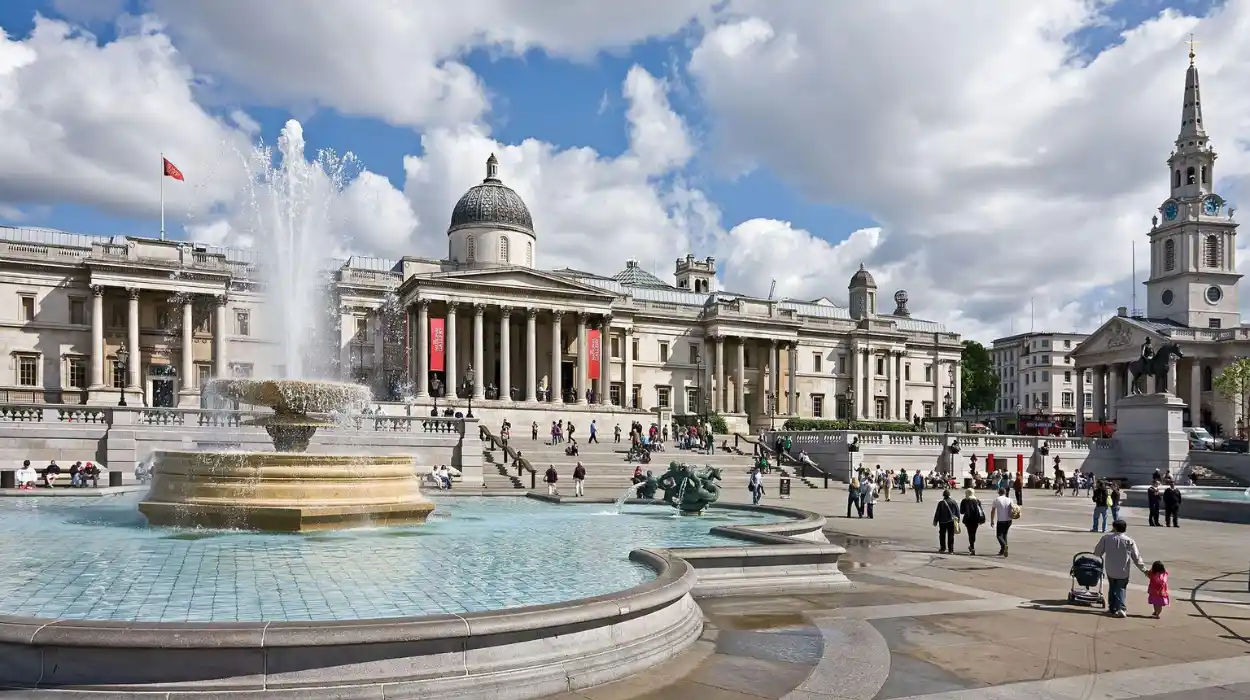
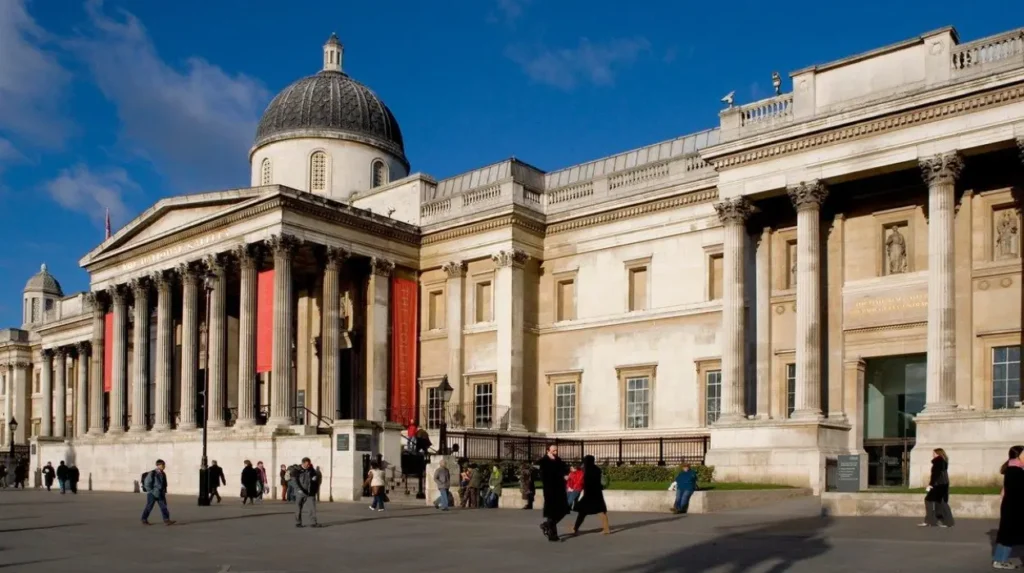
Located in Trafalgar Square, the National Gallery houses more than 2,300 paintings dating from the thirteenth century to the early twentieth century.
The collection includes masterpieces by Leonardo da Vinci, Vincent van Gogh, Claude Monet, Rembrandt, Johannes Vermeer, Titian, Diego Velázquez, Raphael, Sandro Botticelli, and Jan van Eyck.
Established in 1824 after the government purchased the collection of banker John Julius Angerstein, the National Gallery became Britain’s first national collection devoted entirely to European painting.
Its chronological layout enables visitors to understand artistic developments across approximately seven centuries.
Tate Modern
Tate Modern occupies the former Bankside Power Station on the south bank of the River Thames.
Opened in 2000, it rapidly became one of the world’s most visited museums of modern and contemporary art.
Its collections include works by Pablo Picasso, Henri Matisse, Mark Rothko, Andy Warhol, Salvador Dalí, Yayoi Kusama, Louise Bourgeois, and countless international contemporary artists.
The building itself represents one of Britain’s finest examples of industrial heritage successfully adapted for cultural use.
Tate Britain
Tate Britain focuses exclusively on British art from the sixteenth century to the present day.
Its collections document artistic developments spanning over 500 years, including works by J.M.W. Turner, William Blake, John Constable, Dante Gabriel Rossetti, Barbara Hepworth, David Hockney, and many contemporary British artists.
The gallery also administers the prestigious Turner Prize, established in 1984.
National Portrait Gallery
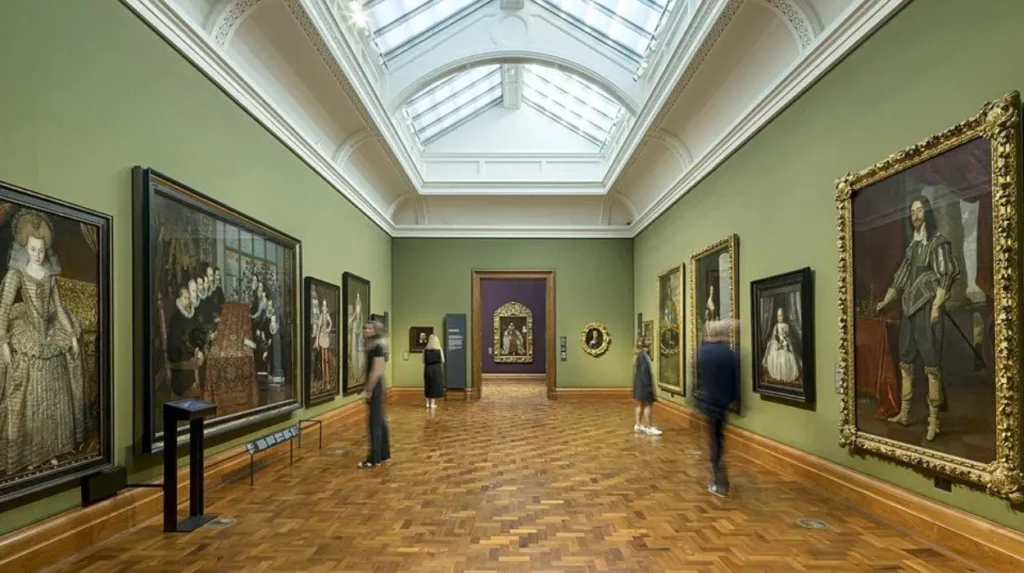
Reopened following extensive refurbishment, the National Portrait Gallery preserves portraits of individuals who shaped British history.
Its collections include monarchs, scientists, politicians, military leaders, writers, musicians, athletes, and cultural figures whose achievements influenced Britain and the wider world.
Unlike traditional fine art museums, portraits are selected primarily for historical significance rather than artistic merit alone.
Saatchi Gallery
Founded in 1985, the Saatchi Gallery specialises in contemporary art.
Located in Chelsea, it has introduced many emerging artists to international audiences and remains an important platform for experimental exhibitions.
Its exhibitions regularly explore global artistic trends and innovative media.
How did London’s public art galleries develop through history?
London’s galleries evolved from royal collections, aristocratic patronage, Enlightenment education, Victorian public institutions, and twentieth-century cultural reforms. These developments transformed private collections into accessible national resources serving education, research, preservation, and international cultural exchange for diverse audiences.
During the medieval period, artistic commissions primarily served churches and royal households. Religious institutions commissioned illuminated manuscripts, stained glass, sculpture, and devotional paintings.
The Renaissance encouraged increased artistic patronage by monarchs and wealthy nobles. European artists visited England, bringing continental influences that shaped British artistic traditions.
The eighteenth century witnessed growing public interest in exhibitions. Institutions such as the Royal Academy of Arts, founded in 1768, organised annual exhibitions that encouraged public engagement with contemporary artists.
Victorian Britain invested heavily in museums, libraries, galleries, and educational institutions. Public funding enabled significant acquisitions while expanding access to artistic education.
Following the Second World War, government investment in cultural infrastructure increased further. Museums modernised conservation methods, educational outreach expanded, and contemporary art gained greater institutional support.
Today London’s galleries combine preservation, education, research, tourism, and public engagement.
What artistic periods can visitors explore across London’s galleries?
London’s galleries collectively present over seven centuries of artistic development. Visitors can study medieval religious art, Renaissance painting, Baroque masterpieces, Romantic landscapes, Victorian realism, Impressionism, Modernism, Post-war experimentation, and contemporary multimedia installations within a single metropolitan area.
Medieval Art
Early religious paintings, illuminated manuscripts, carved sculpture, and devotional objects illustrate artistic production before the Renaissance.
Renaissance Art
Italian, Flemish, German, French, and Spanish masters introduced perspective, anatomical accuracy, and humanist themes.
Leonardo da Vinci, Raphael, Titian, and Holbein remain central figures represented in London’s collections.
Baroque Art
Seventeenth-century painters emphasised dramatic light, movement, realism, and emotional expression.
Artists including Rubens, Rembrandt, Velázquez, and Van Dyck dominate this period.
Romanticism
British painters such as Turner and Constable transformed landscape painting through atmospheric effects and emotional engagement with nature.
Victorian Art
Industrialisation, empire, and scientific progress shaped nineteenth-century artistic production.
Pre-Raphaelite painters revived detailed craftsmanship inspired by medieval art.
Modern Art
Cubism, Surrealism, Abstract Expressionism, Minimalism, Pop Art, and Conceptual Art reshaped artistic language during the twentieth century.
Contemporary Art
Today’s exhibitions explore digital technology, environmental themes, migration, identity, artificial intelligence, climate change, and globalisation.
What makes London’s commercial galleries important for contemporary art?
Commercial galleries complement public museums by representing living artists, supporting creative careers, encouraging international collecting, and introducing experimental artistic practices. Together they strengthen London’s position as one of the global art market’s leading cultural centres throughout the year.
Neighbourhoods including Mayfair, Fitzrovia, Soho, Shoreditch, and Bermondsey contain hundreds of commercial galleries.
These organisations organise exhibitions, publish scholarly catalogues, represent artists internationally, and participate in major art fairs.
Commercial galleries often introduce emerging artists years before museums acquire their work.
Many influential British artists first gained recognition through London’s independent gallery network before entering national collections.
How do London’s galleries preserve artistic heritage for future generations?
Professional conservation departments use scientific research, environmental monitoring, digital documentation, and specialist restoration techniques to preserve paintings, sculptures, drawings, photographs, manuscripts, and installations. These practices protect nationally significant collections while supporting academic research and public accessibility over generations.
Conservation combines chemistry, physics, art history, engineering, and materials science.
Experts monitor humidity, temperature, lighting, pollution, and biological deterioration.
Modern imaging technologies include infrared reflectography, ultraviolet fluorescence, X-radiography, multispectral imaging, and digital microscopy.
These methods reveal hidden sketches, earlier compositions, restoration history, and structural weaknesses without damaging artworks.
Digital cataloguing further protects collections by creating permanent scholarly records.
How do London’s galleries support education and academic research?
London’s galleries function as educational institutions through lectures, archives, conservation laboratories, university partnerships, digital collections, and public programmes. These resources support historians, artists, educators, students, genealogists, and researchers investigating artistic, cultural, and social history across multiple disciplines.
Museums collaborate with universities, schools, libraries, and research institutes.
Students examine original artworks rather than reproductions.
Art historians investigate provenance, attribution, artistic techniques, and historical context.
Scientific researchers analyse pigments, canvas fibres, varnishes, wood panels, and restoration materials.
Digital archives increasingly provide worldwide access to high-resolution collections, scholarly essays, and historical documentation.
Genealogical researchers also benefit from portrait collections documenting notable individuals and family connections across centuries.
Which London neighbourhoods offer the richest gallery experiences?
Several London districts combine historic institutions, independent galleries, artist studios, cultural landmarks, and architectural heritage. Together they provide varied artistic experiences reflecting different historical periods, creative communities, and collecting traditions throughout the capital.
Trafalgar Square
The National Gallery dominates one of Britain’s most recognisable public squares.
Nearby museums, theatres, and historic buildings create one of London’s richest cultural districts.
South Bank
Tate Modern anchors a broader cultural quarter including performance venues, public art, riverside architecture, and educational institutions.
Westminster
Tate Britain preserves Britain’s national artistic heritage within a historic riverside setting.
Chelsea
Chelsea combines established commercial galleries with contemporary exhibition spaces and annual cultural events.
Mayfair
Mayfair contains one of Europe’s highest concentrations of commercial art galleries representing internationally recognised artists.
Shoreditch
Shoreditch supports emerging artists through independent galleries, creative studios, murals, and experimental exhibition spaces.
To experience these cultural districts in person today, consult our comprehensive [London’s Rise as a Global Art Capital Through Centuries of Artistic Innovation] for itineraries and visiting parameters.
How have London’s galleries influenced British culture and global art?
London’s galleries influence artistic education, museum practice, conservation standards, cultural diplomacy, tourism, and international scholarship. Their collections shape public understanding of history while encouraging artistic innovation across Britain and the wider global cultural community through permanent and temporary exhibitions.
British artists study historical masterpieces preserved within London’s collections.
International museums collaborate through loans, conservation research, and scholarly exchanges.
Major exhibitions attract visitors from every continent, contributing substantially to London’s visitor economy.
Creative industries including publishing, design, architecture, film, advertising, fashion, and digital media draw continual inspiration from gallery collections.
These institutions also strengthen Britain’s international cultural relationships through travelling exhibitions and collaborative research projects.
Why do London’s art galleries remain relevant throughout the year?
London’s galleries remain continually relevant because permanent collections preserve world history while temporary exhibitions introduce contemporary perspectives. Combined with education, research, conservation, accessibility, and architectural heritage, they provide enduring cultural value regardless of season, visitor background, or academic interest.
Unlike seasonal attractions, galleries operate throughout the calendar year.
Permanent collections enable repeated visits because viewers discover new artistic details over time.
Temporary exhibitions introduce new scholarship, international collaborations, and contemporary creative voices.
Educational programmes serve schoolchildren, university students, professional artists, tourists, families, and lifelong learners.
Digital innovation continues expanding accessibility through online collections, virtual exhibitions, interactive interpretation, and multilingual educational resources.
As London evolves into an increasingly global city, its galleries preserve historical continuity while reflecting contemporary artistic diversity. They connect medieval craftsmanship, Renaissance innovation, Victorian public education, twentieth-century experimentation, and twenty-first-century creativity within one interconnected cultural landscape.
For historians, London’s galleries preserve documentary evidence of changing societies. For educators, they function as living classrooms.
For artists, they provide continual inspiration. For visitors, they offer year-round opportunities to understand the artistic achievements that shaped Britain and influenced global culture.
Their enduring combination of scholarship, preservation, accessibility, and creativity ensures that London’s galleries remain among the world’s finest destinations for cultural exploration.
What are the best art galleries to visit in London?
The best art galleries in London include the National Gallery, Tate Modern, Tate Britain, the National Portrait Gallery, Saatchi Gallery, the Royal Academy of Arts, Whitechapel Gallery, Dulwich Picture Gallery, the Wallace Collection, and the Serpentine Galleries.