Key Points
- Five Metropolitan Police officers were injured after a marine policing unit boat struck Westminster Bridge in central London.
- The incident took place at approximately 15:40 BST on Friday while the vessel was responding to a report of a person in the water near Battersea.
- Three officers were thrown into the River Thames by the impact and were subsequently rescued by individuals on nearby boats.
- One officer has since been discharged from hospital, while four others remain hospitalised with serious but non-life-threatening injuries.
- Authorities confirmed that no members of the public were involved or injured in the collision.
- The Marine Accident Investigation Branch, alongside the Metropolitan Police, is conducting a thorough review and investigation into the circumstances surrounding the crash.
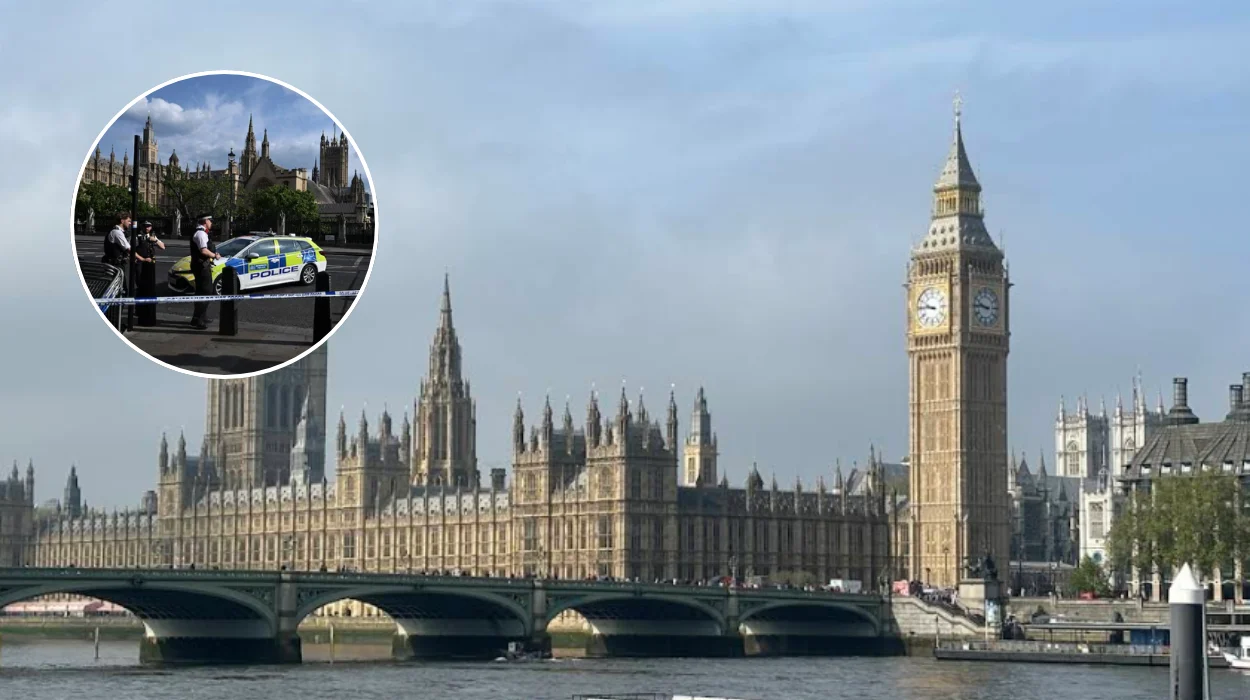
London (Extra London News) July 25, 2026 — Five Metropolitan Police officers sustained injuries on Friday afternoon when a high-speed marine unit vessel collided directly with Westminster Bridge in the heart of central London. The collision, which occurred at approximately 15:40 BST, prompted a massive emergency response involving the London Ambulance Service, the London Fire Brigade, and an air ambulance, while forcing the temporary closure of surrounding roads, tube station entrances, and local river transit routes.
Why Did the Police Boat Crash into Westminster Bridge?
As reported by the BBC and other international news agencies, the vessel belonging to the Metropolitan Police’s Marine Policing Unit was actively responding to an urgent call concerning a person in the water near Battersea in south-west London. Witnesses detailed that two police boats were navigating the River Thames at high speed prior to the impact.
As detailed in accounts covered by the Press Association and reported by The Guardian, American tourist Jim Bagley, visiting the capital from Gloucester, Massachusetts, stated that he and his wife were standing in line for a city cruise tour when they observed the vessels moving up the river. According to Jim Bagley,
“We were standing in line to get onto the city cruise hop on, hop off tours, and we saw two police boats coming up the river. One was an orange boat that went under the bridge and left a great big wave, and then there was a black boat that came up behind it, the police boat.”
Further eyewitness accounts from young visitors captured the dramatic nature of the crash. As reported by Sky News and The Washington Examiner, 12-year-old Mateo Bilis-Lusevic, visiting from Chile alongside his mother Cecilia Lusevic, recalled hearing a sudden explosion-like noise. Mateo Bilis-Lusevic stated that
“Two boats were riding extremely fast through the water. Suddenly, I heard a boom. I was looking towards the boat, and I heard a boom. Then three people went flying into the water and one of the people was really hurt.”
What Happened to the Officers Thrown into the River Thames?
The forceful impact of the vessel against the bridge structure threw three armed officers directly into the cold waters of the River Thames. According to official statements from the Metropolitan Police, the officers remained immersed for roughly ten minutes while bystanders and nearby river users rushed to their aid.
Mateo Bilis-Lusevic noted to the Press Association, as featured by The Guardian, that a life ring was thrown to assist one of the struggling officers in the water.
Swift intervention by civilians operating nearby boats managed to pull the stranded personnel out of the river before emergency services arrived. Paramedics subsequently treated the casualties on a black inflatable boat moored near the scene while a police helicopter hovered overhead near Big Ben.
The Metropolitan Police confirmed that all five officers involved received immediate medical attention at the scene before being rushed to hospital. Providing a later health update, Met official Commander Nick John stated that four of the officers remained hospitalised with serious but non-life-threatening injuries, whereas one officer had successfully been discharged. Commander Nick John stated:
“Our thoughts are with all those involved, in particular our officers who were injured and those who responded in challenging circumstances. The four officers who remain in hospital have serious but non-life-threatening injuries. We will give them all every support as they recover.”
Explore More Westminister News
Westminster Council Apologises for Petrol-Smelling Water in Pimlico, 2026
Westminster Bridge Road Fire Sparks Central London Traffic Gridlock, 2026
How Did Emergency Services Respond to the Incident?
The scale of the collision triggered an immediate, multi-agency response across central London. The London Fire Brigade announced via a post on X (formerly Twitter) that it had mobilised its dedicated fire boat alongside three fire rescue units equipped with specialized water rescue capabilities following a call received at 15:58 BST.
Rescue personnel from the Royal National Lifeboat Institution (RNLI) alongside paramedics from the London Ambulance Service converged on Westminster Pier to administer trauma care. Transport infrastructure was heavily impacted as police established cordons at both ends of Westminster Bridge, bringing vehicular traffic and public buses to a complete standstill.
Transport for London (TfL) confirmed that entrances and exits one, two, three, and four at Westminster Underground Station were temporarily shut down to manage heavy pedestrian congestion. Additionally, river traffic faced disruptions, with Thames Clippers—operators of Uber Boat services—announcing that Westminster Pier would remain closed until further notice.
Were Any Members of the Public Harmed?
Amid mounting public concern over safety in one of London’s busiest tourist hubs, law enforcement officials were quick to clarify that civilian safety was not compromised during the high-speed transit.
The Metropolitan Police asserted in their primary media release that no members of the public were involved or injured in the collision.
A spokesperson for the Port of London Authority added that maritime authorities were closely monitoring the situation to assist with river traffic management, working hand-in-hand with the Met and HM Coastguard to restore normal operations on the Thames.
What Are the Authorities Saying About Future Safety Reviews?
With the vessel heavily damaged and subsequently towed away by a larger fire service recovery boat, attention has turned toward institutional accountability and operational safety protocols.
Expressing profound gratitude toward civilian rescuers, Met Police Commander Nick John stated:
“I must also offer our thanks to those river users who came to the aid of the officers, as well as other police and emergency service colleagues who immediately made their way to the scene to assist.”
Commander Nick John further emphasized:
“The quick-thinking and professionalism of all those involved undoubtedly prevented any further injuries.”
The Metropolitan Police confirmed that the exact mechanics and underlying factors driving the crash will face rigorous scrutiny.
The force stated that the circumstances of the incident will be “thoroughly reviewed,” though immediate efforts remain dedicated toward the health and psychological recovery of the affected crew members. Simultaneously, the Marine Accident Investigation Branch has initiated an independent statutory inquiry to determine precisely how a routine emergency response transformed into a major navigational disaster on the River Thames.