Key Points
- Financial Windfall: Ealing Council will receive nearly £17.8 million in planning contributions from developer CyrusOne after approving a massive new data centre.
- Location: The project is slated for the 6.8-hectare vacant site of the former Honey Monster Food Factory on Bridge Road in Southall.
- Grid Independence Assurances: Ealing Council has strongly insisted that the facility’s high energy demands will not strain or pull from the existing local electrical grid.
- Sustainable Power Integration: Part of the data centre’s energy and environmental mitigation needs will be met via a 7,000-square-metre photovoltaic facade—a solar panel wall on its southern elevation that changes appearance with sunlight.
- Timing Controversy: The approval was granted on July 16, just a day before new restrictive guidelines regarding data centres were published in the draft London Plan.
- Job Creation: The development is projected to generate over 1,100 construction jobs and approximately 650 permanent operational roles, alongside 25 apprenticeships and work placements.
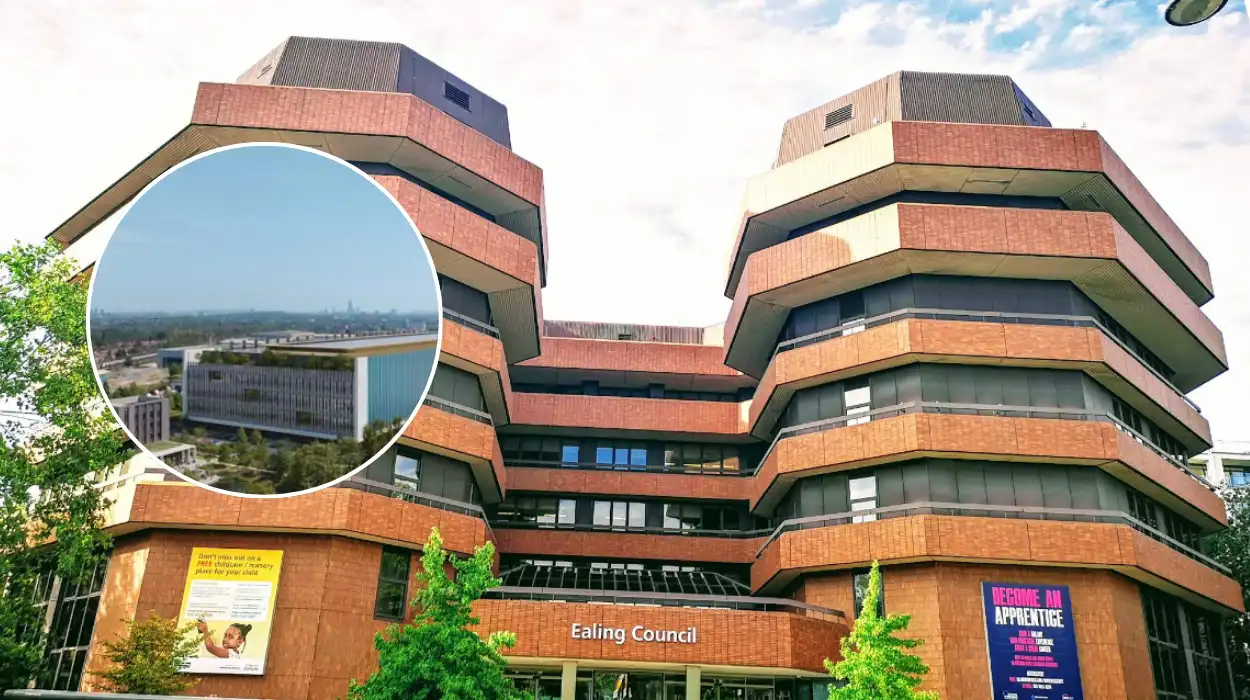
Southall (Extra London News) July 21, 2026 — Ealing Council is set to pocket almost £18 million from a major developer following the contentious greenlight of a massive new data centre in West London, with local authorities fiercely maintaining that the structure’s massive power requirements will bypass the overburdened local electrical grid.
Why Was the Data Centre Approved Despite Timing Controversies?
The high-stakes development was given the formal go-ahead by Ealing Council’s planning committee on Wednesday, July 15, 2026.
The approval grants developer CyrusOne permission to completely redevelop the vacant 6.8-hectare (17-acre) industrial plot situated on Bridge Road in Southall, which formerly housed the iconic Honey Monster Food Factory from 1937 until production ceased in 2016.
The timing of the decision has sparked intense public scrutiny. As reported by local news sources, the development was greenlit just a day before brand-new, stringent guidelines regarding data centres were officially published in the draft London Plan, which aims to tightly balance economic advantages against environmental degradation.
Defending the timing of the decision, Ealing Council asserted that the project was evaluated strictly under existing frameworks. As noted in coverage by MyLondon and Ealing Today, an institutional spokesperson stated that
“the application was determined against the planning policies and material planning considerations that applied when the decision was made,”
while pointing out that the wider London Plan remains unadopted despite its published draft status.
Furthermore, planning officers concluded that the scheme’s
“substantial economic, infrastructure, employment, public realm and sustainability benefits”
comfortably outweighed any limited adverse environmental impacts, noting that the brownfield location was uniquely suited due to pre-existing regional power and digital networks.
Where Will the Massive Energy Demands Come From?
With the sudden, aggressive proliferation of data centres across London—particularly concentrated in West London—widespread community and environmental concerns have continuously mounted regarding severe strains on electricity infrastructure, local water supplies, and general ecological health.
Local housing developments across West London have previously faced crippling delays due to systemic grid capacity constraints, a phenomenon frequently blamed on the dense clustering of data hubs.
Addressing these acute anxieties directly, Ealing Council has strongly insisted that the facility’s extensive energy appetite will not tap into local consumer supplies. Elaborating on utility provisions, an Ealing Council spokesperson stated:
“Electricity capacity is a recognised issue across West London and was considered through the planning process. Applicants are required to demonstrate the necessary utility infrastructure can be provided to support a development and any required upgrades are subject to agreement with the infrastructure providers.”
Additionally, technical blueprints indicate that the facility will incorporate a massive 7,000-square-metre photovoltaic facade across its southern elevation—functioning essentially as a dynamic, sunlight-responsive solar wall that shifts appearance with changing daylight to help power the site.
Explore More Ealling News:
Rise in Ealing Council Complaints: Ombudsman Annual Report 2025-2026
Massive £5,000 Fly-Tipping Fine Crackdown Revealed, Ealing 2026
How Will the Local Community Benefit from the £17.8 Million Windfall?
Under the binding Section 106 legal agreements tied to the project’s approval, Ealing Council will receive precisely £17,760,000 (roughly £17.8 million) in vital planning contributions.
According to regional breakdowns, these funds are earmarked for targeted investments including local transport improvements, sweeping carbon reduction initiatives, dedicated air quality monitoring measures, and enhanced employment and skills training programmes for borough residents.
The project promises a major socioeconomic boost for Southall. Developer CyrusOne has committed to delivering 25 formal apprenticeships, 25 high-value work placements, designated affordable workspace units, and a specialized training centre tailored for local community members.
Economic models project the build phase will unlock upwards of 1,100 temporary construction jobs, later transitioning to support roughly 650 permanent, full-time operational careers once the facility goes live.
What Do the Developers and Local Stakeholders Say Moving Forward?
Reflecting on the milestone decision, representatives for the developer emphasized their commitment to cooperative regional integration. As covered by the Ealing Times, a CyrusOne spokesperson stated:
“We’ve worked closely with a wide variety of relevant local politicians, community leaders, businesses, resident and community groups. We’ve also held public events, to give residents the opportunity to directly understand the data centre development, ask questions and share their feedback.”
The spokesperson added, as documented by Ealing.News, that the approval marks
“an important milestone” and that the corporate entity will continue working diligently alongside Ealing Council and local populations to keep stakeholders fully informed as construction progresses.
Concluding the council’s broader developmental vision, an institutional representative added:
“Ealing Council supports a coordinated approach to planning for data centres, electricity infrastructure, housing and economic growth, ensuring that development is aligned with wider community, environmental and economic objectives.”