Key Points
- Residents and local politicians in Islington have expressed utter astonishment regarding the high expenditure associated with a newly installed zebra crossing on Thorpedale Road in Finsbury Park.
- Figures uncovered via a Freedom of Information (FOI) request—and reviewed by the Local Democracy Reporting Service (LDRS)—initially highlighted a £100,000 price tag, though the local authority later clarified that the comprehensive street safety scheme actually totalled £131,000.
- During a recent full council meeting, Green councillor Jonathan Ward questioned the financial prudence of the project, stating to the LDRS that local constituents were completely “gobsmacked” by the investment on a relatively quiet residential street.
- Islington Council’s Labour finance chief, Councillor Paul Convery, admitted he was equally startled by the figures, pointing out that comparable zebra crossings across the borough typically cost around £15,000, while hinting at potential hidden infrastructure expenses.
- Local authorities defended the overall expenditure by detailing that the broader project encompassed extensive public realm improvements, including pavement widening, drainage enhancements, raised crossing installations, and upgraded street lighting.
- Despite the council’s explanations, critics continue to demand greater financial transparency, imagination, and cost-effectiveness in local public infrastructure developments.
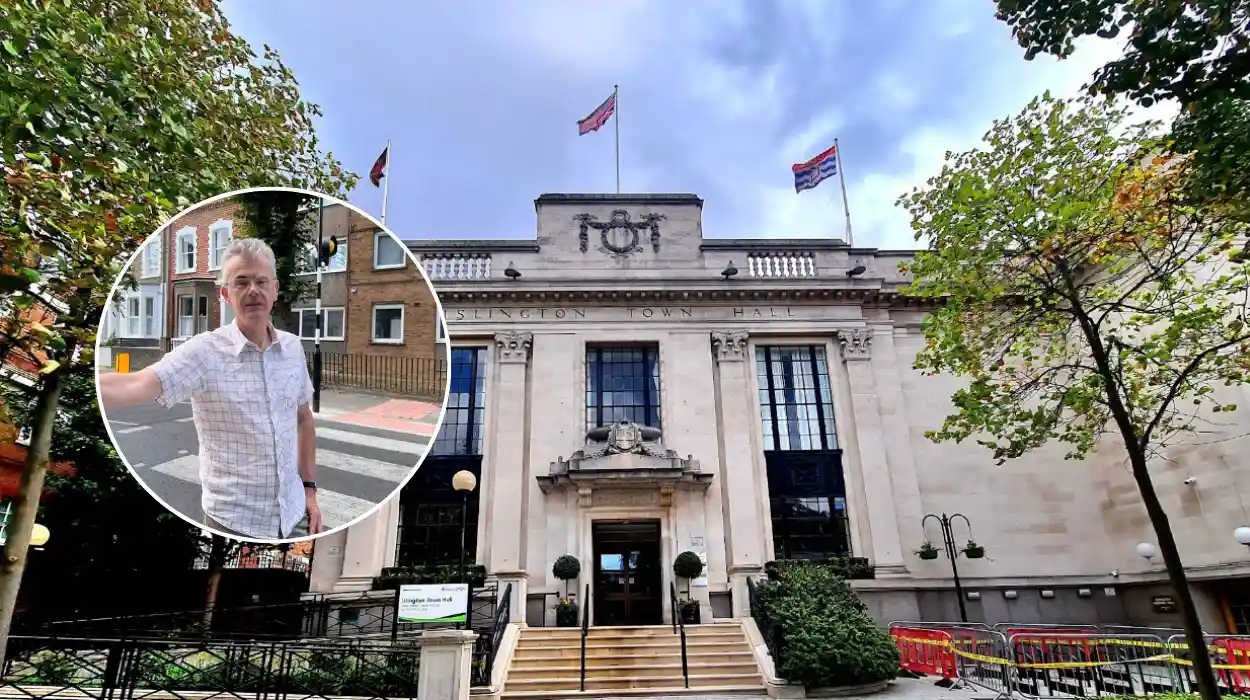
London (Extra London News) July 21, 2026 — Residents and local elected officials within the London Borough of Islington have been left completely stunned following the revelation that a localized pedestrian safety improvement scheme, headlined by a new zebra crossing, accumulated a final bill soaring up to £131,000. The financial allocation, which targeted a seemingly quiet residential thoroughfare, has ignited a fierce debate concerning the optimization of public funds, bureaucratic efficiency, and the transparency of municipal expenditures across the capital.
The financial details surrounding the infrastructure project came to light initially through a Freedom of Information (FOI) request filed by curious local constituents. The resulting documentation was subsequently examined by the Local Democracy Reporting Service (LDRS), triggering an intense political interrogation at a local council meeting where senior leadership faced difficult questions regarding the cost-effectiveness of the initiative.
Why are Islington residents and councillors so shocked by the zebra crossing cost?
The core of the public contention stems from the stark contrast between standard borough infrastructure expenses and the specific financial outlay required for the Thorpedale Road project in Finsbury Park.
As reported by Josef Steen of the Local Democracy Reporting Service (LDRS) and detailed in MyLondon, Green Party Councillor Jonathan Ward brought the matter to the floor during a council meeting, emphasizing the sheer disbelief felt by people living in the immediate vicinity. Highlighting the tranquil nature of the street, Councillor Ward stated to the LDRS:
“We have a pedestrian crossing that arrives in a quiet street that costs £100,000. Residents were absolutely gobsmacked. It’s not a busy road.”
The shock wave generated by the figures was not restricted to opposition benches. Even within the ruling administration, the high cost raised immediate eyebrows. As noted by the Evening Standard and MyLondon, the council’s Cabinet Member for Finance, Labour Councillor Paul Convery, expressed profound astonishment when confronted with the data.
Acknowledging that standard zebra crossings deployed elsewhere across the borough normally demand a budget of roughly £15,000, Councillor Convery remarked during the session: “I am startled,” while further speculating that there may have been obscure overhead costs “lurking in the background.”
What safety concerns prompted the Finsbury Park street improvements?
To fully understand the context behind the municipal intervention, transport planners and local officials pointed toward pre-existing community safety anxieties.
According to reports compiled by the Local Democracy Reporting Service (LDRS), the initiative on Thorpedale Road was originally commissioned in direct response to persistent complaints lodged by local families and neighbourhood associations.
Locals had repeatedly raised alarms concerning motorists utilizing the residential stretch as a dangerous cut-through to bypass larger arterial routes.
This driving behaviour presented a compounding hazard, particularly endangering children, families, and young students commuting daily to and from nearby educational facilities.
The community pressure compelled the local authority to act, prioritizing pedestrian safety over passive traffic management.
Explore More Islington News:
State School Beats Eton: Islington Collegiate A-Level Success, Islington 2026
74 Chapel Market Pie Shop Closes: Islington 2026
How has Islington Council justified the £131,000 final price tag?
Following initial media queries and scrutiny from opposition members, Islington Council officials clarified the ledger entries, confirming that the total financial outlay actually reached £131,000.
However, the local authority stressed that quoting the figure strictly as the price of a single zebra crossing provides a misleading picture of the engineering scope involved.
As quoted by the Local Democracy Reporting Service (LDRS) and featured in MyLondon, Councillor Rowena Champion, the Executive Member for Climate, Environment and Transport, defended the project by emphasizing that the scheme delivered a comprehensive structural overhaul rather than a simple paint-and-beacon installation.
“We widened pavements, carried out drainage improvements, installed a raised crossing to help reduce vehicle speeds, upgraded street lighting and Belisha beacons, and added high-friction surfacing on the approach to the crossing,”
Councillor Champion explained, outlining how the initiative successfully incorporated much more than a standard pedestrian lane.
What are the broader criticisms regarding council spending efficiency?
Despite the detailed breakdown of engineering upgrades provided by the executive team, community skepticism regarding fiscal responsibility has not entirely dissipated.
Critics argue that even when accounting for civil engineering adjustments, the expenditure threshold remains disproportionately high for a secondary residential road.
Challenging the long-term utility and financial planning of such projects, Green Councillor Jonathan Ward offered a critical assessment to the Local Democracy Reporting Service (LDRS).
Questioning whether the borough can sustain such intensive spending models across multiple neighbourhoods, Councillor Ward stated:
“We’ve got hundreds of places like this across Islington. Can we afford to spend £131,000 each time? It’s good that there’s a facility for people to cross the road safely but it would have been cheaper to put some plants in, rather than a new pavement.”
Furthermore, Councillor Ward emphasized to the LDRS that the local tax-paying community expects greater creativity from public servants:
“We just want to make sure there’s imagination and value for money in public works.”
As local governance bodies across Greater London navigate tighter budgetary constraints amidst rising inflation and infrastructure maintenance backlogs, the Thorpedale Road debate serves as a prominent flashpoint.
It highlights an ongoing tension between fulfilling vital pedestrian safety mandates and maintaining rigorous public accountability over how municipal treasuries allocate every pound of taxpayer money.