London’s family attractions are historic, cultural, educational, and recreational places that have evolved over centuries to entertain visitors of all ages. Their enduring popularity reflects continuous adaptation, public investment, heritage preservation, and Britain’s long tradition of making knowledge, leisure, and public spaces accessible to families.
- How did London’s earliest public attractions develop for families?
- Why did the Victorian era transform London into a global centre for family attractions?
- Which historic museums became London’s leading educational attractions for families?
- How did London’s historic parks become essential family destinations?
- What role has London Zoo played in family education and wildlife conservation?
- How have royal palaces influenced London’s appeal for families?
- Why has Greenwich remained one of London’s most historically significant family destinations?
- How have transport, tourism, and preservation increased visitor numbers over time?
- Why will London’s historic family attractions remain important for future generations?
- Frequently Asked Question
London is one of the world’s oldest continuously inhabited capital cities. Its family attractions developed gradually alongside the city’s political, commercial, scientific, and cultural growth. Unlike purpose-built entertainment destinations, London’s attractions combine centuries of history with modern visitor experiences, creating places where education and recreation exist together.
A family attraction refers to any destination that welcomes visitors across multiple age groups while providing educational, cultural, recreational, or scientific value. In London, these attractions include museums, royal parks, zoos, observatories, palaces, historic ships, gardens, interactive science centres, and public landmarks.
The city’s attraction landscape expanded significantly after the Industrial Revolution during the eighteenth and nineteenth centuries. Improved transport, public education reforms, and urban planning enabled ordinary families—not only aristocrats—to visit museums, exhibitions, and gardens.
During the Victorian era, Britain invested heavily in public institutions. Museums, libraries, botanical collections, zoological gardens, and public parks became symbols of national progress. Many of today’s most visited family attractions originated during this period.
Modern tourism has strengthened this legacy. Before the COVID-19 pandemic, London welcomed more than 20 million international visitors annually according to official tourism statistics. Family attractions remain among the city’s most visited destinations because they combine history, accessibility, and interactive learning.
How did London’s earliest public attractions develop for families?
London’s earliest public attractions emerged through royal estates, pleasure gardens, markets, religious institutions, and scientific collections. Over several centuries these spaces gradually became more accessible, transforming exclusive locations into educational and recreational destinations for families from diverse social backgrounds.
Medieval London offered limited recreational spaces. Public entertainment centred on markets, fairs, religious festivals, and ceremonial processions. Families gathered during seasonal celebrations rather than visiting dedicated attractions.
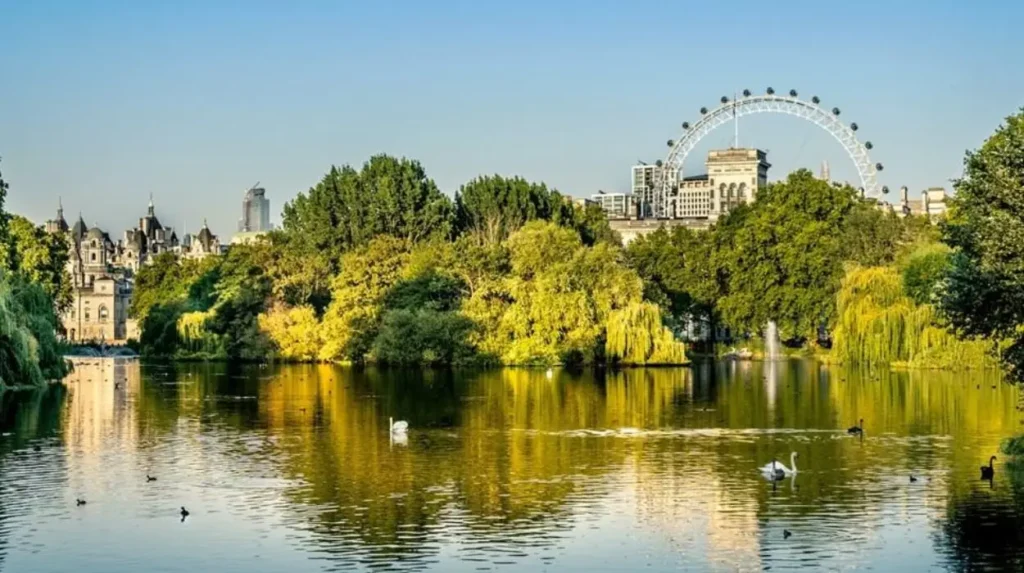
Royal parks marked the beginning of London’s large public green spaces. Parks including Hyde Park, Richmond Park, Greenwich Park, and St James’s Park originated as royal hunting grounds between the sixteenth and seventeenth centuries.
Access gradually expanded.
In 1637, King Charles I opened Hyde Park to the public. This decision represented one of Britain’s earliest examples of converting royal land into civic recreational space.
Pleasure gardens became another important development.
During the eighteenth century, gardens such as Vauxhall Gardens attracted families with music, walking paths, decorative lighting, performances, and refreshments. Although admission fees applied, these venues introduced the concept of family leisure within landscaped environments.
Scientific curiosity also influenced London’s attractions.
Private collections of natural specimens eventually evolved into public museums. Wealthy collectors donated fossils, plants, manuscripts, and archaeological objects, laying foundations for Britain’s national museum system.
Growing literacy and education further encouraged public engagement with history, science, and exploration.
Why did the Victorian era transform London into a global centre for family attractions?
The Victorian era transformed London’s attractions through public education reforms, scientific advancement, imperial expansion, museum construction, railway development, and urban planning. Government investment created institutions that combined learning with recreation, establishing many landmarks families continue visiting today.
Few periods influenced London’s attraction landscape more than Queen Victoria’s reign between 1837 and 1901.
Britain experienced rapid industrialisation.
The expanding railway network allowed families from across southern England to travel into London more easily. Affordable transport dramatically increased visitor numbers.
Education reforms also changed public expectations.
The Elementary Education Act 1870 expanded formal schooling. Museums increasingly viewed children as important audiences rather than incidental visitors.
The Great Exhibition of 1851 became a defining moment.
Held inside the Crystal Palace in Hyde Park, the exhibition welcomed approximately six million visitors. It showcased technology, engineering, manufacturing, art, and scientific innovation from around the world.
Revenue from the exhibition funded cultural institutions in South Kensington.
This district later became known as “Albertopolis” after Prince Albert, Queen Victoria’s husband, whose vision promoted education through museums, colleges, and cultural institutions.
The Victorian commitment to public knowledge permanently reshaped London’s identity.
Many institutions established during this period continue serving millions of family visitors every year.
Which historic museums became London’s leading educational attractions for families?
London’s major museums became family attractions by combining scientific collections, archaeological discoveries, artistic heritage, and interactive education. Free admission policies introduced greater accessibility, allowing generations of families to explore world history, natural science, technology, and culture together.
The British Museum opened to the public in 1759.
It became the world’s first national public museum.
Its collections include Egyptian mummies, the Rosetta Stone, Greek sculptures, Assyrian reliefs, Roman artefacts, and thousands of objects representing global civilisations.
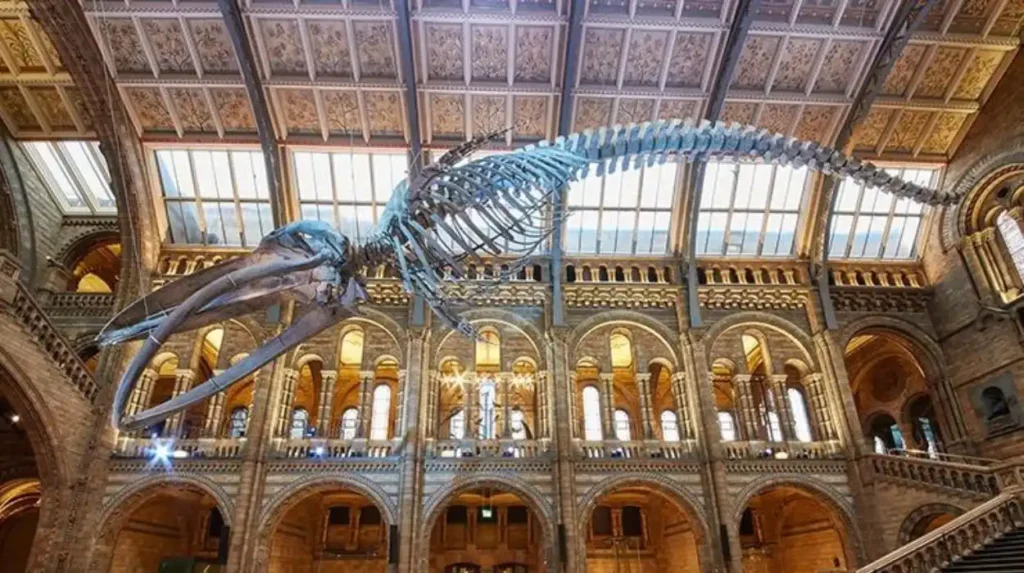
The Natural History Museum opened in its iconic Romanesque building in 1881.
Designed by architect Alfred Waterhouse, it houses approximately 80 million scientific specimens across zoology, botany, mineralogy, and palaeontology.
Its dinosaur galleries remain among London’s most popular educational experiences for children.
The Science Museum traces its origins to the South Kensington Museum established after the Great Exhibition.
Today it documents technological innovation through aviation, medicine, computing, engineering, and space exploration.
The Victoria and Albert Museum, founded in 1852, showcases decorative arts and design spanning over 5,000 years.
Free admission across these national museums significantly increases accessibility.
According to the Department for Culture, Media and Sport, England’s national museums collectively receive tens of millions of visits annually, with London’s institutions accounting for the largest share.
These museums continue updating exhibitions while preserving internationally significant collections.
To experience these historic institutions in person today, consult our comprehensive [Best Family Attractions in London for Memorable Days With Children of All Ages] for itineraries and visiting parameters.
How did London’s historic parks become essential family destinations?
London’s historic parks evolved from royal hunting grounds into public recreational landscapes supporting education, conservation, sport, wildlife, and community life. Their historic design, protected status, and year-round accessibility continue attracting families seeking outdoor experiences alongside cultural heritage.
London contains more than 3,000 parks and green spaces.
Several historic Royal Parks remain among Britain’s most significant public landscapes.
Hyde Park spans approximately 350 acres.
Originally acquired by Henry VIII in 1536, it later became one of London’s principal public parks featuring Serpentine Lake, memorials, gardens, playgrounds, and ceremonial routes.
Kensington Gardens developed from Hyde Park during the eighteenth century.
Its landscaped environment includes the Italian Gardens, the Diana Memorial Playground, Kensington Palace, and historic monuments.
Greenwich Park holds particular historical importance.
Established during the Roman period before becoming a royal park, it later became home to the Royal Observatory, connecting recreation with astronomy and navigation.
Richmond Park, created in 1625 by Charles I, protects approximately 2,500 acres of ancient landscape and supports hundreds of wild red and fallow deer.
These parks demonstrate how conservation, public health, recreation, and heritage preservation can coexist within an expanding global city.
What role has London Zoo played in family education and wildlife conservation?
London Zoo pioneered scientific zoology while becoming one of Britain’s most influential family attractions. Since opening in 1828, it has combined public education, conservation research, veterinary science, and wildlife protection within a historic setting that continues evolving for modern audiences.
The Zoological Society of London established London Zoo in Regent’s Park in 1828.
Initially, access remained limited to society fellows.
Public admission expanded during the nineteenth century.
London Zoo introduced several global firsts.
It opened the world’s first reptile house in 1849.
It established the first public aquarium in 1853.
It later introduced one of the earliest insect houses and children’s zoo concepts.
These innovations transformed public understanding of wildlife.
Rather than presenting animals solely for entertainment, the zoo increasingly emphasised biological research, conservation, breeding programmes, and habitat protection.
Today, London Zoo participates in international conservation initiatives involving endangered species.
Educational programmes serve thousands of schoolchildren annually, connecting historical collections with contemporary environmental science.
The zoo demonstrates how historic attractions continue adapting to changing scientific priorities.
How have royal palaces influenced London’s appeal for families?
London’s royal palaces preserve centuries of constitutional, political, architectural, and cultural history while offering accessible visitor experiences. Families explore ceremonial traditions, royal collections, historic interiors, and landscaped gardens that illustrate Britain’s evolving monarchy across multiple historical periods.
London’s royal residences remain internationally recognised symbols of British history.
Tower of London originated shortly after the Norman Conquest in 1066.
Originally constructed as a fortress, it later functioned as a royal palace, treasury, prison, armoury, and mint.
Families visit to see the Crown Jewels, medieval architecture, and centuries of royal history.
Hampton Court Palace reflects Tudor and Stuart monarchy.
Cardinal Thomas Wolsey began its construction before presenting it to Henry VIII in 1529.
Its kitchens, gardens, Great Hall, and famous maze provide historical experiences suitable for visitors of different ages.
Kensington Palace became a royal residence in 1689.
It has housed generations of monarchs including Queen Victoria during her childhood.
Buckingham Palace developed into Britain’s principal royal residence during the nineteenth century.
Although primarily a working palace, seasonal openings allow visitors to explore ceremonial rooms and royal collections.
Together these palaces illustrate constitutional continuity spanning nearly one thousand years.
Why has Greenwich remained one of London’s most historically significant family destinations?
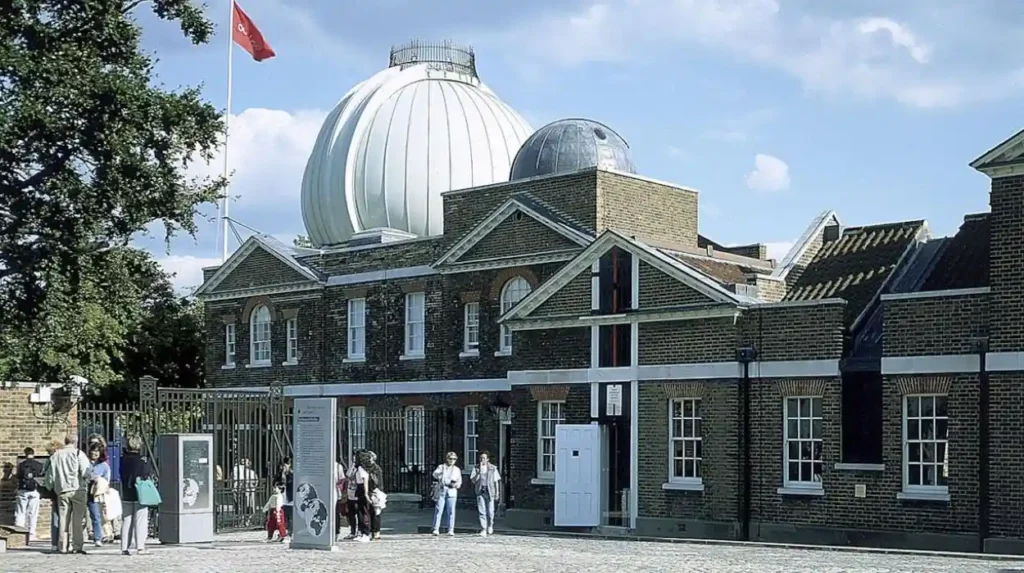
Greenwich combines maritime history, astronomy, royal heritage, architecture, and scientific innovation within a UNESCO World Heritage Site. Families experience interconnected landmarks that explain Britain’s naval development, global navigation, and the international measurement of time through engaging educational interpretation.
Greenwich represents one of London’s richest concentrations of historic landmarks.
Its significance extends beyond Britain.
The Royal Observatory, founded by Charles II in 1675, established Greenwich Mean Time and the Prime Meridian.
These scientific achievements standardised global navigation and modern timekeeping.
The National Maritime Museum documents Britain’s maritime history through exploration, naval warfare, trade, cartography, and shipbuilding.
The Queen’s House, designed by Inigo Jones, introduced classical architecture to England during the early seventeenth century.
The Old Royal Naval College, designed principally by Sir Christopher Wren, remains an architectural masterpiece.
Greenwich Park connects these landmarks through historic landscapes overlooking the River Thames.
UNESCO designated Maritime Greenwich as a World Heritage Site in 1997 because of its exceptional historical, scientific, and architectural importance.
The district demonstrates how multiple attractions combine into a coherent educational environment.
How have transport, tourism, and preservation increased visitor numbers over time?
Improved transport networks, heritage conservation, public investment, digital technology, and international tourism have steadily increased London’s attraction popularity. Better accessibility enables millions of domestic and overseas families to experience historic destinations throughout every season of the year.
Transport improvements fundamentally changed visitor behaviour.
Victorian railways first expanded regional tourism.
The London Underground, opening in 1863, transformed movement across the capital.
Modern buses, rail services, river transport, cycling infrastructure, and pedestrian routes now connect virtually every major attraction.
Heritage protection has also strengthened public confidence.
Historic England, conservation charities, museums, and local authorities invest continuously in restoration projects.
Digital interpretation enhances traditional exhibitions.
Interactive displays, multilingual guides, educational workshops, augmented reality experiences, and online resources broaden accessibility for different learning styles.
International tourism has become another major driver.
London consistently ranks among Europe’s most visited cities because of its concentration of historic attractions within relatively compact travel distances.
Educational tourism also contributes significantly.
Schools, universities, researchers, and genealogy enthusiasts regularly visit London’s archives, museums, cemeteries, churches, and historic neighbourhoods to support academic study and family history research.
Why will London’s historic family attractions remain important for future generations?
London’s historic family attractions preserve collective memory while supporting education, research, conservation, and sustainable tourism. Continued investment ensures future generations understand Britain’s cultural development through authentic historic places that remain relevant despite changing technologies and visitor expectations.
Historic attractions perform multiple public functions simultaneously.
They preserve architecture.
They protect archaeological evidence.
They conserve scientific collections.
They document political history.
They support formal education.
Climate adaptation increasingly shapes conservation strategies.
Historic buildings require specialised restoration methods that protect original materials while improving resilience against environmental change.
Digital archives now complement physical collections.
High-resolution scanning, three-dimensional documentation, and online catalogues improve research access without replacing original artefacts.
Family learning remains central.
Museums increasingly design exhibitions encouraging participation rather than passive observation.
Historic parks expand biodiversity programmes alongside recreational facilities.
Zoos strengthen conservation partnerships across international ecosystems.
Royal palaces continue balancing heritage preservation with modern visitor management.
Government agencies, charitable trusts, academic institutions, and heritage organisations collaborate to ensure these nationally significant landmarks remain accessible for future generations.
London’s enduring appeal lies in this remarkable continuity.
Visitors encounter Roman foundations, medieval fortifications, Tudor palaces, Georgian landscapes, Victorian museums, Edwardian institutions, and contemporary educational experiences within one interconnected city.
That continuity explains why London’s family attractions remain among the world’s most respected cultural destinations. Their historical depth, educational value, architectural significance, and commitment to preservation ensure they continue welcoming families while safeguarding Britain’s heritage for centuries to come.
Frequently Asked Question
Why are London’s historic family attractions still popular with visitors today?
London’s historic family attractions remain popular because they combine centuries of history with interactive learning, cultural heritage, and recreational experiences. World-famous museums, Royal Parks, historic palaces, Greenwich’s maritime landmarks, and London Zoo offer educational opportunities for all ages while preserving Britain’s architectural, scientific, and royal heritage. Free admission to many national museums and ongoing conservation efforts continue to attract millions of domestic and international visitors each year.