Key Points
- Charitable Mission Unveiled: Camden’s newly appointed Mayor, Councillor Tricia Leman, has formally pledged to use her year in office to champion ‘Women at the Well’, a dedicated King’s Cross charity supporting women facing extreme marginalisation and sexual exploitation.
- Roots of Advocacy: A lifelong feminist, Cllr Leman revealed her conviction stems from her childhood in South Wales, where her mother escaped an abusive household to raise her daughters as a single parent facing systemic financial and social discrimination.
- Distinguished Career Focus: The new Mayor brings a deep background in advocacy to the role, having previously served on the Trades Union Congress (TUC) National Women’s Committee and acted as Camden’s official Violence Against Women and Girls (VAWG) champion.
- The Selected Cause: Women at the Well, originally founded by a sisterhood of nuns two decades ago during King’s Cross’s era as an infamous red-light district, now operates as the sole remaining women’s day centre in central London.
- Holistic Support Network: The charity delivers crucial non-judgmental, long-term advocacy spanning healthcare, secure housing, food, and washing facilities, deliberately avoiding rigid, prescriptive timelines for rehabilitation.
- Preventative Success Measures: Mayor Leman emphasised that the charity’s true value lies in preventative outcomes—keeping vulnerable women alive and stopping them from falling back into cyclical, dangerous exploitation.
- Personal Motivations: Alongside her political and social commitments, Cllr Leman shared how early exposure to foreign cinema during unconventional school days—balanced by a supportive headteacher who served as an inspiring female role model—shaped her eventual career in education.
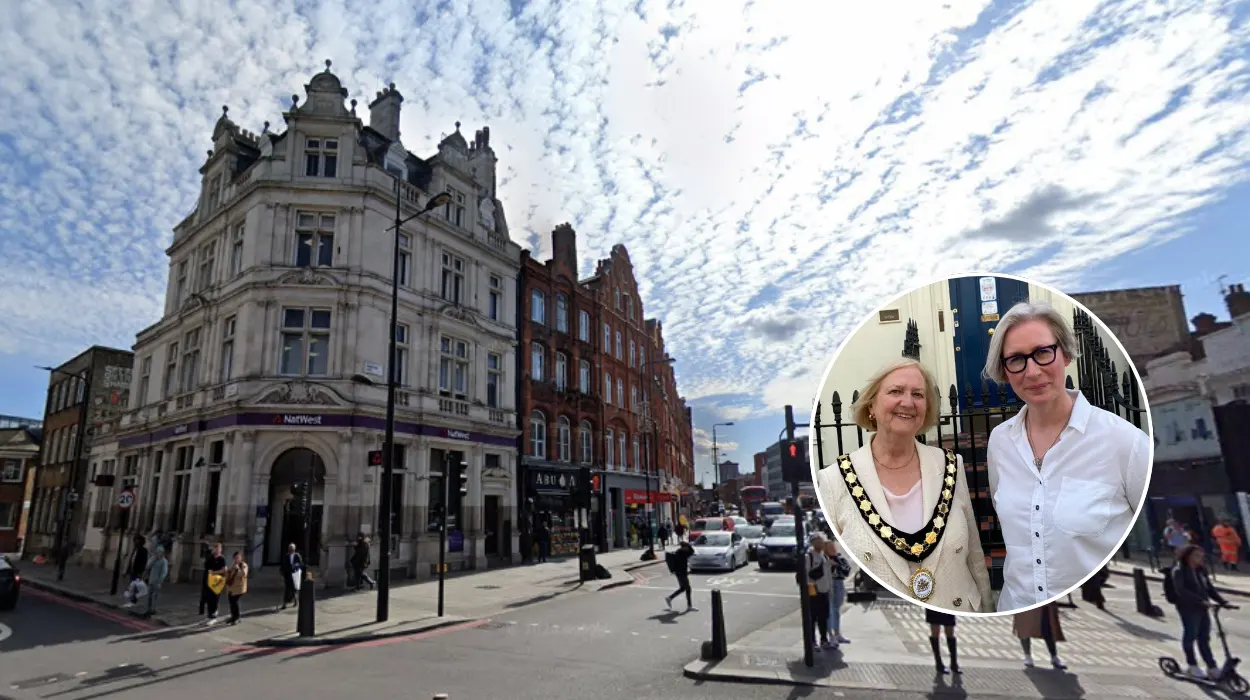
Camden (Extra London News) June 29, 2026 – The newly inaugurated Mayor of Camden, Councillor Tricia Leman, has officially launched her civic term with a distinct humanitarian mandate, pledging her year in the robe and chains to uplift and protect the borough’s most marginalised and structurally overlooked women. Announcing her choice of official mayoral charity, Cllr Leman has partnered with Women at the Well, an established drop-in support centre based in King’s Cross that specializes in rescuing and advocating for women trapped in cycles of sexual exploitation, homelessness, and acute social vulnerability. The decision marks a deliberate effort by the new mayoral administration to direct local government visibility and critical fundraising frameworks toward grass-roots support services operating on the absolute periphery of public consciousness.
- Key Points
- Who Is Tricia Leman, the New Mayor of Camden?
- Why Did Childhood Experiences Shape the Mayor’s Lifelong Feminism?
- What Is the History and Mission of Women at the Well?
- How Does the Charity Support Women on the Margins of Society?
- What Impact Does the King’s Cross Day Centre Have Beyond Numbers?
- How Will the Mayoral Partnership Benefit the Charity’s 20th Anniversary Year?
- How Did an Unconventional Education Inspire the Mayor’s Career?
Who Is Tricia Leman, the New Mayor of Camden?
The trajectory of Camden’s new first citizen is deeply intertwined with decades of community presence, educational leadership, and institutional activism. Having grown up in South Wales, Tricia Leman relocated to London to pursue her university education, subsequently establishing her roots in Camden, where she has lived, worked, and raised her family for more than 35 years. Her transition into local governance is a relatively recent chapter in a long history of public service; she was elected as a local authority councillor in 2024.
However, her commitment to structural equality spans the entirety of her professional life. Throughout her career as a professional educator and her extensive involvement with the British trade union movement, Ms Leman has consistently positioned human rights and gender equality at the forefront of her public obligations. This dedication manifested clearly during her tenure on the Trades Union Congress (TUC) National Women’s Committee, as well as her recent institutional role as Camden’s dedicated Violence Against Women and Girls (VAWG) champion. It was through this specialist work on Camden’s VAWG board—a strategic panel uniting elected councillors, third-sector charity executives, and representatives from the Metropolitan Police—that Cllr Leman first developed a close working relationship with the leadership of her chosen mayoral charity.
Why Did Childhood Experiences Shape the Mayor’s Lifelong Feminism?
In an open reflection on the personal motivations driving her political and charitable focus, Councillor Tricia Leman disclosed that her ideological foundations were forged by early family adversity and the systemic inequalities of twentieth-century Britain. As reported by the Camden New Journal, Cllr Leman stated that:
“My mother took myself and my sister out of an abusive household when I was a baby, and therefore we grew up in a single-parent family, so we experienced what were in those days the average discriminations.”
This firsthand exposure to the legal and economic vulnerabilities imposed on unsupported women left an indelible mark on the future mayor. Pointing to specific structural barriers her family encountered while trying to establish stability, Cllr Leman explained to the publication:
“My mother, for example, wanting to find us a secure home, couldn’t get a bank loan because you needed a male guarantor to sign off the application. So we grew up with a pretty good understanding of the challenges facing women when we were young. My feminism comes, I think, from that family life experience.”
This foundational understanding of how easily women can be pushed to the margins of economic security underpins her contemporary civic philosophy.
What Is the History and Mission of Women at the Well?
The institution selected to receive the structural backing of the mayoralty holds a unique position in the social geography of central London. Founded 20 years ago by a dedicated sisterhood of religious nuns, Women at the Well was established at a time when the King’s Cross neighbourhood operated as one of London’s most notorious and visible red-light districts. In the two decades since its inception, the surrounding urban landscape has undergone radical commercial redevelopment, yet the underlying social crises afflicting vulnerable women have persisted.
Today, the organisation stands as the only remaining specialized women’s day centre operating within central London. It functions both as an emergency sanctuary and a long-term rehabilitation engine, offering immediate daily life-sustenance needs—such as nutritious food, clean washing facilities, and a physically secure environment—alongside complex, extended legal and logistical advocacy. The charity coordinates complex interventions to help service users navigate the state healthcare apparatus, secure stable housing tenancy, and break free from systemic physical and financial exploitation.
How Does the Charity Support Women on the Margins of Society?
The operational philosophy of Women at the Well diverges sharply from standard, state-contracted social care models by prioritizing unconditional, long-term human dignity over rigid institutional metrics. As explicitly detailed by Sarah Green, the Chief Executive of Women at the Well, the charity rejects transactional approaches to social rehabilitation. Speaking on the core values that guide their daily operations, Ms Green stated:
“We don’t have a model of, ‘you need to be fixed’ or ‘we need to have changed you in six months’. We’re not prescriptive, we don’t judge, and we understand that some women might drop off and then need to come back.”
This fluid, trauma-informed approach is designed to accommodate the non-linear nature of recovery from severe exploitation. The organisation emphasizes a comprehensive care strategy that addresses multiple overlapping vulnerabilities simultaneously, recognizing that isolated fixes are inherently unstable. Elaborating on the necessity of this multi-faceted service delivery, Ms Green added:
“The support we give is holistic, while some other services may be more focused on a single issue. But it’s very difficult to sort your housing out, for example, if you can’t get back into the health service for a chronic problem.”
What Impact Does the King’s Cross Day Centre Have Beyond Numbers?
While statistical outputs dictate much of the funding landscape in the charitable sector, the partnership between the Camden mayoralty and the King’s Cross day centre seeks to reframe how success is evaluated. Though thousands of vulnerable women seek assistance through the centre’s doors on an annual basis, both civic and charity leaders argue that the true metrics of preservation are often invisible to traditional data collection.
Addressing the deeper, preventative value of the organisation’s presence, Cllr Leman told the Camden New Journal that the charity’s true societal impact is found in “the things that don’t happen – literally the women who don’t die, the women who don’t fall back into terrible situations of exploitation.” Acknowledging that the path out of systemic abuse is frequently prolonged and fraught with systemic setbacks, the Mayor noted:
“That may take months and years, and sometimes it doesn’t ever happen, but Women at the Well understands that complexity.”
Explore More Camden News:
Why Camden Council Must Crack Down on A-Board Clutter, Camden 2026
Camden Barfly Reopens with Frank Turner Headline Show: London 2026
How Will the Mayoral Partnership Benefit the Charity’s 20th Anniversary Year?
The arrival of the mayoral endorsement coincides directly with a major organizational milestone, as Women at the Well marks exactly two decades of continuous frontline service. Securing the status of the Mayor’s official charity provides a vital platform for public fundraising initiatives, high-profile civic awareness campaigns, and the strengthening of localized community alliances at a time of escalating economic pressure on third-sector budgets.
The long-term survival of localized drop-in spaces depends heavily on fostering deep, reciprocal relationships with the surrounding community and commercial neighbors. Commenting on the strategic importance of this elevated profile, Chief Executive Sarah Green emphasized that the partnership is vital for “ensuring that we’ve got really good relationships in this area so that for the long term, our neighbours will help us keep the doors open.” This community integration is deemed essential by leadership, with Ms Green concluding plainly: “Because the need for what we do isn’t diminishing.”
How Did an Unconventional Education Inspire the Mayor’s Career?
Beyond her public record of political and social activism, Camden’s new mayor possesses a deeply human side, characterized by an avid appreciation for classical music and international cinema. In a light-hearted but revealing admission, Cllr Leman traced her sophisticated cultural palate back to unorthodox habits during her adolescence in South Wales. Speaking openly to local media, she confessed: “I have to admit, my love of cinema comes from playing truant from school.”
This youthful evasion of institutional routine introduced her to a broader world of international art and thought, providing a unique alternative education. Describing those formative, solitary experiences, Cllr Leman stated:
“There was a little cinema that showed foreign films, so I found myself sitting there in the dark, on my own, trying to hide my school uniform, and watching Italian and French new wave, Russian films, great classics. It was an education.”
Despite the profound impact these experiences had on her personal development, the Mayor was careful to clarify that she does not endorse such actions for contemporary youth. Reaffirming her foundational belief in institutional learning, she added:
“I’m not recommending truancy to anybody, because it’s critically important that young people complete their education.”
Ultimately, her journey from a truant teenager hiding in a cinema to a dedicated professional educator was made possible by the intervention of an empathetic educator. Reflecting on the compassionate guidance she received during her youth, the Mayor credited her former headteacher for maintaining a supportive, watchful eye over her welfare rather than resorting to punitive measures. The headteacher would routinely telephone the teenage Ms Leman in the mornings to reassure her that she was still welcomed and expected at school, regardless of her arrival time.
Recalling this pivotal relationship, the Mayor observed:
“She understood that we were a single-parent family, and life was not simple. It was quite remarkable. She is one of the reasons, I think, that I went into education and stayed in it.”
This early encounter with understanding leadership left a lasting impression on her worldview. Offering a final reflection on her past perceptions versus her modern gratitude, the Mayor concluded:
“Of course, we were endlessly mean about her but I look back and I think, my gosh, she was a really powerful female role model.”