London offers one of the world’s richest collections of free cultural, historical, architectural, and public experiences. National museums, royal parks, historic markets, ceremonial traditions, riverside landmarks, and public memorials preserve nearly 2,000 years of history while remaining accessible without admission fees for millions of annual visitors.
- Why do London’s museums remain free to visit?
- How do London’s royal parks preserve centuries of history?
- Why is walking along the River Thames one of London’s greatest free experiences?
- How can visitors experience Britain’s ceremonial traditions for free?
- Why are London’s historic markets important cultural destinations?
- What architectural landmarks can visitors admire without buying tickets?
- How do London’s public memorials explain Britain’s national history?
- Why are London’s historic churches worth exploring without admission?
- How does street art and public culture reflect London’s modern heritage?
- Why do free experiences remain essential to London’s cultural identity?
- Frequently Asked Question
London has developed as Britain’s political, commercial, and cultural capital since the Roman foundation of Londinium around AD 47. Throughout its history, governments, charitable organisations, royal institutions, and national museums established public spaces intended for education, recreation, and civic life. Today, many of these places remain freely accessible, allowing visitors to experience centuries of British history without purchasing tickets.
Unlike many international capitals where major museums charge significant admission fees, the United Kingdom has maintained a long-standing policy of providing free entry to many nationally funded museums. Since 2001, the British Government has supported free admission to permanent collections at national museums in England, encouraging educational access while increasing visitor numbers.
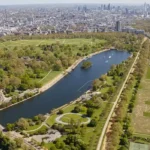
London also contains more than 3,000 public parks and open spaces. Examples include Hyde Park, Greenwich Park, and Regent’s Park. Together these landscapes preserve royal hunting grounds, medieval estates, Victorian gardens, and modern conservation areas.
Historic streets, churches, memorials, bridges, and government buildings further contribute to London’s reputation as an open-air museum where significant historical experiences remain available without charge.
Why do London’s museums remain free to visit?
Britain’s national museum policy promotes public education, cultural preservation, and equal access to heritage. Government funding allows permanent collections in major national museums to remain free, enabling millions of domestic and international visitors to study archaeology, science, art, and history annually.
Free museum admission reflects Britain’s commitment to preserving national heritage for public benefit rather than limiting access through admission charges.
The policy expanded significantly during the early twenty-first century when free admission became standard across national museums funded by the Department for Culture, Media and Sport. Visitor numbers increased dramatically after admission fees disappeared, demonstrating the relationship between accessibility and educational participation.
Among London’s best-known free museums are the British Museum, National Gallery, Natural History Museum, Science Museum, Victoria and Albert Museum, Museum of London Docklands, Imperial War Museum London, and National Maritime Museum.
The British Museum alone houses approximately eight million objects representing human civilisation across every inhabited continent. Its collections span Egyptian mummies, Assyrian sculptures, Greek antiquities, Roman artefacts, medieval manuscripts, Asian ceramics, African cultural heritage, and Indigenous American collections.
The National Gallery preserves more than 2,300 European paintings dating from the thirteenth to the twentieth centuries, including works by Leonardo da Vinci, Vincent van Gogh, Claude Monet, Rembrandt, and J.M.W. Turner.
The Natural History Museum contains around 80 million scientific specimens documenting Earth’s biological and geological history.
These institutions demonstrate how museums function simultaneously as research centres, conservation laboratories, educational institutions, and public learning environments.
How do London’s royal parks preserve centuries of history?
London’s royal parks originated as medieval hunting grounds and royal estates before becoming public recreational spaces. Their landscapes preserve historic monuments, ceremonial routes, memorials, lakes, gardens, and ecological habitats that illustrate Britain’s changing relationship between monarchy, government, and public life.
The eight Royal Parks collectively cover approximately 5,000 acres of protected landscape.
Hyde Park began as part of Westminster Abbey’s estate before King Henry VIII acquired it in 1536 for royal hunting. During the seventeenth century it gradually opened to the public, becoming one of Europe’s earliest urban public parks.
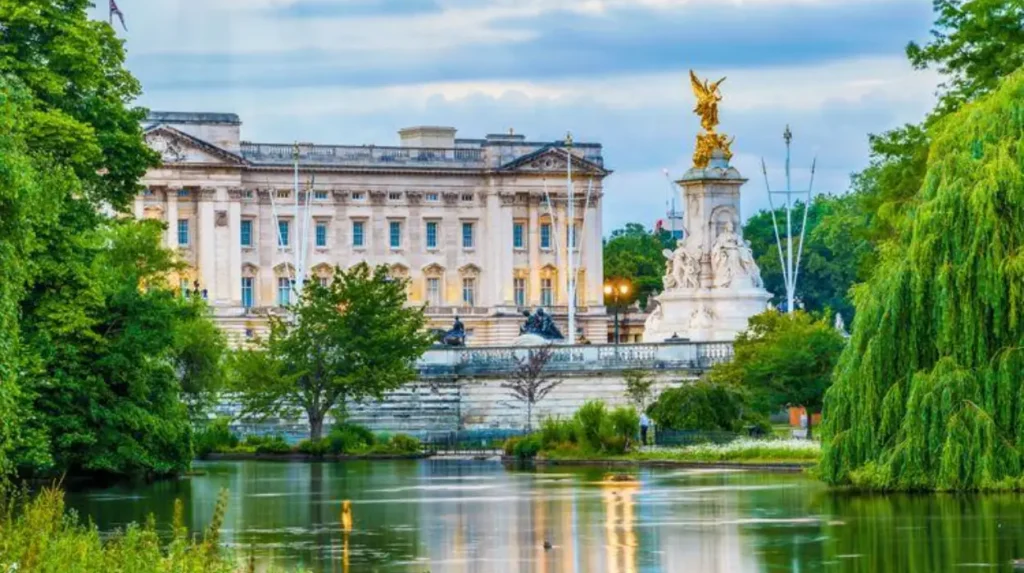
St James’s Park developed around a Tudor palace before being redesigned during the Restoration under King Charles II. The park became associated with royal ceremonies, military parades, and diplomatic processions connecting Buckingham Palace with Whitehall.
Greenwich Park occupies one of London’s oldest enclosed royal parks, established during the fifteenth century. The park overlooks the River Thames and contains archaeological evidence of Roman occupation, Anglo-Saxon settlement, and Tudor royal development.
Richmond Park preserves extensive ancient woodland and approximately 650 free-ranging red and fallow deer descended from populations introduced by King Charles I during the seventeenth century.
Visitors also encounter memorials, historic statues, ornamental lakes, and protected wildlife habitats that demonstrate how royal landscapes evolved into public environmental resources.
To experience these historic landscapes in person today, consult our comprehensive Free Public Spaces That Shaped London’s History and Everyday Community Life for itineraries and visiting parameters.
Why is walking along the River Thames one of London’s greatest free experiences?
The River Thames shaped London’s economic, political, and cultural development for nearly two millennia. Walking its public riverside paths reveals Roman settlement, medieval commerce, industrial expansion, royal architecture, modern regeneration, and internationally recognised engineering achievements without admission charges.
The Thames extends approximately 346 kilometres from Gloucestershire to the North Sea, with central London representing the historic heart of Britain’s maritime development.
Roman Londinium emerged because the Thames provided a navigable crossing suitable for trade and military movement.
During the Middle Ages, London’s port became one of Europe’s busiest commercial centres. Merchants imported wine, spices, textiles, timber, metals, and luxury goods while exporting wool and manufactured products throughout continental Europe.
Modern riverside walking routes connect landmarks including Westminster Bridge, the Palace of Westminster, the South Bank, Tower Bridge, St Paul’s Cathedral viewpoints, Shakespeare’s Globe area, Tate Modern surroundings, and Canary Wharf.
The Thames Path National Trail allows pedestrians to experience historic wharves, restored warehouses, Victorian engineering, twentieth-century redevelopment, and contemporary architecture within a continuous historical landscape.
Public art installations, memorials, dock structures, and surviving industrial buildings further illustrate London’s transformation from medieval trading port to global financial centre.
How can visitors experience Britain’s ceremonial traditions for free?
Several royal and state ceremonies remain publicly accessible without tickets. Military pageantry, ceremonial guards, historic processions, remembrance events, and constitutional traditions demonstrate centuries of British institutional continuity while attracting millions of spectators every year.
Ceremonial traditions remain central to Britain’s constitutional monarchy.
The Changing of the Guard outside Buckingham Palace represents one of London’s most recognised public ceremonies. Although military duties continue throughout the year, ceremonial guard exchanges attract the largest audiences during scheduled performances.
The Household Division consists of highly trained operational soldiers who simultaneously perform ceremonial responsibilities and active military service.
Horse Guards Parade also hosts mounted guard inspections, reflecting traditions dating to the seventeenth century.
State ceremonial routes along The Mall, Whitehall, and Parliament Square frequently accommodate coronations, royal celebrations, military commemorations, and national remembrance events.
The annual Remembrance Sunday ceremony at the Cenotaph honours members of the British Armed Forces who died during conflicts including the First World War, the Second World War, the Korean War, the Falklands War, Iraq, and Afghanistan.
These public ceremonies illustrate how constitutional traditions continue within modern democratic governance.
Why are London’s historic markets important cultural destinations?
Historic markets preserve London’s commercial heritage while remaining vibrant public spaces. Their architecture, street layouts, trading traditions, and multicultural communities illustrate economic development from medieval commerce through industrial expansion to modern urban regeneration without requiring admission fees.
Markets formed the commercial backbone of medieval London.
Borough Market traces documented trading activity back more than 1,000 years. Its position near London Bridge supported regional agricultural exchange and international imports arriving through the Thames.
Leadenhall Market developed during the fourteenth century as an important centre for meat, poultry, leather, and wool trading.
Covent Garden originated as a fruit and vegetable market during the seventeenth century before evolving into one of London’s principal cultural districts.
Columbia Road Flower Market reflects Victorian urban planning and continues the tradition of specialist street markets.
Spitalfields Market demonstrates London’s changing immigration history. Successive communities including Huguenot silk weavers, Jewish merchants, and Bangladeshi entrepreneurs contributed to the district’s commercial and cultural identity.
Walking through these markets allows visitors to observe preserved Victorian ironwork, Georgian street planning, historic warehouses, restored shopfronts, and contemporary independent businesses operating within centuries-old commercial environments.
What architectural landmarks can visitors admire without buying tickets?
Many of London’s most historically significant buildings can be appreciated from public streets, bridges, squares, and parks. Their architectural styles document Roman foundations, medieval rebuilding, Tudor governance, Georgian expansion, Victorian engineering, and contemporary urban development across successive historical periods.
London’s skyline reflects nearly two thousand years of architectural evolution.
The Palace of Westminster represents the Gothic Revival movement following reconstruction after the devastating fire of 1834.
St Paul’s Cathedral dominates London’s skyline with Sir Christopher Wren’s seventeenth-century Baroque masterpiece, completed after the Great Fire of London destroyed the medieval cathedral in 1666.
Tower Bridge, completed in 1894, combines Victorian Gothic architecture with innovative engineering that allowed river traffic to continue serving London’s expanding port.
The Tower of London preserves Norman military architecture dating from the reign of William the Conqueror after 1066.
The Monument commemorates the Great Fire of London and stands near the location where the fire began in September 1666.
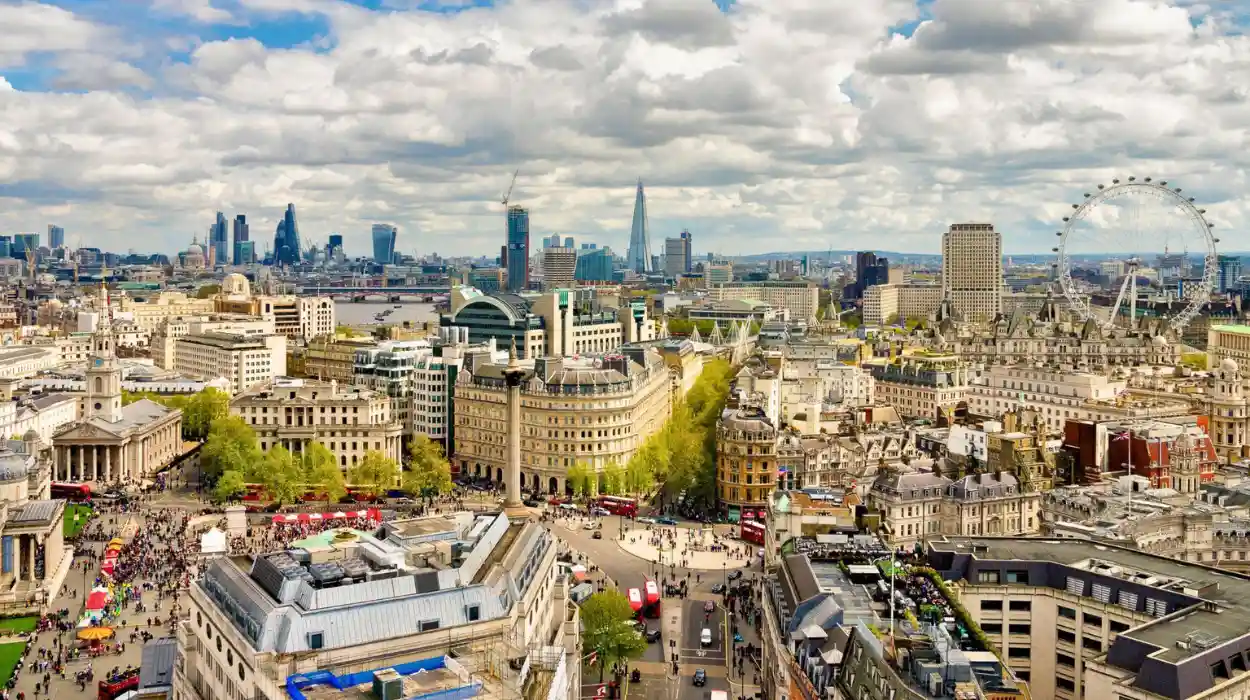
Modern buildings including The Shard, the Gherkin, and the Walkie Talkie illustrate London’s continuing architectural evolution while standing alongside medieval churches, Georgian terraces, Victorian civic buildings, and twentieth-century reconstruction.
Public viewpoints across the city enable appreciation of these landmarks without requiring paid observation platforms.
How do London’s public memorials explain Britain’s national history?
Public memorials commemorate monarchs, military personnel, scientists, political leaders, writers, reformers, and civilians whose contributions shaped Britain. Statues, monuments, plaques, and remembrance gardens collectively create an accessible historical record embedded throughout London’s streets and public spaces.
London contains thousands of commemorative monuments.
Parliament Square includes statues honouring figures such as Winston Churchill, Mahatma Gandhi, Nelson Mandela, Abraham Lincoln, David Lloyd George, and Millicent Fawcett.
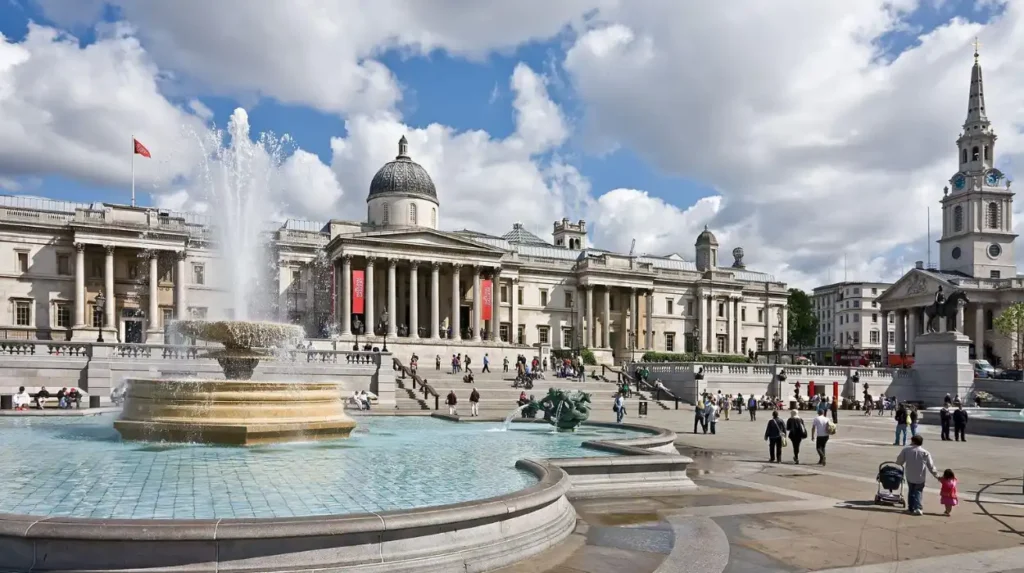
Trafalgar Square commemorates Admiral Horatio Nelson’s victory at the Battle of Trafalgar in 1805 through Nelson’s Column, completed in 1843.
The Cenotaph remains Britain’s principal national war memorial.
Blue Plaques identify buildings associated with influential individuals including scientists, writers, musicians, political leaders, engineers, and artists. The programme began during the nineteenth century and continues documenting London’s historical associations.
Victoria Embankment Gardens, Whitehall, Kensington Gardens, and other public spaces contain memorials recognising medical pioneers, explorers, humanitarian workers, and victims of conflict.
These monuments collectively transform London’s streets into an educational landscape illustrating Britain’s political, scientific, literary, military, and social development.
Why are London’s historic churches worth exploring without admission?
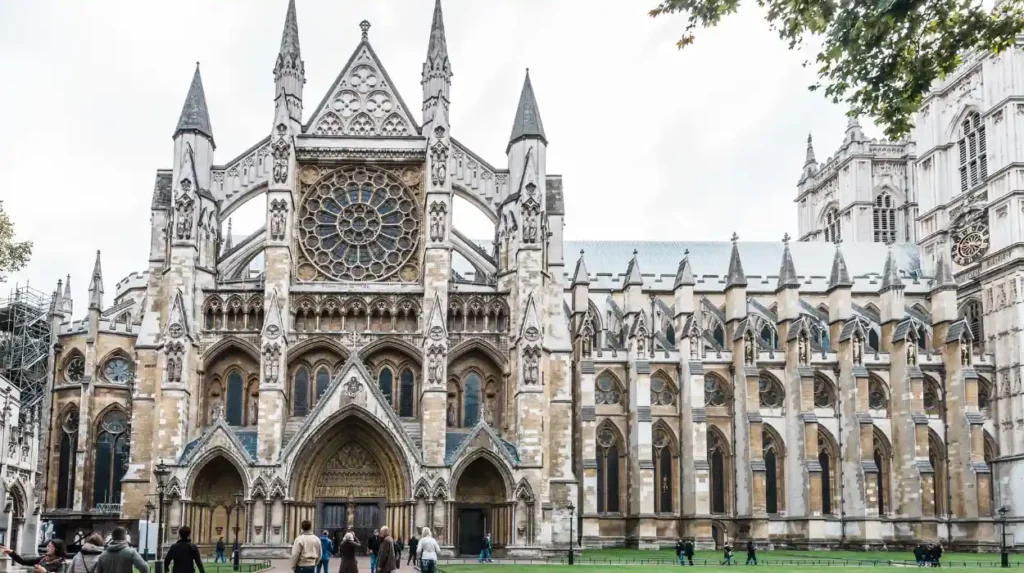
Many historic churches welcome visitors free of charge while preserving architecture, monuments, artworks, and burial records spanning nearly one thousand years. These religious buildings document London’s spiritual history alongside political change, community development, and artistic achievement.
Christian worship has shaped London’s urban landscape since the Roman period.
Numerous parish churches rebuilt after the Great Fire of London continue serving local communities while preserving seventeenth-century architecture designed by Sir Christopher Wren.
St Martin-in-the-Fields combines active religious services with community outreach, concerts, and charitable programmes.
Southwark Cathedral preserves Norman, Gothic, and Victorian architectural features while reflecting centuries of connection with London’s commercial waterfront.
Temple Church, originally constructed by the Knights Templar during the twelfth century, survives as one of England’s most important medieval ecclesiastical buildings.
Many churches contain historic monuments, stained glass, carved memorials, military commemorations, and archival records valuable for historians and genealogical researchers.
These buildings continue functioning as places of worship while preserving nationally significant architectural heritage.
How does street art and public culture reflect London’s modern heritage?
London’s public art demonstrates continuing cultural evolution through murals, sculptures, installations, performance spaces, and creative districts. Contemporary artistic expression complements historic architecture while documenting immigration, community identity, political debate, and urban regeneration across the capital.
Public art extends London’s historical narrative into the present day.
Neighbourhoods including Shoreditch, Hackney Wick, and Brixton became internationally recognised for large-scale murals and evolving street art during the late twentieth century.
The Fourth Plinth in Trafalgar Square presents rotating contemporary artworks that encourage public discussion about history, identity, and culture.
The South Bank hosts free cultural performances, festivals, book markets, musicians, and visual artists throughout much of the year.
The City of London’s Sculpture in the City programme integrates contemporary artworks within London’s financial district, creating dialogue between historic buildings and modern design.
Public libraries, community exhibitions, university museums, and local galleries further expand free access to cultural experiences beyond London’s internationally famous institutions.
These initiatives demonstrate how heritage conservation and contemporary creativity coexist within one of the world’s oldest continuously inhabited capitals.
Why do free experiences remain essential to London’s cultural identity?
Free public access preserves London’s democratic cultural tradition by ensuring history, education, architecture, landscapes, and national collections remain available to everyone regardless of income. This accessibility strengthens heritage conservation, academic research, tourism, and public understanding of Britain’s historical development.
Free experiences distinguish London from many global destinations by allowing visitors to engage directly with nationally significant heritage.
Museums preserve internationally important archaeological collections.
Royal parks protect historic landscapes alongside biodiversity.
Markets maintain centuries-old commercial traditions.
Ceremonial events reinforce constitutional continuity.
Historic churches preserve religious, artistic, and genealogical records.
Riverside walks connect engineering, commerce, and urban planning across successive centuries.
Together these experiences form an interconnected historical landscape that explains London’s development from Roman frontier settlement into one of the world’s leading political, financial, educational, and cultural capitals.
For history enthusiasts, educators, cultural tourists, and researchers, London’s freely accessible heritage provides exceptional opportunities to examine architecture, archaeology, governance, commerce, science, religion, and public memory within their original historical settings. This enduring accessibility ensures that the capital’s remarkable past continues educating future generations while supporting sustainable tourism, heritage preservation, and lifelong learning.
Frequently Asked Question
What are the best free experiences every London visitor should enjoy?
Some of London’s best free experiences include visiting the British Museum, National Gallery, Natural History Museum, walking along the River Thames, relaxing in Hyde Park and St James’s Park, watching the Changing of the Guard at Buckingham Palace, exploring Borough Market and Covent Garden, admiring landmarks such as Tower Bridge and St Paul’s Cathedral from public viewpoints, and discovering London’s historic churches and public memorials. These attractions offer an authentic introduction to London’s history, culture, and architecture without any admission fee.