Key Points
- Record Achievement: Hackney has secured a record-breaking 34 Green Flag Awards for its parks and public green spaces.
- Top of the Capital: The latest figures confirm Hackney Council has retained its title as the number-one London borough for high-quality green spaces.
- Continuous Improvement: The borough surpassed its previous year’s total of 33 flags, introducing Clapton Common as a first-time winner.
- National Recognition: Managed by the environmental charity Keep Britain Tidy, the international benchmark evaluates cleanliness, accessibility, safety, and biodiversity.
- Vital Urban Lifelines: The recognition underscores long-term visual investment in one of the United Kingdom’s most densely populated urban boroughs.
- Community Engagement: Grassroots volunteer groups, including the Tree Musketeers and Core Arts, secured distinct community accolades for structural stewardship.
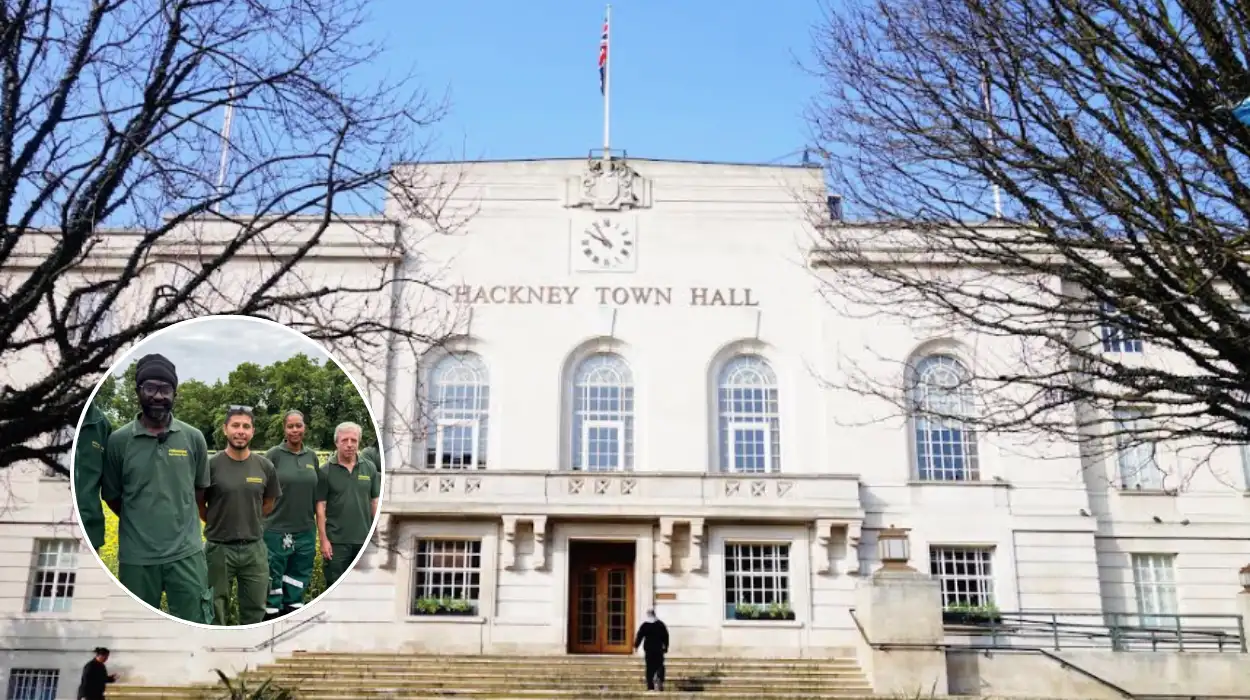
Hackney (Extra London News) July 14, 2026 – Hackney has officialised its status as London’s greenest borough after securing a record-breaking 34 Green Flag Awards for its public parks and open spaces. The annual environmental certification scheme, which is meticulously organised and overseen by the national charity Keep Britain Tidy, serves as the definitive international benchmark for beautifully maintained, safe, accessible, and biodiverse public recreational areas. By expanding its tally from the 33 flags achieved in the previous annual cycle, the local authority has successfully defended its position at the absolute summit of the capital’s leaderboard, outpacing all other London boroughs in ecological preservation and community infrastructure.
- Key Points
- Why Has Hackney Been Named London’s Top Borough for Parks?
- How Did Clapton Common Secure Its First Green Flag Award?
- What Does Hackney Council Say About the Historic Green Flag Milestone?
- Which Community Groups Won Green Flag Awards in Hackney?
- Why Are Public Green Spaces So Critical in Densely Populated Boroughs?
- What Are the 34 Award-Winning Parks in Hackney?
- How Does the Green Heritage Site Accreditation Work for Historic Parks?
The monumental achievement highlights a concerted, multi-year strategy by local civic teams to safeguard and elevate municipal nature networks within one of the UK’s most heavily urbanised and densely populated municipal zones. In a borough where an overwhelming majority of residents live in high-density flats and lack access to private gardens or personal outdoor patios, these publicly managed spaces serve as critical ecological sanctuaries and essential wellness hubs. The newly released figures showcase not only the performance of major municipal locations like London Fields and Hackney Marshes but also the successful introduction of freshly revitalised neighborhood commons into the prestigious national registry.
Why Has Hackney Been Named London’s Top Borough for Parks?
The primary reason behind the borough’s exceptional ranking is its sustained, structured funding and rigorous land management protocols, which have allowed it to systematically outperform neighboring administrative districts. As detailed in the comprehensive local reporting by community reporter Robyn Bennett of the Hackney Gazette, the borough’s park network expanded its footprint of excellence by entering Clapton Common into the strict evaluation matrix for the very first time. The addition of this historical green lung brought the borough’s complete checklist of elite spaces to 34, cementing a steady upward trajectory in urban land management.
To attain a Green Flag accolade, a public space must clear an uncompromising series of inspections conducted by independent volunteer judges who assess everything from litter management and structural safety to pedestrian paths, community facilities, and clear directional signage. According to the investigative framework outlined by Robyn Bennett of the Hackney Gazette, the scheme demands annual re-applications and rigorous physical audits, ensuring that local authorities do not become complacent after winning an initial award. Hackney’s capability to continuously scale up its numbers demonstrates that its municipal investment strategies are designed for long-term sustainability rather than short-term public relations exercises.
How Did Clapton Common Secure Its First Green Flag Award?
The inclusion of Clapton Common as a newly minted Green Flag site stands as a prime example of successful urban regeneration within the borough. As documented by Robyn Bennett of the Hackney Gazette, the historic common secured its debut flag directly following a sequence of targeted capital investments and comprehensive environmental restoration works. Local authorities targeted the space for holistic upgrades, focusing heavily on enhancing community facilities alongside raw ecological infrastructure to meet Keep Britain Tidy’s multifaceted judging criteria.
A central pillar of the space’s transformation was the complete refurbishment of its dedicated children’s play area, replacing aged, uninspiring assets with modern, accessible, and highly engaging recreational fixtures. Simultaneously, local conservationists and council teams initiated extensive nature recovery work across the common’s perimeter. These works involved establishing wild meadow zones, protecting mature tree root networks, and creating specialized habitats to boost native urban insect and bird populations. This twin-track strategy of combining high-quality human leisure spaces with sensitive, proactive biodiversity creation was what ultimately satisfied the demanding environmental standards enforced by the national judging panels.
What Does Hackney Council Say About the Historic Green Flag Milestone?
The political leadership within the borough has welcomed the record-setting environmental haul as validation of their ongoing commitment to climate resilience and public health. As reported by Robyn Bennett of the Hackney Gazette, Councillor Jacob Cable, Hackney Council’s cabinet member for climate, clean air, energy, and transport, stated that “everyone deserves access to top-quality green spaces, close to home.” This fundamental principle has guided the local authority’s spatial allocation policies, ensuring that even the most built-up estates remain within short walking distances of an award-winning park.
The leadership team has been quick to distribute praise across the wide network of individuals responsible for the daily up-keep of these spaces. In an official communication documented by Robyn Bennett of the Hackney Gazette, Councillor Jacob Cable emphasized the collaborative framework behind the victory, declaring that “this achievement is a credit to the hard work of Hackney’s parks team, alongside the many parks user groups, volunteers and partners whose care and dedication make our parks a haven for nature and residents alike.” The public statement underlines the council’s perspective that public parks cannot thrive purely on top-down administrative mandates; they require active, daily co-operation from the communities that inhabit them.
Which Community Groups Won Green Flag Awards in Hackney?
While large-scale municipal sites dominate the headline numbers, grassroots community groups working independently of direct council management also walked away with top honors. These civic organizations were judged under the specialized Green Flag Community Award tier, which tracks the stewardship of smaller, citizen-led green pockets. As reported by Robyn Bennett of the Hackney Gazette, the prominent local volunteer group known as the Tree Musketeers earned a Green Flag Community Award specifically for their continuous, hands-on management of the Hackney Community Tree Nursery and the accompanying Edible Forest Garden.
The Tree Musketeers have spent years transforming their local site into an educational hub where residents can learn arboriculture, cultivate native saplings for urban reforestation, and harvest organic fruits and herbs from a collectively managed forest floor. Furthermore, the local reporting by Robyn Bennett of the Hackney Gazette confirmed that Core Arts—a prominent mental health and creative non-profit organization based in Homerton—likewise received a community award for its beautifully curated garden spaces. Core Arts utilizes horticultural therapy to assist individuals navigating complex mental health challenges, proving that the borough’s green infrastructure yields profound social and therapeutic benefits alongside pure ecological metrics.
Why Are Public Green Spaces So Critical in Densely Populated Boroughs?
The social geography of Hackney explains why the retention of the Green Flag crown matters so intensely to both local policymakers and everyday citizens. Statistically recognized as one of the most densely populated municipal areas in the entire United Kingdom, the borough features thousands of multi-story apartment complexes, historical social housing estates, and tightly packed terraced rows. For a substantial percentage of the local population, private backyards or manicured gardens are an unattainable luxury, placing the entire psychological and physical burden of outdoor recreation squarely onto public land.
Public parks act as natural equalizers in these environments. They serve as outdoor living rooms for families who lack indoor space, sports complexes for youth groups, and quiet contemplative spaces for elderly residents seeking relief from urban sensory overload. From an environmental standpoint, these 34 award-winning spaces play a massive role in mitigating the “urban heat island effect,” absorption of surface-level rainwater during intense storms to prevent flash flooding, and scrubbing pollutants from the air—aligning directly with the broader climate and clean air portfolios managed by the council.
Explore more Hackney News:
Young Hackney Artists Debut Auerbach-Inspired Exhibition in London 2026
Hackney Council Spent £10k On Avoidable Parking Fines: Hackney 2026
What Are the 34 Award-Winning Parks in Hackney?
The comprehensive register of Hackney’s victorious spaces spans a vast array of landscapes, ranging from vast, world-famous athletic wetlands to tiny, historic inner-city squares tucked behind bustling commercial high streets. As preserved in the official public record published by Robyn Bennett of the Hackney Gazette, the complete, definitive list of the 34 certified Green Flag locations across the borough consists of:
- Abney Park Cemetery
- Albion Square
- Broadway Market Green
- Butterfield Green
- Charles Square
- Clapton Common
- Clapton Pond
- Clapton Square
- Clissold Park
- Daubeney Fields
- De Beauvoir Square
- Fairchild’s Garden
- Hackney Downs
- Hackney Marshes
- Haggerston Park
- Hoxton Square
- Joe White Gardens
- Kit Crowley Gardens
- Kynaston Gardens
- London Fields
- Mabley Green
- Mark Street Gardens
- Millfields Park
- Rowley Gardens
- Shore Gardens
- Shoreditch Park
- Springfield Park
- St John’s Churchyard
- St Thomas’s Square Gardens
- Stoke Newington Common
- Stonebridge Gardens (locally known as Snake Park)
- Well Street Common
- West Hackney Recreation Ground
- Woodberry Down Park
This diverse portfolio illustrates that the borough’s high standards are not confined to affluent neighborhoods; instead, they are evenly distributed across the entire geography of Hackney, ensuring spatial and environmental justice for all residents regardless of their specific postal code.
How Does the Green Heritage Site Accreditation Work for Historic Parks?
Beyond the standard green flag evaluations, several parks within the borough also qualify for the prestigious Green Heritage Site Accreditation, an elite sub-tier within the broader Keep Britain Tidy framework. This specialized accreditation does not merely look at current cleanliness or floral vibrancy; rather, it judges sites specifically on how effectively they conserve, interpret, and showcase their unique historic features and structural lineage. Sites must demonstrate that they are actively protecting their architectural heritage while making it relevant and understandable to modern, diverse urban audiences.
In Hackney, locations like Abney Park Cemetery and Springfield Park stand as premier examples of this historic preservation work. Abney Park, one of the “Magnificent Seven” garden cemeteries of London, requires a incredibly delicate balance: it must be managed simultaneously as a wild woodland nature reserve, a respectful place of remembrance, and an architectural museum featuring crumbling Victorian funerary art and a Grade II-listed non-conformist chapel. The council’s ability to maintain these layers of history, while keeping the grounds safe and accessible to daily walkers, underscores the structural sophistication that has allowed Hackney to retain its title as London’s premier park authority.