Key Points
- Surveillance Network Overhaul: Barnet London Borough Council is modernising its entire public video infrastructure by partnering with i-PRO Co., Ltd., upgrading a system that had critically fallen into disrepair.
- System Failure Rescue: Prior to the deployment, the council’s legacy system was virtually non-functional, with only 15 to 20 out of 3,000 installed cameras operating across the estate.
- Substantial Cost Savings: The implementation of i-PRO’s edge-AI hardware is projected to save the local authority an estimated £600,000 over five years by eliminating the need for heavy, server-based processing infrastructure.
- Cutting-Edge Edge-AI Integration: Barnet is deploying i-PRO X-series AI Processing Relay Applications to introduce smart analytics—such as people and vehicle counting—to existing third-party cameras without requiring total equipment replacement.
- Comprehensive Infrastructure Refresh: The phase-one rollout features an initial £1 million investment introducing 127 X-series bullet cameras, 10 fisheye cameras for unmanned libraries, 5G redeployable units for events, a refreshed control room, and an upgraded Genetec video management system (VMS).
- Police and Community Synergy: The system integrates directly into the Genetec Security Centre, embedding forensic search capabilities to support the Metropolitan Police. It operates under strict NDAA cyber security alignment and data privacy rules, explicitly excluding facial recognition technology.
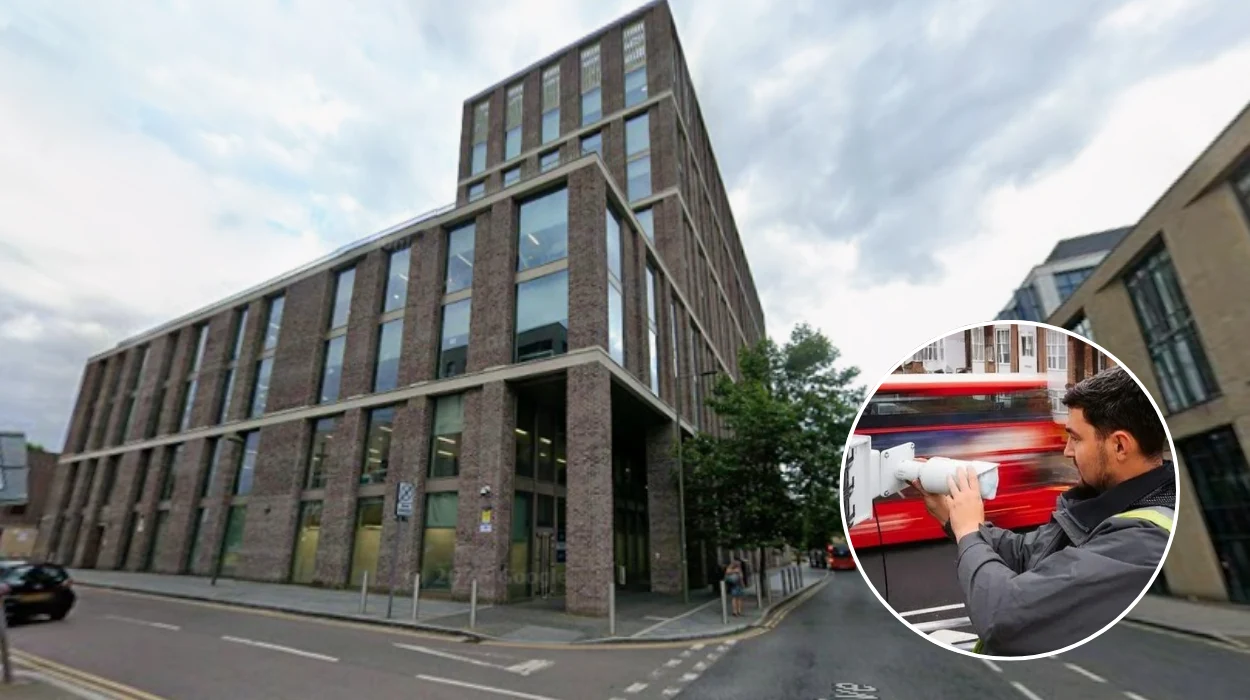
London (Extra London News) July 9, 2026 – The Barnet London Borough Council has launched a comprehensive technological overhaul of its public safety infrastructure, replacing a nearly entirely broken legacy CCTV system with a modern smart-city video network powered by i-PRO Co., Ltd. Serving London’s most populous borough of nearly 350,000 residents, the high-tech transition incorporates edge-based Artificial Intelligence (AI) analytics, a refreshed central control room, and a state-of-the-art video management system. The initial phase represents a £1 million capital investment, strategically designed to salvage functional elements of the council’s existing infrastructure while yielding an estimated £600,000 in operational savings over the next five years.
- Key Points
- Why did Barnet Council need an urgent video network upgrade?
- How does i-PRO edge-AI technology deliver £600,000 in savings?
- What specific hardware and software components comprise the new system?
- How are automated sensors transforming Barnet’s public libraries?
- In what ways do urban analytics assist local businesses and town planning?
- How does the system improve collaboration with the Metropolitan Police?
- What cyber security and data privacy protocols are enforced?
- What can be expected in phase two and future IoT expansions?
The modernised surveillance environment directly addresses a massive operational deficit within the borough. Prior to this intervention, Barnet’s public camera network had effectively collapsed, leaving the sprawling municipality visually unmonitored. By migrating to intelligent edge-processing sensors, the council is not only restoring core public safety functions but is also extracting granular, real-time urban analytics. This metadata is being processed internally to streamline municipal planning, evaluate high-street footfall, and assist the Metropolitan Police Service with advanced forensic search capabilities, all while maintaining strict compliance with UK data privacy legislation.
Why did Barnet Council need an urgent video network upgrade?
The decision to initiate a sweeping modernisation programme stems from a profound systemic failure of the borough’s previous public safety assets. As documented in industry findings published by the Editorial Desk of 4RFV (The UK Broadcast, Film and Media Technology Guide), the council’s legacy surveillance infrastructure had suffered years of severe degradation. Out of an expansive estate comprising roughly 3,000 cameras across the borough, a mere 15 to 20 individual units were found to be functioning properly. This near-total blackout left local commercial hubs, residential streets, and public parks without reliable visual oversight.
Faced with an unacceptable security vacuum, Barnet Borough Council sought a paradigm shift. Rather than simply replacing broken hardware on a like-for-like basis, the local authority designed an operational framework geared toward future-proof, data-driven governance. The goal shifted from passive video recording to the deployment of proactive, intelligent technology capable of generating actionable insights. By introducing a network that could actively interpret urban environments, the council aimed to boost administrative efficiency, improve target response times for emergency services, and enhance overall public service delivery for both residents and local commercial enterprises.
Managing a geographic territory as complex as Barnet compounded the urgency. The borough spans a diverse mosaic of environments, demanding a flexible and highly scalable technical approach. The upgraded network must simultaneously monitor dense, bustling urban centres such as Hendon, Finchley, Golders Green, Friern Barnet, Chipping Barnet, Whetstone, and Edgware. Concurrently, it must extend reliable coverage across affluent village communities like Totteridge and Arkley, whilst monitoring expansive stretches of protected Green Belt land.
How does i-PRO edge-AI technology deliver £600,000 in savings?
The foundational architecture of the new network relies on edge-computing AI, a technological choice that directly underpins the project’s financial viability. Traditional AI surveillance models typically leverage server-heavy configurations, where hundreds of standard cameras stream raw, high-definition video files back to a centralized datacenter for processing. This methodology introduces massive network strain, requires high-bandwidth lease lines, and demands extensive backend server hardware, which in turn incurs heavy costs for physical space, power consumption, and specialized cooling infrastructure.
In a comprehensive analysis detailed by the editorial team at 4RFV, the system integrator chosen to execute the rollout, DSSL Systems, highlighted how moving away from this centralised model protected the public purse. As stated by Aaron Stephens, Managing Director at DSSL Systems, “Unlike traditional server-based AI systems, which place a heavy burden on network infrastructure, i-PRO cameras process analytics on the edge, transmitting only metadata rather than large video files.”
By executing the deep-learning algorithms directly inside the camera housing, the requirement for costly central server arrays evaporated. The council’s smart city and community safety teams calculated that choosing i-PRO’s edge-AI framework over traditional server-bound solutions would yield a direct savings of approximately £600,000 over a five-year operational window. The inherent scalability of edge hardware also guarantees that as the borough expands its visual network in future phases, it can do so without facing exponential structural costs for server room expansions or increased utility outlays.
What specific hardware and software components comprise the new system?
The physical implementation of Barnet’s smart city network relies on a multi-tiered deployment of specialised hardware tailored to distinct municipal environments. To date, the phase-one hardware rollout includes:
- 127 X-Series Bullet Cameras: Deployed extensively across high streets, traffic junctions, and civic spaces to handle general public safety monitoring and real-time situational awareness.
- 10 High-Definition Fisheye Cameras: Installed within local public libraries to provide comprehensive, 360-degree situational coverage.
- Dual-View 5G Redeployable Units: Temporary, highly mobile assets designed to be rapidly positioned at outdoor festivals, cultural gatherings, and religious events.
Backing this hardware is a significant upgrade to the council’s software ecosystem. The entire network is managed via a newly synchronised central control room running an updated version of the Genetec video management system (VMS). A key software bridge utilized in this project is the i-PRO X-series AI Processing Relay Application. This analytical software layer allows Barnet to retroactively inject advanced AI capabilities into existing, older third-party cameras that are still physically viable, enabling advanced classification functions without requiring immediate, costly equipment replacements.
How are automated sensors transforming Barnet’s public libraries?
The incorporation of the 10 i-PRO fisheye cameras within local libraries marks an innovative shift toward automated facility management, particularly during hours when facilities are unmanned. These specialized devices do not merely record imagery; they operate as complex acoustic and spatial data collectors. Equipped with intelligent audio detection, the cameras are calibrated to recognize distinct acoustic anomalies, such as glass breaking, raised voices, or sudden physical impacts, instantly triggering automated alerts to central control room operators if a disturbance occurs.
Furthermore, these devices utilize spatial analytics to manage building lockup protocols seamlessly. The cameras run continuous heat-mapping and people-counting algorithms to track patron occupancy levels throughout the day. When a library prepares to transition to an unstaffed or closed state, the automated people-counting system verifies whether the building is completely clear of visitors. This electronic confirmation removes the necessity for manual sweeps by security personnel, ensuring that automated building lockdown procedures begin only when the facility is safely empty.
In what ways do urban analytics assist local businesses and town planning?
Beyond the traditional mandates of crime prevention and deterrence, Barnet Council is actively repurposing its surveillance network to function as an open-ended source of urban intelligence. The i-PRO hardware operates as a network of multifunctional sensors that translate physical movements into structured data sets. According to reporting from 4RFV, Aaron Stephens of DSSL Systems explained: “A key factor in the decision was the ability of i-PRO cameras to serve as multifunctional sensors, capturing both security footage and valuable urban analytics. The cameras are used for people and vehicle counting, feeding real-time data into Power BI for internal council reports.”
This integration with business intelligence software like Microsoft Power BI allows the council to export highly accurate metadata regarding civilian movement patterns. The resulting data streams are currently informing long-term spatial planning for deployments across public parks, railway hubs, and heavily trafficked commuter corridors.
Local commercial enterprises stand to benefit significantly from these insights. By reviewing anonymised footfall patterns across various high streets, businesses can better understand peak consumer hours, evaluate the impact of seasonal changes, and make highly calculated decisions regarding capital investments. For the council, the data takes the guesswork out of civil engineering, providing solid statistical foundations for traffic management schemes, pedestrianisation projects, and public space alterations.
How does the system improve collaboration with the Metropolitan Police?
When criminal incidents occur, the operational integration between the camera hardware and the Genetec VMS platform significantly reduces investigative turnaround times. Traditional video architectures require police officers or council operators to manually review hours of static footage to locate a suspect or vehicle. The modernised Barnet system entirely eliminates this bottleneck through embedded hardware-to-software synchronisation.
As reported by the editorial staff of 4RFV, Benjamin Durrant, Account Executive at Genetec UK & Ireland, clarified how this mechanism accelerates judicial processing. Benjamin Durrant stated that: “The i-PRO forensic capabilities are directly embedded within Genetec Security Centre, which enables control room operators to quickly find specific objects or events by filtering through attributes and characteristics captured by the cameras. This speeds up the investigative process and enhances collaboration with the Metropolitan Police.”
Through this deep integration, metadata descriptions generated by the edge-AI cameras—such as vehicle types, clothing colours, or directional vectors—are instantly searchable within the Genetec platform. Operators can filter through hundreds of hours of multi-camera footage in a matter of seconds. This fast tracking allows the council to provide actionable evidence packets to the Metropolitan Police during critical, time-sensitive investigations, drastically improving public safety responsiveness across the capital.
Explore more Barnet News:
City Hall Planning Row Sparks Bitter Council Debate: Barnet 2026
Barnet Council Housing Office Vandalised and Police Shot At: Colindale 2026
What cyber security and data privacy protocols are enforced?
With public sector data systems facing heightened scrutiny from both regulatory bodies and civil liberties groups, Barnet Council has implemented stringent defensive and regulatory protocols to govern its new network. Architecturally, the entire network framework was deployed by DSSL Systems to follow strict firewall rules, isolating the surveillance data streams from vulnerabilities present on public networks. Furthermore, the selection of i-PRO hardware guarantees compliance with the National Defense Authorization Act (NDAA), ensuring that the underlying chipsets and components meet rigorous international criteria for cyber resilience against state-sponsored intrusion or firmware tampering.
On the civilian privacy front, the council has drawn a firm ethical and legal boundary regarding algorithmic capabilities. The system operates strictly within current UK data privacy legislation and explicitly does not utilise facial recognition software or any form of biometrics that could identify specific individuals. The analytics generated are strictly aggregated and numerical—tracking that a vehicle or person passed a specific point, rather than who they were. According to the publication records on 4RFV, all governance approvals are being strictly maintained, and the council is waiting for formalized administrative sign-offs before any public results or long-term analytical trends are officially published.
What can be expected in phase two and future IoT expansions?
The initial £1 million deployment represents only the opening chapter of Barnet’s broader smart-city master plan. With the system’s operational efficacy and cost-efficiency already demonstrated, the local authority has formally sanctioned the next expansion step. As reported by 4RFV, Aaron Stephens of DSSL Systems confirmed the immediate road map, stating that: “With an initial £1 million investment, the council has maximised existing infrastructure to expand its data capabilities without significant additional spending. Phase two of the project, which has already been approved, will see the addition of 60-70 new i-PRO bullet cameras.”
This approved expansion will reinforce visual coverage across gaps identified in the initial rollout, while further scaling the borough’s collective data-gathering footprint. Concurrently, the council’s community safety and smart city departments are preparing to expand their analytical capabilities into transport logistics. An Automatic Number Plate Recognition (ANPR) pilot programme is scheduled to commence shortly, providing high-accuracy monitoring of traffic density and vehicle emissions classifications, with an eye toward a wider borough deployment depending on initial outcomes.
Looking further down the horizon, Barnet intends to leverage this newly built network backbone to establish a comprehensive Internet of Things (IoT) ecosystem. Municipal planners are currently assessing secondary integrations that would see environmental sensors attached to the surveillance nodes to monitor real-time air quality metrics. Additionally, the council plans to integrate automated flood detection sensors along vulnerable waterways and introduce dynamic traffic signal coordination systems that adjust light timings based on real-time vehicle queues.
Reflecting on the collaborative process that allowed this extensive deployment to succeed, Aaron Stephens of DSSL Systems noted the crucial role that open communication played in securing the project. As published by 4RFV, Aaron Stephens stated:
“This transparency, combined with i-PRO’s compliance with strict security standards, solidified the council’s trust in the solution. The i-PRO team came in to answer questions from the council and really won them over with their knowledge and honesty.” Stephens concluded by emphasizing the market implications of the partnership, noting that: “Furthermore, i-PRO’s deep integration with the Genetec security solutions portfolio created a seamless ecosystem, reinforcing its strong position in the smart city market.”