Key Points
- Cross-Party Alliance: West London councils are actively collaborating across party lines to drive local economic growth, boost independent businesses, and stimulate sustainable job creation.
- Diverse Political Spectrum: The strategic alignment spans multiple local authorities, explicitly bridging Conservative-run Hillingdon and Harrow with Labour-led Ealing and Hounslow.
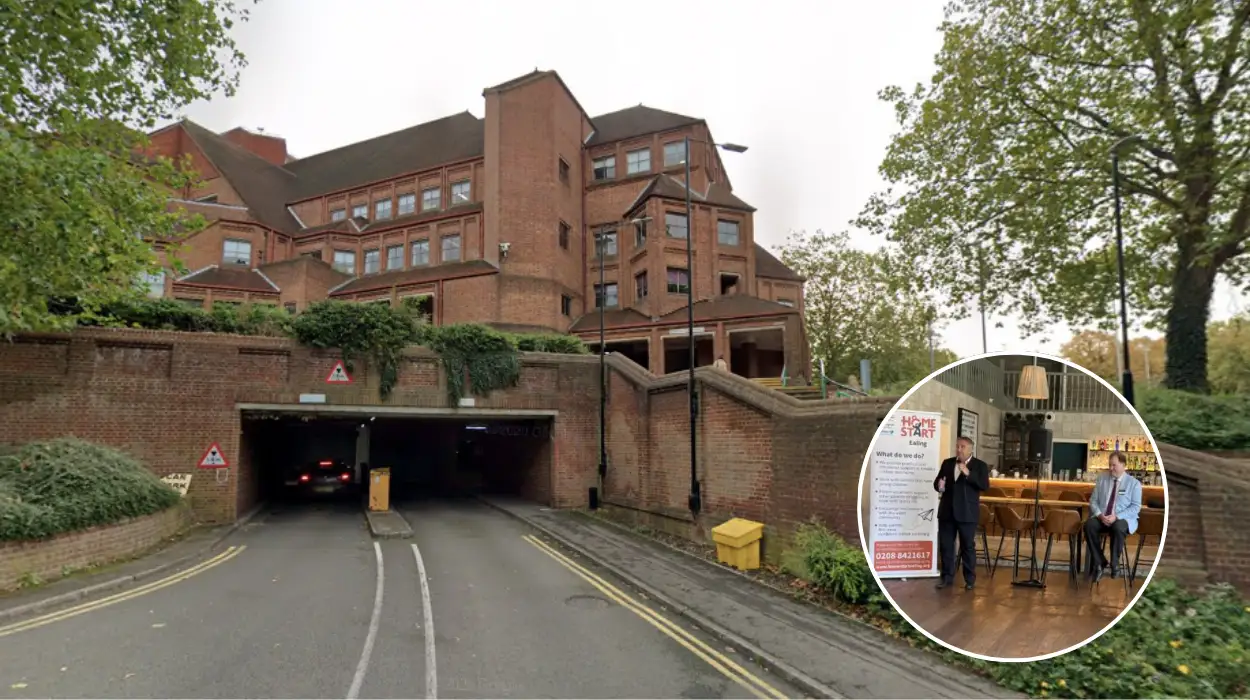
- Keynote Speech at Ealing Broadway: Hillingdon Council Leader Councillor Steve Tuckwell formally praised this sub-regional unity during a keynote address at the Ealing Business Club event, hosted at Bobo Social in Filmworks.
- A Clear Shared Objective: Leaders emphasise that regional commercial and resident benefits supersede traditional party politics, stating that distinct political identities have not disrupted collaborative policy-making.
- Green Infrastructure Exchange: Infrastructure expansion, specifically Ealing’s progressive roll-out of electric vehicle (EV) charging networks, serves as a primary model for cross-border knowledge sharing and structural emulation.
- Long-Term Commercial Outlook: The unified front aims to insulate the West London economy against macroeconomic shifts by fostering an integrated, business-friendly ecosystem.
Ealing (Extra London News) July 02, 2026 – West London local authorities are systematically bridging partisan divides to launch unified initiatives designed to bolster local businesses and accelerate job creation across borough lines. Speaking before a prominent assembly of local business owners, policymakers, and civic leaders, the leader of Hillingdon Council highlighted an unprecedented level of ongoing operational synchronicity between neighbouring municipalities that operate under opposing political mandates. The collaborative framework unites Conservative-led administrations with Labour-led cabinets to address pressing economic priorities, demonstrating a collective shift toward pragmatism over political friction in municipal governance.
- How Do Councils With Different Political Leaderships Work Together?
- What Is the Focus of the West London Cross-Borough Initiative?
- How is Ealing Council Leading the Way in Electric Vehicle Infrastructure?
- Why Is Cross-Party Cooperation Essential for Local Businesses?
- What Does This Strategic Partnership Mean for the Future of West London?
The cross-border ecosystem relies on the sharing of logistical insight, economic strategies, and urban development policies among several key authorities. According to coverage published by the editorial team at Ealing News, Councillor Steve Tuckwell, the Conservative leader of Hillingdon Council, confirmed that his administration is working in close lockstep with Labour-run Ealing Council and Hounslow Council, alongside their Conservative neighbours in Harrow Council. The overarching goal of this administrative network is to cultivate a resilient, interconnected commercial infrastructure throughout the West London sub-region, ensuring small and medium enterprises (SMEs) receive consistent support regardless of local electoral outcomes.
Addressing attendees at the high-profile Ealing Business Club networking assembly—convened at the Bobo Social venue within the Filmworks development on Ealing Broadway—Councillor Tuckwell underscored that regional economic health demands a unified approach. The assembly highlighted how localized cross-border policy development can circumvent traditional partisan gridlock to yield tangible structural outcomes. By synchronizing municipal priorities, these four neighbouring authorities aim to streamline supply chains, enhance workforce mobility, and elevate West London’s profile as a premier destination for corporate and independent investment.
How Do Councils With Different Political Leaderships Work Together?
The mechanics of cross-party collaboration within local government often attract intense scrutiny, particularly during periods of national political polarization. As detailed in the comprehensive reporting by Ealing News, when Councillor Tuckwell was questioned by event attendees regarding how councils managed by opposing political forces manage to coordinate their agendas efficiently, he pointed to a deep-seated institutional commitment to local prosperity. The Hillingdon Leader made it clear that operational objectives concerning employment and commercial stability naturally surpass party-political manifestos.
According to the published report by the editorial team at Ealing News, Councillor Steve Tuckwell stated that: “Despite the fact that in West London there are different colour rosettes for the political parties, there is an absolute determination. There’s a shared objective to benefit business and benefit our residents.” This assertion reflects an emerging consensus among West London local authorities that geopolitical borders within London should not act as barriers to economic development or infrastructure enhancement.
From an operational standpoint, this determinations translates into regular cross-borough consultations, joint economic forums, and shared administrative data pools. By aligning their commercial agendas, the involved councils can coordinate major infrastructure projects, ensure transport networks serve commuting workforces logically, and avoid counterproductive competition for corporate investments. This structured coordination ensures that resources are deployed strategically to benefit the wider sub-regional population rather than being constrained by individual borough borders.
What Is the Focus of the West London Cross-Borough Initiative?
The collaborative framework established by Hillingdon, Ealing, Hounslow, and Harrow focuses heavily on optimizing conditions for local commercial sectors while generating high-quality employment opportunities. As noted by the reporting staff at Ealing News, the partnership seeks to create an environment where independent enterprises can scale effectively by tapping into a wider regional market. This includes aligning business support services, simplifying local regulatory pathways, and standardising public procurement processes to make it simpler for West London firms to secure municipal contracts.
Furthermore, the cross-borough initiative aims to tackle regional employment challenges by coordinating workforce training and skills development programs. By mapping the collective labor market demands of the four boroughs, the councils can work with local educational institutions and vocational training centers to close existing skills gaps. This proactive approach ensures that residents are well-equipped to fill the jobs created by incoming investments, particularly in expanding fields like technology, logistics, and sustainable infrastructure.
How is Ealing Council Leading the Way in Electric Vehicle Infrastructure?
A primary example of this cross-border knowledge transfer is the rapid expansion of sustainable transport infrastructure, specifically green energy networks. In his address at the Filmworks venue, as documented by Ealing News, Councillor Tuckwell singled out Ealing Council’s progressive deployment of electric vehicle (EV) charging installations as a prime example of a municipal policy worth studying and emulating across West London.
The roll-out of comprehensive EV charging networks requires navigating complex urban planning regulations, grid capacity constraints, and private sector partnerships. According to the direct reporting of the journalism team at Ealing News, Councillor Steve Tuckwell openly admitted his own borough’s current position relative to their neighbor, stating: “Ealing are kind of leading the way on that in West London, and Hillingdon have got catching up to do, but we’re learning the lessons from our friends and colleagues just across the border in Ealing as well.”
This public acknowledgement highlights the practical utility of the cross-party alliance. Rather than developing independent, potentially incompatible EV strategies from scratch, Hillingdon is directly leveraging the operational blueprints and technical insights refined by Ealing’s transport planners. This shared expertise allows copying authorities to accelerate their own infrastructure roll-outs, avoid common procurement mistakes, and establish a seamless, highly compatible charging network across the entirety of West London.
Explore more Local London News:
Four New Deacons Begin Ministry Across North London: 2026
Sadiq Khan Hailed ULEZ Air Pollution Falls in London 2026
Why Is Cross-Party Cooperation Essential for Local Businesses?
For the local business community, consistent and predictable policy across borough borders is a major asset for long-term planning and investment. When adjacent local authorities operate in isolation, businesses often face fragmented regulations, differing environmental compliance standards, and disjointed transport planning, all of which add unnecessary friction to daily operations. The collaborative model praised by the Hillingdon Council Leader helps build a more predictable, integrated commercial landscape.
By aligning economic development policies, the participating councils reduce the bureaucratic hurdles facing businesses that operate across multiple boroughs. This is particularly valuable for logistics companies, supply chain providers, and service industries that rely on fluid movement across West London. A unified approach to business support also means that companies can access a broader pool of resources, mentoring networks, and regional development grants, amplifying the impact of public investment in the local economy.
What Does This Strategic Partnership Mean for the Future of West London?
The long-term implications of this cross-party governance model could set a powerful precedent for other local authorities across the United Kingdom. By demonstrating that substantial progress on infrastructure, sustainability, and economic growth can be achieved by looking past party politics, the West London councils are offering an efficient blueprint for sub-regional administration. This strategy is expected to become increasingly important as local authorities continue to navigate tight budgets and growing economic challenges.
Moving forward, this cooperative framework could expand beyond business support and EV infrastructure into other complex areas of municipal management, such as affordable housing strategies, waste management systems, and public health initiatives. As long as the involved leaders maintain their shared commitment to delivering tangible benefits for residents and businesses alike, the boundaries between different political parties will likely continue to take a back seat to practical, effective governance.