Key Points
- Unique Concept: Handyman Sushi operates as an intimate underground supper club hosted directly inside a residential flat in Hackney.
- Limited Capacity: The culinary experience accommodates a strict maximum of only six guests per seating, offering a highly exclusive counter atmosphere.
- Dual Experience: The supper club uniquely synthesises high-end Edomae-style Japanese dining with vinyl listening sessions curated from an extensive record collection.
- Highly Qualified Chef: The founder, Pedro, is a self-taught practitioner who secured a Master Distinction from the Narita Sushi Academy and formal certification from the All Japan Sushi Association.
- Seasonal Menu: Gastronomic offerings include three to five small plates, a soup course, twelve to sixteen pieces of sushi, a hand roll, and a dedicated dessert course based on seasonal availability.
- Cultural Fusion: The concept highlights London’s multicultural landscape, bringing together diverse international patrons over traditional Japanese cuisine prepared by a Brazilian national.
London (Extra London News) June 19, 2026 – A groundbreaking underground culinary movement is shifting the boundaries of high-end dining in East London as Handyman Sushi, an exclusive residential supper club, captures the attention of the city’s gastronomic community. Operating directly from a private flat within the vibrant neighbourhood of London Fields, the initiative strips away the traditional commercial restaurant framework in favour of a highly intimate, six-seat counter experience. By blending rigorous Japanese Edomae sushi techniques with an unyielding devotion to analogue vinyl music, the micro-venue bridges the gap between a casual domestic gathering and a elite Michelin-tier tasting counter. The establishment operates on a Bring Your Own Bottle (BYOB) system, transforming regional dining standards by fostering authentic cross-cultural conversations among complete strangers over a single kitchen counter.
What Is the Concept Behind Handyman Sushi in London Fields?
The structural framework of Handyman Sushi defies traditional commercial hospitality norms by operating entirely within a domestic sphere. As reported by journalist Jules Pearson of London On The Inside, the venture functions primarily as an exclusive underground supper club that “mostly takes place in Pedro’s flat in London Fields.” By intentionally restricting the physical seating capacity to just six patrons per session and incorporating a flexible BYOB policy, the establishment alters the standard power dynamics of urban dining out.
Rather than replicating the formal, sometimes clinical detachment found within conventional high-street Japanese establishments, the spatial arrangement brings guests into immediate proximity with the preparation space. Jules Pearson of London On The Inside observed that the physical and social architecture of the venue makes the evening feel “closer to being asked round to a friend’s for dinner than to a night out at a restaurant.” This blending of private residential living with elite commercial-grade culinary execution addresses a growing consumer demand for hyper-local, authentic experiential dining within the British capital.
Who Is Pedro, the Creative Mind Behind the Counter?
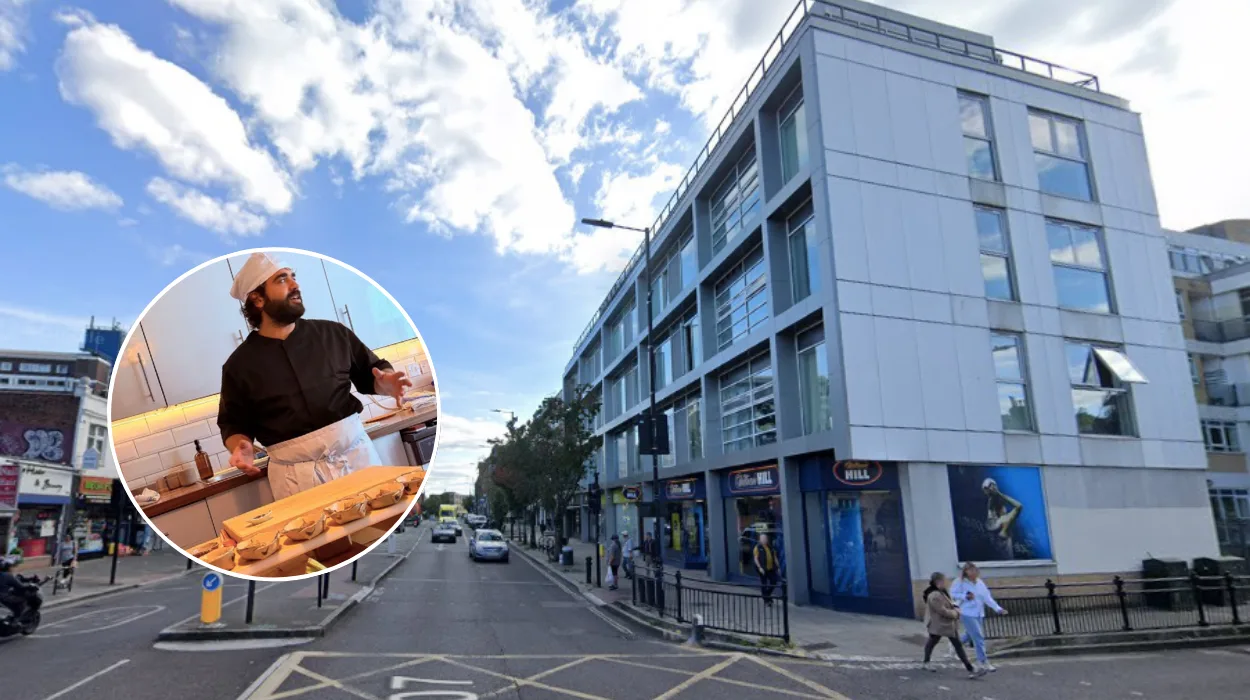
At the centre of this underground phenomenon is a culinary figure whose background stands in stark contrast to traditional commercial kitchen trajectories. The founder and head chef, known simply as Pedro, balances a corporate career with an intense, decade-long culinary obsession. In her detailed profile for London On The Inside, author Jules Pearson stated that “Pedro is Brazilian and a self-taught sushi slayer who’s been obsessed with sushi for more than a decade.” While his primary daytime occupation remains rooted within the marketing sector, his domestic focus has been entirely consumed by mastering the complex mechanics of sourcing, aging, slicing, and serving raw fish.
Despite his self-taught origins, Pedro has actively sought out and secured world-class professional validations to substantiate his residential enterprise. As documented by Jules Pearson of London On The Inside, earlier this year Pedro successfully travelled to Japan to complete a highly demanding, “professionals-only course at Narita Sushi Academy, graduating with Master Distinction.”
Furthermore, his technical handiwork was formally verified by the primary governing authorities of the craft. Writing for London On The Inside, Jules Pearson noted that Pedro “also received a Professional Sushi Proficiency certification from the All Japan Sushi Association, which is recognised by the Japanese government.” This dual qualification guarantees that despite the informal, domestic setting of a Hackney apartment, the raw execution adheres strictly to traditional standards. This rigorous training serves to completely upend guest expectations, as Jules Pearson pointed out that
“none of that prepares you for how seriously he takes the fish.”
What Can Dinners Expect From the Omakase Menu?
The gastronomic narrative of Handyman Sushi relies entirely on fluidity, seasonality, and the immediate atmosphere of the room. The structure follows the traditional omakase format—a Japanese phrase translating to “I’ll leave it up to you”—meaning the exact progression of plates is never locked into a static printout. According to the investigative review published by Jules Pearson of London On The Inside, “the menu is shaped by what’s good that week and the season, plus whatever Pedro’s into at the time.” This hyper-flexible approach empowers the chef to alter the dining experience mid-course, with Jules Pearson reporting that “dishes shift mid-service depending on the room or the drinks going round.”
Despite this element of spontaneous adaptation, the absolute volume of food delivered over the course of an evening remains remarkably generous and highly structured. Patrons attending a session are advised by London On The Inside’s Jules Pearson to “expect three to five small plates, a soup course, twelve to sixteen pieces of sushi, a hand roll and dessert.” During her targeted assessment of the dining experience, Jules Pearson confirmed that the rotation featured an array of meticulously executed items, explicitly stating that
“on our visit that meant house-made miso, grilled eel, several cuts of tuna and sea bass belly among others.”
The deliberate pacing of the service deliberately pushes back against modern restaurant trends that prioritize rapid table turnovers. Reflecting on the rhythmic delivery of the dishes, Jules Pearson affirmed that
“it’s a long, slow meal and the execution is excellent right the way through.”
What Particular Record Labels and Artists Inform the Evening?
Beyond the intricate knife work and the precision temperature control of the seasoned sushi rice, the atmospheric identity of Handyman Sushi is fundamentally defined by high-fidelity audio engineering. Pedro operates simultaneously as both a certified chef and an active disc jockey, utilizing an expansive and highly curated physical record collection to establish the emotional baseline of the flat. As detailed by Jules Pearson of London On The Inside, “if sushi is one half of the experience, the other is music.” Avoiding the modern corporate reliance on generic digital streaming platforms, Pedro treats the audio format with the exact same preservationist discipline he applies to his seafood. Jules Pearson wrote that “as a DJ (yes he wears many hats) Pedro’s record collection is serious stuff,” emphasizing that “he builds each soundtrack himself, playing full albums rather than a playlist on shuffle.”
This adherence to unbroken, full-album analogue playback creates a listening lounge environment that alters how guests consume their food and interact with one another. During the course of her recorded mid-day evaluation, Jules Pearson of London On The Inside tracked the specific acoustic landscape provided by the host, writing that “over our lunch that meant João Donato, Flora Purim, Tamba 4, Leon Ware and Jon Lucien.”
This deliberate arrangement generated “a run of samba-jazz, soul, funk and fusion that worked perfectly next to the food.” The final result of this intentional sensory intersection is a distinct hybrid space that eludes standard hospitality categorization. In her final synthesis for London On The Inside, Jules Pearson described the environment as existing “somewhere between a sushi counter, a listening session and someone’s very good house party.”
Explore more Hackney News:
Green Councillor Resigns Triggering By-Election: Hackney Central 2026
Juniper Ventures Wins 20 Hackney Schools Cleaning Contract, London 2026
Why Is London the Ideal Catalyst for This Cultural Intersection?
The existence and immediate success of Handyman Sushi serves as a stark reflection of the broader sociological and cosmopolitan identity of the modern British capital. The phenomenon of an individual of Brazilian heritage mastering an ancient Japanese craft and serving it within a British residential borough highlights the unique global melting pot that defines contemporary London hospitality.
This distinct cultural synthesis is not lost on the operator himself. In an exclusive statement preserved by journalist Jules Pearson of London On The Inside, Pedro reflected directly on the deep geopolitical harmony made possible by his supper club counter, asserting:
“Only in London can a Brazilian host an Edomae-style omakase while six different nationalities sit around the same counter. That’s part of the magic of this city for me.”
This ethos matches an escalating macroeconomic pattern across the wider London dining scene, where alternative dining formats are stepping in to fill structural gaps left by standard brick-and-mortar restaurants. In a broader market analysis tracking urban culinary trends for London On The Inside, industry analysts noted that “as London gets more expensive, the balance that handroll bars and supper clubs can strike between premium products, price and atmosphere will only become more attractive to diners.”
For those looking to experience Pedro’s unique culinary approach outside of his residential counter, alternative avenues are beginning to emerge. Jules Pearson of London On The Inside confirmed that for individuals who might feel uncomfortable “sharing a small table with strangers in a random’s flat,” Pedro has begun diversifying his operations, including “a hand roll pop-up at Le Regret.” However, for the complete residential vinyl-and-sushi experience, spaces remain hyper-scarce, with Jules Pearson advising prospective patrons to “get on the mailing list now for first dibs on the August dates, which go fast.”
References and Attributions
- London On The Inside (LOTI): All core restaurant metrics, reviews, menu details, and direct quotations from Chef Pedro were originally documented and published by Editor-at-Large Jules Pearson on June 19, 2026.
- All Japan Sushi Association & Narita Sushi Academy: Institutional data regarding Master Distinction graduation standards and professional proficiency certification frameworks recognized by the Japanese Government.