Key Points:
- Election Date: Residents in Camden will head to the polls on 7 May 2026.
- Political Dominance: Labour has held Camden Council for all but four years since 1971, currently holding 47 of the 55 seats.
- Main Contenders: Labour, Conservatives, Liberal Democrats, Green Party, and Reform UK are contesting nearly all wards.
- Minor Parties: The National Housing Party and the Camden People’s Alliance are fielding candidates in specific wards, such as King’s Cross.
- Core Issues: Manifestos focus heavily on the housing crisis, social care, environmental retrofitting, and community safety.
- Housing Pledges: Labour promises 1,400 new homes; the Lib Dems propose selling the Crowndale Centre to fund temporary accommodation; the Greens advocate for a council-led building programme.
- Transport and Climate: Pledges range from 800 new EV chargers (Labour) to a joined-up cycling network (Greens) and ending “blanket” 20mph limits (Conservatives).
Camden (Extra London News) May 13, 2026 – The political landscape of Camden faces a pivotal test as the 2026 local elections approach, with five major parties and several independent challengers vying for control of a borough long considered a “Labour fortress.” While the Labour Party currently commands a significant majority with 47 out of 55 seats, rival parties have intensified their campaigns, focusing on systemic issues in social housing, the cost-of-living crisis, and controversial transport policies. With the election scheduled for 7 May, the Local Democracy Reporting Service (LDRS) has scrutinised the manifestos of all major contenders to outline the competing visions for the north London borough.
- Will Labour Maintain Its Historic Stronghold in Camden?
- What is the Conservative Plan for Camden’s Motorists and Taxpayers?
- How Do the Liberal Democrats Propose Fixing the Housing Crisis?
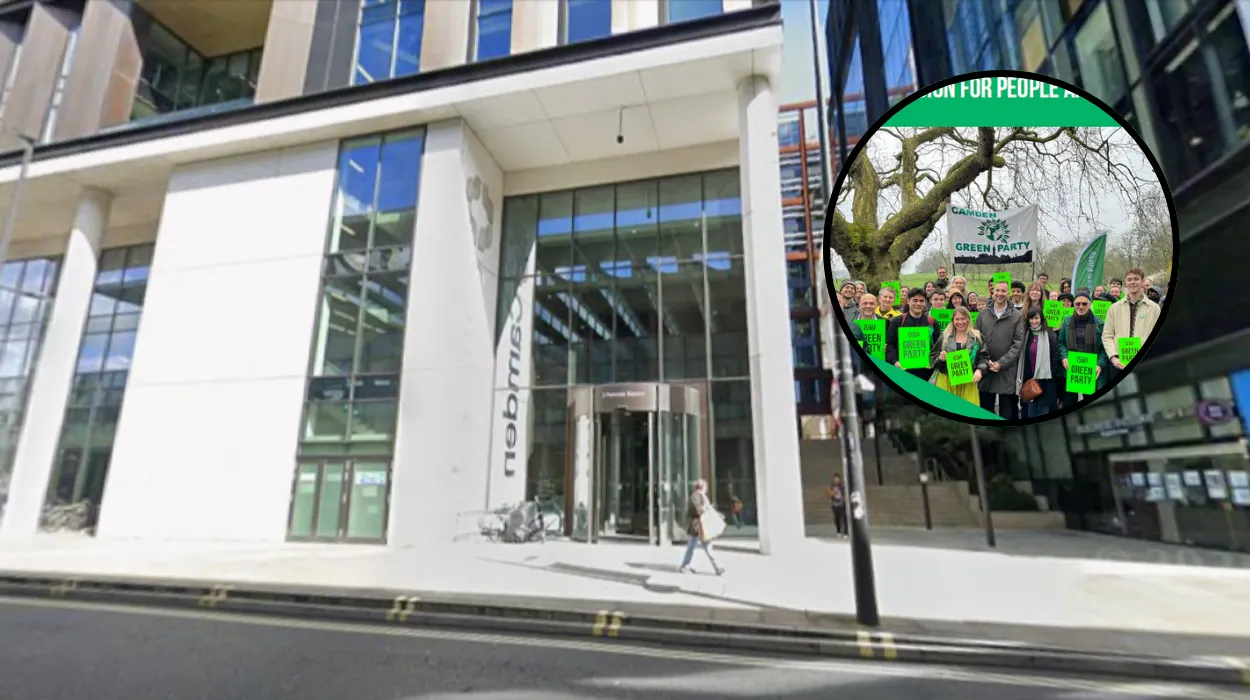
- Can the Green Party Redefine Camden’s Environmental Policies?
- What Role Does Reform UK Play in the Local Election?
- Who Are the Minor Parties and Independent Candidates?
- How Will Parties Address Crime and Anti-Social Behaviour?
- What Are the Key Environmental Differences Between the Manifestos?
- Why Does This Election Matter for Camden’s Future?
Will Labour Maintain Its Historic Stronghold in Camden?
As reported by The Fitzrovia News, the Labour Party enters this election defending a legacy of nearly five decades of dominance in Camden.
Their 2026 platform is built on a continuation of existing social programmes while promising a significant expansion of the borough’s housing stock and green infrastructure.
According to the official Labour Manifesto, the party’s headline housing pledge is to build 1,400 new homes, with a specific commitment that 700 of these will be “genuinely affordable.”
In an effort to protect those in the private sector, Labour also intends to expand landlord licensing to enforce stricter rights for tenants and improve overall housing quality.
On the financial front, as documented by Councillor Camron Aref-Adib, Cabinet Member for Finance and Cost of Living, in a report for Camden News, the council recently passed a budget for 2026/27 that includes a 4.99% Council Tax increase.
Aref-Adib stated that this rise is essential to “make every pound count” and “provide financial stability” at a time when other councils are facing bankruptcy. He noted that £29.9 million would be allocated to retrofit 3,000 council homes to reduce energy bills for residents.
What is the Conservative Plan for Camden’s Motorists and Taxpayers?
The Conservative Party, acting as the primary opposition in many wards, has framed its campaign around fiscal responsibility and a “common-sense” approach to urban management.
As outlined in the Conservative Party Plan for Britain and local campaign materials, the party is positioning itself as the champion of the motorist.
According to statements released by the Conservative Party, a Tory-led council would move to “end blanket 20mph schemes,” arguing that such limits should only be used where strictly necessary. Furthermore, they have pledged to “free up underused road space in bus lanes” to prevent what they describe as “enforcement traps” for local drivers.
On the local economy, the Conservatives have promised to abolish business rates for thousands of high-street businesses, including pubs and shops.
Regarding crime, they have committed to hiring 10,000 extra police officers nationally, with a local focus on “crushing crime” through a “National Pothole Patrol” and increased CCTV coverage.
How Do the Liberal Democrats Propose Fixing the Housing Crisis?
The Liberal Democrats have focused their 2026 manifesto on what they describe as
“Camden’s failing housing repairs system.”
As reported by The Fitzrovia News, the party has taken a critical stance on the current administration’s management of council stock.
As stated by the Camden Liberal Democrats in their 2026 Manifesto, the party proposes a radical shift in asset management:
“A Liberal Democrat council will sell the under-used Crowndale Centre to provide funds to boost the Temporary Accommodation Purchasing Programme (TAPP) to provide additional homes to reduce homelessness.”
The Lib Dems also pledge to “put contractors who fail to provide good service on notice” and ensure that all residents are aware of their rights under “Awaab’s Law.”
On the issue of community safety, the party has promised to boost the size of community safety teams and pressure the Metropolitan Police to stop diverting neighbourhood officers to other assignments.
Explore More Camden News
James Corden Wins Camden Council Row on Belsize Park Mansion Paving, 2026
Camden Police Slam BT Link Kiosks as Drug Honey Pot, Camden 2026
Can the Green Party Redefine Camden’s Environmental Policies?
The Green Party has presented a manifesto that prioritises social justice alongside environmentalism. According to the LDRS and The Fitzrovia News, the Greens are advocating for a complete overhaul of how the council approaches building and public space.
As reported by The Fitzrovia News, the Green Party pledges to:
- Use public investment to establish a council-led building programme.
- Oppose the sale of public land for private homes.
- Restore “planned cyclical repairs programmes” to social housing to prevent long-term decay.
In terms of transport, the Greens have promised a “joined-up cycling network across Camden” and have stated they will prioritise the renovation and retrofitting of existing buildings over demolition. Their manifesto also includes a strong ethical stance, promising to
“divest funds from companies linked to human rights abuses and violations of international law.”
What Role Does Reform UK Play in the Local Election?
Reform UK is standing in almost all electoral wards in 2026, offering a platform that leans heavily on national policy shifts to affect local outcomes. While the LDRS noted that the party’s local branch did not provide a borough-specific response by the time of publication, their core national pledges form the basis of their local appeal.
As reported by The Fitzrovia News, Reform UK’s platform includes:
- Leaving the European Convention on Human Rights (ECHR).
- Scrapping Net Zero policies to “cut energy bills.”
- Limiting welfare benefits exclusively to British citizens.
- Scrapping “indefinite leave to remain” for immigrants.
Who Are the Minor Parties and Independent Candidates?
In addition to the five main parties, Camden voters will see names from the National Housing Party and the Camden People’s Alliance on their ballot papers.
In the King’s Cross ward, for example, Luke McCarthy is standing for the National Housing Party, a group that explicitly campaigns under the slogan “No more Refugees.”
Conversely, the Camden People’s Alliance is fielding candidates such as Paul Renny and Shezan Renny, focusing on hyper-local community representation and alternative social policies.
How Will Parties Address Crime and Anti-Social Behaviour?
Safety remains a top-tier concern for Camden residents. As reported by The Fitzrovia News, all parties have offered varying solutions to the rise in anti-social behaviour (ASB).
Labour’s Safety Plan
Labour’s budget, as detailed by Councillor Camron Aref-Adib, includes the deployment of a new team of “community safety officers” and an increase in CCTV cameras in known hotspots.
The Liberal Democrat Perspective
According to the Liberal Democrat Manifesto, the party wants to ensure “more visible patrols at peak times,” particularly after school hours and late in the evening. They also focus on “Violence Against Women and Girls” (VAWG), promising to build partnerships with schools and sports clubs to challenge harmful behaviours.
The Green Party Approach
The Greens have pledged to invest in “violence prevention and community safety” through a public health lens, specifically focusing on early intervention for youth to prevent loneliness and radicalisation.
What Are the Key Environmental Differences Between the Manifestos?
While all parties acknowledge the climate crisis, their methods of intervention differ significantly.
- Labour: As outlined in the Camden Climate Action Plan 2026–2030, Labour intends to identify locations for new parks, plant more trees, and install 800 new electric vehicle (EV) charging points.
- Liberal Democrats: They propose overhauling rubbish and recycling policies to “reverse the fall in recycling rates” and want to remove “street clutter,” including illegally parked e-bikes.
- Conservatives: They argue for a “repeal of the Climate Change Act” at a national level and wish to “axe the Carbon Tax” locally to reduce household bills.
- Greens: They advocate for the creation of a “climate change task group” within the council and the support of community initiatives to increase biodiversity corridors.
Why Does This Election Matter for Camden’s Future?
This election is more than just a vote for local services; it is a referendum on the “Labour stronghold” status of the borough. With high-profile candidates and radically different visions for housing and transport, the results on 7 May 2026 will determine whether Camden continues its current trajectory or shifts toward the market-led policies of the Conservatives, the community-centric focus of the Lib Dems and Greens, or the populist platform of Reform UK.