Key Points
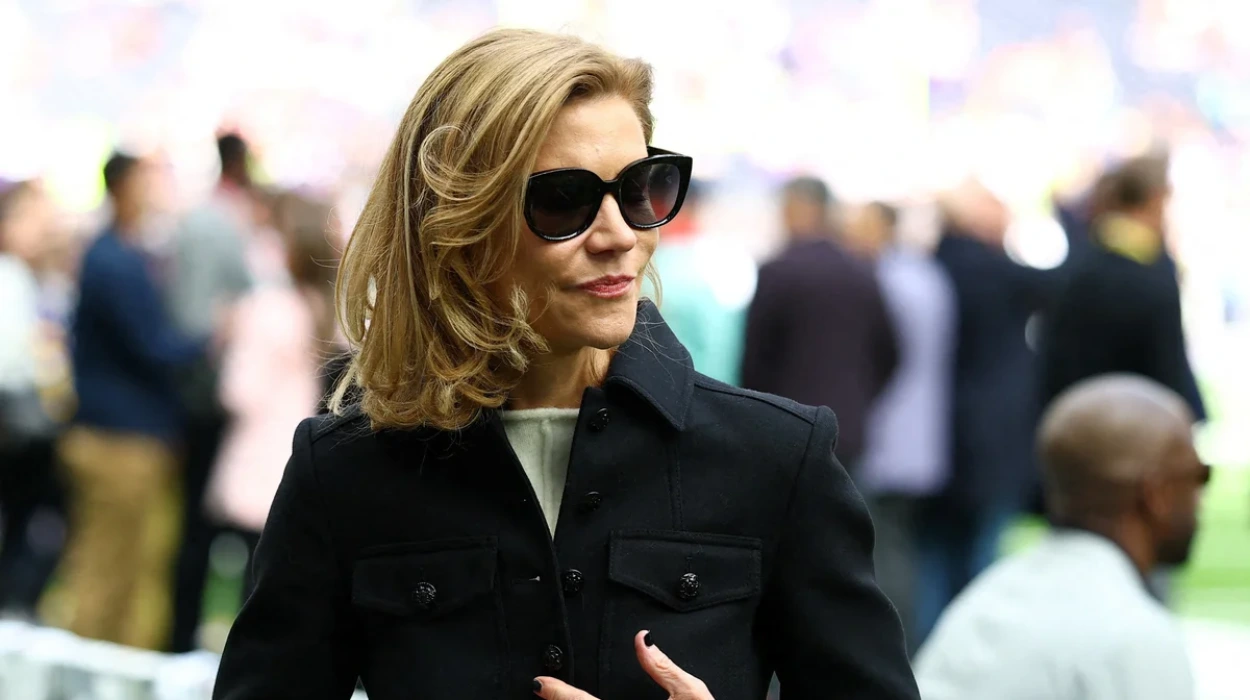
- Amanda Staveley was present at West Ham United’s 4-2 win over Wolves at London Stadium on Tuesday evening.
- Staveley was offered tickets to the game by co-chair Vanessa Gold as a crucial deadline looms on the control of the club.
- In July, Vanessa Gold made up her mind to sell her full 25.1% share of the club to Staveley, with the valuation of the club being £600m.
- By virtue of the pre-emption rights, any offer from any external party must be offered to the existing majority shareholders on equal terms.
- The original 30-day period when the existing shareholders had their options open on Gold’s shares expires this week.
- David Sullivan, who owns a 38.8% shareholding in the club, is the majority shareholder and also resigned as co-chair in June.
- Daniel Kretinsky owns 27% of the club; however, he recently sold slightly more than 2% of his stock to Czech businessman Jakub Havrlant in order to stay below a mandatory 50% takeover mark.
- According to the BBC, reports suggest that David Sullivan is unlikely to purchase any shares until the Football Regulator evaluates whether he qualifies to do so.
- Vanessa Gold inherited her share of stock through the family trust after her father, David Gold, passed away in January 2023.
- Previously, Amanda Staveley was the face of the Saudi-led group which purchased Newcastle United in October 2021 as well as played a key role in the 2008 take-over of Manchester City.
- Last season, West Ham were relegated from the Premier League, marking their first time playing in the Championship after 14 consecutive years in the top flight, and their first time being in the second tier in 15 years.
- The head coach, Nuno Espirito Santo, must now achieve promotion back to the Premier League with more than 50,000 sold season tickets and approximately £150m from player sales.
London (Extra London News) September 3, 2025 – Amanda Staveley was spotted in the stands at London Stadium on Tuesday evening, observing West Ham United secure a 4-2 victory against Wolverhampton Wanderers in the Championship. While the fixture itself offered fans an entertaining contest, the presence of the prominent financier carried monumental implications for the boardroom politics at West Ham, as a crucial ownership deadline looms large.
- Key Points
- Why Is Vanessa Gold’s Stake Sparking a Fierce Ownership Battle?
- What Role Do David Sullivan and Daniel Kretinsky Play in the Deal?
- How Did Vanessa Gold Inherit Her Position in the Club?
- What Is Amanda Staveley’s Track Record in Football Takeovers?
- How Did West Ham Fall Out of the Top Flight?
- Can Nuno Espirito Santo Deliver a Rapid Return to the Premier League?
As reported by sports correspondents across multiple outlets, Staveley’s attendance was explicitly at the invitation of West Ham co-chair Vanessa Gold. The visit occurs precisely as the window closes on a high-stakes transaction that threatens to completely redraw the power dynamics of the East London club.
Why Is Vanessa Gold’s Stake Sparking a Fierce Ownership Battle?
The roots of the current scramble for control trace back to July, when Vanessa Gold agreed to transfer her entire 25.1% stake in West Ham United to Amanda Staveley. That proposed agreement valued the entire club at an ambitious £600 million. However, the transaction cannot proceed in a vacuum.
Under the club’s strict corporate governance rules and pre-emption rights, any external offer negotiated by a shareholder must first be tabled to existing major stakeholders. These primary investors are granted first refusal on matching terms before remaining shares can be cleared for an outside buyer.
As detailed in reports from the BBC, the initial 30-day window allowing current stakeholders to act upon Gold’s shares runs out this week. This leaves the final destination of the 25.1% block shrouded in uncertainty, with several heavyweight figures locked behind the scenes.
Explore More London Sports News:
Fulham close on triple deadline day signings in London 2026
What Role Do David Sullivan and Daniel Kretinsky Play in the Deal?
The complex share registry at West Ham is heavily weighted between two dominant figures: David Sullivan and Daniel Kretinsky. Sullivan remains the club’s largest individual shareholder, commanding a 38.8% stake. Although Sullivan stepped down from his role as co-chair in June, he continues to wield immense influence, even as he faces external scrutiny and allegations tied to a joint investigation by BBC Panorama and The Times—claims he has stated he intends to fight.
Concurrently, Czech billionaire Daniel Kretinsky owns a 27% stake in the club. Kretinsky made waves recently by announcing plans to sell just over 2% of his holdings to fellow Czech businessman Jakub Havrlant.
According to financial analysts cited by BBC reporters, Kretinsky’s strategic sell-off is designed to clear a path. By dipping slightly below his current threshold, Kretinsky could potentially absorb all of Gold’s shares without triggering a strict regulatory clause. Crossing the 50% threshold would automatically force him to launch a mandatory, costly buyout offer for the entire remainder of the club on terms that would not serve his financial interests.
Furthermore, sources close to the matter informed the BBC that David Sullivan is not anticipated to attempt an expansion of his own shareholding. This hesitation stems primarily from the ongoing assessment by the independent Football Regulator regarding his suitability to remain a shareholder at the club. Observers note that Kretinsky’s maneuver could additionally face legal hurdles due to its potential to bypass mandatory full-club acquisition rules.
How Did Vanessa Gold Inherit Her Position in the Club?
Vanessa Gold’s central role in this unfolding saga is a direct legacy of her late father, David Gold. Back in January 2010, David Gold joined forces with David Sullivan to purchase a 50% share in West Ham United at a modest valuation of £105 million, immediately seizing operational and commercial control.
Through subsequent rounds of purchasing—including acquisitions from CB Holdings—their combined equity expanded significantly. Following Daniel Kretinsky’s entry into the ownership trio via his November 2021 purchase, the club settled into a tripartite balance of power. When David Gold passed away in January 2023 at the age of 86, his significant shareholding seamlessly passed to Vanessa through the family trust, setting the stage for the current multi-million-pound tussle.
What Is Amanda Staveley’s Track Record in Football Takeovers?
Amanda Staveley brings a formidable pedigree in high-profile sports finance and club acquisitions to the table. In October 2021, she orchestrated and led the high-profile, Saudi-backed consortium that finalized a £305 million takeover of Newcastle United, partnering alongside Saudi Arabia’s Public Investment Fund (PIF) and the Reuben brothers. Staveley maintained an active management and ownership role at St James’ Park until she officially divested her remaining shares in July 2024.
Beyond her recent stint at Newcastle, Staveley’s footprint in elite corporate and sports transactions extends back over a decade. In 2008, she played a vital advisory role in brokering Sheikh Mansour’s transformative acquisition of Manchester City. That same year, her firm, PCP Capital Partners, successfully guided a monumental £3.5 billion recapitalization of Barclays Bank, securing her reputation as a master negotiator in global corporate finance.
Should Staveley successfully complete her acquisition of Vanessa Gold’s stake, it will mark her triumphant return to Premier League-tier ownership structures, even if West Ham are currently fighting their battles a division lower.
How Did West Ham Fall Out of the Top Flight?
The urgency driving this high-stakes corporate maneuvering is deeply tied to the club’s on-pitch struggles last season. West Ham’s proud 14-year consecutive run in the Premier League came to a painful, dramatic end when they suffered relegation on the final day of the campaign. Despite securing a 3-0 victory against Leeds United at London Stadium, their fate was sealed elsewhere as Tottenham Hotspur avoided defeat against Everton, leapfrogging the Hammers to safety.
Finishing the term with 39 points—a total that historically often secures survival in a 20-team Premier League—West Ham went down alongside Burnley and Wolverhampton Wanderers. The drop marked the club’s first return to the Championship in fifteen years, having last experienced second-tier football during the 2011-12 season.
This unexpected descent immediately threw the club’s financial models into disarray. A staggering £600 million valuation for a Championship entity would have seemed entirely implausible a year prior, underscoring just how heavily investors are gambling on a swift and immediate top-flight revival.
Can Nuno Espirito Santo Deliver a Rapid Return to the Premier League?
While boardrooms battle over percentages and pre-emption rights, the immediate focus on the grass remains strictly centered on promotion. Head coach Nuno Espirito Santo, who was retained by the club’s hierarchy following the confirmation of their relegation last September, faces a singular mandate: guide West Ham straight back into the Premier League.
The club’s management has heavily backed Nuno’s sporting ambitions. Defying expectations for a side playing outside the elite tier, supporters snapped up more than 50,000 season tickets ahead of the Championship kickoff. Additionally, West Ham injected crucial capital into the squad by generating roughly £150 million through the high-profile sales of players like Mateus Fernandes and Crysencio Summerville. Crucially, club captain Jarrod Bowen opted to stay put through the tumultuous squad rebuild, offering Nuno an elite attacking focal point.
Tuesday night’s 4-2 win over Wolves—watched closely by Staveley and executives from the stands—demonstrated the undeniable quality lingering within the squad. However, as supporters look toward a defining end-of-week deadline, the overriding sentiment on the terraces remains clear: whether resolution comes via Staveley’s influx, a counter-play by Kretinsky, or judicial intervention, the club urgently requires boardroom stability to let the team finish the job on the pitch.