Key Points
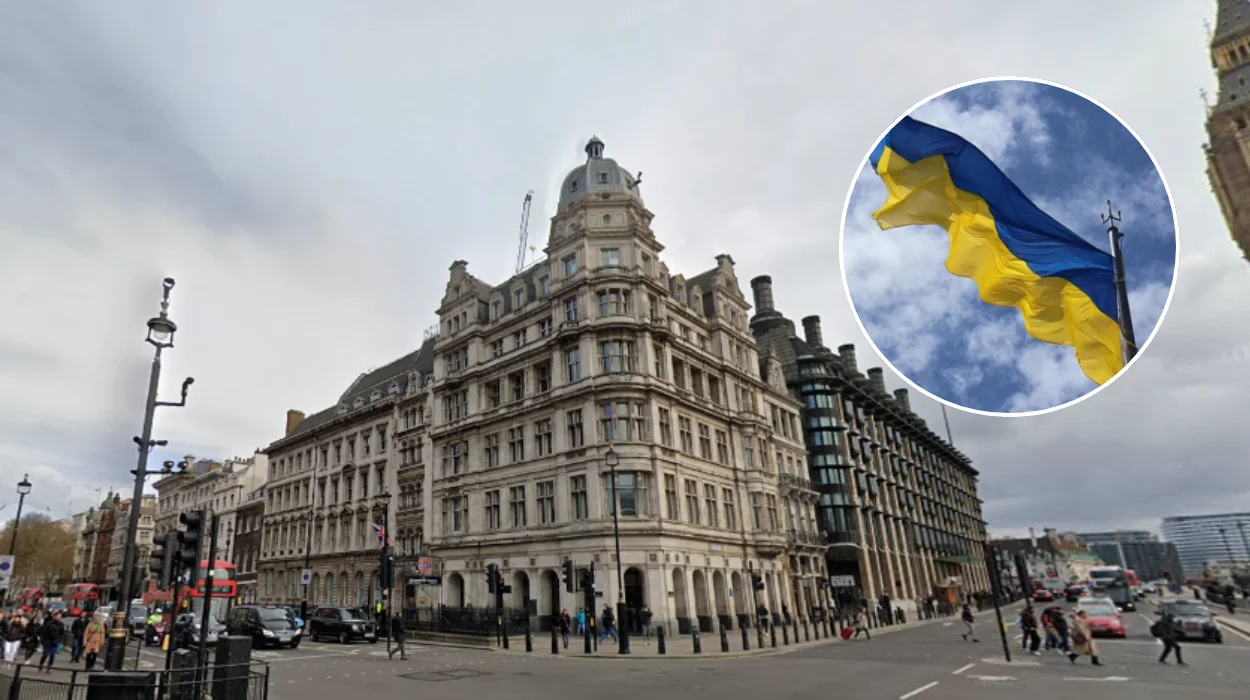
- The Palace of Westminster in London and Moldova’s Parliament were illuminated in Ukraine’s blue and yellow national colours to mark Ukraine’s Independence Day.
- The tributes came as Ukraine marked 35 years since its official declaration of independence from the USSR.
- The UK and Moldovan parliaments posted statements on their respective X (formerly Twitter) accounts reaffirming their solidarity with the Ukrainian people.
- Moldova’s Parliament announced an exhibition titled “Revival in Glory and Strength”, focusing on the destruction of Ukrainian religious monuments during Russian aggression.
- The event was organised jointly by the Ukrainian embassy in Moldova, the National Preserve of Kyiv-Pechersk Lavra and the National Museum of the Revolution of Dignity.
London (Extra London News) August 24, 2026 — In a striking display of international solidarity, landmark government buildings across international capitals illuminated their facades in the national colors of Ukraine to commemorate the country’s Independence Day. Among the most prominent tributes, the historic Palace of Westminster in London—home to the United Kingdom Parliament—was bathed in vibrant blue and yellow lighting. Simultaneously, regional allies including the Republic of Moldova mirrored the gesture in Chișinău, lighting up their primary legislative halls as Ukraine officially marked three and a half decades of sovereign statehood since 1991.
Why Were Landmark Parliaments Lit Up in Blue and Yellow?
The visual tributes serve as a powerful symbol of continuous backing for the Ukrainian population amidst ongoing geopolitical conflict. As reported by Ukrinform, the British Parliament utilized its official social media presence on X to showcase the illuminated London skyline.
As reported by the UK Parliament on its X page, the institution published photographs of the landmark alongside a definitive statement:
“Tonight the Palace of Westminster is illuminated in the colours of the Ukrainian flag to mark Ukraine’s Independence Day and show Parliament’s support for the people of Ukraine.”
Echoing the sentiment from Western Europe, the Republic of Moldova participated heavily in the regional tribute. Moldovan parliamentary authorities emphasized that the decision to light up the legislative building in Chișinău was intended to reinforce ties of brotherhood and mutual defense of democratic values.
As reported by Moldova’s Parliament via its official X page, the institution noted:
“On Ukraine’s Independence Day, the building of the Parliament of the Republic of Moldova was illuminated in blue and yellow as a symbol of solidarity with the Ukrainian people.”
Furthermore, Moldovan Parliament Speaker Igor Grosu expanded on these themes during preceding national statements, drawing direct parallels between the historic trajectories of both post-Soviet nations. As reported by Moldpres, Igor Grosu stated that
“Like the Republic of Moldova, Ukraine became independent 35 years ago. We know how difficult is the path of a country that defends its freedom, sovereignty, and its right to decide its own future.”
Grosu further lauded the sacrifice of Ukrainian citizens, emphasizing that through their ongoing defense, they protect the security of the wider European continent.
Explore more London Politics News:
Reform UK Welfare Plans and £50B Spending Overhaul: Westminster 2026
Reform UK and Restore Britain Rift Widens: Westminster 2026
What Cultural Events Are Marking the 35th Anniversary?
Beyond architectural illuminations, the commemorations in Eastern Europe feature profound cultural and historical retrospectives. According to coverage by NewsMaker and compiled by Ukrinform, the Parliament of the Republic of Moldova scheduled the launch of a specialized documentary and photo exhibition on Monday, August 24.
Titled
“Revival in Glory and Strength,”
the exhibition directly addresses the heavy cultural toll inflicted by the ongoing war. As reported by Ukrinform, the showcase is explicitly
“dedicated to churches and other sites of Ukraine’s sacred heritage that have been destroyed or damaged as a result of Russia’s aggression against Ukraine.”
Analysts note that bringing light to these structural losses serves as both a preservation of historical truth and a testament to spiritual resilience. The collaborative nature of the exhibition highlights cross-border cultural partnerships. According to reports from regional media desks, the cultural initiative was meticulously organized through a joint effort by the Embassy of Ukraine in Moldova, working alongside the Kyiv-Pechersk Lavra National Preserve and the National Museum of the Revolution of Dignity.
How Does This Fit into Wider Global Commemorations?
The coordinated displays in London and Chișinău form part of a broader global movement of architectural solidarity. Across various international democracies, buildings have been transformed into canvases of support. In Canada, the federal Parliament buildings and the Office of the Prime Minister in Ottawa glowed in blue and yellow, prompting expressions of deep gratitude from the Embassy of Ukraine in Canada. Similarly, primary institutions of the European Union—including the headquarters of both the European Commission and the European Council in Brussels—switched on blue-and-yellow structural displays.
European Commission President Ursula von der Leyen reinforced this united front on social media, describing the illuminated EU facade as a clear symbol of unwavering support for a “reliable partner and a future member of the EU.” These gestures coincide with high-level diplomatic visits to Kyiv by international leaders, emphasizing that diplomatic, cultural, and structural backing remains unyielding as Ukraine steps past its thirty-fifth year of restored independence.