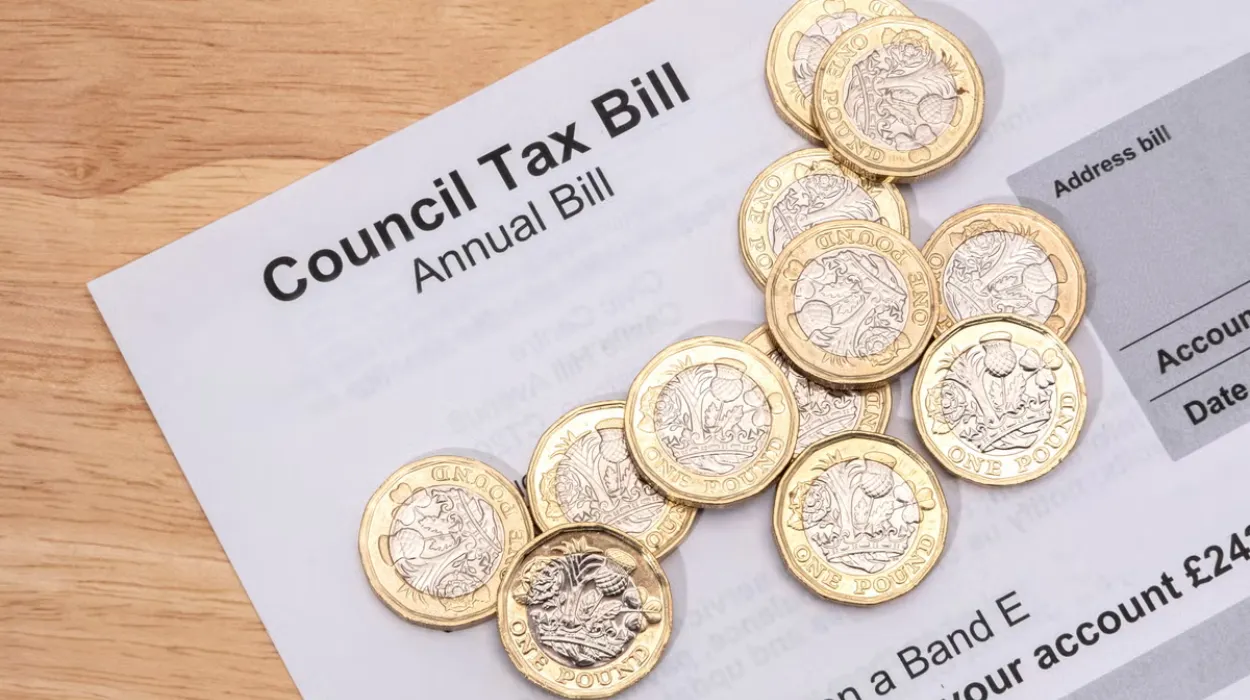
Residents in the west London borough of Hammersmith and Fulham could face a substantial increase in council tax in 2027–28, after the local authority warned that changes to central government funding could leave it struggling to maintain existing public services.
A report due to be published by the council on Monday, 5 October, reportedly outlines scenarios involving increases of 100%, 125% and 150% in the borough council’s own share of council tax. Under the highest scenario, a Band D household could pay an additional £29.11 per week, according to a report published by The Guardian on Saturday, 3 October.
The proposed 150% increase has not been approved. It is a financial scenario under consideration, rather than a confirmed change to residents’ bills. The distinction matters because the reported increase applies to the Hammersmith and Fulham council element of the bill, not the separate charge collected for the Greater London Authority (GLA).
What could residents pay?
Hammersmith and Fulham’s approved 2026–27 budget sets the borough’s council tax contribution for a Band D property at £1,009 a year. Including the GLA precept of £510.51, the total annual bill is £1,519.51.
According to The Guardian, the council’s forthcoming report examines three possible increases for 2027–28:
- 100% increase: the borough’s Band D council tax element would rise to £2,018 a year, leaving a projected budget shortfall of £46.1 million.
- 125% increase: the borough element would reach £2,270.25 a year, leaving a projected shortfall of £20.6 million.
- 150% increase: the borough element would reach £2,522.50 a year, broadly balancing the budget under the assumptions in the report.
The highest scenario would mean an additional £29.11 per week for a Band D household, the newspaper reported. These figures concern the council’s own tax element; the GLA precept is separate, and the eventual total bill would depend on the final decisions for both components.
The figures underline the scale of the financial challenge facing the council. They also raise questions about how any future increase could affect households already managing the cost of housing, energy and other essentials.
Why is the council facing a funding gap?
The dispute centres on the Government’s Fair Funding Review 2.0, which changes how local government funding is distributed across England. The Government says its reforms are intended to direct resources more fairly towards areas with greater need and to address differences in councils’ ability to raise revenue locally.
Under the Government’s published settlement arrangements, Hammersmith and Fulham is among six local authorities identified for special treatment regarding council tax referendum principles in 2027–28 and 2028–29. The other authorities are Westminster, Kensington and Chelsea, Wandsworth, the City of London, and Windsor and Maidenhead.
The Government’s stated rationale is that these authorities have some of the lowest council tax levels among upper-tier local authorities in England. It says changing the funding arrangements will allow more money to be directed towards public services in areas with greater need.
However, the funding changes have prompted concern among affected councils about whether the new formula adequately reflects deprivation and the cost of delivering local services.
What do the council and Government say?
Hammersmith and Fulham’s published budget records the council’s concerns about the effects of funding reform. At its Cabinet meeting on 9 February 2026, the authority approved a 2026–27 budget that included a 2.99% increase in its council tax element and a 2% adult social care precept, as modelled in the Government’s spending-power calculations.
The council’s published meeting record also describes measures intended to protect services and improve financial resilience. These include efficiency programmes, income generation and the use of data and technology to identify potential savings.
The council has previously highlighted services such as free primary-school breakfasts and free home care as priorities. Its current published budget, however, does not itself approve the reported 150% increase for 2027–28.
The Government’s position is that local authorities remain responsible for deciding their own council tax levels. In a written parliamentary answer published on 2 March 2026, the Ministry of Housing, Communities and Local Government said the actual level of council tax remains a local decision, taking account of factors including the impact on taxpayers.
The same answer explained that the Government intended not to set council tax referendum principles for the six named authorities in 2027–28 and 2028–29. This flexibility does not require councils to impose a particular increase; it gives them greater scope to decide their own rates.
What happens next?
The next significant development is expected on Monday, 5 October, when the council report cited by The Guardian is due to be published. Its detailed assumptions should help clarify the projected funding gap, the options available to councillors and the potential consequences for residents.
Until that information is published and the council makes its budget decisions, it would be premature to describe the 150% scenario as a confirmed tax rise.
For residents, the immediate concern is whether the borough can maintain services without placing a heavier financial burden on households. For local and central government, the dispute raises a broader question about how funding should be distributed between areas with different levels of need and different histories of council tax.
The coming budget discussions will determine whether Hammersmith and Fulham can find another way to close its projected funding gap, or whether residents could face significantly higher bills in the years ahead.