
Key Points
- 53-Year Tenure Ends: Long-serving politician Andrew Boff has formally resigned from the Conservative Party after joining in 1973.
- Blocked Candidate Bid: Boff was prevented from entering the race to become the Conservative candidate for Mayor of London because of his support for the European Convention on Human Rights (ECHR).
- Leadership Mandate: Conservative leader Kemi Badenoch established a strict party directive stating that individuals unsupportive of leaving the ECHR “should not and cannot stand as a Conservative candidate.”
- Transition to Independent Member: Boff will remain at City Hall, serving out his term as an independent London-wide Assembly member.
- Public Rebuttal: Boff asserted that the Conservatives have “abandoned” core principles, emphasizing that the ECHR was originally backed by post-war Conservatives including Sir Winston Churchill.
- City Hall Response: Susan Hall AM expressed regret over his departure while confirming the party’s firm commitment to withdrawing from the ECHR.
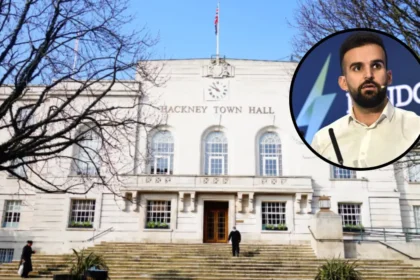
Extra London News (ELN) October 21, 2026 – In a dramatic rift within London politics, Andrew Boff, one of the capital’s longest-serving Conservative politicians, has resigned from the Conservative Party after 53 years of membership following a political dispute regarding party policy on human rights treaties.
- Key Points
- Why Did Andrew Boff Decide to Leave the Conservative Party?
- How Did Boff Criticize the Current Leadership’s Standards?
- What Position Have Conservative Party Leaders Taken on the ECHR?
- Background of the Particular Development
- Predictions: How Will This Development Affect London Voters and Political Dynamics?
Inverted Pyramid Summary: Boff announced his departure after being barred from entering the selection contest to represent the Conservatives in the upcoming London mayoral race. The decision stemmed from a policy implemented by Conservative leader Kemi Badenoch, which disqualifies any individual who supports remaining in the European Convention on Human Rights (ECHR) from standing for candidate selection. Boff, who first joined the Conservative Party in 1973 and has served on the London Assembly since 2008, confirmed he will not vacate his seat at City Hall but will instead serve out his term as an independent London-wide member.
As reported by political correspondents at the BBC, Boff characterized his exclusion from the mayoral longlist as “extraordinary and profoundly disappointing.” He detailed that his explicit commitment to retaining the United Kingdom’s status as a signatory to the ECHR became an insurmountable barrier under the current national leadership’s ideological mandate.
Why Did Andrew Boff Decide to Leave the Conservative Party?
Detailing his motivations for ending more than half a century of political affiliation, Boff articulated that his stance was grounded in foundational post-war Conservative ideology.
As reported by BBC News, Boff stated in a formal public release:
“These are Conservative values, or at least they were the values of the Conservative Party I joined.”
Boff argued that the European Convention on Human Rights was never designed as a political construct of the political left. As reported by journalists covering the resignation statement, Boff pointed out that:
“The convention was not a ‘left-wing project’ but a ‘safeguard against arbitrary government’.”
To reinforce his point, Boff underscored historical precedents, highlighting that British Conservatives—most notably former Prime Minister Sir Winston Churchill—were instrumental in founding and drafting the ECHR following the atrocities of World War Two.
Boff elaborated that in a constitutional system such as that of the United Kingdom, which lacks a single codified constitution, constitutional protections are paramount. As reported in his official statement, Boff argued that citizens’ fundamental rights should not depend on whichever political party holds a parliamentary majority, particularly within a governance framework where administration majorities are frequently secured with a minority of the total popular vote.
How Did Boff Criticize the Current Leadership’s Standards?
Addressing the shift in party policy regarding candidate selection, Boff drew a sharp distinction between internal political disagreement and complete administrative exclusion.
As reported by BBC News, Boff observed that while he had never expected every party member to share his precise perspective, there was “a profound difference” between disagreeing with a colleague and “deciding their beliefs disqualify them from even putting themselves forward to serve.”
Continuing his critique of the current direction under national leadership, Boff stated:
“A political party that cannot tolerate support for fundamental human rights has moved a very long way from the principles that first attracted me to it.”
Refusing to yield his political position to remain within the organizational framework, Boff added:
“I have not abandoned my Conservative principles. I believe the party has abandoned some of its own. I will not surrender those principles in order to remain a member of any political party.”
What Position Have Conservative Party Leaders Taken on the ECHR?
The party rule that triggered Boff’s departure stems from a explicit directive delivered by Conservative leader Kemi Badenoch.
As reported by GB News during an interview in October 2025, Kemi Badenoch publicly declared that agreement with exiting the ECHR was a mandatory condition for representative candidates. Badenoch stated that anyone who did not agree with leaving the ECHR “should not and cannot stand as a Conservative candidate.”
Following Boff’s formal resignation, City Hall Conservatives leader Susan Hall AM issued a statement reflecting on the departure of her long-time London Assembly colleague.
As reported by media outlets covering City Hall developments, Susan Hall stated that she “deeply regrets” his resignation. However, Hall affirmed that she “stands resolutely by the party’s commitment to leaving the ECHR.”
Acknowledging Boff’s long tenure and active record in municipal government, Hall remarked:
“Andrew has been a forthright and vocal supporter of Conservative principles, and we thank him for his contribution to our party.”
Background of the Particular Development
The European Convention on Human Rights is an international treaty drafted in 1950 by the newly formed Council of Europe in the aftermath of World War Two. Designed to protect basic civil liberties and political freedoms across Europe, the convention operates completely separate from the European Union (EU); thus, the UK’s status under the treaty was unaffected by its exit from the EU (Brexit).
Key protections guaranteed under the ECHR include:
- The right to life and a fair trial.
- Freedom of expression, thought, conscience, and religion.
- The right to respect for private and family life.
- Absolute prohibitions against torture, slavery, and degrading or inhuman treatment.
Legal cases concerning alleged breaches of these rights fall under the jurisdiction of the European Court of Human Rights in Strasbourg. Following the enactment of the UK’s Human Rights Act 1998, domestic courts within England, Wales, Scotland, and Northern Ireland gained the authority to apply convention rights directly within British judicial proceedings.
Virtually every European nation is a signatory to the agreement, with the only non-participating European nations being Belarus and Russia—the latter having been formally expelled from the Council of Europe in 2022. In recent years, debates surrounding the treaty have intensified within the Conservative Party, particularly regarding sovereign authority over border control, immigration policies, and deportation legislation.
Predictions: How Will This Development Affect London Voters and Political Dynamics?
1. Impact on London Assembly Governance
Boff’s transition to an independent member shifts the dynamic on the London Assembly floor. As a seasoned politician who joined the Assembly in 2008 and previously served as its Chair, his independent status provides him with full freedom to vote against official party lines without fear of losing the whip. This shift may complicate voting math for Conservatives on key mayoral scrutiny committees, housing initiatives, and regional budget reviews.
2. Influence on the Upcoming London Mayoral Campaign
The explicit disqualification of a high-profile figure over ECHR adherence exposes a ideological debate within the London Conservative apparatus. Because London electors traditionally favor socially liberal and centrist stances compared to the national electorate, imposing strict ideological litmus tests could restrict the appeal of the eventual Conservative mayoral nominee among moderate suburban and inner-city London voters.
3. Greater Ideological Realignment Across the Conservative Party
Boff’s departure highlights the broader national realignment taking place within the Conservative Party under Kemi Badenoch’s leadership. By enforcing strict policy alignment on international treaties such as the ECHR, the party leadership consolidates its platform around national sovereignty and border control. However, this strategy risks alienating traditional, moderate “one-nation” Conservatives, potentially prompting further resignations or voter drift toward candidate alternatives in urban constituencies.