Key Points
- Live-Data Sharing Deal: Westminster City Council and e-bike rental giant Lime have enacted a “pioneering” data partnership to track the precise distribution of dockless vehicles across central London on an hour-by-hour basis. Evening Standard
- Tackling Pavement Clutter: The agreement aims to combat escalating public and business frustration regarding carelessly abandoned e-bikes blocking narrow pavements and pedestrian walkways across the West End’s eight-square-mile territory. Evening Standard
- Escalating Rider Penalties: Irresponsible dockless bike users will face heightened financial penalties, with fines increasing from £2 to £10 before repeat offenders face permanent platform bans. Evening Standard
- Targeted Ward-by-Ward Enforcement: Local authority officials and Lime’s on-street operations teams will monitor and manage bike numbers across specific wards to prevent commuter “hotspots” from becoming obstructed. Evening Standard
- Unified Regulatory Push: The announcement comes amidst a broader regional context, including surrounding borough crackdowns, a planned London-wide operator summit, and newly passed legislation aimed at standardising micro-mobility rules.
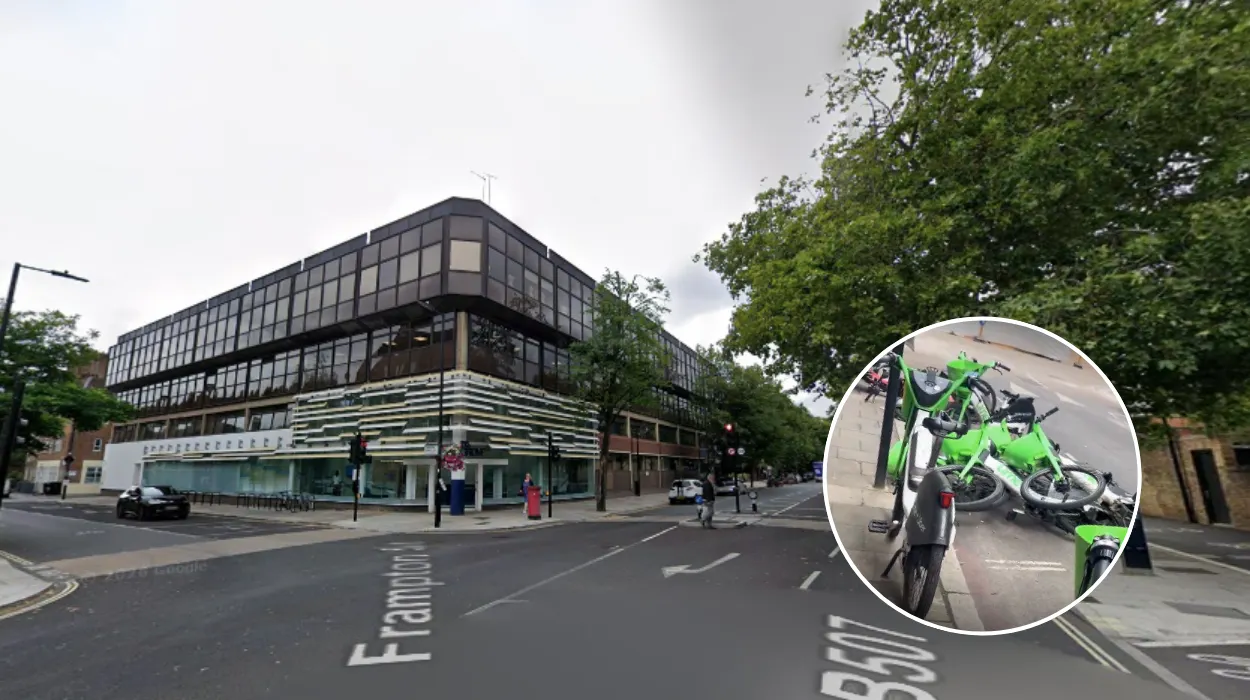
London (Extra London News) June 10, 2026 – Dockless bike riders who carelessly dump their cycles in central London could face more fines under the latest crackdown aimed at keeping the West End’s streets and pavements clear. Westminster City Council has struck a “pioneering” agreement with Lime that will see the e-bike rental company share real-time information on the location and number of vehicles across the borough. The move is designed to tackle growing frustration over abandoned and badly parked bikes cluttering pavements, while helping officials identify trouble spots before they become a nuisance.
- Key Points
- Why Is Westminster Council Entering A Data-Sharing Deal With Lime?
- What Do Council Leadership And Lime Executives Say About The New Strategy?
- How Will Fines And Enforcement Mechanisms Directly Impact Riders?
- How Does This Deal Compare To Hardline Enforcement In Other London Boroughs?
- What Are The Wider Plans For City-Wide E-Bike Regulation Across London?
Under the framework of this localized partnership, the town hall and Lime will actively manage the borough’s eight square miles on a ward-by-ward basis. This localized approach is intended to ensure that designated bike parking bays are properly utilized, while strictly preventing excess numbers of vehicles from accumulating in specific locations during peak commuting hours.
The deal directly aligns with an expansion of Lime’s targeted enforcement measures against riders who systematically ignore urban parking regulations. Customers who repeatedly leave vehicles outside of designated zones will confront escalating financial penalties, culminating in permanent exclusion from the platform if their poor parking habits persist.
Why Is Westminster Council Entering A Data-Sharing Deal With Lime?
As reported by Chief Political Correspondent Rachael Burford of The Standard, the underlying objective of the partnership is to establish an immediate, transparent link between local government monitors and operator logistics. By integrating live tracking data, the council intends to expedite responses to complaints submitted by local residents and business owners. This will enable Lime’s field teams to be deployed with greater efficiency to clear obstructions.
As detailed in an official statement released by Westminster City Council, the operational reality of managing a highly transient micro-mobility network requires detailed spatial intelligence. The shared data will allow both parties to determine exactly where physical infrastructure is struggling to keep pace with demand, thereby guiding the future installation of dedicated e-bike parking spaces where they are most urgently required.
The initiative builds on structural components previously established under Lime’s broader London Action Plan. Since its rollout, the operator has deployed substantial capital toward mitigating pavement congestion, resulting in a reported 59% reduction in overcrowding at historical parking bottleneck points across the capital.
Explore more Westminster News:
Hidden Camera Discovered Inside Government Offices: Westminster London 2026
Westminster Abbey Cafe Opens for Historic First Dinner: London 2026
What Do Council Leadership And Lime Executives Say About The New Strategy?
As reported by Rachael Burford of The Standard, Councillor Paul Swaddle, the Leader of Westminster City Council, emphasized that managing the impact of dockless vehicles has become a core objective for the local government. Swaddle stated that:
“It is no secret that carelessly parked dockless bikes are a key concern for local people and my administration has made tackling this issue an early priority. I am pleased Lime are working with us to manage this issue. Dockless bikes are now a major way of getting around the City, and we want people to have that choice. We need to match that with keeping pavements clear and ensuring parking bays are well managed.”
The Council Leader expanded on the specific utility of the data-sharing mechanism, adding: “Working more closely with Lime, I am hopeful we can build a much more accurate hour-by-hour intelligence picture of where bikes are and stop issues before they arise.”
Representing the operator’s perspective, Jack McKenna, Lime’s Senior Policy Manager, expressed a shared commitment to localized urban management. As published by Westminster City Council, McKenna stated:
“We’re continuing to invest in e-bike parking in the borough, and will be strengthening our on-street team of parking patrollers who work seven days a week tidying and removing excess bikes in busy locations. As e-bike usage in Westminster continues to grow, working with Cllr Swaddle and his team on a collective approach on a localised, ward level will enable us to tackle hotspot areas, deliver parking bays and ensure that our service works for everyone in Westminster, whether they are a cyclist or not.”
McKenna further noted that the company welcomes the local administration’s support for active transport, concluding that Lime looks forward to “working with the Council to deliver an improved service for residents, commuters and visitors alike.”
How Will Fines And Enforcement Mechanisms Directly Impact Riders?
The enforcement architecture detailed within the agreement relies heavily on escalating financial deterrents and expanded physical patrolling. According to reporting by Westminster Times, Lime is actively reinforcing its on-street presence by utilizing an expanded operations team consisting of more than 400 staff members across London. These patrollers are tasked with manually redistributing clustered vehicles, rectifying tipped bikes, and ensuring pedestrian pathways remain accessible.
For the end-user, the penalties for non-compliance have become markedly more severe. As reported by The Standard, riders who repeatedly abandon bikes outside of designated bays will face tiered fines ranging from £2 up to £10 per infraction. Should an individual user continuously violate these parameters, Lime’s policy dictates that the user will be permanently blocked from accessing the rental service entirely.
Furthermore, past initiatives by Westminster Labour underscores an ongoing reliance on geofencing technology. In highly congested West End environments such as Soho Square, Cambridge Circus, and Old Compton Street, virtual boundaries prevent riders from ending their trips entirely. If a user attempts to leave a bike within these designated no-parking zones, the mobile application continues to charge them by the minute until the vehicle is moved to an authorized bay.
How Does This Deal Compare To Hardline Enforcement In Other London Boroughs?
The collaborative approach chosen by Westminster stands in contrast to harsher measures enacted by adjacent local authorities. As reported by Rachael Burford of The Standard, the neighbouring London Borough of Kensington and Chelsea has historically pursued an aggressive “seize and return” enforcement model. Since implementing its strict policy, the Kensington and Chelsea town hall has hit micro-mobility operators with an estimated £210,000 in direct fines, storage fees, and vehicle release charges.
Similarly, as recorded in official public notices from Wandsworth Borough Council, alternative enforcement models involve the wholesale impounding of vehicles. Wandsworth launched a dedicated enforcement trial empowering officers under the Highways Act to immediately remove and impound any e-bike or e-scooter found to be dangerously obstructing a public highway, charging recovery fees directly to the operator’s account.
Westminster City Council itself has previously experimented with direct corporate penalties. As documented in a Westminster City Council operational update, the local authority previously issued 150 Fixed Penalty Notices (FPNs) valued at £100 each directly to operators Lime and Forest for pavement obstructions, projecting at the time that such direct corporate fines could accumulate to over £1 million within a single calendar year if operational behavior failed to shift.
What Are The Wider Plans For City-Wide E-Bike Regulation Across London?
A primary criticism of current micro-mobility frameworks is the fragmentation of rules across municipal borders. As highlighted by Westminster Times, Councillor Paul Swaddle pointed out the systemic inefficiencies of the current regime, stating:
“The issue is that London boroughs have gone for individual enforcement schemes, which creates a kind of patchwork approach. The reality is cyclists don’t live by local authority boundaries and their commute takes them from one area to another. We need a collective approach to make this system work better for residents, businesses and riders.”
To address this structural challenge, Westminster City Council is organizing a comprehensive summit of major dockless bike operators to establish standardized parking and enforcement baselines across central London.
The regional push for order is further supported by broader legislative developments. As reported by journalist Kumail Jaffer of South London News, the newly passed English Devolution and Community Empowerment Act has granted sweeping licensing powers directly to Transport for London (TfL). This statutory shift allows TfL to replace the historic borough-by-borough patchwork with a singular, city-wide regulatory framework.
As noted by Jaffer, regional leaders are eager to see these statutory powers implemented. Appraising the legislative transition, Marina Baker of the Greater London Authority (GLA) remarked to South London News that TfL has “probably been quite frustrated [so far] at not being able to manage the operators in a way that’s positive,” adding that she expects the transport body to utilize its new powers rapidly to curb widespread “nuisance parking.”
A formal spokesperson for Transport for London confirmed this regulatory trajectory, stating:
“We welcome the new legislation which will provide TfL proper powers to regulate dockless bikes across London. This would provide the future ability to replace the existing patchwork and borough by borough approach with a consistent licensing scheme for London.”
Supporting this shift, Councillor Peray Ahmet, Leader of Haringey Council, issued a public statement welcoming regional intervention, observing that far too many e-bikes are left blocking pavements, which leaves vulnerable, elderly, or disabled residents “finding it difficult to come out of their own home and walk down the street.” Ahmet expressed hope that coordinated city-wide pressure would force operators to introduce faster response times, robust anti-hacking measures, and uniform parking compliance.