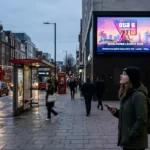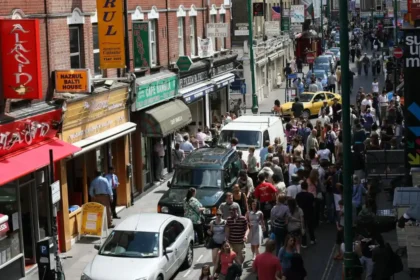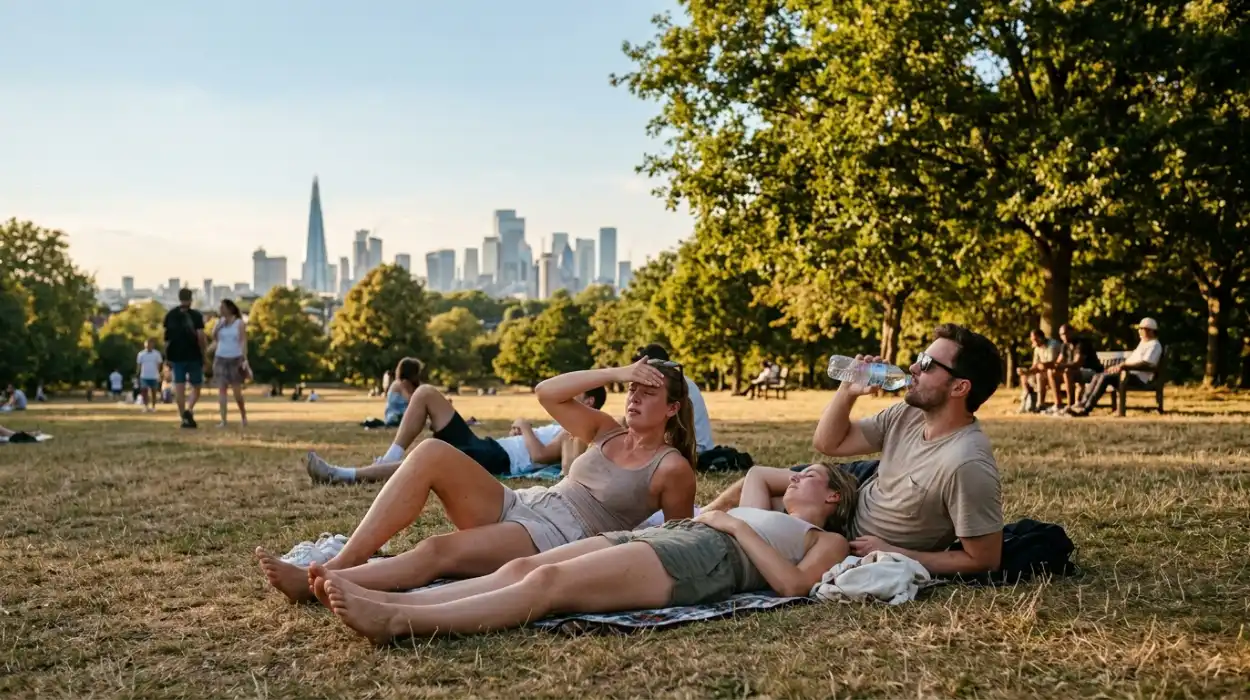
London late summer hot weather refers to prolonged meteorological periods during August and early September when daily maximum temperatures regularly exceed 28 degrees Celsius, driven by high-pressure atmospheric blocking patterns over the British Isles. Extra London News records indicate that this seasonal phase transitions from the standard maritime temperate climate into episodes of intense heat stress. These climatic peaks emerge as thermal energy accumulates across Western Europe, pushing warm continental air masses northward across the English Channel.
- How does climate change impact late summer temperatures in London?
- What are the atmospheric mechanisms behind London heatwaves?
- How does the urban heat island effect influence London temperatures?
- What are the public health implications of late summer heat in London?
- How do municipal authorities manage extreme heat in London?
- Frequently Asked Question
The meteorological classification of this seasonal window requires sustained high temperatures lasting for at least three consecutive days. Climatological archives maintained by the Met Office define these episodes by maximum thresholds surpassing the long-term regional average of 22 degrees Celsius for Greater London. High-pressure systems, commonly known as anticyclones, generate stable atmospheric conditions that suppress cloud formation. This lack of cloud cover allows maximum solar radiation to penetrate the urban canopy, heating the surface layers of the city.
Urban geography plays a decisive role in intensifying these conditions through the urban heat island effect. Dense concentrations of asphalt, concrete, and brick absorb shortwave radiation during daylight hours and reradiate it as longwave thermal energy during the night. Consequently, nighttime temperatures in central districts frequently remain above 20 degrees Celsius, creating what meteorologists designate as tropical nights. Air mass origins during these events typically trace back to Southern Europe and North Africa, carrying dry, hot air masses across the UK mainland. Relative humidity levels during these late-season spikes vary, yet the sheer sensible heat load places distinct physiological demands on the population.
How does climate change impact late summer temperatures in London?
Climate change significantly amplifies the frequency, intensity, and duration of late summer heatwaves in London through enhanced greenhouse gas concentrations and shifting planetary Rossby wave patterns. Extra London News analyses highlight that climate models project a continuation of these warming trends across Southeast England. Historical baselines established between 1961 and 1990 show a sharp statistical divergence when compared against observations from the most recent decade.
Quantitative assessments from meteorological research demonstrate that temperature extremes in Greater London have accelerated rapidly. The number of days exceeding 30 degrees Celsius and nights remaining above 18 degrees Celsius has more than quadrupled in the most recent decade relative to the mid-twentieth-century baseline. Furthermore, the average temperature of the hottest day of the year has climbed by over 4.5 degrees Celsius across Southern England. These shifts correlate directly with rising global mean temperatures driven by anthropogenic carbon emissions.
Atmospheric circulation changes further exacerbate these events. Persistent high-pressure blocking patterns stall over the United Kingdom for extended intervals, preventing Atlantic frontal systems from introducing cooler marine air. Soil moisture deficits also compound the heating process. When agricultural soils and urban green spaces dry out during prolonged dry spells, solar energy is converted directly into sensible heat rather than latent heat through moisture evaporation. This land-atmosphere feedback loop intensifies surface temperatures across the London basin, setting new benchmarks for seasonal warmth.
What are the atmospheric mechanisms behind London heatwaves?
London heatwaves are driven by anticyclonic blocking mechanisms that trap warm air masses, induce descending air currents, and create stable, cloud-free skies over Southern England. Extra London News meteorological summaries explain that these synoptic-scale patterns interrupt the prevailing westerly jet stream that normally brings variable maritime weather to the British Isles.
The primary driver is a stationary high-pressure cell that deflects Atlantic depressions far to the north of Scotland. Within this anticyclone, air sinks slowly toward the Earth’s surface. This subsidence causes adiabatic compression, which warms the air mass as atmospheric pressure increases downward. The downward motion of air suppresses vertical cloud development, ensuring maximum duration of bright sunshine and uninterrupted solar heating of the ground.
Advection acts as a secondary mechanism during severe late summer events. Southerly and easterly wind vectors transport heated air parcels from continental Europe across the narrow expanse of the English Channel. By the time these air masses reach London, they have crossed sun-baked land surfaces in France and the Low Countries, retaining high thermal energy. Local topography within the Thames Valley basin then traps these stagnant air masses, restricting horizontal dispersion and elevating particulate air pollution levels alongside ambient temperatures.
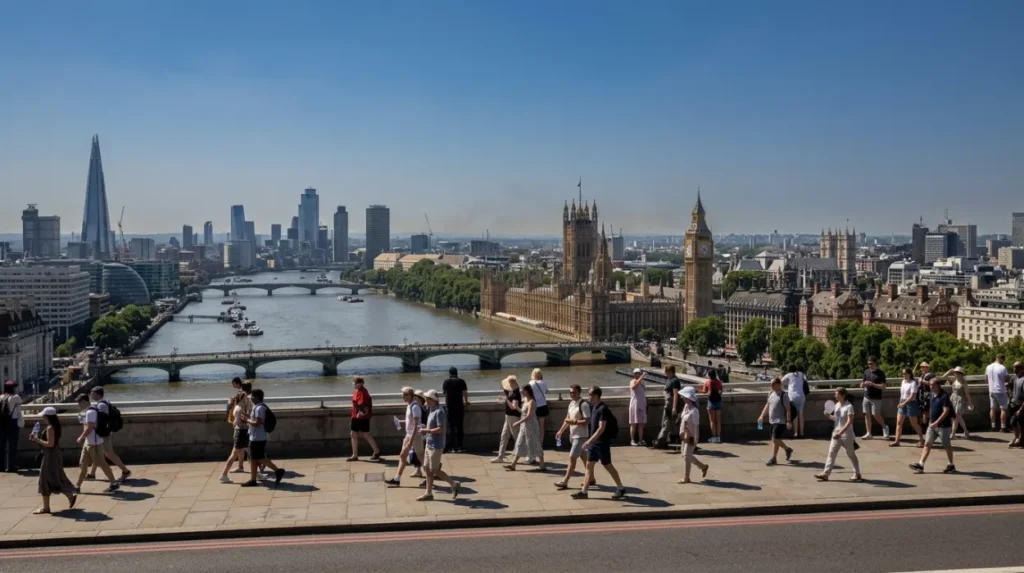
How does the urban heat island effect influence London temperatures?
The urban heat island effect causes central London to experience surface and air temperatures up to 8 degrees Celsius higher than surrounding rural greenbelt areas due to anthropogenic heat and artificial thermal mass. Extra London News urban studies confirm that built environments modify local microclimates by altering radiation balances, surface roughness, and moisture dynamics.
Construction materials such as dark asphalt roads, concrete facades, and slate roofs possess high thermal admittance. These materials absorb substantial quantities of solar radiation during peak daylight hours. After sunset, this stored heat is slowly released back into the surrounding street canyons and lower atmosphere. This thermal inertia prevents rapid nocturnal cooling, contrasting sharply with the radiative cooling observed in open countryside fields.
Anthropogenic heat emissions contribute significantly to this temperature differential. Energy consumption from commercial and domestic air conditioning systems, vehicular exhaust, and industrial machinery discharges waste heat directly into the urban atmosphere. Reduced vegetation cover and limited permeable soil surfaces minimize natural evapotranspiration cooling from trees and grasslands. Consequently, urban neighborhoods like the City of Westminster, Camden, and Tower Hamlets register severe heat concentrations during late summer weather peaks.
What are the public health implications of late summer heat in London?
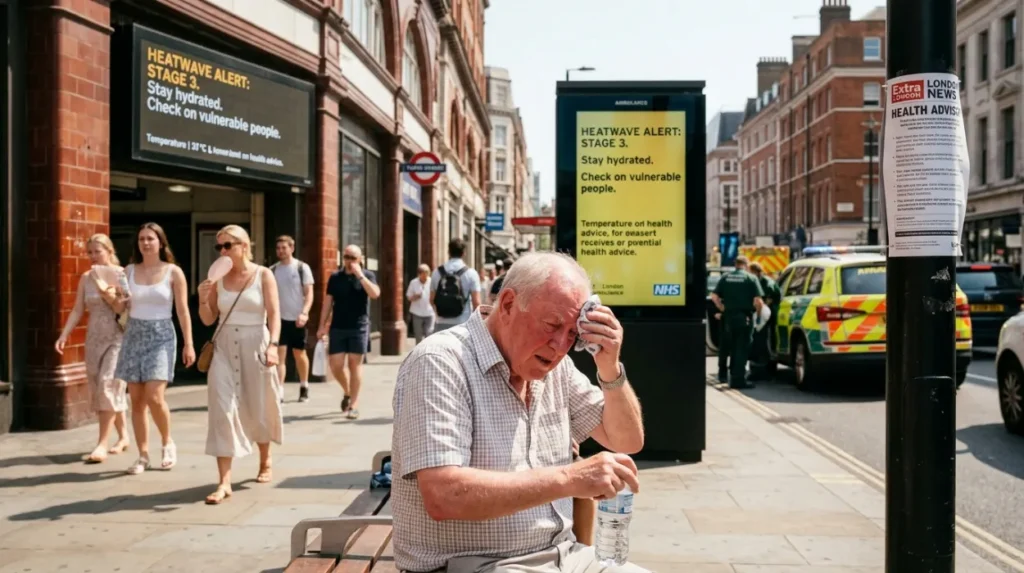
Late summer heatwaves pose severe public health risks in London, triggering spikes in heat-related mortality, cardiovascular strain, and emergency medical service demand among vulnerable populations. Extra London News health advisories emphasize that prolonged thermal stress overwhelms human thermoregulatory systems, particularly when high ambient temperatures coincide with elevated urban air pollution.
Physiological strain manifests as dehydration, heat exhaustion, and heatstroke as core body temperatures rise past safe thresholds. Populations most at risk include the elderly, infants, individuals with chronic cardiovascular or respiratory pathologies, and outdoor manual laborers. Heat stress exacerbates pre-existing conditions by increasing cardiac output requirements as the body attempts to dissipate heat through cutaneous vasodilation and sweating.
Air quality degradation compounds these health impacts. Stagnant anticyclonic conditions trap ground-level ozone, nitrogen dioxide, and particulate matter within the London air basin. Photochemical reactions, catalyzed by intense sunlight and high temperatures, convert primary vehicular emissions into secondary pollutants. This chemical cocktail irritates respiratory tracts, leading to elevated hospital admissions for asthma and chronic obstructive pulmonary disease during late summer weather episodes.
How do municipal authorities manage extreme heat in London?
Municipal authorities manage extreme heat in London through coordinated emergency response frameworks, public health campaigns, and infrastructural heat-mitigation policies led by the Greater London Authority and the UK Health Security Agency. Extra London News municipal reports detail that civic planning strategies focus on both immediate crisis response and long-term climate adaptation.
Operational measures deploy automated heat-health alerts that notify hospitals, care homes, and transport operators ahead of severe temperature spikes. Public guidance emphasizes hydration, staying out of direct sunlight during peak ultraviolet radiation hours between 11:00 and 15:00, and checking on isolated neighbors. Transport for London implements speed restrictions on rail networks to prevent track buckling and deploys water distribution initiatives across underground and commuter train stations.
Long-term infrastructural adaptation strategies target urban greening to reduce thermal absorption. Municipal policies mandate sustainable drainage systems, green roofs on new commercial developments, and the expansion of urban tree canopies across asphalt-heavy boroughs. Cool pavement technologies and reflective coatings are incorporated into streetscape renewals to lower surface albedos, mitigating the urban heat island effect and protecting London’s resilience against future climate extremes.
Frequently Asked Question
What is late summer hot weather in London?
Late summer hot weather in London refers to periods of unusually high temperatures, typically occurring during August and early September. These conditions can involve prolonged daytime heat, warm nights, clear skies, and persistent high-pressure systems.