Key points
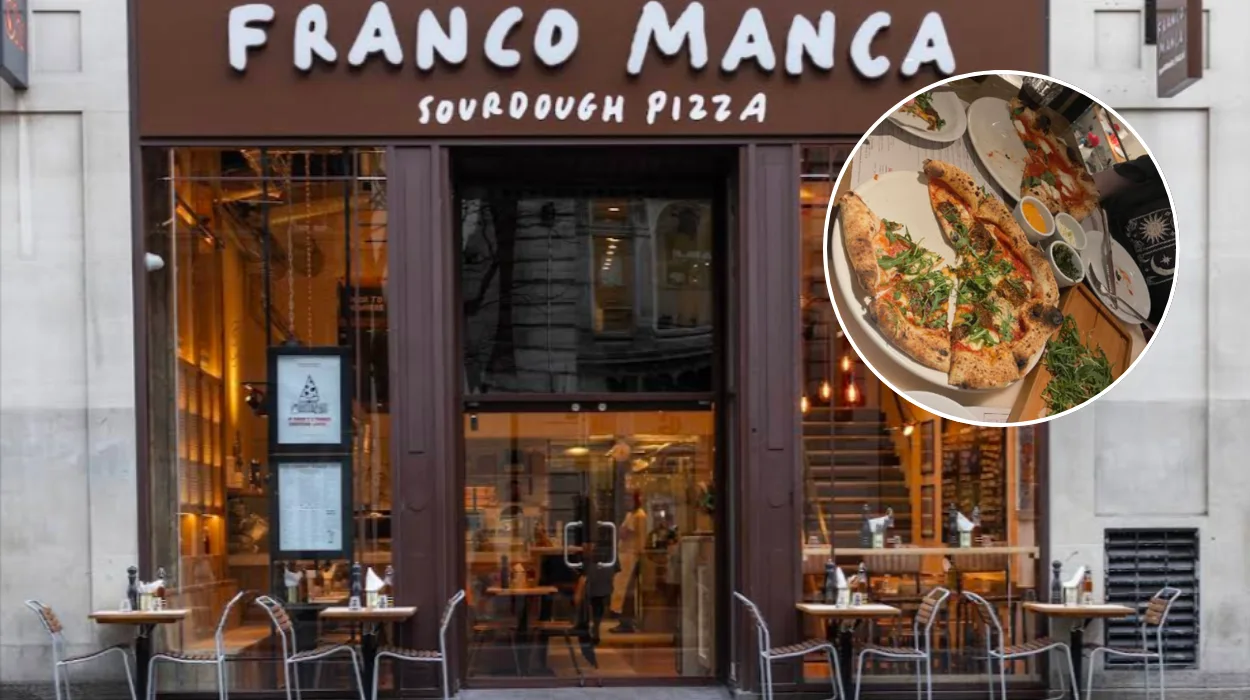
- Franco Manca, the sourdough‑pizza chain, will go ahead with the closure of 16 restaurants after a company voluntary arrangement (CVA) restructuring was approved by its creditors.
- The move will affect around 225 jobs and is being carried out under a CVA process overseen by restructuring firm Alvarez & Marsal.
- The parent company, The Fulham Shore, stated that a “minority” of its sites were “no longer sustainable” due to high UK taxes, business-rate pressure, and rising labour costs.
- Franco Manca operated roughly 70 restaurants in the UK prior to the closures; the CVA allows the wider chain to trade while closing underperforming sites.
- The 16 locations facing closure include Battersea, Bishops Stortford, Brixton, Broadway Market, Bromley, Cheltenham, Chiswick, Didsbury, Glasgow, Hove, Kilburn, Lincoln, New Oxford Street, Plymouth, Stoke Newington and Tottenham Court Road.
- Marcel Khan, chief executive of The Fulham Shore, framed the CVA as a necessary step to “put the business back on a firm footing” and strengthen the brand’s customer offer.
- Fulham Shore has also placed its sister brand, The Real Greek, into administration, which was swiftly acquired by Karali Group, the owner of Cote, with nine of its 28 sites earmarked for closure.
London (Extra London News) May 5, 2026 – Franco Manca has confirmed that 16 of its UK restaurants will close after a company voluntary arrangement (CVA) restructuring won the backing of more than 90% of voting creditors, paving the way for a major overhaul of the sourdough‑pizza chain. The move follows a decision by parent firm The Fulham Shore last month to pursue the CVA process, which allows the group to shed underperforming sites while protecting the wider business from collapse amid a punishing cost environment for the UK hospitality sector. Around 225 jobs are expected to be affected by the closures, which will be concentrated in London and several regional towns.
- How did the CVA plan gain approval?
- Which Franco Manca sites will shut?
- Why has Franco Manca chosen to restructure?
- What does this mean for jobs and staff?
- How heavy is the tax and cost burden on Franco Manca?
- What about Franco Manca’s wider brand and future?
- Why did The Real Greek slip into administration?
- What does this mean for the UK hospitality sector?
How did the CVA plan gain approval?
As reported by MCA, a sister title of Restaurant Online, The Fulham Shore launched a CVA this week for Franco Manca that will see roughly 16 of its 70 UK restaurants shut as part of a formal restructuring.
The proposal, overseen by consultancy Alvarez & Marsal, required creditor approval and ultimately secured support from more than 90% of voting creditors, a threshold that allowed the framework to move forward.
Paul Berkovi, managing director at Alvarez & Marsal, said in a statement to media outlets, including Restaurant Online, that the “significant majority” of creditors supported the CVA, reflecting what he described as
“constructive engagement across stakeholders.”
He added that, in a “challenging backdrop for the sector,” the vote was an important step for Franco Manca, enabling the business to complete its financial restructuring and secure a platform for its operational transformation.
Which Franco Manca sites will shut?
An internal site list circulated to staff and later reported by MCA and trade title Restaurant Online identifies 16 locations that are earmarked for closure.
The list, which has also been highlighted by outlets such as The Sun, Time Out UK and Mirror, shows that about half of the 16 sites are in London.
The affected restaurants are: Battersea; Bishops Stortford; Brixton; Broadway Market; Bromley; Cheltenham; Chiswick; Didsbury; Glasgow; Hove; Kilburn; Lincoln;
New Oxford Street, Plymouth, Stoke Newington, and Tottenham Court Road. Local coverage in Putney and similar neighbourhoods notes that branches such as Putney High Street and Southfields are not included in the list, offering some reassurance to customers in those areas.
Why has Franco Manca chosen to restructure?
As reported by London Loves Business and City A.M., The Fulham Shore has attributed the closures to a combination of “disproportionately high” UK taxation, a lack of business rates relief for restaurant operators, and rising labour costs, including national insurance and the living wage.
In statements to these outlets, the group described the 16 locations as a “minority” of its estate that had become “no longer sustainable” within the current cost environment.
Marcel Khan, chief executive of The Fulham Shore, explained in comments relayed via City A.M. and MCA that the CVA was being pursued precisely because some sites could not viably absorb the burden of high VAT and other levies compared with many European competitors.
He said the intention was to use the restructuring to “put the business back on a firm footing” and to focus resources on strengthening Franco Manca’s customer offer and operational performance rather than spreading them across unprofitable sites.
What does this mean for jobs and staff?
Outlets, including Verdict Foodservice and Restaurant Online, estimate that the 16 closures will affect approximately 225 employees across the UK.
The Fulham Shore has said that it will seek to support affected staff “in every way that we can,” including redeployment where possible and assistance with job searches, though exact local support packages have not been publicly detailed in full.
Community‑focused coverage, such as the Putney News piece, notes that neighbourhoods are bracing for the economic and social impact of losing well‑established dining spots, particularly in areas like Brixton and Stoke Newington, where Franco Manca has operated for years.
Trade union and employment‑law specialists cited in broader hospitality coverage warn that CVAs can side‑step full redundancy protections, making the handling of individual cases highly sensitive.
How heavy is the tax and cost burden on Franco Manca?
As highlighted by City A.M. in a feature on Franco Manca’s CVA, the chain has pointedly criticised the level of taxation and business-rate pressure faced by UK restaurateurs.
Marcel Khan was quoted as stressing that VAT in the UK remains “disproportionately high” compared with many European countries, while restaurants continue to receive limited or no business-rate relief despite the squeeze from inflation and energy costs.
Verdict Foodservice and London Loves Business both note that The Fulham Shore has also cited rising national insurance contributions and the impact of the higher living wage on its labour bill, arguing that these combined pressures have made several locations unviable.
Operators and industry analysts speaking to these outlets have framed the Franco Manca CVA as part of a broader trend of mid‑market chains using formal restructuring to survive a hostile regulatory and fiscal environment.
What about Franco Manca’s wider brand and future?
Despite the closures, Franco Manca and its parent company remain committed to preserving the core brand. The chain currently runs around 70 restaurants in the UK before the 16 planned shutdowns, and the CVA is designed to allow the remainder of the estate to continue trading while debt and lease obligations are renegotiated.
Marcel Khan told MCA and related group titles that the Fulham Shore views Franco Manca as “a fantastic brand with a strong heritage and a loyal customer base,” and that the goal of the restructuring is to “press ahead with strengthening our customer offer and performance” across the surviving sites.
Analysts cited by Restaurant Online and London Loves Business suggest that a leaner, more profitable footprint could help the chain withstand ongoing volatility in consumer spending and staffing markets.
Why did The Real Greek slip into administration?
In closely related developments, The Fulham Shore moved its sister Greek‑style restaurant brand, The Real Greek, into administration in the same restructuring window.
As reported by Restaurant Online and LinkedIn‑based industry updates, the administration process was swiftly followed by the acquisition of The Real Greek by Karali Group, the owner of Cote, which immediately announced plans to close nine of its 28 sites.
Industry coverage notes that the dual moves—a CVA for Franco Manca and an administration plus selective site‑closures for The Real Greek—reflect a broader strategy to rationalise the group’s estate in the face of continuing headwinds.
Experts quoted by Restaurant Online suggest that private‑equity‑backed restaurant groups are increasingly turning to CVAs and administration to exit unprofitable leases while retaining stronger‑performing brands within the portfolio.
What does this mean for the UK hospitality sector?
In commentary carried by outlets such as Time Out UK, London Loves Business and City A.M., sector analysts describe the Franco Manca CVA as emblematic of the strain on mid‑market casual‑dining chains, which are caught between rising costs and cautious consumer spending. The repeated emphasis on “disproportionately high” taxes and the absence of targeted business-rate relief for restaurants have fuelled calls from trade bodies for more sector‑specific support measures.