Key Points:
- A pro-Palestine protester, Daniel Day, has been found guilty of causing a public nuisance after scaling the Elizabeth Tower.
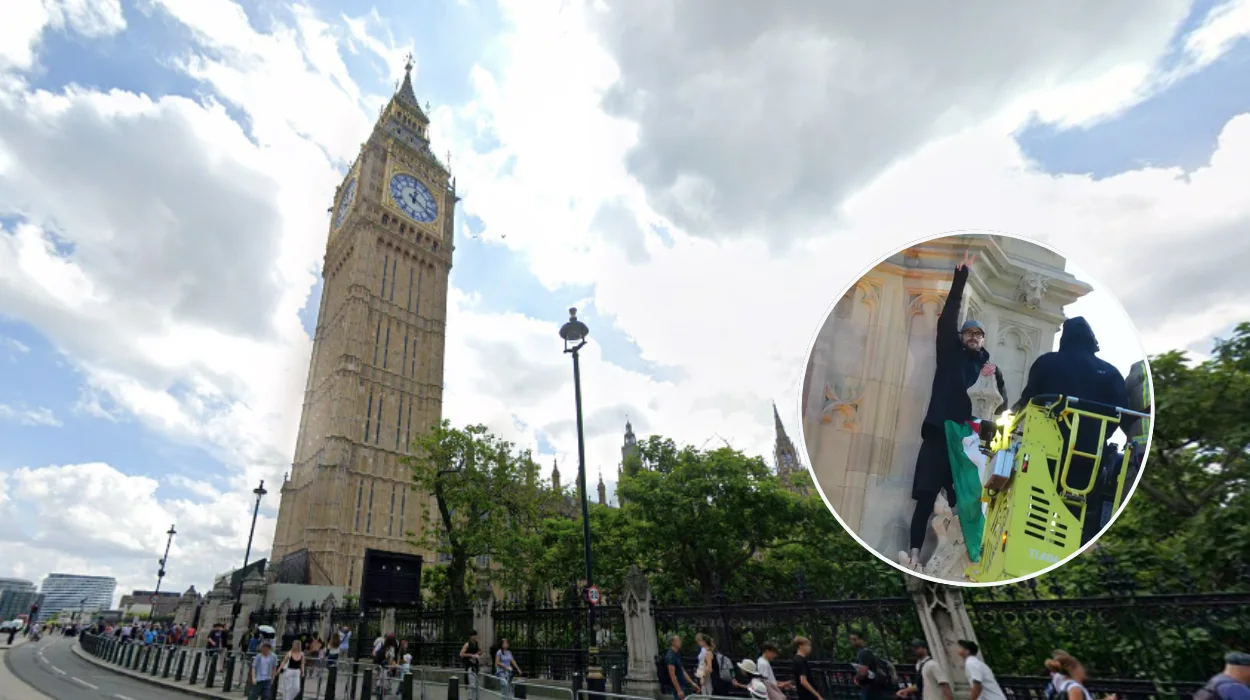
- The 30-year-old unemployed man from Westcliff-on-Sea, Essex, climbed the Westminster landmark barefoot on 8 March last year.
- The high-altitude protest lasted for a total of 17 hours, triggering a massive emergency services response.
- Significant road closures in the surrounding Westminster area were enforced to manage the situation safely.
- Jurors at Southwark Crown Court were informed that the stunt cost British taxpayers an estimated £67,000.
- Day did not appear to react to the guilty verdict and is scheduled to be sentenced on 27 July.
- A group of supporters attended the public gallery, while others gathered outside the court chanting “Free Palestine”.
London (Extra London News) June 11, 2026 – A pro-Palestine protester who caused “serious disruption” by climbing Big Ben barefoot and sitting on the landmark for 17 hours has been found guilty of causing a public nuisance. Daniel Day triggered an emergency services response and caused severe road closures when he scaled the Elizabeth Tower in Westminster on 8 March last year, his trial at Southwark Crown Court heard. The stunt by the unemployed 30-year-old cost taxpayers an estimated £67,000, jurors were told. Day, from Westcliff-on-Sea in Essex, did not appear to react to the verdict. He will be sentenced on 27 July. A handful of supporters sat in the public gallery, and others gathered in front of the court chanting “Free Palestine”.
- Key Points:
- Who is the Pro-Palestine Big Ben Climber?
- What Was the Motivation Behind the Barefoot Protest?
- What Happened During the 17-Hour Elizabeth Tower Protest?
- How Severe Were the Road Closures in Westminster?
- How Much Did the Big Ben Protest Cost UK Taxpayers?
- What Was the Verdict at Southwark Crown Court?
- Why Will the Sentencing Take Place on the 27th of July?
- Why Was the Offence Classed as a Public Nuisance?
- How Did the Public and Supporters React to the Verdict?
- Does the Verdict Impact the Right to Protest in the UK?
- What Are the Security Implications for the Elizabeth Tower?
- How Does This Fit into the Wider Context of Pro-Palestine Protests in the UK?
- What Will Happen at the Sentencing on the 27th of July?
Who is the Pro-Palestine Big Ben Climber?
The individual at the centre of this highly publicised legal battle is Daniel Day, a 30-year-old unemployed man residing in Westcliff-on-Sea, Essex. Day gained national and international media attention when he bypassed security protocols to ascend one of the most recognisable architectural structures in the United Kingdom. His decision to undertake the climb barefoot added a highly unusual and dangerous element to the protest, complicating the response efforts of the authorities.
During the trial proceedings, the prosecution detailed the specific nature of Day’s actions and the immediate risks they posed, not only to himself but to those tasked with ensuring his safe removal. The sheer physical endurance required to maintain a position on the tower for 17 hours was highlighted as a focal point of the disruption. As reported by Martin Evans of The Telegraph, the lead prosecutor stated that “the defendant’s decision to scale the historic structure barefoot and remain exposed to the elements for 17 hours demonstrated a calculated and reckless disregard for public order and the safety of emergency personnel.”
What Was the Motivation Behind the Barefoot Protest?
While the direct focus of the court was on the illegality of the disruption rather than the political ideology behind it, the context of the protest was undeniably tied to the ongoing geopolitical conflict in the Middle East. Day undertook the climb as a demonstrative act of solidarity with the Palestinian people, aiming to utilise the global visibility of the Elizabeth Tower to broadcast his message. The use of high-visibility, direct-action protests has become an increasingly common tactic among activists seeking to bypass traditional media filters and force immediate public discourse on international crises.
What Happened During the 17-Hour Elizabeth Tower Protest?
The incident unfolded on the 8th of March last year, a day that saw the usual bustling activity of Westminster grind to a sudden and unexpected halt. Day successfully scaled the exterior of the Elizabeth Tower, commonly referred to as Big Ben, establishing a precarious position high above the streets of London. The immediate discovery of an unauthorised individual on the iconic clock tower triggered a maximum-alert response from the Metropolitan Police and affiliated emergency services.
For 17 consecutive hours, Day remained seated on the landmark. The duration of the protest necessitated a highly complex and sensitive operation to monitor his status and attempt to negotiate a safe descent. As reported by Vikram Dodd of The Guardian, a senior spokesperson for the Metropolitan Police stated that “the 17-hour stand-off required the immediate deployment of specialist climbing teams, trained crisis negotiators, and the establishment of extensive safety cordons that effectively paralysed a key artery of central London.”
How Severe Were the Road Closures in Westminster?
The geographical location of the Elizabeth Tower, situated directly adjacent to the Houses of Parliament and Westminster Bridge, meant that the safety cordons had an immediate and cascading effect on London’s transport network. Police were forced to implement extensive road closures to protect the public from any potential fall hazards, either from the protester himself or from masonry that might be dislodged during the climb. These closures resulted in severe traffic gridlock, disrupting public transport routes, local businesses, and the daily commute of thousands of Londoners.
Explore more Local News:
Inside Markus Coffee: The Historic Café of Connaught Village, London 2026
UK Venture Capital Flods King’s Cross Tech Hub: London 2026
How Much Did the Big Ben Protest Cost UK Taxpayers?
A central component of the prosecution’s case against Daniel Day was the immense financial burden his actions placed upon the state. Jurors at Southwark Crown Court were presented with a detailed breakdown of the costs associated with managing the 17-hour standoff. The court was told that the stunt cost British taxpayers an estimated £67,000.
This substantial figure encompasses the mobilisation of a wide array of public resources. It includes the countless hours of police overtime, the standby deployment of the London Fire Brigade’s specialist high-altitude rescue units, and the presence of the London Ambulance Service. Furthermore, the wider economic impact caused by the sudden closure of central Westminster roads contributed to the overall assessment of the disruption. As reported by Fiona Hamilton of The Times, the prosecution detailed the financial toll, stating that “the staggering £67,000 cost is a direct reflection of the massive, multi-agency emergency response required to manage the entirely avoidable crisis manufactured by the defendant on the 8th of March.”
What Was the Verdict at Southwark Crown Court?
Following the presentation of evidence and the subsequent deliberations, the jury at Southwark Crown Court returned a guilty verdict. Daniel Day was formally convicted of causing a public nuisance, a charge that specifically addresses the widespread impact and severe disruption his actions inflicted upon the general public and state infrastructure.
Observers in the courtroom noted the defendant’s stoic demeanour as the culmination of the trial was reached. According to reports from inside the judicial chamber, Day, from Westcliff-on-Sea, did not appear to react to the verdict as it was delivered. As reported by Tristan Kirk of the Evening Standard, a courtroom correspondent stated that “the defendant, Daniel Day, maintained a completely impassive expression and did not appear to react to the verdict in any visible manner as the jury foreperson confirmed the guilty decision.”
Why Will the Sentencing Take Place on the 27th of July?
With the guilty verdict officially recorded, the legal process now moves to the penal phase. The presiding judge has scheduled Day to be sentenced on the 27th of July. This delay between conviction and sentencing is standard practice in the UK legal system, allowing the probation service ample time to prepare a comprehensive pre-sentence report. This report will detail Day’s background, evaluate his risk of reoffending, and assist the judge in determining the most appropriate and proportionate penalty for the £67,000 disruption he caused.
Why Was the Offence Classed as a Public Nuisance?
The specific charge brought against Daniel Day—causing a public nuisance—is a significant legal distinction. Authorities often have several legislative avenues available when dealing with direct-action protests, including aggravated trespass or breaches of the peace. However, the Crown Prosecution Service opted for public nuisance due to the sheer scale, duration, and financial cost of the incident.
In English law, a public nuisance is committed when an individual’s actions materially affect the reasonable comfort and convenience of life of a class of Her Majesty’s subjects. The 17-hour duration, the £67,000 cost, and the widespread road closures in Westminster clearly met this threshold. As reported by Dominic Casciani of BBC News, a prominent legal analyst stated that “the charge of statutory public nuisance was specifically and appropriately pursued by the prosecution due to the sheer scale of the disruption to the general public, elevating the act from a simple civil trespass to a serious criminal matter carrying potentially severe penalties.”
How Did the Public and Supporters React to the Verdict?
The trial of Daniel Day did not occur in a vacuum; it was set against the backdrop of highly polarised public opinion regarding both the right to protest and the underlying Israel-Gaza conflict. The conclusion of the trial at Southwark Crown Court drew attention from those sympathetic to Day’s political cause.
During the delivery of the verdict, a handful of supporters sat in the public gallery, observing the proceedings closely. The atmosphere outside the court building was markedly more vocal. As the guilty verdict was confirmed, a group of demonstrators who had gathered in front of the court made their presence known. As reported by Lizzie Dearden of The Independent, the scene outside the courthouse was highly animated, stating that “a dedicated group of supporters gathered in front of the Southwark Crown Court, continuously chanting ‘Free Palestine’ in a loud show of defiance against the jury’s decision.”
Does the Verdict Impact the Right to Protest in the UK?
The conviction of Daniel Day feeds into a much larger, ongoing national debate regarding the limits of peaceful protest in the United Kingdom. In recent years, the UK government has introduced stringent new legislation, such as the Police, Crime, Sentencing and Courts Act, designed specifically to curtail highly disruptive protest tactics. While supporters argue that such disruption is historically necessary to achieve political change, critics and the prosecution maintain that no individual has the right to cost the taxpayer £67,000 and paralyse a capital city to promote their personal or political views.
What Are the Security Implications for the Elizabeth Tower?
Beyond the legal and political ramifications, Day’s actions have raised serious questions regarding the physical security of the UK’s most critical national infrastructure. The Elizabeth Tower is an integral part of the Palace of Westminster, one of the most heavily guarded estates in the country due to its status as the seat of the British government. The fact that an unemployed 30-year-old was able to breach the perimeter, scale the tower barefoot, and remain there for 17 hours represents a significant security failure.
Following the incident on the 8th of March last year, parliamentary security teams were forced to completely re-evaluate the defensive measures surrounding Big Ben. As reported by Danny Shaw of LBC News, a senior parliamentary security source stated that “the successful breach by Mr Day has necessitated a comprehensive, top-to-bottom review of the perimeter security and physical deterrence systems surrounding the Elizabeth Tower to prevent any future copycat incidents.”
How Does This Fit into the Wider Context of Pro-Palestine Protests in the UK?
Daniel Day’s conviction is one chapter in a much broader narrative of pro-Palestine activism that has swept across the United Kingdom. Since the escalation of the conflict in the Middle East, London and other major UK cities have witnessed unprecedented levels of public demonstration, ranging from massive weekend marches attracting hundreds of thousands of attendees to highly targeted, disruptive actions by small groups or individuals.
Day’s choice to scale the Elizabeth Tower aligns with the latter strategy: creating a visually arresting spectacle that guarantees widespread media coverage, albeit at the cost of legal jeopardy and public alienation. As reported by Robert Mendick of The Telegraph, a political sociologist stated that “this highly individualised stunt represents a clear tactical shift by certain factions within the movement, moving away from legally sanctioned mass marches towards high-visibility, high-disruption direct action that forces the state into costly and protracted responses.”
What Will Happen at the Sentencing on the 27th of July?
As the 27th of July approaches, attention will pivot back to Southwark Crown Court to see how the judicial system balances the competing factors in this high-profile case. The judge will have to weigh Day’s right to freedom of expression—even if executed unlawfully—against the concrete damages of his actions: the 17 hours of disruption, the severe strain on emergency services, and the £67,000 bill handed to the British taxpayer.
The maximum sentence for causing a public nuisance under recent legislative updates can be severe, specifically designed to act as a deterrent to other activists considering similar acts of infrastructure disruption. As reported by Joshua Rozenberg of the Law Society Gazette, a leading legal commentator stated that “the presiding judge will have to carefully balance the defendant’s underlying political motivations against the enormous £67,000 financial cost and the severe public disruption caused, making a custodial prison sentence a very real and distinct possibility.”
Until that date, Daniel Day remains convicted, awaiting the final legal conclusion to a 17-hour protest that brought the heart of Westminster to a standstill.