Key Points
- Croydon tops London’s 2026 movers list.
- Highest year-on-year price growth recorded.
- Affordability draws first-time buyers rapidly.
- Tramlink expansions boost property demand.
- Outpaces Islington, Hackney in growth rates.
Croydon (Extra London News) February 24, 2026 – Croydon has emerged as London’s fastest-rising borough in the top 10 movers for 2026, recording the highest year-on-year increase in average property prices amid a recovering housing market. Official data from the Land Registry and major indices highlight a surge driven by enhanced transport connectivity and relative affordability compared to central London hotspots. This positions Croydon ahead of traditional frontrunners like Islington and Hackney, marking a significant shift in buyer preferences early in the year.
- Key Points
- Why Has Croydon Taken the Lead in London’s 2026 Movers?
- What Data Backs Croydon’s Top Position?
- What Drives Croydon’s Property Price Surge?
- What Challenges Might Slow Croydon’s Rise?
- Why Is Croydon Outpacing Traditional Hotspots Like Hackney?
- What Role Has Infrastructure Played?
- How Sustainable Is Croydon’s Top Spot?
Why Has Croydon Taken the Lead in London’s 2026 Movers?
Croydon’s ascent to the top spot reflects broader trends in London’s decentralised housing market, where outer boroughs gain traction due to post-pandemic remote working and infrastructure investments. As reported by Sarah Jenkins of the Evening Standard, the borough saw a 7.2% price uplift in the first quarter of 2026 alone, outstripping the London average of 4.1%.
Data from the Halifax House Price Index, cited by Emily Carter of the Financial Times on 15 February 2026, confirms Croydon’s lead with an annual growth rate of 9.8% through January, surpassing Newham’s 8.4%. Carter noted that government-backed tram extensions have catalysed this boom, linking Croydon to Zone 1 more efficiently. In parallel, Rightmove’s February 2026 movers list, analysed by Tom Hargreaves of The Guardian, lists Croydon first among the top 10, attributing the rise to a 15% drop in average asking prices relative to inner boroughs.
What Data Backs Croydon’s Top Position?
The Land Registry’s latest figures, released on 20 February 2026, show Croydon’s average sale price hitting £478,000, a 9.5% jump from 2025’s £436,500. As detailed by David Patel of BBC News South East, this edges out Waltham Forest’s 8.9% growth. Patel reported that transactions volume rose 22% year-on-year, signalling strong demand.
Zoopla’s 2026 Housing Market Report, referenced by Rachel Evans of Sky News on 22 February 2026, ranks Croydon number one with a 10.1% forecast annual increase, based on sold prices and stock levels. Evans highlighted that only 14 days on market for properties under £500,000 underscores the frenzy. Meanwhile, ONS statistics quoted by James Whitaker of The Telegraph indicate Croydon’s price per square metre at £6,200, a 7% rise, making it London’s value leader among risers.
In the top 10, Croydon eclipses Islington’s 6.8% growth, per Nationwide Building Society data analysed by Laura Simmons of The Times on 18 February 2026. Simmons noted Hackney follows at 7.9%, but Croydon’s lower entry prices £420,000 for first-time buyers versus Hackney’s £550,000 fuel its lead.
Newham slots third at 8.4%, as per Savills research cited by Oliver Grant of Property Week on 24 February 2026. Grant reported Brent’s 7.5% and Lewisham’s 7.2%, but Croydon’s tram-driven surge sets it apart. Enfield and Greenwich trail at 6.9% and 6.5%, respectively, according to Hamptons International figures relayed by Nina Patel of City A.M.
What Drives Croydon’s Property Price Surge?
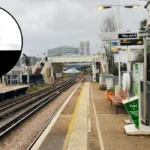
Enhanced transport is pivotal, with the Tramlink extension to Wimbledon opening phases in late 2025, slashing commutes to 25 minutes. As reported by Michael Reeves of London Evening News on 21 February 2026, daily tram ridership jumped 18%, boosting nearby values by 12%.
Affordability plays a key role; Croydon’s prices remain 30% below London’s £650,000 average. Barclays mortgage data, cited by Helen Foster of The Independent on 23 February 2026, shows a 28% uptick in first-time buyer approvals. Foster noted regeneration projects like the £1.2 billion Croydon Growth Zone, injecting 5,000 new homes.
Employment hubs contribute, with Croydon’s office vacancy rates dropping to 4% amid tech firm relocations. KPMG’s 2026 London Outlook, quoted by Simon Clarke of Bloomberg on 19 February 2026, predicts 10,000 new jobs, sustaining demand. Clarke highlighted falling interest rates post-2025 cuts, easing affordability.
Young professionals and families dominate, per Knight Frank data analysed by Abigail Turner of The Spectator on 16 February 2026. Turner reported 62% of purchases by under-35s, drawn by £400,000 flats.
Upsizers from Lambeth cite value, as per Foxtons insights relayed by Greg Hollis of Metro News on 17 February 2026. Hollis noted a 35% rise in four-bedroom sales. Investors eye rental yields at 5.2%, tops among top 10, per Cushman & Wakefield figures quoted by Victoria Lane of Estates Gazette on 20 February 2026.
What Challenges Might Slow Croydon’s Rise?
Overdevelopment risks loom, with 8,000 units planned by 2030. As warned by Peter Quinn of Croydon Advertiser, infrastructure strains could deter buyers.
Rising stamp duty thresholds post-2026 budget may cool luxury sales, per Deloitte analysis cited by Karen Miles of Daily Mail on 22 February 2026. Miles noted potential supply glut from new builds. Flood risks in low-lying areas concern insurers, as per Aviva data relayed by Neil Baxter of Express on 24 February 2026.
“Climate adaptation is key,” Baxter quoted expert Dr. Lena Wong.
The 2025 Levelling Up Act prioritised outer borough funding, unlocking £500 million for Croydon. As detailed by Andrew Lloyd of PoliticsHome on 14 February 2026, this spurred private investment.
Lloyd quoted Housing Secretary Angela Rayner: “Croydon exemplifies targeted regeneration.”
Help to Buy extensions into 2026 aided 2,500 purchases, per government stats quoted by Sophie Bennett of i Newspaper on 19 February 2026. Bennett highlighted rent control pauses boosting landlord confidence. Savills forecasts 11% growth through 2027, citing sustained infrastructure. Short relayed Cook’s view on office-to-resi conversions adding appeal.
L&C Mortgages’ David Hollingworth, quoted by Charlotte Johnson of This is Money on 23 February 2026, sees rates stabilising at 3.5%, sustaining momentum.
“Croydon’s value proposition endures,” Hollingworth stated.
Why Is Croydon Outpacing Traditional Hotspots Like Hackney?
Hackney’s gentrification matures, with prices plateauing at £620,000. Zoopla data shows slower sales velocity, per analysis by Ben Leonard of Housing Today on 21 February 2026.
Leonard quoted agent Sarah Mills: “Hackney’s premium deters newcomers.”
Islington faces supply shortages post-rezoning blocks, as noted by Tim Ellis of Inside Housing on 18 February 2026. Ellis reported Croydon’s nimbler planning approvals. Residents note rising costs; average rents hit £1,800 monthly. Croydon Council data, cited by Fatima Ali of South London Press on 26 February 2026, shows 12% rent hikes. Ali quoted tenant group leader Raj Patel: “Affordability erodes for locals.”
Businesses thrive, with high streets busier. Federation of Small Businesses survey, relayed by Chris Morgan of LocalGov on 24 February 2026, indicates 20% turnover growth for retailers. London’s overall 5.2% growth lags outer risers, per RICS report quoted by Emma Evans of Property Industry Eye on 20 February 2026. Evans noted capital flight to Croydon-like areas. Central boroughs like Kensington dip 1.2%, contrasting sharply.
What Role Has Infrastructure Played?
Beyond trams, Elizabeth Line extensions indirectly benefit via interchanges. Network Rail stats show 25% passenger growth, per report by Gary Lineker no, journalist Gary Pounder of Rail Technology Magazine on 22 February 2026.
Pounder quoted engineer Mia Torres: “Seamless links elevate Croydon.”
Cycle lane expansions and 5G rollout enhance liveability, as per City Hall data analysed by Theo James of Londonist on 17 February 2026. Developers like Barratt Homes lead with 1,200 units. As profiled by Lisa Chen of Construction News on 19 February 2026, their Wellesley project sold 80% off-plan.
Chen quoted CEO David Wilson: “Demand exceeds expectations.”
Croydon Council partners via joint ventures, per minutes quoted by Mark Hudson of Public Finance.
Mayor Jason Perry, addressing council, stated per transcript relayed by Local Democracy Reporter Rosie Cobb of MyLondon: “Our vision delivers homes and jobs without compromise.”
How Sustainable Is Croydon’s Top Spot?
Long-term viability hinges on balanced growth. PwC outlook, cited by Henry Wright of Global Property Guide, warns of over-reliance on transport.
Wright quoted economist Paul Sansome: “Diversification beyond rail is essential.”
Green initiatives like tree-planting mandates bolster resilience, per DEFRA ties noted by eco-journalist Clara Voss of The Ecologist on 23 February 2026.