Key Points
- A specially trained and dedicated officer is going to be employed in west London to address the problem of increasing water pollution caused by misconnection in domestic households.
- Improper plumbing causes such houses to dump household waste directly into surface water drains.
- The waste moves quickly through the drainage network, destroys wildlife habitats, and badly affects the water channels.
- Misconnections in plumbing are considered completely illegal according to the law, and fixing the problem falls under the legal obligation of the homeowner alone.
- Local authorities have the legal right to enforce action on people who do not comply with the regulation.
- The pilot scheme gets funding from the London mayor’s office; should the scheme prove successful, it will be extended in the whole of London.
- The funding is allocated to areas where the problem of misconnections is deemed significant; examples include the vulnerable River Brent catchment area.
- According to Ben Morris, the founder of the voluntary group Clean Up the River Brent (CURB), misconnections are the greatest threat to water pollution in London’s rivers.
London (Extra London News) September 4, 2026 — A dedicated officer is to be recruited in west London under a pioneering trial scheme designed to tackle the persistent and damaging environmental problem of water-polluting household misconnections, as reported by the BBC.
As detailed in coverage by the BBC, incorrect domestic plumbing setups frequently lead to affected households unknowingly pumping raw waste straight into local surface water drains. Once inside these drainage networks, the contaminants can spread extensively, killing local wildlife and severely degrading the quality of natural waterways. The BBC noted that such misconnections are strictly illegal under current regulations, meaning that fixing the underlying plumbing faults is firmly the legal responsibility of the individual property owner.
While local authorities possess the legal authority to pursue enforcement action against negligent homeowners, the implementation of this pilot—financially backed by the mayor of London’s office—aims to streamline oversight. According to the BBC, if the pilot proves successful, the novel measure could eventually be rolled out on a wider scale across the entire capital. Resources and funding are slated to be deployed directly to areas where the phenomenon is categorized as a severe problem, explicitly incorporating the River Brent catchment area.
Explore More London Local News:
Camden pub loses £40,000 after outdoor seating ban, London, 2026
Grant helps East London older women health scheme, Tower Hamlets, 2026
What Are Household Misconnections and Why Are They Illegal?
To fully understand the gravity of the new pilot initiative, one must examine the mechanics of domestic plumbing faults. As outlined in reporting by the BBC, misconnections occur when wastewater pipes from household appliances—such as washing machines, toilets, or sinks—are incorrectly plumbed into surface water drains instead of the foul sewer system. While foul sewers transport wastewater directly to treatment plants, surface water drains lead straight to local rivers and streams without undergoing any filtration or treatment.
Because untreated sewage flows directly into natural habitats, the practice is classified as illegal. The BBC emphasized that fixing these faulty systems is not the duty of public utilities or local municipalities, but rather the explicit responsibility of the property owner. Neglecting to rectify these issues causes continuous, invisible environmental damage that accumulates over time, prompting the mayor of London’s office to fund the west London trial as a proactive countermeasure.
Where Will the New Funding Be Directed?
Geographical targeting is a core pillar of the new strategy. As highlighted by the BBC, financial resources are being specifically channeled into regions where water-polluting misconnections are recognized as a pronounced hazard.
Chief among these priority zones is the River Brent catchment area. Environmental advocates have long argued that the stretch suffers disproportionately from urban runoff and illicit domestic discharges. By focusing the efforts of the newly appointed dedicated officer on these high-risk areas, authorities hope to isolate the worst offenders, map out widespread plumbing errors, and test whether targeted municipal intervention can measurably improve water quality before committing to a capital-wide rollout.
What Do Environmental Groups Say About the Problem?
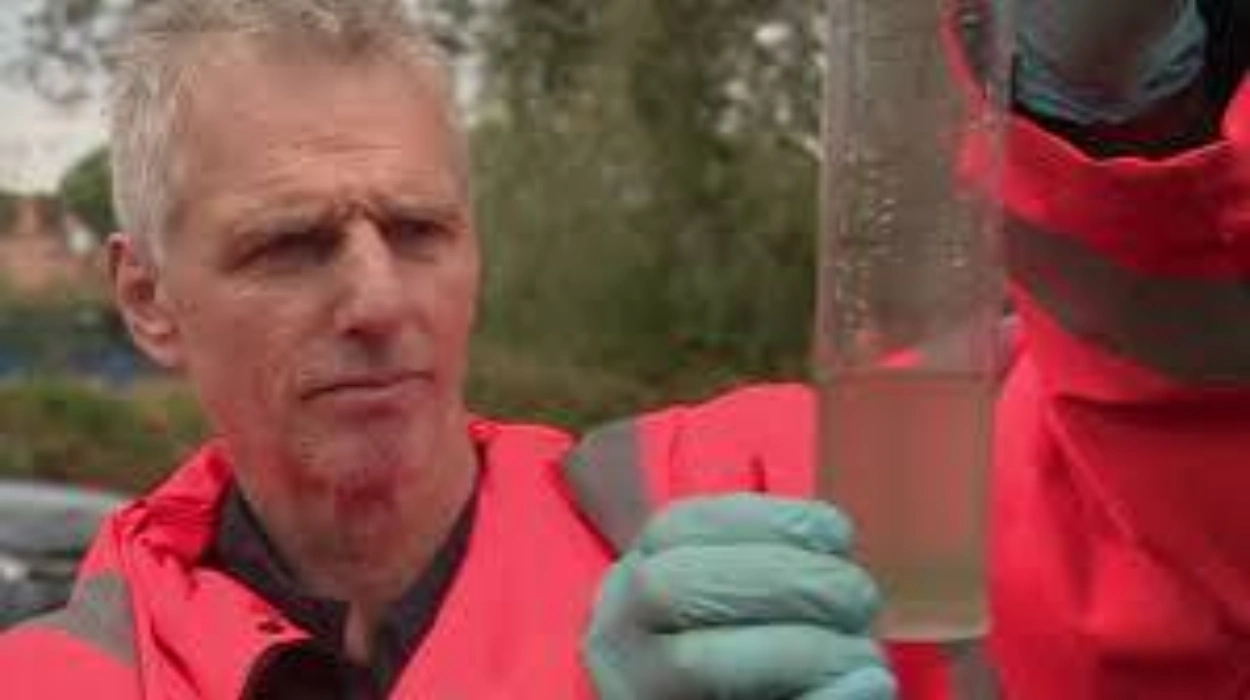
The scale of the crisis has drawn sharp criticism from grassroots organizations monitoring the health of urban waterways. As reported by the BBC, Ben Morris, founder of the volunteer group Clean Up the River Brent (CURB), spoke candidly about the severity of the situation.
As reported by Ben Morris of Clean Up the River Brent (CURB) to the BBC, there was “good reason” to think that plumbing misconnections
“are the biggest single cause of pollution in London’s rivers.”
Mr Morris did not stop at identifying the root cause; he also issued a direct challenge to municipal institutions regarding their current laxity in applying penalties. As reported by Ben Morris of Clean Up the River Brent (CURB) to the BBC, he added:
“We need to see stronger action from the councils to get this done.”
Emphasizing that local governments already possess the necessary legal mechanisms to compel compliance, Mr Morris further stated, according to the BBC: “They have the power of enforcement and they need to be using those powers to get those property owners to sort out the misconnections.”
How Could This Pilot Shape the Future of London’s Waterways?
The implications of the west London trial extend far beyond a single borough. With the mayor of London’s office footing the bill for the pilot, policymakers are looking closely at metrics such as detection rates, homeowner compliance, and overall improvements in river biodiversity.
If the dedicated officer successfully navigates the bureaucratic and logistical hurdles of identifying private plumbing errors and compelling reluctant homeowners to alter their systems, the framework could become a blueprint for city-wide adoption. As water pollution remains a high-profile public concern across the United Kingdom, this localized trial in west London may well herald a much tougher regulatory era for domestic property management throughout the capital.