Key Points
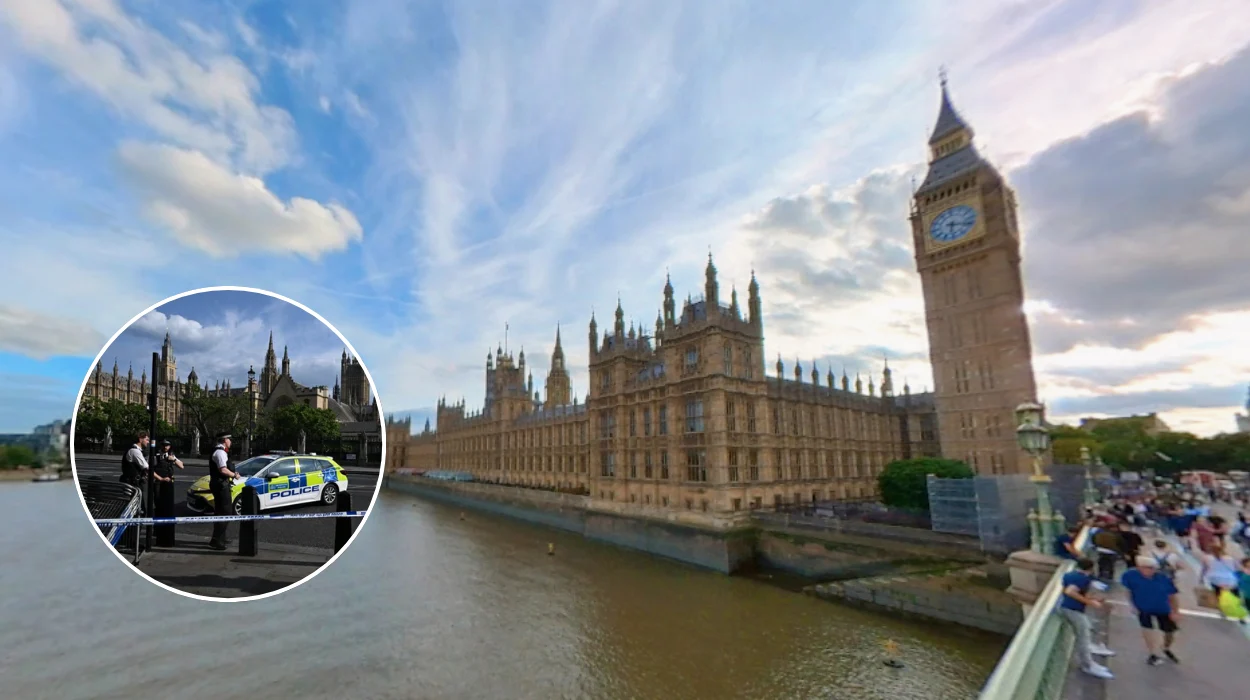
- Incident Overview: Five Metropolitan Police officers were injured after a Marine Policing Unit boat travelling “at speed” struck Westminster Bridge on the River Thames.
- Water Rescue: The collision threw three officers directly into the water, where they remained for roughly ten minutes before being rescued by civilian bystanders on nearby boats.
- Emergency Response: Officers were initially responding to an urgent report of a person in the water near Battersea, south-west London.
- Casualties & Hospitalisation: Five officers received medical treatment at the scene by RNLI responders and the London Ambulance Service before being transported to hospital; four sustained serious but non-life-threatening injuries, while one has since been discharged.
- Public Safety: The Metropolitan Police confirmed that no members of the general public were involved or injured in the crash.
- Witness Accounts: Eyewitnesses described hearing a loud “explosion” or “big bang” upon impact, noting the high speed of the vessel.
- Infrastructure Impact: Westminster Bridge was brought to a standstill with cordons placed at both ends, and portions of Westminster Underground station were temporarily closed by Transport for London.
London (Extra London News) July 27, 2026 — Five Metropolitan Police officers sustained injuries on Friday afternoon after a high-speed marine unit patrol boat crashed violently into Westminster Bridge on the River Thames, pitching multiple crew members into the water.
- Key Points
- What Happened During the Collision on the River Thames?
- How Were the Trapped Officers Rescued from the Water?
- What Are the Conditions of the Injured Police Officers?
- How Did Authorities and Partner Agencies Respond to the Crash?
- What Was the Impact on London Traffic and Public Transport?
- What Happens Next Regarding the Investigation?
The high-stakes emergency deployment unfolded during the afternoon rush hour near the heart of the British capital, drawing a massive multi-agency response from the London Fire Brigade, London Ambulance Service, RNLI, and air ambulance services. According to official statements issued by the Metropolitan Police, the vessel—carrying armed officers from the force’s Marine Policing Unit—was racing upstream at approximately 3:40 PM on Friday, July 24, to answer an urgent distress call regarding a person reported to be in the river near Battersea.
What Happened During the Collision on the River Thames?
As reported by Izzie Addison of The Evening Standard, the police vessel was travelling at an elevated speed when it violently struck the stone structure of Westminster Bridge. The forceful impact sent shockwaves across the water and violently ejected three of the police officers overboard into the cold current of the Thames.
Eyewitnesses standing near the landmark location recounted scenes of immediate panic and confusion as the crash occurred right beside the Houses of Parliament.
As highlighted in reports covered by the Press Association (PA) and broadcast by ITV News, a visiting American couple from Gloucester, Massachusetts, who were waiting nearby for a river cruise tour, detailed the dramatic moments leading up to the accident.
As told to the Press Association by witness Jim Bagley and reported across multiple syndicates by journalists such as Izzie Addison of The Evening Standard, Mr Bagley stated that:
“We were standing in line to get onto the city cruise hop on, hop off tours, and we saw two police boats coming up the river.”
Witnesses further described hearing what sounded like an “explosion” or a “big bang” as the leading police boat smashed into the bridge architecture, noting that the craft appeared to be operating under high pressure in pursuit or response mode further up the waterway.
How Were the Trapped Officers Rescued from the Water?
Following the sudden impact, three of the officers found themselves struggling in the river. Local witnesses reported that the officers remained submerged or treading water for roughly ten minutes, during which time quick-thinking members of the public threw a life ring to assist one of them.
Swift action from civilian boat operators on the Thames proved vital. As detailed in updates compiled by journalists across outlets like Hells Radio and The Evening Standard, civilian river users immediately navigated toward the stranded crew members and pulled them safely from the water before emergency rescue services fully took charge of the scene.
Responders from the Royal National Lifeboat Institution (RNLI) subsequently met the casualties at Westminster Pier, setting up a treatment station on a black rigid inflatable boat to administer initial first aid.
Paramedics from the London Ambulance Service, alongside additional Metropolitan Police units and London Fire Brigade firecrews, swarmed the embankment to stabilise the injured personnel.
What Are the Conditions of the Injured Police Officers?
The Metropolitan Police confirmed that a total of five officers sustained injuries during the unfortunate deployment. While all five were initially treated at the scene and subsequently transferred to a local hospital, subsequent medical updates clarified the severity of their conditions.
According to force updates shared via The Evening Standard and Yahoo News, four of the injured officers remained hospitalised with serious but non-life-threatening injuries.
A fifth officer has since been formally discharged from hospital care. Crucially, law enforcement authorities confirmed that no civilian members of the public were involved, struck, or injured during either the initial emergency run or the subsequent bridge collision.
Paying tribute to the bravery displayed by both the injured crew and civilian helpers, Met Police Commander Nick John released a comprehensive statement addressing the community.
As officially stated by Met Police Commander Nick John:
“Our thoughts are with all those involved, in particular our officers who were injured and those who responded in challenging circumstances. The four officers who remain in hospital have serious but non-life-threatening injuries. We will give them all every support as they recover. I must also offer our thanks to those river users who came to the aid of the officers, as well as other police and emergency service colleagues who immediately made their way to the scene to assist. The quick-thinking and professionalism of all those involved undoubtedly prevented any further injuries.”
How Did Authorities and Partner Agencies Respond to the Crash?
The severity of the crash prompted an extensive multi-agency coordinated response across central London. In addition to the Metropolitan Police and London Ambulance Service, the Port of London Authority (PLA) stepped in to manage river traffic and secure the maritime environment.
As reported by regional broadcasting networks including Rayo, a spokesperson for the Port of London Authority stated:
“We are aware of an incident involving a police vessel at Westminster Bridge. We are supporting the response and providing assistance where needed, working closely with the Metropolitan Police, HM Coastguard and partner agencies to manage the situation.”
Aerial support was also deployed, with a police helicopter and an air ambulance circling low over the Houses of Parliament and the River Thames to monitor the operational space and provide rapid transit options if required.
Explore More London Local News
Police Dispersal Zone Implemented to Tackle Crime in Purley 2026
Camden Inspire Climate Festival Returns to Camden Town 2026
What Was the Impact on London Traffic and Public Transport?
The accident caused massive disruption to central London’s transit grid right as the Friday evening rush hour began to peak. Westminster Bridge—a vital artery crossing the Thames next to the Palace of Westminster—was brought to an absolute standstill.
Police cordons were hastily erected at both ends of the bridge, preventing vehicular traffic, buses, and coaches from crossing.
Transport workers and drivers trapped within the cordon were forced to execute difficult multi-point turns and reverse out of the area to find alternative detour routes.
Simultaneously, Transport for London (TfL) issued urgent public service announcements regarding local underground infrastructure.
As confirmed by TfL channels, entrances one, two, three, and four to Westminster Underground Station were temporarily locked down and shut off to foot traffic while emergency personnel utilized the surrounding station exits and pier zones to stage their operations. Commuters were strongly advised to reroute their journeys and avoid the Westminster corridor entirely.
What Happens Next Regarding the Investigation?
With the immediate rescue phase concluded and the injured officers receiving ongoing medical care, attention has turned toward establishing the precise root cause of the accident.
The Metropolitan Police confirmed that a formal, thorough review and investigation into the operational circumstances of the crash have been launched.
While the primary institutional focus remains centered on the recovery and psychological well-being of the affected marine officers, maritime investigators alongside independent safety bodies will examine how a routine high-speed emergency response deployment ended in a major structural collision on one of London’s most heavily monitored bridges.