Key Points
- The Proposal: Developers have submitted plans for “Park View Place,” a massive 882-home mixed-use development comprising seven tower blocks ranging from 11 to 16 storeys.
- Location Crisis: The site is a 2.8-hectare former disused car park south of Sudbury Hill Underground Station, directly adjacent to the Grove Farm Local Nature Reserve.
- Environmental Concerns: Campaigners warn that the development will destroy 0.27 hectares of broadleaf woodland and damage a Site of Importance for Nature Conservation (SINC).
- Wildlife at Risk: Local groups highlight potential “devastation” for badgers, owls, rare plants, and bats, the latter of which face severe light pollution and habitat fragmentation.
- Affordability Gap: The project offers only 25% affordable housing (135 units), significantly below Ealing Council’s standard target of 35%.
- Urgent Deadline: Residents have until today, June 3, 2026, to submit formal objections via the Ealing Council planning portal.
Sudbury (The Londoner News) June 2, 2026 — A coalition of West London residents and environmental campaigners has launched a final, urgent appeal to Ealing Council to reject a high-density residential scheme that they claim will “destroy” the ecological integrity of the Grove Farm Nature Reserve. The proposed development, titled Park View Place, seeks to erect 882 new homes across seven high-rise blocks on a site immediately bordering protected Metropolitan Open Land (MOL). With the public consultation window set to slam shut at midnight tonight, the community group “Friends of Grove Farm” is warning that the current design represents an existential threat to one of the borough’s last remaining wild spaces, home to ancient woodland and several protected species.
- Key Points
- Why is the Park View Place development causing such a backlash?
- How will the 16-storey towers affect the Grove Farm Nature Reserve?
- What is the specific threat to Ealing’s local wildlife?
- Does the project meet Ealing Council’s affordable housing targets?
- What do the developers say in their defence?
- Is there still time for residents to object to the plans?
Why is the Park View Place development causing such a backlash?
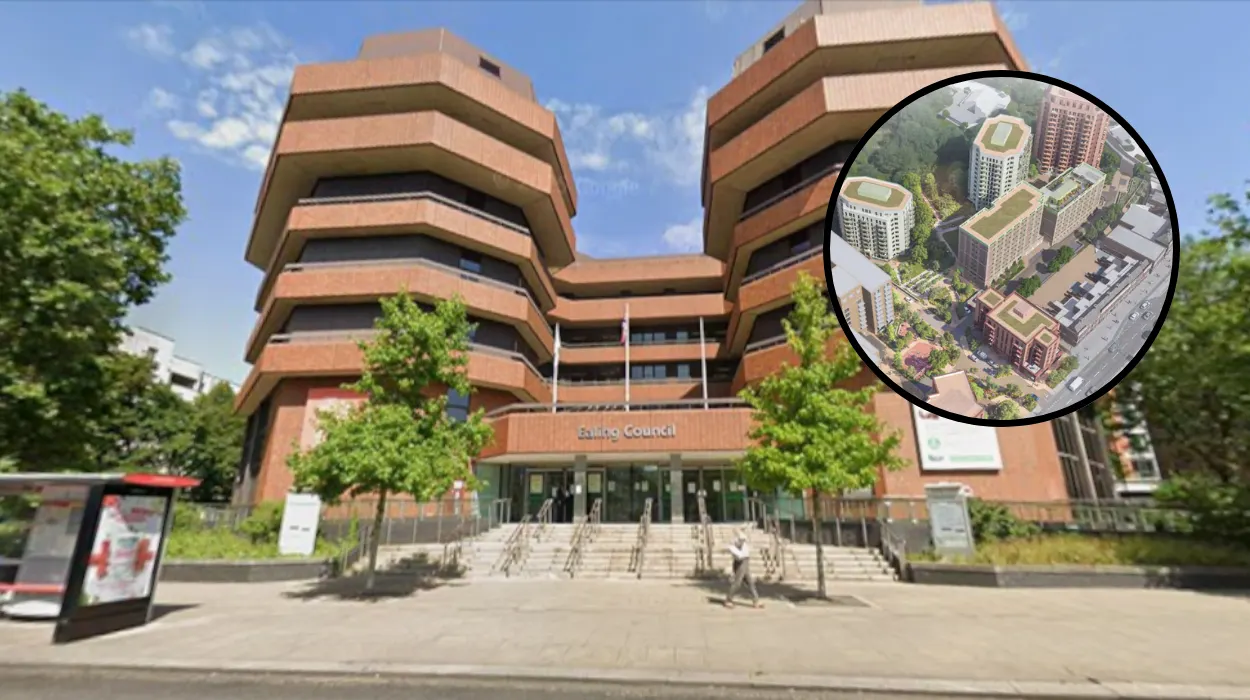
As reported by Philip James Lynch, a Local Democracy Reporter for Ealing Nub News, the scale of the “Park View Place” project is unprecedented for the Sudbury Hill area. The 2.8-hectare site, currently a disused car park, is slated to become a “high-density residential neighbourhood.” The plans include 542 conventional flats and 340 co-living units—a model where tenants have private bedrooms but share communal kitchens and living areas.
While the developers, Laverne Holdings (owned by Interland), pitch the project as a solution to London’s housing crisis, local residents argue the infrastructure cannot cope. According to reporting by Ealing Today, one resident stated in a formal objection: “This proposal is entirely inappropriate for the location and demonstrates a complete disregard for the existing pressures already affecting local residents. The area is already heavily congested on a daily basis… the local road infrastructure is simply not capable of supporting development on this scale.”
How will the 16-storey towers affect the Grove Farm Nature Reserve?
The most contentious aspect of the plan is its physical proximity to the Grove Farm Local Nature Reserve, an 8-hectare site of ancient woodland and meadow. Writing for Ealing.News, journalists have highlighted that four of the seven proposed towers—ranging from 11 to 16 storeys—would be situated directly on or adjacent to the Site of Importance for Nature Conservation (SINC) boundary.
The Friends of Grove Farm group has been vocal about the looming environmental degradation. In a statement provided to Ealing.News, the group asserted:
“The plans currently place four high-rise towers… on one or both the Site of Importance for Nature Conservation (SINC) and Metropolitan Open Land (MOL) which covers one of the borough’s most ecologically valuable sites.”
The group further detailed that the construction would necessitate the removal of 158 trees and result in the permanent overshadowing of the reserve, which would “reduce biodiversity” by killing off ground flora that requires sunlight.
Explore More Ealing News
Huge 882-Home Neighbourhood Planned Near Sudbury Hill Station, Ealing 2026
What is the specific threat to Ealing’s local wildlife?
The ecological stakes are remarkably high. As documented by Go Parks London, Grove Farm is a rare urban habitat for the wild service-tree—an indicator of ancient woodland—as well as rare plants like the pepper saxifrage and adders tongue fern.
Campaigners, as reported by Ealing.News, have identified several specific threats:
- Badgers: The construction would reportedly destroy one active badger sett and force the temporary closure of another.
- Bats: Increased light pollution from 882 new households would disrupt the “wildlife commuting corridor,” effectively blinding and displacing local bat populations.
- Costons Brook: The installation of heavy retaining walls is expected to cause significant damage to the brook that runs through the woodland.
A spokesperson for Friends of Grove Farm told reporters:
“Grove Farm is one of Ealing’s last remaining wild spaces and is home to a remarkable diversity of wildlife including bats, badgers, owls and rare plants.”
Does the project meet Ealing Council’s affordable housing targets?
Despite the massive volume of units, the development has come under fire for failing to meet social responsibility benchmarks. According to the planning application details analysed by Philip James Lynch of Ealing Nub News, only 135 of the 542 conventional flats are classified as “affordable.” This constitutes roughly 25% of the development, falling short of the 35% “affordable housing” level typically sought under the London Plan and Ealing’s own local policies.
The inclusion of 340 co-living units has also raised eyebrows. While developers describe these as “much-needed homes for young professionals,” critics argue they are essentially “student-style” accommodations that do not cater to families currently on the council’s housing waiting list.
What do the developers say in their defence?
In a community update newsletter titled “Park View Place,” the developer Interland argues that the project is a “sustainable and deliverable” way to fast-track housing on brownfield land. They claim the new design is an improvement over previous consents granted between 2020 and 2022, which were deemed unfeasible due to new fire safety regulations regarding single staircases.
The developers state:
“Our intention is to submit a planning application to Ealing Council in early 2026… [the project includes] 40% of the site as public open space, with dedicated play areas and a central green route linking Greenford Road to Grove Farm Park.”
They also claim the plan includes planting over 100 new trees to offset those lost during construction.
Is there still time for residents to object to the plans?
The window for community action is closing. Today, June 3, 2026, marks the final day for residents to log their comments on the Ealing Council planning portal. As of late May, Ealing.News reported that 74 public comments had been submitted, with 72 of those being staunch objections.
Campaigners are calling for a complete redesign, demanding:
- No construction within the SINC boundary or a 15-metre buffer zone.
- Reduction in height for all buildings near the reserve to no more than six storeys.
- Protection of all mature trees and the retention of the woodland embankments.
If the council does not heed these warnings, the Friends of Grove Farm fear that the very “Park View” promised to new residents will be the sight of a dying ecosystem.
Note to Residents: Formal objections must be submitted via the Ealing Council planning website before the end of the day to be considered by the planning committee.