Key Points
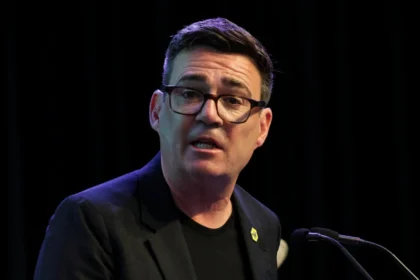
- Shadow national security minister and Conservative MP Alicia Kearns has said she will write to the Home Office and Metropolitan Police regarding plans for former Islamic Revolutionary Guard Corps (IRGC) commander Saied Reza Ameli to deliver a pre-recorded video talk at the Islamic Human Rights Commission’s (IHRC) thirteenth annual conference in London, titled “Artificial Intelligence and Islamophobia”.
- Kearns stated that hosting Ameli could breach the law and was “likely illegal under the State Threats Act”, adding she would also write to the organisation hosting him to warn of a likely breach if it proceeds.
- Ameli served as secretary of Iran’s Supreme Council of the Cultural Revolution from 2019 to 2023—a period marked by morality police crackdowns over compulsory head coverings and roughly 476 protesters killed by security forces following the September 2022 death of 22-year-old Mahsa Amini in police custody—and previously joined the IRGC in 1980, serving as deputy commander of the Imam Sadeq Brigade in the IRGC’s Seyed-al-Shohada Division from 1997 to 1999 under Ali Fazli during the Iran-Iraq War.
- Ameli co-founded the IHRC in 1997, served as a director of its board of trustees from 2006 to 2022 alongside Massoud Shadjareh, held a London business directorship until 14 June 2023, was sanctioned by Canada ahead of his resignation over alleged human rights abuses in western Iran’s Kurdish regions, and remains affiliated with Iranian bodies sanctioned by Britain less than a month after he stepped down from the UK firm, while now serving as a professor at Tehran University.
- The IHRC—funded by the Islamic Human Rights Commission Trust (IHRCT), which faces a Charity Commission statutory inquiry in Wembley, north-west London—defended Ameli as an academic and head of Tehran University’s Faculty of World Studies, criticised Western unilateral sanctions, and accused the Charity Commission of pressuring London’s P21 Gallery to cancel the conference venue, a claim disputed or reported amid regulatory scrutiny.
London (Extra Landon News) November 22, 2026 – Shadow national security minister Alicia Kearns has urged action from the Home Office and the Metropolitan Police over plans for former Islamic Revolutionary Guard Corps commander Saied Reza Ameli to give a pre-recorded video address at an Islamic Human Rights Commission conference on Islamophobia in London. Kearns argued that permitting Ameli to speak could break the law and is likely unlawful under the State Threats Act. The Islamic Human Rights Commission defended Ameli’s academic standing and criticised Western sanctions as the conference faces venue cancellation disputes and ongoing Charity Commission scrutiny.
- Key Points
- Why Has Alicia Kearns Urged the Home Office and Police to Investigate Saied Reza Ameli’s Planned Talk?
- What Is Saied Reza Ameli’s Background With the IRGC, Iranian Institutions, and the IHRC?
- How Has the IHRC Responded and What Regulatory Scrutiny Does It Face?
- Background of the IHRC, State Threats Oversight, and Iran Sanctions
- Prediction: How Will This Affect UK Law Enforcement, Charities, and London Communities?
Why Has Alicia Kearns Urged the Home Office and Police to Investigate Saied Reza Ameli’s Planned Talk?
Shadow national security minister Alicia Kearns has stated she will write to the Home Office and the Metropolitan Police because allowing former IRGC commander Saied Reza Ameli to deliver a pre-recorded talk at the IHRC conference could breach the law, including under the State Threats Act.
According to reporting by The Jewish Chronicle (JC) and the Daily Mail, Conservative MP and shadow national security minister Alicia Kearns raised alarms after Saied Reza Ameli was announced among the keynote speakers for the Islamic Human Rights Commission’s (IHRC) thirteenth annual conference, titled “Artificial Intelligence and Islamophobia”.
As reported by The Jewish Chronicle, Kearns said the IHRC could be breaking the law by enabling Ameli, a senior figure within the Islamic Republic of Iran, to deliver a “pre-recorded video talk”.
According to The Jewish Chronicle, Kearns stated that she would write to the Metropolitan Police and the Home Office concerning the “vile former IRGC commander”, saying it was “likely illegal under the State Threats Act” to host him.
As reported by The Jewish Chronicle, Kearns added: “I will write to the ‘charity’ hosting him to make clear they will likely be in breach if they proceed.”
What Is Saied Reza Ameli’s Background With the IRGC, Iranian Institutions, and the IHRC?
Ameli joined the IRGC in 1980, held senior military and state roles including secretary of Iran’s Supreme Council of the Cultural Revolution from 2019 to 2023, co-founded the IHRC in 1997, and faces international sanctions while serving as a professor at Tehran University.
According to the reporting by The Jewish Chronicle, Ameli joined the Islamic Revolutionary Guard Corps (IRGC) in 1980 and served as deputy commander of the Imam Sadeq Brigade in the IRGC’s Seyed-al-Shohada Division between 1997 and 1999. The report notes that during the Iran-Iraq War, he served under Ali Fazli, whom Britain later sanctioned over his role overseeing police, Basij, and IRGC crackdowns on civilians during the 2009 unrest in Iran, which led to hundreds of deaths and thousands of tortures.
Reporting by The Jewish Chronicle further states that Ameli served as secretary of Iran’s Supreme Council of the Cultural Revolution from 2019 to 2023. During that timeframe, Iran’s morality police intensified enforcement against women who did not cover their hair, and approximately 476 protesters were killed by security forces following the death of 22-year-old Mahsa Amini in police custody in September 2022.
According to The Jewish Chronicle, Ameli founded the IHRC in 1997 and sat as a director on its board of trustees from 2006 to 2022 alongside Massoud Shadjareh, who continues in that role. The report also notes that Ameli held a business interest in London until 14 June 2023, when he resigned as a director.
Prior to that resignation, Canada sanctioned Ameli over what the report describes as “gross and systematic human rights violations in Iran, including through the lethal suppression of demonstrations across Kurdish areas of Western Iran”. Less than a month after his resignation from the London business, the United Kingdom sanctioned the Supreme Council of the Cultural Revolution as well as the Supreme Council of Cyberspace, another body with which Ameli remains affiliated. Today, according to The Jewish Chronicle, Ameli is a professor at Tehran University.
How Has the IHRC Responded and What Regulatory Scrutiny Does It Face?
The IHRC defended Ameli as an academic and head of Tehran University’s Faculty of World Studies, criticised Western sanctions, and faces a Charity Commission statutory inquiry into its funding arm in Wembley, north-west London.
According to The Jewish Chronicle, reporting on the IHRC’s response to the Daily Mail, the organisation stated that Ameli “will be presenting his paper by way of a pre-recorded video. He has been invited to present the paper in his capacity as the head of the Faculty of World Studies at Tehran University.”
As reported by The Jewish Chronicle, the IHRC statement continued: “Prof. Ameli is a brilliant and sincere academic who has consistently taken an inclusive approach to his work. He has championed multiculturalism and sought to foster understanding between different worldviews, a position that has even led to accusations of being pro-Western in his own country. He has also been critical of the retreat of multiculturalism in the West.”
The IHRC statement also addressed sanctions and international affairs. As reported by The Jewish Chronicle, the group stated: “Furthermore, as a human rights organisation we adopt a moral and principled position in relation to sanctions that are essentially designed to silence people from speaking the truth.”
It went on to say, as reported by The Jewish Chronicle: “Western countries have weaponised unilateral sanctions to punish countries like Cuba and Iran for resisting injustice and oppression, crippling their economies, devastating the lives of ordinary people and in the case of sanctions against the International Criminal Court and the UN Special Rapporteur Francesca Albanese, trying to obstruct the administration of international law and justice, in an attempt to whitewash the current genocide in Gaza.”
What Previous Controversies and Regulator Actions Have Involved the IHRC and Its Leadership?
According to The Jewish Chronicle, the IHRC is funded by the Islamic Human Rights Commission Trust (IHRCT), which is under investigation by the Charity Commission over concerns regarding its ties to the IHRC, located in the same building in Wembley, north-west London. The report notes that the charity previously received an official warning from the Charity Commission and is now the subject of a statutory inquiry after failing to comply with the regulator’s “Action Plan”.
Reporting by The Jewish Chronicle also highlights past controversies involving the IHRC and trustee Massoud Shadjareh:
- The IHRC has been among the organisers of the annual pro-regime Al Quds Day march, which was banned the previous year following a police request aimed at preventing “serious public order” issues.
- After IRGC general Qasem Soleimani was killed by the United States in 2020, Shadjareh attended a vigil and stated: “We work hard to make sure there will be many, many more Qasem Soleimanis.”
- Reporting by The Jewish Chronicle the previous year noted that Shadjareh, who promoted a boycott of Holocaust Memorial Day, has a history of working with the Iranian regime’s Basij Resistance Force, a branch of the IRGC linked to campus ideology enforcement and military research, including work tied to nuclear and missile programmes.
Additional reporting from The Jerusalem Post, Iran International, and IHRC statements on 19 November 2026 notes that IHRC accused the Charity Commission of pressuring London’s P21 Gallery into cancelling the booking for the 13 December conference on artificial intelligence and Islamophobia, after P21 cited an emergency meeting with the Charity Commission discussing Ameli’s inclusion on the speaker list.
Background of the IHRC, State Threats Oversight, and Iran Sanctions
Founded in London in 1997, the Islamic Human Rights Commission has operated alongside the Islamic Human Rights Commission Trust in north-west London while campaigning on issues including anti-terrorism laws, policing, and discrimination, even as critics, lawmakers, and regulators have scrutinised links between its leadership and officials or institutions of the Islamic Republic of Iran.
In parallel, UK authorities have tightened scrutiny around foreign state influence, sanctioned Iranian officials and state bodies, and used statutory charity oversight and national security laws—such as the State Threats Act—to examine activities connected to foreign states and regulated charities in Britain.
Prediction: How Will This Affect UK Law Enforcement, Charities, and London Communities?
For UK law enforcement, government departments, and charity regulators, Alicia Kearns’s correspondence and the ongoing Charity Commission inquiry are likely to prompt closer examination of compliance boundaries, speaker vetting, and charitable governance around events linked to sanctioned or state-affiliated figures from Iran.
For British Muslim communities, civil society groups, and London residents, disputes over conferences addressing Islamophobia and artificial intelligence—alongside heightened debate over state threats and foreign influence—may keep attention focused on how advocacy organisations operate and how public order and regulatory rules are applied.