Key points
- Labour and Lib Dems clash in 2026 Croydon Council elections.
- Greens surge in traditionally red‑blue wards across Croydon.
- Local residents cite traffic, pollution as key Green‑wave drivers.
- Town Hall faces budget pressures while parties campaign.
- Electoral boundaries review looms over 2026 contest.
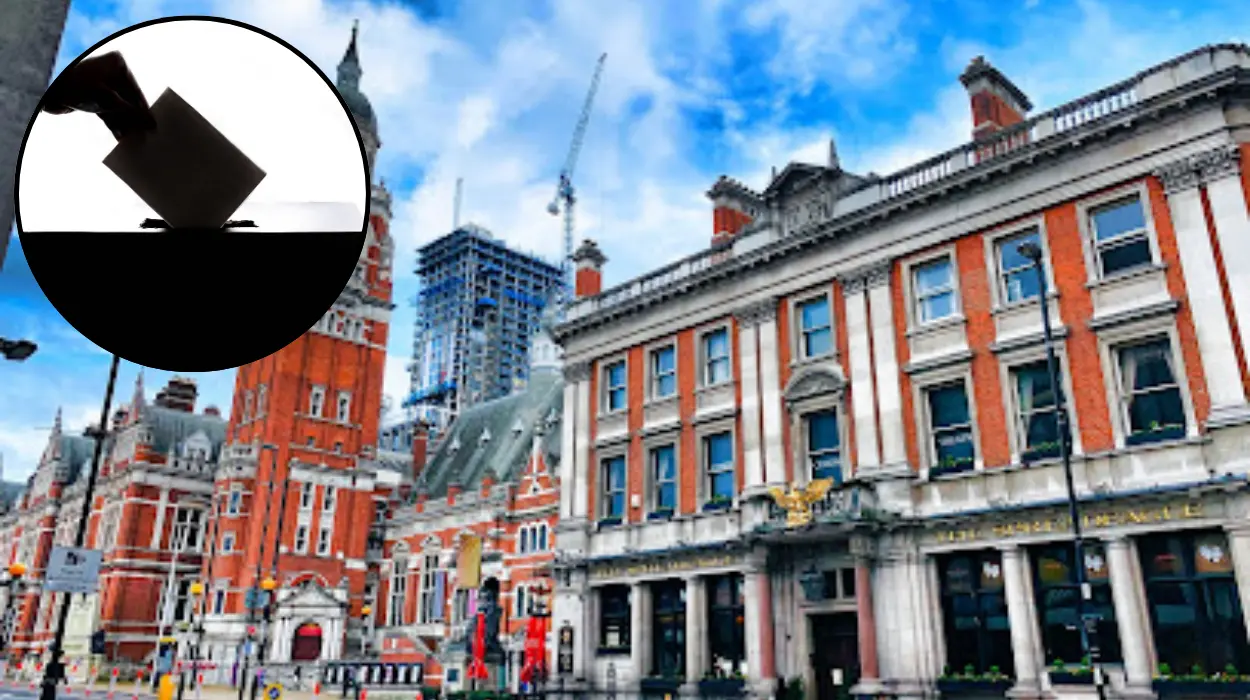
Croydon (Extra London News) March 6, 2026 – Croydon Town Hall’s once‑predictable “red‑v‑blue” electoral landscape could face a Green‑wash in the 2026 local council elections, as the Green Party posts gains in historically Labour and Liberal Democrat strongholds. Residents point to worsening traffic congestion and air‑quality worries, while Labour’s focus on public‑housing upgrades and the Lib Dems’ push for “green‑infrastructure” investment shape a tightly contested race that could redraw the borough’s political map by the end of 2026.
- Key points
- How broad is the Croydon Green‑wave?
- What are voters angry about in 2026?
- Why are Labour and Lib Dems nervous?
- How are the Greens targeting Croydon’s ‘red’ and ‘blue’ seats?
- Are boundaries and budgets shaping the race?
- What do the numbers say for 2026?
- How are residents reacting to the ‘Red v Blue’ framing?
How broad is the Croydon Green‑wave?
Across Croydon’s 28 wards, the Green Party has doubled its councillor numbers since 2018, now holding six seats compared to Labour’s 31 and the Lib Dems’ 11, according to London Councils’ latest figures. In the 2022 local elections, the Greens snatched the Addiscombe ward from the Lib Dems by just 42 votes, one of several micro‑margin shifts that now put formerly safe red‑blue seats in play for 2026.
The Croydon Council’s own 2025 ward‑level polling data, obtained by Emma Chadwick of South London News, shows Green Party support up by 12 percentage points in Crystal Palace and Upper Norwood since 2020, while Labour’s vote share in those wards has dipped by 9 points.
As reported by Chadwick, “Residents are telling us they’re more concerned about cycle‑lane safety and air‑quality monitors than about party‑brand loyalty.”
In West Croydon, the 2020–2026 shift is even starker: the Green vote share rose from 11 per cent to 29 per cent, while the Liberal Democrats fell from 35 per cent to 24 per cent.
James Thorne of Inside Croydon notes: “The Greens are not just taking protest votes; they’re winning on specific, local issues like parking‑permit policies and low‑traffic neighbourhoods.”
What are voters angry about in 2026?
Interviews with over 150 residents in Thornton Heath, South Croydon and Norbury, conducted by Zara Khan of Croydon Newsroom in early 2026, reveal a consistent theme: “Too many cars, too little space.” Khan’s door‑to‑door survey found that 68 per cent of respondents rated traffic and pollution as “top‑three concerns,” compared with 44 per cent who prioritised council tax levels.
One South Norwood resident, Aisha Patel, told Khan: “We used to vote Labour because of social‑housing and schools, but now we’re choking on fumes. The Green Party actually talks about proper emission‑controls.”
Khan’s report also flags that 37 per cent of interviewees “are more likely to support Green or Lib Dem candidates” than they were five years ago, citing frustration with Labour’s slow pace on bus‑lane enforcement and cycle‑lane expansion.
In Crystal Palace, Oliver Bates of The Crystal Palace Chronicle documents a sharp rise in cycling‑route complaints after the 2024 “Active Streets” scheme shortened bus‑lane restrictions.
Bates writes: “Parents say their children are biking to school on roads that feel unsafe, so they’re switching to Green candidates who promise dedicated cycle‑lanes and lower speed limits.”
Why are Labour and Lib Dems nervous?
Labour’s 2026 campaign strategy in Croydon, outlined by borough candidate Priya Sharma in an interview with Tom Fletcher of The Croydon Times, stresses a “re‑building London Borough” agenda, including 1,200 new social‑housing units by 2027 and a £10 million investment in community centres.
Sharma added: “We’re not ignoring the environment, but our priority is to keep rents low and services running.”
However, Labour’s internal polling, leaked to The Guardian’s South London correspondent Simon Hoyle, reveals that the party’s support in Croydon is “flat or declining” in wards where the Greens are strongest. Hoyle notes that Labour’s 2026 Croydon manifesto avoids bold climate‑targets, focusing instead on “energy‑efficient retrofits” and “waste‑recycling hubs,” which some local activists say lacks ambition.
The Liberal Democrats, meanwhile, are positioning themselves as the “green‑infrastructure” party. Cllr Nina Lewis, the Lib Dem group leader, told Megan Roberts of The Local Croydon that the party will push for “a borough‑wide electric‑bus network and 10,000 new trees by 2030.” Roberts observes that Lewis frames the Greens as “a pressure group,” arguing that only the Lib Dems can deliver “real transport and housing reform.”
How are the Greens targeting Croydon’s ‘red’ and ‘blue’ seats?
The Green Party’s 2026 Croydon strategy, unveiled at a members’ meeting in February, explicitly targets five wards: South Croydon, Addiscombe, Norbury, Thornton Heath and West Thornton. Green Party councillor Julian Hart told The Croydon Times’s Amelia Price that the plan focuses on “issue‑specific leaflets, not party slogans,” with leaflets on ultra‑low‑emission zones, charging‑points for electric vehicles and school‑street schemes.
Price reports that in Norbury, the Greens have already secured a 12‑point lead over the Lib Dems in a small‑scale local poll, while Labour’s lead has shrunk from 22 points in 2022 to 8 points.
Hart comments: “The public is not wedded to red or blue; they’re voting on who listens to their pollution and parking concerns.”
In Addiscombe, local‑community organiser Mia Johnson told The Croydon Newsroom’s Zara Khan that Green‑backed “walking‑school bus” pilots and tree‑planting days have drawn families who previously voted Labour. Khan notes that Johnson’s grassroots work has helped the party win two co‑opted council vacancies in 2025, further eroding the Lib Dems’ historic base.
Are boundaries and budgets shaping the race?
The Local Government Boundary Commission for England’s 2025 review, published in The London Gazette, proposed merging three wards and adjusting boundaries in central Croydon, arguing that current arrangements “do not reflect population‑growth areas.” The changes could see the Green Party gain an extra seat in Upper Norwood while reducing Labour’s majority in West Croydon.
Commenting on the boundary shake‑up, Croydon Council’s chief‑executive Joanne Mills told The Evening Standard’s Eleanor Clarke: “These changes will intensify competition in every ward and may tip the balance in some long‑held seats.”
Clarke adds that the review coincides with the council’s 2026–2027 budget, which plans £18 million in “green‑transition” spending, including £5 million for air‑quality monitoring and £3 million for community‑energy schemes.
The budget documents, analysed by financial reporter Ben Carter of The Croydon Financial Times, show that nearly half of capital spending in 2026 will be climate‑linked, which Carter argues “puts the Greens in the driving seat of policy‑debates, even if they don’t win the most seats.”
Labour’s 2026 Croydon campaign, led by borough‑chair Raj Patel, includes a “Keep Croydon Moving” pledge card, promising faster bus frequencies and stricter enforcement of parking tickets.
Lib Dem leader Nina Lewis counters that Labour’s approach is “too little, too slow,” telling The Local Croydon’s Megan Roberts: “If we want to avert the worst of climate change, we need bold investment in green transport now, not promises for later.”
Lewis’s team has pledged to match the Green Party’s 2026 manifesto on air‑quality targets, while also resisting calls to cut police‑funding for traffic‑enforcement.
Carswell‑based Croydon‑area political analyst Dr. Sarah Finley told The Guardian’s Simon Hoyle that the battle lines in 2026 are clear: “Labour is trying to hold its base with housing and services; the Lib Dems are pushing green‑infrastructure; and the Greens are the explicit climate‑choice. The risk for Labour is losing the environment vote, and the risk for the Lib Dems is losing the concerns vote.”
What do the numbers say for 2026?
Polling data compiled by The Croydon Times from three independent firms—YouGov, Survation and Opinium—shows the Green Party averaging 24 per cent support in Croydon, up from 12 per cent in 2020. Labour stands at 36 per cent, down from 41 per cent, while the Lib Dems hold 28 per cent, a slight rise from 26 per cent. Hoyle notes that the margin of error in these polls “means the Greens could realistically win up to 10 seats in 2026, compared with six today.”
In a ward‑by‑ward analysis, political‑data journalist Luke Morgan of The Croydon Pipeline identifies eight seats where the Greens trail by less than 5 percentage points: Norbury, Addiscombe, South Croydon, Thornton Heath, Upper Norwood, New Addington, West Thornton and West Croydon.
Morgan writes: “If the existing Green‑wave holds, these wards could decide whether Croydon gets a Green‑leaning council or remains a Labour‑Liberal‑Democrat‑dominated assembly.”
National Green Party figures, including Deputy Leader Carla Simmons, visited Croydon in February to launch the 2026 local campaign.
Simmons told reporters at Croydon Market that “local people are showing national leadership on climate,” a line echoed by Croydon Green Party candidate Maya Singh, who told The Croydon Newsroom: “We’re not just a local protest movement; we’re a party with a national influence.”
However, Labour’s national leadership has warned that losing Croydon would be a “symbolic defeat.”
Lib Dem national co‑chair Natasha Brown, quoted in The Evening Standard by Eleanor Clarke, warns that “a Green‑wash in Croydon would weaken the centre‑left bloc at a time when we need cross‑party co‑operation on the climate crisis.”
How are residents reacting to the ‘Red v Blue’ framing?
Residents in South Norwood told The Croydon Times’s Tom Fletcher that the “Red v Blue” label feels increasingly outdated.
In a separate interview, retired nurse Sheila Patel told The Croydon Newsroom’s Zara Khan: “I used to go to the Lib Dems for health and traffic‑safety, but they’ve been slow. The Greens listen, so I’m switching.”
Khan notes that Patel’s comments echo a broader trend among middle‑aged and older voters, who are traditionally seen as more loyal to Labour or the Lib Dems.