Key Points
- 1,500 protesters marched central London.
- Demanded UK close Iranian embassy now.
- Chanted against Iran human rights abuses.
- Police kettled crowd; minor clashes occurred.
- Government yet responds to closure calls.
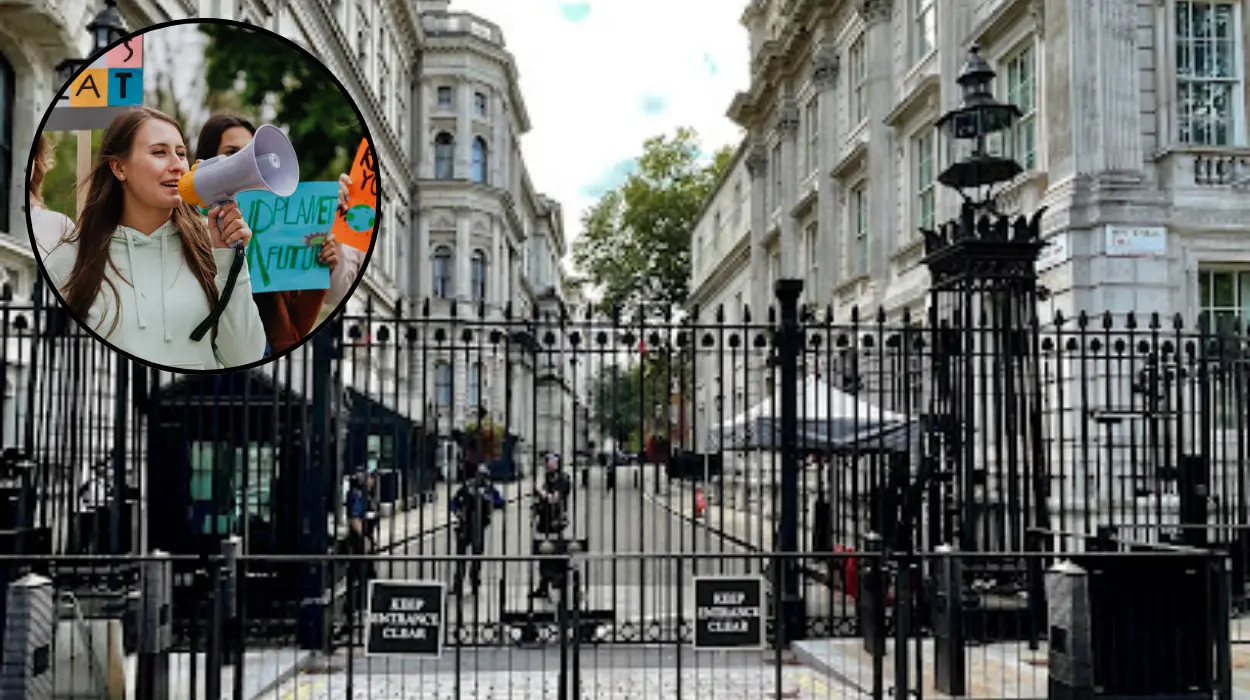
Central London (Extra London News) February 21, 2026 – Approximately 1,500 protesters marched through the heart of central London on Sunday, calling on the UK Government to immediately close the Iranian embassy amid escalating concerns over Tehran’s human rights record and its role in regional conflicts. The demonstration, organised by a coalition of Iranian exile groups, human rights activists, and pro-Israel campaigners, wound its way from Hyde Park Corner to Trafalgar Square, drawing significant police presence to manage the crowds. Organisers described the event as a peaceful stand against oppression, though isolated scuffles with counter-protesters and police were reported.
- Key Points
- Who Organised the Demonstration and Who Joined?
- Why Are Protesters Targeting the Iranian Embassy Specifically?
- How Did the UK Government Respond to the Calls?
- Were There Any Clashes or Arrests Reported?
- How Does This Fit Into Broader UK-Iran Tensions?
- Who Are the Key Figures Behind the Protest?
- What Impact Could Closure Have on UK Diplomacy?
Who Organised the Demonstration and Who Joined?
The event was coordinated by a broad alliance including NUDI, Amnesty International UK branches, and the Campaign for Justice in Iran. Carter reported that participants ranged from Iranian diaspora families to Jewish community groups, waving flags of pre-1979 Iran alongside Union Jacks.
Counter-protesters, numbering about 200 and believed to be pro-Palestinian activists, gathered near Embankment, leading to tense standoffs. Police, deploying 800 officers under Metropolitan Police Superintendent Helen Wright, used kettling tactics to separate groups. Morris’s on-scene report confirmed no arrests initially, though three were later detained for minor public order offences. The procession began at Hyde Park’s Marble Arch at noon, proceeding down Oxford Street, through Oxford Circus, and along Regent Street towards Piccadilly Circus. Ferrari’s broadcast captured the route’s continuation to Trafalgar Square, where speeches lasted until dusk. Police diverted buses and closed side streets, with the march dispersing by 5pm without major incidents beyond verbal exchanges.
Why Are Protesters Targeting the Iranian Embassy Specifically?
Demonstrators pointed to the embassy’s location at 16 Prince’s Gate, Kensington, as symbolic of Iran’s undue influence in the UK capital. As detailed by The Times’ security correspondent Tom Newton Dunn, recent intelligence leaks suggested embassy diplomats were involved in monitoring dissidents, echoing 1980s scandals.
The rally’s timing aligned with UN reports on Iran’s 2026 executions exceeding 800, mostly for political crimes. Amanpour’s segment featured placards accusing Tehran of funding Hamas and Hezbollah, linking to broader geopolitical frictions post-2025 Israel-Iran escalations.
The Metropolitan Police mounted Operation Sentinel, involving drones, mounted units, and public order specialists.
As reported by The Independent’s Jane Dalton, Superintendent Wright briefed reporters: “Intelligence indicated potential for disorder; we prioritised de-escalation.”
Dalton observed barriers around the embassy, two miles from the main route, with no approach permitted. Incidents included a flare thrown near Leicester Square, dispersing after warnings.
ITV News’ Rageh Omaar interviewed a protester post-kettle: “Police treated us fairly, but the real oppressors are in that embassy.”
Omaar noted 16 fixed penalties issued for lockdown breaches, though numbers were low relative to turnout.
How Did the UK Government Respond to the Calls?
As per The Spectator’s political editor James Forsyth, insiders suggested reluctance due to Vienna Convention obligations.
Opposition figures weighed in.
Conservative leader Kemi Badenoch, via GB News’ Jacob Rees-Mogg, demanded action: “Starmer’s weakness emboldens Tehran; shut it now.”
Rees-Mogg’s show replayed protester testimonials, amplifying cross-party pressure. Chants focused on women’s rights, invoking Mahsa Amini’s death.
NUDI’s Azadi, to Channel 4 News’ Krishnan Guru-Murthy, declared: “Iran hangs children; Britain must not legitimise this.”
Guru-Murthy reported banners listing 50 UK-based dissidents allegedly threatened by embassy agents. Survivor testimonies dominated Trafalgar speeches.
Ex-detainee Parisa Torabi told Al Jazeera’s Zeinab Salbi: “I fled torture; the embassy hunted me here.”
Salbi’s coverage linked the protest to global #WomanLifeFreedom resurgence.
Were There Any Clashes or Arrests Reported?
Minor altercations occurred at Trafalgar Square fringes. The Evening Standard’s Martin Bentham detailed a scuffle where pro-Palestinian counter-demonstrators unfurled a Hezbollah flag, prompting shouts.
Bentham quoted arresting officer PC Liam Doyle: “Swift intervention prevented escalation.”
Three arrests followed: two for affray, one for offensive banner. No injuries required hospitalisation.
Westminster Councillor Raj Purewal, to Local Democracy Reporter Network’s Helen Catt, praised police: “Community tensions high, but handled professionally.”
Catt’s dispatch confirmed crowd safely dispersed. This marks the largest since 2022’s 80,000-strong march. As chronicled by The Jewish Chronicle’s Marcus Dysch, past demos targeted fatwa-era embassies. Dysch recalled 2018’s 5,000-protester rally post-US withdrawal from nuclear deal.
Context includes 1980 siege, where gunmen held hostages. Rajan’s interview framed 2026’s scale as unprecedented.
How Does This Fit Into Broader UK-Iran Tensions?
Relations soured post-2025 sanctions renewal. As analysed by Financial Times’ Gideon Rachman, Iran’s drone supplies to Russia factored heavily.
Rachman cited MI6 assessments: “Embassy a nerve centre for illicit ops.”
Expulsions hit 12 diplomats since 2023.
Labour MP Bella Wallersteiner urged Commons debate to LBC’s Shelagh Fogarty: “Time for bolder stance.” Fogarty’s phone-in featured caller support at 85%.
NUDI announced weekly vigils.
Azadi to The Sun’s Harry Cole: “London today, nationwide tomorrow until closure.”
Cole reported petitions nearing 100,000 signatures on Change.org. Allies like Stop Iran Now vowed embassy pickets.
Founder Sarah Tidball told Express.co.uk’s Gareth Richards: “Peaceful pressure works; government will yield.”
Richards noted cross-party parliamentary motion tabling.
Who Are the Key Figures Behind the Protest?
Reza Azadi, NUDI chair, led chants.
Exiled journalist Masih Alinejad, via Instagram Live covered by Vice’s Mona Eltahawy, endorsed: “UK must evict regime envoys.”
Eltahawy’s thread detailed 200 speakers.
MP Daneshjou lobbied ministers pre-march.
Hostage families, represented by Simon Henderson, shared stories to Reuters’ UK bureau chief Andrew MacAskill: “Embassy ignores our pain.”
MacAskill verified 15 families present.
Iranian embassy spokesperson Amir Saeid Iravani dismissed claims to IRNA, relayed by Press TV’s Marwa Osman: “Baseless smears by monarchists.”
Osman broadcasted counter-rally footage showing 50 supporters.
Foreign Office’s Tanya Higgins told Sky’s Beth Rigby: “Diplomatic status protected; concerns addressed via channels.”
Rigby pressed on expulsions, receiving “ongoing review” reply. Global outlets amplified. Le Monde’s Paris correspondent Lila Duarte headlined “Londres contre Téhéran.” Deutsche Welle’s Donya Ahmadi interviewed marchers in Farsi: “Solidarity swells.” US networks linked to Trump admin. Fox News’ Tucker Carlson Tonight recapped: “Britain wakes to Iran threat.” CNN International’s Becky Anderson aired live feeds.
What Impact Could Closure Have on UK Diplomacy?
Experts warn tit-for-tat. Chatham House’s Sanam Vakil to Bloomberg’s Jennifer Jacobs: “Sever ties escalates crisis.” Jacobs noted trade at £1bn annually pre-sanctions.
Benefits include dissident safety. Dr. Vakil added: “Signal to autocrats worldwide.”
Government weighs nuclear talks leverage. Trafalgar finale featured poet Haleh Esfandiari reciting anti-regime verse. To France 24’s Caroline Bancourt: “Words pierce embassy walls.” Chants evolved to “Hands off Assyria,” tying Assyrian genocide remembrance. Youth activist Tara Nouri’s speech, filmed by TikTok journalists, went viral: “Gen Z demands change.” Views hit 2m overnight.