
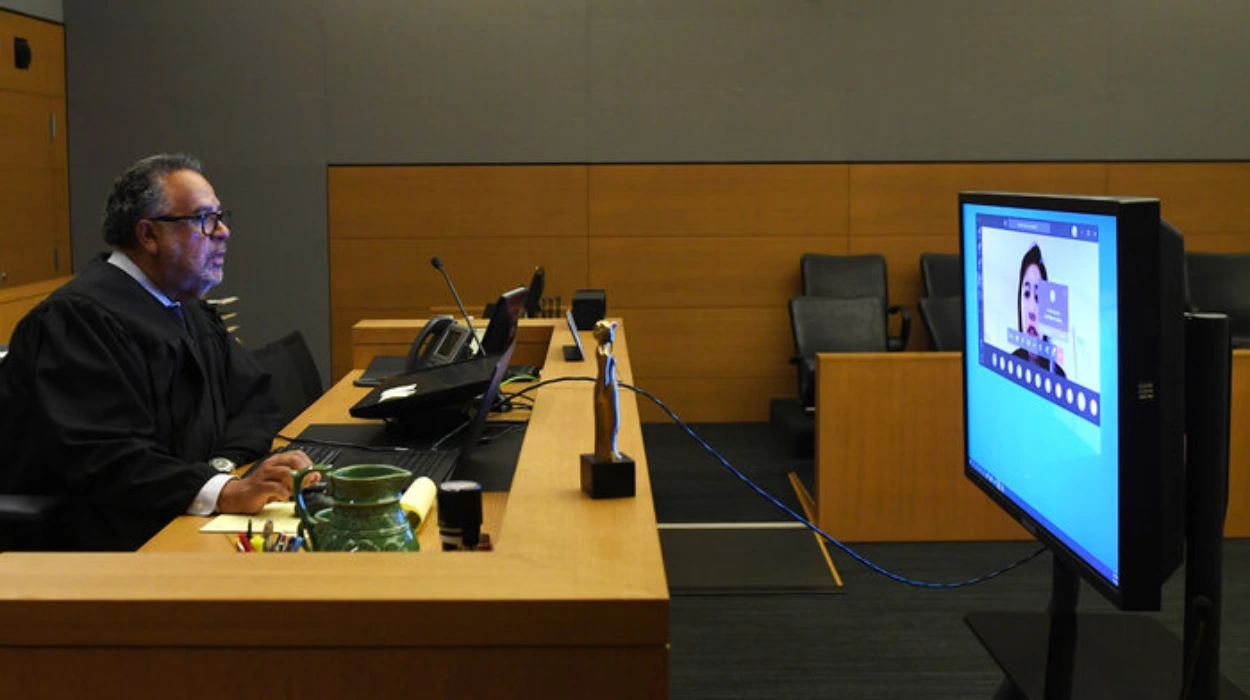
England and Wales are moving towards a more consistent use of remote participation in criminal courts as the government seeks to reduce a record backlog of cases awaiting hearings. New judicial guidance, which came into effect on 1 October, sets out when defendants, witnesses and other participants may join proceedings through live video or audio links, with the aim of improving efficiency without compromising fairness.
The move comes as the latest Ministry of Justice figures reveal that 80,829 cases were open in the Crown Court at the end of June 2026, the highest level in the published series. The number was 3% higher than the 78,226 cases recorded a year earlier, according to the quarterly criminal court statistics published on 24 September.
The reforms are intended to help cases progress more efficiently by reducing unnecessary travel and delays associated with physical attendance. However, the government has not yet demonstrated that the expanded use of remote hearings has reduced the overall backlog.
New guidance sets out when remote participation is appropriate
On 6 July, the Lady Chief Justice of England and Wales, Baroness Carr of Walton-on-the-Hill, announced a new framework governing the use of live links in criminal proceedings. The guidance applies to both Crown Court and magistrates’ court hearings and was scheduled for implementation by 1 October.
Under the framework, judges can consider remote participation when it would help people take part effectively or make more efficient use of court time and resources. It also identifies circumstances in which attendance in person will generally be required. Baroness Carr said the guidance would help make the justice system more accessible and efficient by increasing the appropriate use of remote participation.
“It should help cases move through the courts more quickly, reduce unnecessary travel and delay, and help to reduce backlogs,”
she said, while emphasising the need to maintain open justice, judicial discretion and fairness.
The guidance does not mean that all criminal hearings will become virtual. Decisions remain with judges, who must consider the circumstances of individual cases and whether remote participation is consistent with the interests of justice. The framework follows a judicial review of remote participation across different court jurisdictions, led by Lady Justice Yip and supported by the Judicial Office.
Crown Court backlog reaches a record high
The scale of the challenge is reflected in the Ministry of Justice’s latest statistics for April to June 2026. At the end of June, the Crown Court had 80,829 open cases, an increase of 392 from the previous quarter. Meanwhile, the magistrates’ courts recorded 380,230 open cases, up 9% from 347,365 a year earlier. The figures show that the pressure extends beyond the Crown Court, with cases continuing to enter the system faster than they are being completed.
The age of outstanding Crown Court cases is also increasing. The median age of an open case reached 203 days at the end of June, compared with 168 days a year earlier. A total of 23,706 Crown Court cases had been open for at least 12 months, representing 31% of the outstanding caseload. This was a 22% increase from 19,384 cases in June 2025.
For defendants who pleaded not guilty and proceeded to a jury trial, the median waiting time was 49.7 weeks in the second quarter of 2026. The figure was 12% higher than a year earlier and substantially above the 27.1 weeks recorded in the final quarter of 2019. These figures highlight why measures that reduce avoidable delays are receiving greater attention from the judiciary and government. They do not, however, establish how much of the backlog could be cleared through remote participation alone.
Police witnesses to receive clearer arrangements for video evidence
A further development came on 30 September, when HM Courts & Tribunals Service published a memorandum of understanding covering police witnesses giving evidence through live video links in criminal proceedings. The agreement involves the National Police Chiefs’ Council, the Crown Prosecution Service and HM Courts & Tribunals Service, with support from the Judicial Office of England and Wales.
It sets out operational arrangements for police witnesses to participate remotely when authorised by the court. The stated aim is to provide a more consistent approach while supporting the efficient administration of justice.
The memorandum supports implementation of the Lady Chief Justice’s guidance, but it does not override statutory requirements, court procedures or judicial discretion. It is also not, by itself, a legally binding agreement. The arrangements illustrate how the justice system is seeking to establish clearer procedures for remote participation rather than treating video links as an unrestricted alternative to appearing in person.
Government accelerates wider court reforms
Remote hearings form part of a broader programme to modernise the criminal courts.
On 4 October, the Ministry of Justice announced that wider court reforms would be accelerated as the government sought to address the record number of cases waiting to be heard.
Justice Secretary Alex Norris said the government remained committed to reducing the backlog and delivering swifter justice for victims. He also confirmed a change in direction on proposals for judge-only trials, with plans for some criminal trials to be heard without a jury being dropped, while technical and lengthy fraud and financial cases would be allowed to proceed before a judge alone. Courts Minister Sarah Sackman KC also identified virtual hearings as one of the measures being considered to improve efficiency.
“Whether that is using AI to support the listing of cases, rolling out further virtual hearings, or taking steps to ensure defendants arrive to court on time, we will turn the tide and deliver the swifter justice victims deserve,” Sackman said in the government’s announcement.
The Ministry of Justice said the wider reforms would be supported by investment in technology and resources to enable judges to hear more cases. The Courts and Tribunals Bill is due to return to the House of Commons on 13 October, according to the government’s 4 October announcement.
Efficiency versus fairness
Although remote hearings may reduce travel and logistical delays, their effectiveness depends on how they are implemented. Reliable technology, suitable facilities and adequate administrative support are important to ensure participants can follow proceedings and communicate effectively.
The government’s existing remote participation approach acknowledges that the use of remote hearings has varied across jurisdictions and regions. Its published analysis found that, in February 2024, 33% of Crown Court hearings in the London region involved remote participation, compared with 9% in Wales. The figures provide a historical snapshot rather than a measure of current usage, but they illustrate the differences that the new national framework is intended to address.
There are also limits to what remote participation can achieve. It cannot, on its own, resolve shortages of courtrooms, judicial capacity, legal representation or the administrative resources required to process cases. Nor does it remove the need for in-person hearings where the circumstances of a case require them.
For victims and witnesses, avoiding unnecessary journeys may make participation easier. For defendants, however, the ability to understand proceedings, consult legal representatives and participate meaningfully must remain central to decisions about remote attendance. The judiciary’s guidance therefore combines support for appropriate remote participation with safeguards designed to protect open justice and the fairness of criminal proceedings.
What happens next?
The immediate test will be whether the new guidance leads to more consistent use of remote participation and whether that translates into measurable improvements in the progress of cases. Future assessments will need to examine the number and types of hearings conducted remotely, delays avoided, technology failures and the experiences of defendants, witnesses, victims and legal representatives.
The next scheduled quarterly criminal court statistics release is 10 December 2026, according to the Ministry of Justice’s publication schedule. Those figures should provide a further opportunity to assess the direction of the backlog, although they will not necessarily isolate the impact of remote hearings.
For now, the policy represents an attempt to make the court system more flexible while preserving judicial control over how proceedings are conducted. With more than 80,000 Crown Court cases outstanding at the end of June, the challenge is not simply to move hearings online, but to ensure that changes in court procedure result in timely, accessible and fair justice.