Key Points
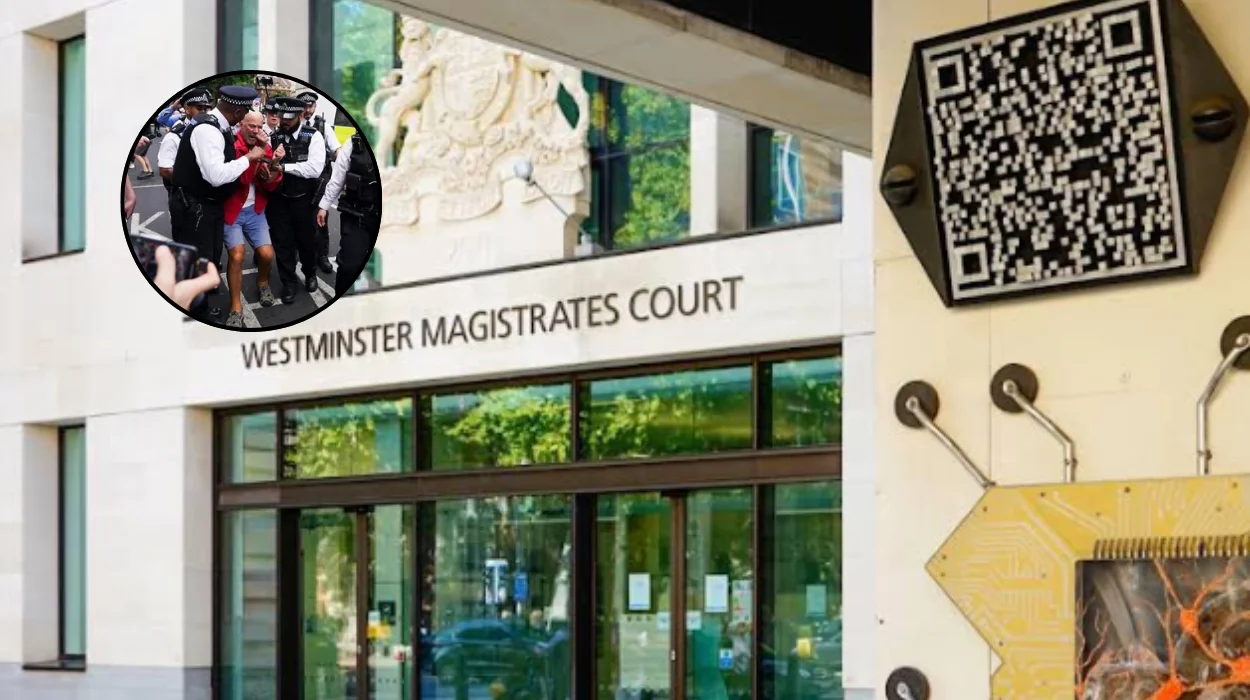
- More than 100 protesters were arrested outside Westminster Magistrates’ Court in central London during a demonstration organized by the legal rights group Defend Our Juries.
- The Metropolitan Police confirmed that 117 people were detained, primarily on suspicion of showing support for a proscribed terrorist organisation under the Terrorism Act.
- The mass protest coincided with the announcement that Palestine Action co-founder Huda Ammori has been granted permission by the UK Supreme Court to challenge the Home Office’s decision to ban the group.
- Hundreds of demonstrators had gathered outside the court where proceedings were scheduled for individuals previously arrested for supporting the proscribed organization.
- Court proceedings for over 2,000 pending cases were postponed until October, and those charged were informed they were not required to attend.
- The Supreme Court confirmed that an expedited hearing for Ammori’s challenge will take place between October and December.
- Palestine Action was initially proscribed as a terrorist organization in July 2025 following direct-action protests, including a raid on an RAF base, a status that was upheld by the Court of Appeal in June 2026 after an earlier High Court setback.
London (Extra London News) July 31, 2026 — Over 100 demonstrators were arrested outside a central London courthouse on Thursday as tensions reached a boiling point over the British government’s contentious proscription of direct-action group Palestine Action. The dramatic scenes unfolded on the pavement outside Westminster Magistrates’ Court, where hundreds of activists had assembled to show solidarity with scores of individuals facing criminal charges for backing the banned network. The high-stakes demonstration took place concurrently with a major legal breakthrough announced on Thursday: the UK Supreme Court officially granted Palestine Action co-founder Huda Ammori permission to take her fight against the government’s terror designation to the nation’s highest court.
Why Were Over 100 Protesters Arrested Outside Westminster Magistrates’ Court?
As reported by staff journalists at the Evening Standard, law enforcement officers deployed to the area under the Terrorism Act cracked down on crowds gathered outside Westminster Magistrates’ Court. As detailed by Agence France-Presse (AFP) correspondents and reported via eNCA, London’s Metropolitan Police confirmed that 117 people were taken into custody during the demonstration, which had been organized by the legal rights group Defend Our Juries.
As reported by ITV News journalist political teams, the vast majority of these detentions were made on suspicion of showing support for a proscribed organisation.
Footage from the scene broadcasted across multiple news networks captured police officers physically carrying away demonstrators who held up placards and banners bearing slogans such as “I support Palestine Action”.
The demonstration had originally been timed to coincide with court proceedings scheduled for individuals previously arrested for backing the group. However, according to an official letter distributed outside the courthouse by the Courts and Tribunals Service and cited by AFP, those hearings were postponed until October, and defendants were explicitly told they were not required to attend. Despite the postponement, demonstrators still converged on central London, leading to widespread disruptions and a heavy police footprint.
What Did the Supreme Court Decide Regarding Huda Ammori’s Appeal?
As reported by international and domestic news agencies including AFP and Al Jazeera, Britain’s Supreme Court announced on Thursday that “permission to appeal is granted” in the high-profile case brought by Palestine Action co-founder Huda Ammori.
The legal battle stems from the interior ministry’s decision in July 2025 to proscribe Palestine Action under the UK’s Terrorism Act 2000—placing the group on a government blacklist alongside international entities such as Hamas and Hezbollah. That contentious designation made membership of, or active support for, the pro-Palestinian network a criminal offense punishable by up to 14 years in prison.
According to the Supreme Court’s official statement published on its website and reported by AFP, an expedited hearing for Ammori’s challenge has been scheduled to take place sometime between October and December. Reacting to previous stages of the protracted legal saga, Huda Ammori previously stated, as reported by Al Jazeera:
“We will continue to fight this proscription all the way to the Supreme Court and, if necessary, to the European Court of Human Rights to overturn what has become one of the most extreme attacks on free speech and the right to protest in modern British history.”
Explore More Westminister News
Palestine Action Co-Founder Fights Terror Ban at Supreme Court, London 2026
Banksy Statue May Become Permanent in Westminster, London 2026
How Did the Legal Battle Over Palestine Action Reach This Stage?
To understand the gravity of Thursday’s demonstrations and Supreme Court announcement, one must trace the winding path of litigation that has dominated the British judicial system over the past year. Palestine Action was established in 2020 with the stated objective of ending global corporate and governmental participation in what it describes as Israel’s military apparatus and actions in Gaza.
The group gained intense public and political visibility following the escalation of the Israel-Hamas conflict in October 2023.
The government’s decision to slap a terror ban on the organization in July 2025 followed high-profile direct-action stunts, most notably a coordinated breach of RAF Brize Norton where activists damaged military aircraft.
Since the proscription went into effect, police and civil liberties groups estimate that more than 3,500 arrests have been linked directly or indirectly to the group, sweeping up citizens from all walks of life, including senior citizens and Holocaust survivors.
The legal friction intensified earlier in 2026. In February, the High Court delivered a landmark ruling siding with Huda Ammori, declaring that the Home Secretary’s decision to ban the group was “unlawful” and disproportionately interfered with freedom of speech and assembly under Articles 10 and 11 of the European Convention on Human Rights. However, that victory was short-lived for campaigners. In June 2026, the Court of Appeal overturned the lower court’s judgment following an appeal led by the Home Office.
During the June appeal proceedings, Lady Chief Justice Baroness Carr ruled that the government’s proscription was indeed a “justified and proportionate” interference, concluding that Palestine Action’s activities—characterized by aggressive direct action and property damage—did not fall within the traditional bounds of peaceful protest.
That ruling immediately recriminalized public expressions of support, leading to renewed waves of arrests, including 117 detentions outside the Royal Courts of Justice at the time.
What Are the Broader Implications of the Ongoing Crackdown?
The relentless clash between civil liberties advocates and state security apparatuses has ignited a fierce national debate regarding the boundaries of dissent in the United Kingdom.
Critics and legal representatives for the campaigners argue that using counter-terrorism legislation against direct-action protesters sets a dangerous precedent, creating a chilling effect on political expression.
Following the June Court of Appeal judgment, Huda Ammori sharply criticized the verdict, telling ITV News:
“This is a terrifying time for our civil liberties. It’s a terrifying time for dissent generally, across the country, and this has set a terrible precedent for other direct action groups.”
Conversely, government lawyers and senior judges have maintained that the state must retain robust mechanisms to deal with persistent, disruptive criminality that crosses the threshold into actions designed to intimidate the public or influence government policy through coercion.
Representing the Home Office during earlier hearings, Sir James Eadie KC argued, as noted in court summaries covered by ITV News, that
“the line between criminality, sometimes violent criminality, and terrorism is not a bright one,”
adding that standard criminal law had proved insufficient in curbing the escalation of the group’s tactics.
As the case moves toward its ultimate showdown in the Supreme Court later this autumn, both legal experts and civil rights campaigners will be watching closely.
With thousands of criminal cases pending across England and Wales and activists vowing to continue their demonstrations despite mass arrests, the outcome of the Supreme Court appeal promises to redefine the legal definition of terrorism and the legal protections afforded to political protest in modern Britain.