Key Points
- High Court Legal Challenge Granted: A Croydon resident has successfully won the right to challenge Croydon Council in the High Court over its controversial decision to shut down its face-to-face, walk-in housing and homelessness service.
- Grounds for Judicial Review: District Judge Alan Bates granted permission for a judicial review on four out of five legal grounds, following arguments that the local authority breached statutory duties and disproportionately disadvantaged digitally excluded residents.
- Impact of Digital Shift: The Public Interest Law Centre (PILC) argues that moving emergency housing applications strictly online creates discriminatory barriers for vulnerable individuals, including those with learning disabilities, illiteracy, or limited internet access.
- Scrutiny of Decision-Making: The council is accused of making the closure decision “behind closed doors” without an adequate written record, violating local government regulations and its own internal constitutional rules.
- Wider London Crisis: This litigation highlights a sweeping capital-wide trend; research from King’s College London reveals that only three out of 33 local authorities in London still maintain face-to-face drop-in facilities for homelessness assistance.
- Council’s Defense and Next Steps: Croydon Council maintains the shift to an appointment-based system was necessitated by acute financial pressures and historic demand. The council must submit its formal defence by September 7, ahead of a full judicial review hearing.
London (Extra London News) July 9, 2026 – A vulnerable Croydon resident has won a significant legal victory at the Royal Courts of Justice, securing the right to drag Croydon Council before the High Court to challenge the legality of its decision to eliminate its face-to-face, walk-in homelessness service. District Judge Alan Bates ruled that there was minimal evidence proving the local authority had established sufficient safeguard measures for residents who are physically or intellectually incapable of navigating online booking platforms. The closure of the council’s prominent Mint Walk homelessness service—originally executed under strict financial strains—will now undergo an exhaustive judicial review that lawyers warn could establish a massive legal precedent for local governance across the United Kingdom.
- Key Points
- Why Is Croydon Council Facing A High Court Judicial Review?
- Who Is The Claimant Challenging The Council?
- How Did The Court Criticise Croydon Council’s Alternative Support Measures?
- What Is Croydon Council’s Official Defense For The Service Closure?
- How Bad Is The Frontline Reality For Croydon’s Homeless Families?
- Is This Closure Part Of A Wider Trend Across London Local Authorities?
- What Are The Deadlines And Next Steps For The Judicial Review?
The legal challenge, spearheaded by the Public Interest Law Centre (PILC) on behalf of an anonymous local claimant, directly attacks the operational changes made to the “Access Croydon” frontline service. According to court records, the decision to dismantle the walk-in provision was finalised in a closed-door meeting by the council’s then-chief executive, Katherine Kerswell, alongside the Executive Mayor of Croydon, Jason Perry. As the judicial review proceeds, the High Court will microscopically examine whether local councils can legally push essential, emergency life-saving services behind a digital-only barrier during an unprecedented national housing and cost-of-living crisis.
Why Is Croydon Council Facing A High Court Judicial Review?
The core of the legal dispute rests on whether a local authority can entirely substitute an immediate, physical safety net with a digital-first interface without abandoning its legal obligations to the public. As reported by Harrison Galliven, a Local Democracy Reporter writing for The Standard, the PILC launched the High Court challenge after pointing out that closing Access Croydon fundamentally isolates people who are in immediate need of emergency housing. The legal team representing the claimant successfully argued that the council failed to perform its basic statutory duties under the Housing Act 1996 and breached the Public Sector Equality Duty by effectively shutting out individuals who are digitally excluded.
Furthermore, the claimant’s legal representatives brought forward evidence regarding how the decision itself was reached. As detailed in the legal arguments presented to the High Court, the council allegedly pushed through the closure without creating a formal, transparent written record of the executive meeting, a move the claimant’s counsel argued directly violates local authority regulations and Croydon Council’s very own constitutional framework. By granting permission on four out of five distinct legal grounds, the High Court has signalled that the procedural and substantive execution of this policy warrants intense judicial intervention.
Who Is The Claimant Challenging The Council?
The individual at the centre of this landmark litigation is a Croydon resident whose personal circumstances expose the real-world friction of digital-by-default public services. As stated by Tom Hickman KC, counsel for the applicant, during oral arguments at the Royal Courts of Justice, the claimant first desperately attempted to engage with Croydon Council’s homelessness team after being served a Section 21 “no-fault” eviction notice by their landlord.
As reported by Harrison Galliven of The Standard, Tom Hickman KC explained to the court that the claimant suffers from severe learning disabilities and illiteracy. Consequently, these cognitive and educational barriers meant the resident was utterly incapable of understanding or utilizing the alternative digital arrangements put in place by the local authority—specifically, an intricate online form that residents are now required to fill out to book an initial housing advice appointment. The claimant’s legal team argued that for an illiterate person facing immediate eviction, an online form is not an alternative pathway; it is an absolute wall.
How Did The Court Criticise Croydon Council’s Alternative Support Measures?
During the initial court proceedings, Croydon Council defended its decision by arguing that it had not completely abandoned non-digital residents. Counsel for the local authority explained to the court that “digitally excluded” individuals are routinely directed to local public libraries. At these locations, residents can theoretically access internet-connected computers, seek basic assistance from library staff, or walk to the central library—located a short distance from the old Access Croydon site—to speak with advice specialists.
However, these explanations faced harsh, direct criticism from the bench. As recorded in the court transcript and reported by The Standard, District Judge Alan Bates openly lambasted the extreme lack of clarity and operational detail in the council’s backup plan. Addressing the courtroom, District Judge Bates stated:
“They say this individual would be assisted by council officers, but it is not said who these officers will be or how they will be accessed.”
District Judge Bates went on to express deep skepticism regarding the administrative reality of the plan, noting that it remained entirely unproven whether frontline library staff had ever received the specialized, complex legal training that “specifically enables them to provide assistance to people seeking homelessness assistance.” The judge further dismantled the council’s reliance on telephone helplines as a valid alternative, formally acknowledging that an exceptionally high percentage of public calls to the council go entirely unanswered, while other residents are routinely left waiting “hours” on hold on dead telephone lines.
What Is Croydon Council’s Official Defense For The Service Closure?
Croydon Council has robustly pushed back against the lawsuit, arguing that the operational changes were a rational and necessary response to administrative chaos. At the time of the closure, official statements released by Croydon Council framed the termination of the Mint Walk walk-in hub not as a reduction of care, but as “a change in how the council supports people at its front door.” The local authority openly admitted that the restructuring was heavily accelerated by overwhelming public demand and severe, ongoing institutional financial pressures.
As reported by the Local Democracy Reporting Service (LDRS), Executive Mayor Jason Perry justified the transition by pointing out the operational failures of the old walk-in model. Announcing the implementation of the digital appointment system, Mayor Perry stated:
“The current walk-in service means that, at this time of extreme demand, too often residents are waiting too long to get the help that they need. With an appointments system we can triage to make sure we are prioritising appropriately. And knowing exactly who is coming into council buildings, and when, helps to run things as efficiently as possible whilst keeping everyone safe.”
Furthermore, in court, legal counsel representing the local authority strongly urged District Judge Bates to throw out the case, pointing out that the specific claimant in question was never actually rendered roofless or sleeping on the streets. The council’s legal team argued that because this individual avoided literal homelessness, the entire judicial review was purely “academic” and far too narrow in scope to be applied broadly to other residents across the borough.
District Judge Bates, however, explicitly rejected the council’s attempt to minimize the case. The judge ruled that the ongoing closure of the physical walk-in centre continues to affect everyday residents actively, possessing a clear, dangerous potential to severely harm others caught in identical socio-economic situations.
How Bad Is The Frontline Reality For Croydon’s Homeless Families?
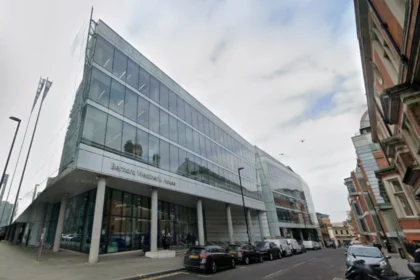
While the council maintains that appointments streamline efficiency, investigative reporting from the ground paints a vastly more troubling picture of the atmosphere outside the municipal offices. As documented by Harrison Galliven of the LDRS, an extensive investigation conducted last year exposed the harrowing plight of families and vulnerable individuals forced to stand in long, exposed queues outside the council’s Bernard Weatherill House headquarters just to secure a basic housing slot.
During that investigation, a charity support officer working directly with affected families on the ground described the visual reality outside the council offices as thoroughly “chaotic” and deeply “dehumanising” for parents and children awaiting essential statutory services. Following the implementation of the new rules, members of the public are now explicitly barred from entering the building freely. Instead, vulnerable individuals are forced to wait outside the Council’s Fell Road entrance in all weather conditions until private security guards check their names against an appointment list and let them inside.
Explore more Croydon News:
Thameslink and Southern Train Delays: East Croydon Station Fire 2026
Fatal Late-Night Collision Near Valley Retail Park Leaves One Dead: Croydon 2026
Is This Closure Part Of A Wider Trend Across London Local Authorities?
The legal battle over Access Croydon is far from an isolated local dispute; rather, it represents a flashpoint for a systemic withdrawal of face-to-face local government services across the capital. Research compiled by King’s College London revealed a stark, widespread trend: out of all 33 local authorities across Greater London, a mere three councils continue to offer functional, face-to-face drop-in services for people experiencing sudden homelessness. The vast majority have migrated their services into digital portals, creating what housing advocates describe as a hostile environment for the poor.
Commenting directly on the wider systemic threat exposed by this case, Alexandra Goldenberg, a legal representative from the Public Interest Law Centre (PILC), expressed deep alarm over the erosion of physical public infrastructure. As reported by The Standard, Goldenberg stated:
“In the middle of a housing crisis, Croydon Council has closed their walk-in services. These barriers risk creating discriminatory access to homelessness services, leaving many vulnerable people unable to obtain the support to which they so desperately need and are legally entitled.”
Legal experts emphasize that because almost all London boroughs have enacted similar digital-first transformations, the final ruling by the High Court could trigger a domino effect, forcing dozens of local councils nationwide to restore in-person emergency counters or face similar, devastating class-action litigation.
What Are The Deadlines And Next Steps For The Judicial Review?
With District Judge Bates officially granting permission for the judicial review to move forward on four critical grounds, a strict legal timeline has been imposed on both parties to prepare for the high-stakes courtroom showdown. Croydon Council has been given a firm deadline of September 7 to submit its comprehensive, detailed grounds of defense, along with any expert testimony or documentary evidence it intends to rely on to prove its digital system is legally compliant.
Following the council’s submission, the anonymous claimant and the PILC legal team will have until September 21 to file their formal counter-responses and rebuttals. While the High Court has solidified these evidentiary deadlines, an exact date for the full judicial review hearing at the Royal Courts of Justice has not yet been set by the court listing office. Until the senior judges deliver a definitive verdict, the doors to Croydon’s walk-in homelessness service will remain locked, and the borough’s most vulnerable residents will remain dependent on the mercy of security guards at the Fell Road entrance.