Key Points
- Legal Road Ends: The Court of Appeal has officially refused to review a previous High Court decision, effectively ending all legal challenges against the closure of ten children’s centres across the London Borough of Ealing.
- Judicial Review Sided with Council: The original legal challenge, brought forward by the parents of a two-year-old child, culminated in a High Court judicial review in February. The judge ruled in April that Ealing Council’s decisions were not legally flawed.
- Consultation Legality Challenged: Local campaigners and the claimant parents argued that the extensive public consultation process conducted prior to the closure announcement violated statutory local government laws.
- Long-Running Dispute: The highly controversial plans to shut down the ten community hubs were initially made public by Ealing Council in April 2025, sparking intense community backlash and political debate.
- Shift to Council Accountability: Following the definitive closure of all legal pathways, leading community activists have confirmed that their campaign strategy will shift from courtroom battles to rigorous, direct oversight of local authority operations.
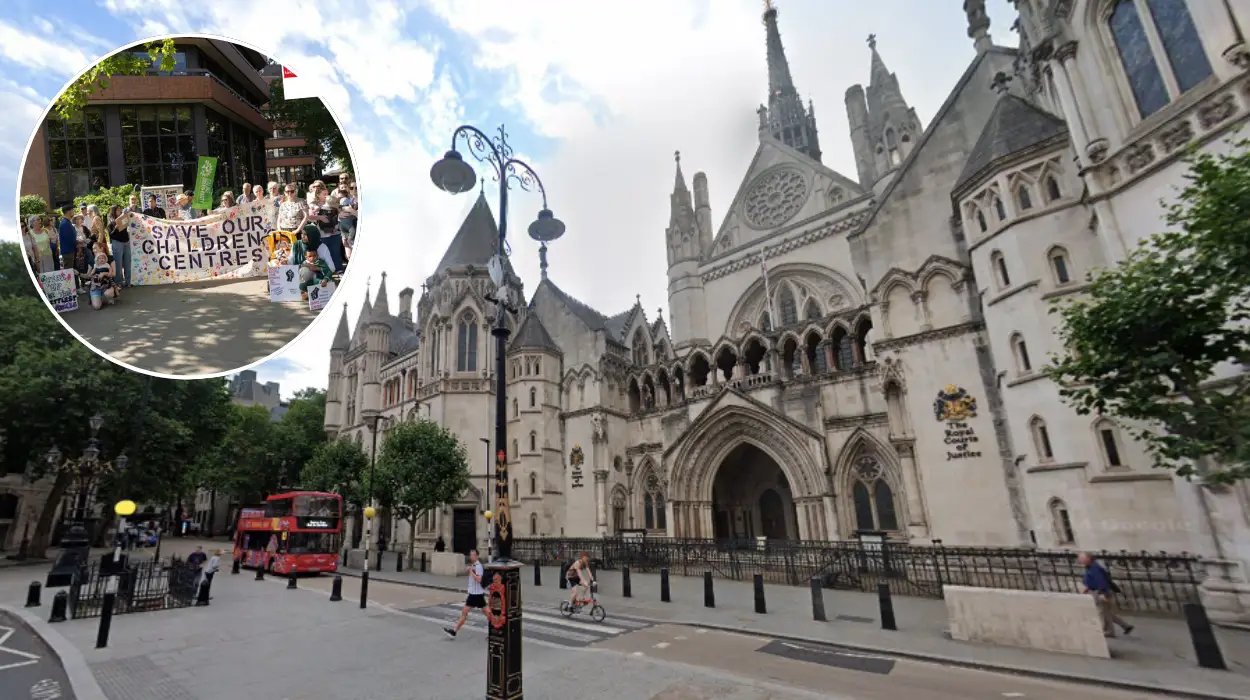
Ealing (Extra London News) June 23, 2026 – Parents in West London have lost their final legal bid to prevent the closure of ten vital children’s centres across the borough, following a definitive ruling by the Court of Appeal. The decision officially rejects an application made by the family of a local two-year-old toddler to appeal a previous High Court judgement that supported the local authority. By refusing to even grant a full review of the case, the appellate court has drawn a firm line under a prolonged, highly publicised multi-year battle between grass-roots community campaigners and the Ealing Local Executive.
- Why did the Court of Appeal refuse the Ealing children’s centres case?
- What was the history of the High Court judicial review?
- How did Ealing Council’s 2025 consultation spark a legal battle?
- What do campaigning politicians say about the final court ruling?
- How will the closures affect families across Ealing Borough?
The legal conflict trace back over a year to when the local authority first unveiled a sweeping budget overhaul. With the judiciary refusing to intervene further, Ealing Council is now legally cleared to move forward with the decommissioning of the ten contested sites. This outcome leaves local families facing a drastically altered landscape for early-years childcare and community support infrastructure in West London.
Why did the Court of Appeal refuse the Ealing children’s centres case?
The finality of the legal dispute was established when the Court of Appeal rejected the application submitted by the claimant parents. As documented by reporters covering the municipal legal beat, the family had filed for permission to appeal immediately after losing their initial High Court challenge. The higher court’s absolute refusal to review the lower court’s analysis indicates that senior appellate judges found no arguable errors of law or public law principles in the original judicial review process.
This formal rejection leaves the original High Court ruling fully intact and legally binding. Legal experts note that an appellate refusal of this nature represents an insurmountable barrier for administrative law challenges. Because judicial reviews evaluate the legality of how a decision was made rather than the political popularity of the decision itself, the Court of Appeal’s decree confirms that Ealing Council operated within its broad statutory powers.
What was the history of the High Court judicial review?
The root of the courtroom struggle dates back to early last year. As reported by local journalists covering the West London courts, the judicial review was formally initiated by the parents of an Ealing toddler who relied heavily on the localized early-years services. The High Court agreed to hear the arguments, leading to a comprehensive legal hearing in February.
During those sessions, lawyers representing the family presented arguments detailing how the loss of these facilities would impact developing children and vulnerable working-class parents. However, following weeks of judicial deliberation, the High Court announced its final judgment in April, completely dismissing the claimants’ case. The presiding judge ruled that the local authority had not acted irrationally, unfairly, or outside its administrative scope, setting the stage for the parents’ subsequent, unsuccessful appeal.
How did Ealing Council’s 2025 consultation spark a legal battle?
The entire legal drama stems from a controversial policy shift initiated in the spring of last year. Ealing Council officially announced its proposal to shutter the ten community facilities in April 2025, immediately igniting public anger. The local authority stated that the closures were a necessary response to unprecedented financial pressures and shifting demographic demands for centralized early-years hubs.
In response, the claimant parents and their legal team built their judicial review around the administrative mechanics of the local authority’s public engagement strategy. The claimants explicitly argued before the High Court that the public consultation process arranged by Ealing Council had actively broken the law. They asserted that the council had failed to provide adequate information to the public, ignored alternative cost-saving proposals, and failed to properly assess the negative impact the closures would have on protected groups under the Equality Act 2010. Ultimately, both the High Court and the Court of Appeal determined that the council’s consultation fulfilled its baseline legal obligations.
Explore more Ealing News:
UWL Hosts Inaugural Healthcare Education Conference: Ealing 2026
West London NHS Trust Halves Pelvic Health Wait: Ealing 2026
What do campaigning politicians say about the final court ruling?
The closure has drawn sharp criticism from local political figures who transitioned from grassroots activism to formal governance during the course of the dispute. Councillor Claire Welsby, who initially rose to prominence as a lead organiser for the high-profile ‘Save Ealing Children’s Centres’ campaign group, has since been elected to local office and currently serves as the Leader of the Green Party on Ealing Council.
As reported by the Local Democracy Reporting Service (LDRS), Councillor Claire Welsby expressed deep sorrow over the systemic implications of the court’s decree. Councillor Claire Welsby stated that:
“I’m disappointed that the decision to close 10 children’s centres will [go ahead]… and you know [there is] nothing we can do about that, that’s the end of the road for the courts… We can’t go any further legally, so what we must do is hold the council to account.”
Welsby’s statement highlights a distinct pivot for the remaining advocacy networks, marking a transition away from expensive, formalized litigation and toward direct municipal oversight, budget scrutiny, and political opposition inside the council chambers.
How will the closures affect families across Ealing Borough?
With all legal remedies exhausted, Ealing Council is expected to initiate the operational wind-down of the ten designated children’s centres. While the council has previously maintained that early-years provisions will be consolidated into remaining regional hubs to ensure efficiency, local parent groups argue that the loss of neighborhood-specific sites will create substantial geographic barriers for low-income families.
The targeted centres have traditionally provided a variety of essential public services, including stay-and-play sessions, breastfeeding support groups, parenting classes, and early health visitor checks. The operational timeline for the phased closures, staff redundancies, or reassignments across the borough is expected to be finalized during upcoming cabinet meetings. Activists have vowed to monitor the transition closely to document any gaps in local service delivery.